If you've ever watched the a380's ailerons move, you'll note that they don't deflect conventionally, but rather do a sort of synchronized dance. The engineers called it the Valse Des Ailerons (VDA) which is baguette-speak for 'Aileron Waltz'.
(1/6)
There's a physicist at Stanford named Safi Bahcall who modeled this exact principle and the math is wild.
He calls it "phase transitions in human networks." When you're stationary, your probability of a lucky event is limited to your existing surface area: the people you already know, the places you already go, the ideas you've already been exposed to. Your opportunity window is fixed.
When you move, your collision rate with new nodes in a network increases nonlinearly. Double your movement (new conversations, new cities, new projects) and your probability of a serendipitous encounter doesn't double. It roughly quadruples. Because each new node connects you to their entire network, not just to them.
Richard Wiseman ran a 10-year study at the University of Hertfordshire tracking self-described "lucky" and "unlucky" people. The single biggest differentiator wasn't IQ, education, or family money. Lucky people scored significantly higher on one trait: openness to experience. They talked to strangers more, varied their routines more, and said yes to invitations at nearly twice the rate.
The "unlucky" group followed the same routes, ate at the same restaurants, and talked to the same 5 people. Their networks were closed loops. No new inputs, no new collisions.
Luck isn't random. Luck is surface area. And surface area is a function of movement.
The lobster emoji is doing more work than most people realize. Lobsters grow by shedding their shell when it gets too tight. The growth requires a period of total vulnerability. No protection, no armor, soft body exposed to the ocean.
That's the cost of movement nobody posts about. You have to be uncomfortable first. The new shell only hardens after you've already moved.
Was talking to a new immigrant from England on the proper frame of mind for the winter depths in Canada.
Best to imagine you live on a spaceship. You go outside the 'airlock', in what is essentially a spacesuit, and run back to your cozy home/car/office as soon as possible.
And just like space and the universe, it is timelessly beautiful and captivating. There's raw honesty in facing -30C temps regularly. If you can survive this and build a life here, everything else is easy.
Once the temps start dropping below zero.
The engine intakes are partially covered with a winterization kit.
The installed block heater is religious plugged in when on ground and the heat is retained with the engine cover. Unless stored in a heated hangar.
Y'ALL THIS STORY AND THE ATC AUDIO IS INCREDIBLE!!!!
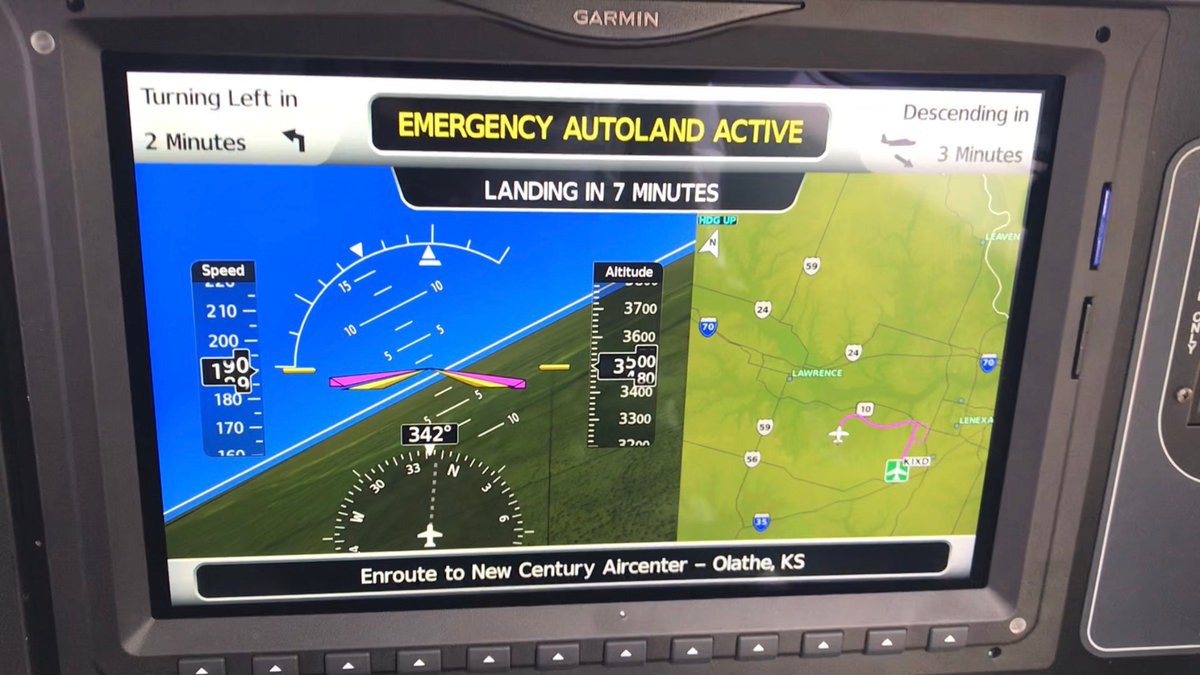
Yesterday at Rocky Mountain Metro Airport in Denver the pilot of a Beechcraft King Air became incapacitated and went NORDO with ATC but his aircraft was equipped with Garmin's new Emergency Autoland feature.
Well, not only did the plane land itself saving the pilots life, but it began transmitting on frequency to ATC controllers and other aircraft in the traffic pattern with position updates and eta to the runway.
Listen to this audio. Link below. Also this was the first real world use of this Garmin feature.
Experienced freezing rain for the first time. My car is covered in a thin layer of clear ice in minutes. Can’t imagine how wild this would be while flying.