🚨🚨The @Brewers are letting me giveaway this signed Brice Turang ball 👀 RT or quote for entry! Make sure you’re following me so I can DM you. Winner drawn Wednesday July 1st.
P.S…if you haven’t yet, head to https://t.co/uc2z0utb2K and use code Snellszn for discounted tix 🎟️
@DeniseKShull That’s about right. I usually read the first, second and then the second to last and last paragraph. That is the most though. Usually 2-3 paragraphs, next
‼️🚨 GIVEAWAY ALERT 🚨‼️
I’m teaming up with the @Brewers to giveaway a SIZE 11 of the City Edition Air Max 1’s!
To be entered, RT this post, follow me and comment your favorite Brewers memory/moment.
Winner will be picked in a week! Best of luck!

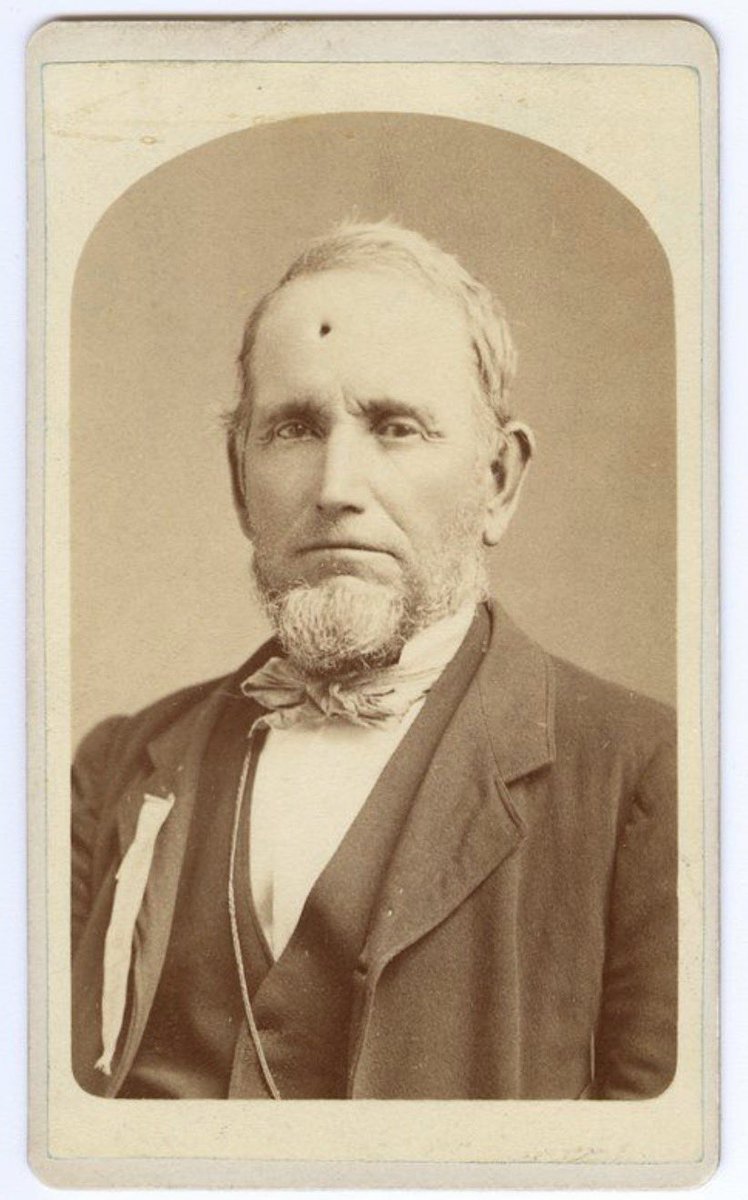
Abraham “Bullet Hole” Ellis
Abraham “Bullet Hole” Ellis was an abolitionist who had been associated with John Brown earlier. He lived in Miami County, Kansas and was caught up in the violent border conflicts between pro-slavery and anti-slavery factions.
When the Civil war broke out, he enlisted in Lane’s Brigade and served as quartermaster. On March 7, 1862, while on his way from Fort Scott to Fort Leavenworth, he stopped over night at Aubrey with a man named Treacle. Aubrey was three miles from the Missouri line and two miles north of the south line of Johnson County. At daybreak the landlord aroused all in the house with by yelling, “The bushwhackers are coming!” Treacle and another man named Whitaker were shot to pieces, and a man named Tuttle was killed by a ball in the eye. At the commencement of the trouble Ellis sprang out of bed, placed a fur cap on his head and looked out of the window. Confederate guerilla leader William C. Quantrill took a shot at him, and the ball passed through the sash and the cap into the skull. The leader of the raiders then came into the house and, recognizing Ellis, expressed great sorrow for what he had done, saying: “You are not the kind of man I was looking for; I’m damned sorry.” He saved the life of Ellis from his followers.
Quantrill’s ball had crashed through both plates of the forehead and lodged against the inner lining, where it lay buried for seventy hours. When the shattered bones and the bullet were extracted, the brain could be seen throbbing with each pulsation of the heart. The wound was extraordinary, described in historical accounts as one of the most remarkable survivable head injuries recorded at the time. About three days later, a U.S. Army surgeon extracted the bullet along with 27 fragments of his skull bone. He reportedly carried the bullet and some skull pieces for a time and even donated fragments to the Army and Navy Medical Museum in Washington D.C. Mr. Ellis recovered in five months, the wound healed, and in September, 1863, he was commissioned first lieutenant in a Fifteenth Kansas company, and served as such until February, 1865. He moved from Miami to Chautauqua County, in 1870 and died in Elk Falls, Kansas in 1885.
Rescuing the Donner Party
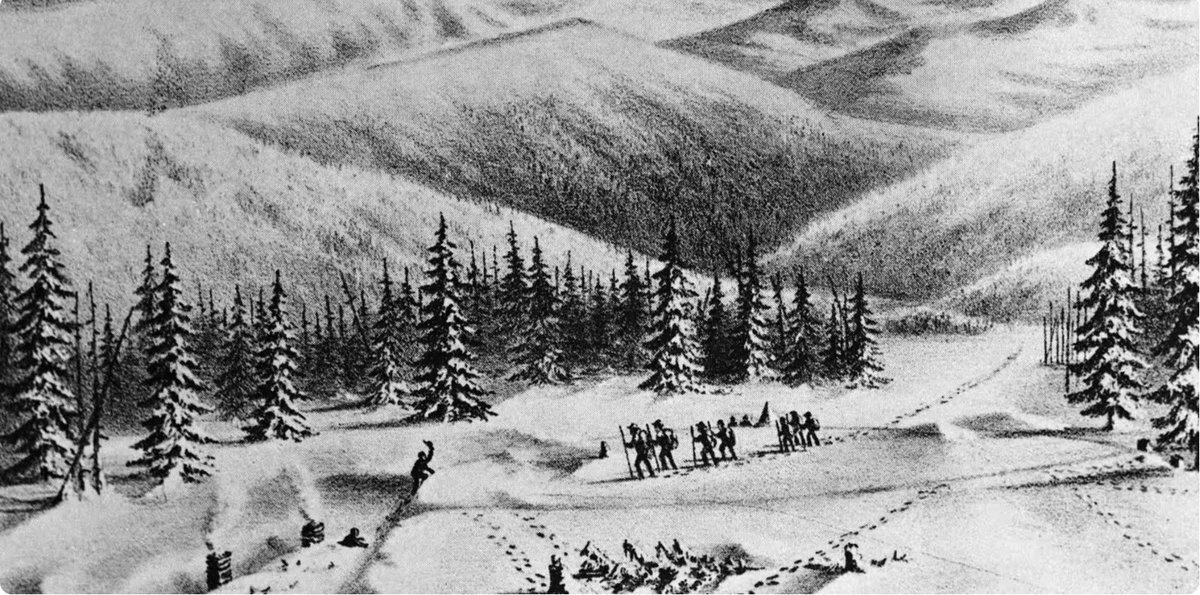
On February 19, 1847, the first relief party consisting of seven men who battled brutal conditions to cross the mountain, reached the main camp of the Donner Party at Truckee Lake (now Donner Lake) in the Sierra Nevada mountains, marking the beginning of the rescue efforts for the stranded pioneers. When the rescuers approached the lake camp, they shouted and were met by a haggard survivor (often described as Mrs. Murphy) who emerged from a snow hole and asked something like, “Are you men from California, or do you come from heaven?” The rescuers found a horrific scene: emaciated survivors (many children) widespread starvation and evidence of extreme measures to stay alive. They took out 23 survivors (including 17 children) on the grueling return trip westward over the mountains. Several more died en route due to starvation and cold.
On December 16,1848, more than a month after they became snowbound, 15 of the strongest members of the Donner Party strapped on makeshift snowshoes and tried to walk out of the mountains to find help. After wandering the frozen landscape for several days, they were left starving and on the verge of collapse. The hikers resigned themselves to cannibalism and considered drawing lots for a human sacrifice or even having two of the men square off in a duel. Several members of the party soon died naturally, however, so the survivors roasted and consumed their corpses.
The rescue process took over two months. Four relief parties were sent in over a two and a half month time period. On the third relief effort, a man named John Stark took to carrying two children at a time for a few yards, then setting them down in the snow and going back for others. He continued this process all the way down the mountain and eventually led all nine of his charges to safety. These children were too weak to walk and he refused to leave any behind. The last to be rescued was Lewis Keseberg who was found in April, 1847, supposedly half-mad and surrounded by the cannibalized bodies of his former companions. Of the 81 pioneers who began the journey, only 45 managed to walk out.
The death of John Turnstall and the beginning of the Lincoln County War
On February 18, 1878 John Turnstall and five men including William H Bonney (better known as Billy the Kid) were leading some horses from Turnstall’s ranch to Lincoln and were confronted by a posse led by just deputized Jacob Mathews. This posse represented the deeply entrenched businessman led by the Murphy-Dolan faction. They were threatened by the newly formed and successful business operations Turnstall was involved with. Turnstall was confronted by the posse over disputed horses and was called forward towards the posse with assurances that he would not be hurt and was shot in the chest and head. Billy the Kid and the others fled.
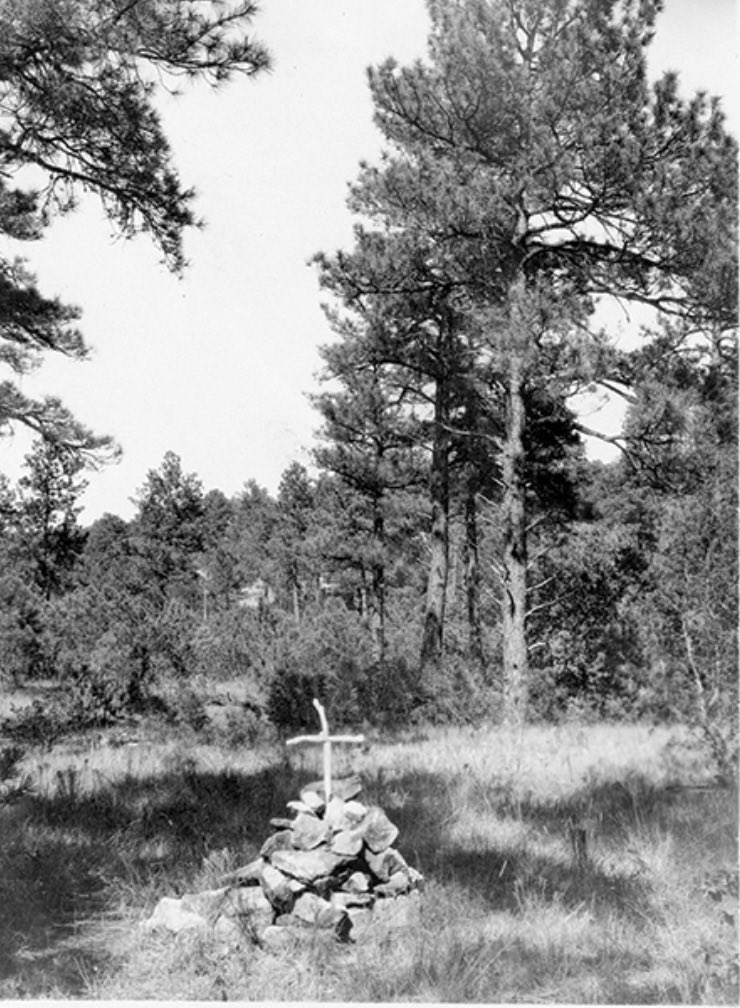
This murder galvanized Turnstall’s supporters, including young gunman Billy the Kid who had worked for Turnstall and viewed him as a mentor. Billy swore revenge. The anti-Murphy Dolan side formed a group called the Regulators who pursued vigilante justice against those they blamed for Turnstall’s death. The conflict involved revenge killings, ambushes and shootings and estimates suggest around 19-20 were killed overall though the exact toll varied amid the chaos. The conflict ended with the climactic Battle of Lincoln in July 1878, a multi-day siege where Alexander McSween’s (a lawyer and business partner of Turnstall) house was burned and McSween himself was killed along with several others. Billy the Kid escaped and was eventually killed by Pat Garrett in 1881. The picture is of a stack of rocks and a cross placed by two of Turnstall’s nephews placed at the location of the of the killing 39 years after the event.
The Death of Geronimo
Geronimo or Goyahkla “the one who yawns” was born on June 16, 1829 and was a prominent Bedonkohe Apache leader and medicine man who became a legendary figure for his fierce, decades long resistance against Mexican and U.S. forces in the Southwest. Geronimo first married at the age of 17 and had a total of 9 wives.
Geronimo was driven by a desire to take revenge for the murder of his family by Mexican soldiers and accumulated a record of brutality during the time period of 1850 to 1886 that was unmatched by any of his contemporaries. The loss of his family led Geronimo to hate all Mexicans for the rest of his life; he and his followers would frequently attack and kill any group of Mexicans that they encountered. Throughout Geronimo’s adult life his antipathy towards, suspicion of and dislike for Mexicans was demonstrably greater than for Americans.
The Apache people were in awe of Geronimo's powers, which he demonstrated to them on a series of occasions. These powers indicated to other Apaches that Geronimo had supernatural gifts that he could use for good or ill. In eyewitness accounts by other Apaches, Geronimo was able to become aware of distant events as they happened, and he was able to anticipate future events. He also demonstrated powers to heal other Apaches.
In February 1909, Geronimo was thrown from his horse while riding home and lay in the cold all night until a friend found him extremely ill. He died of pneumonia on February 17, 1909, as a prisoner of the United States at Fort Sill. On his deathbed, he confessed to his nephew that he regretted his decision to surrender. He had escaped from captivity three times and became a tourist attraction for approximately the last 23 years of his life appearing at sideshows, major expositions, wild west shows and a presidential inaugural parade.