Nem tudo o que parece é.
A insuficiência cardíaca acontece quando o coração deixa de conseguir bombear o sangue de forma adequada para o corpo.
Pode desenvolver-se de forma discreta e passar despercebida durante muito tempo.
Em caso de dúvida, fala com o teu médico.
Reconhecer hoje é proteger o amanhã. 🫀
Sabe mais em https://t.co/oEKdUDjqGa
#MantémOTeuCoraçãoAceso #InsuficiênciaCardíaca #HeartFailureAwarenessDays #HFA_ESC @escardio@HFA_President
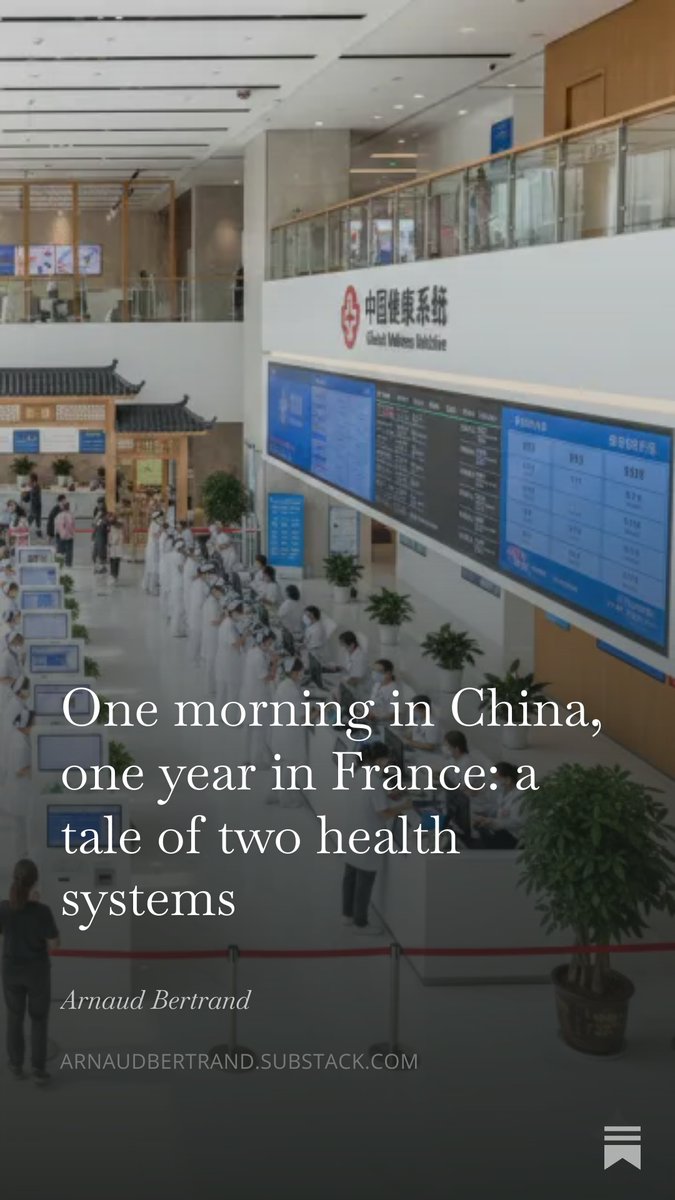
I've been wanting to write this for a while: an article on the key characteristics of the Chinese health system, as a patient.
It's something that I - perhaps unfortunately - have come to have a lot of experience with in my eight years in China.
I've been to the doctor as a patient dozens of times. My wife delivered our first daughter in a Chinese hospital, and had cancer surgery in Shanghai. My younger daughter - who once completely severed her thumb in an unfortunate accident in rural Gansu - had emergency surgery in a small clinic there (her thumb is fine now!). We spent the entire covid episode in China. And, to this day, I still go back to China every year to do my routine health tests or the occasional procedure (like a thyroid biopsy in Harbin last year).
In other words, when it comes to the Chinese health system, I've seen a lot.
What's fascinating about the Chinese health system, and that's true in general about many things in China, is that it never inherited Western dogma about how things were supposed to work, it's completely unconstrained by what everyone else has decided is "normal".
And, as a result, you end up with things that would simply sound impossible to any Western patient: a consultation with the head cardiologist of one of Shanghai's best hospitals for less than $10, blood test results in under 30 minutes, and a system where you can walk in, see three specialists and walk out with a diagnosis and your medicine - all before noon.
As I argue in the article that's all enabled by 3 characteristics that sound super unorthodox:
1) extremely short consultation times, less than 5 minutes
2) no GP gatekeepers (you go straight to see specialists)
3) systematic testing for every patient, even if you just have a cold
Each one sounds wrong. And in fact when I describe them to doctor friends in the West they immediately explain to me why that can't possibly work, and how their own system is far superior.
Except that it does work, I checked the numbers (on top of my personal experience): the Chinese system handles close to 10 billion total outpatient visits a year (https://t.co/b1xd45O73F), or about 7 visits per person per year on average, and the average wait time is only about 18 minutes (https://t.co/S3At5DtbJP).
Contrast this with France, my country, where people already go to the doctor A LOT, but still less than in China: only 5.5 visits per person per year (https://t.co/sk1kQt59tK). And the French system can't even handle this lower volume: when you can see a specialist straight away in China - you don't even need to make an appointment in advance - you need to wait months to see one in France (50 days on average for a cardiologist, for instance: https://t.co/ZKZmhzoFFO).
I've personally managed to see 3 specialists AND do all related tests AND get the test results AND get diagnoses AND buy the medicine to cure me - all in the space of a morning at a hospital in Shanghai. That would have undoubtedly taken me a whole year in the French system.
My purpose here is not to argue that the West should replicate the Chinese health system wholesale, but to ask an honest question: what if some of the things we take for granted about healthcare aren't nearly as inevitable as we think? Is it completely unthinkable that we've developed some dogmas that are costing us - in money, in time, and occasionally in lives?
That's the whole point of my article: describing a health system built from first principles by people who never assumed we in the West knew better - up to you to decide if they have a point.
Enjoy the read here: https://t.co/cNXNmo195l
@antix_in You create advanced digital tools but yet are lagging on solving something that was long planned. Is it incompetence or just scamming clients?
@DTransferencias Preferia que os desafios fossem “ao encontro de” indo “de encontro a” receio que seja um mau prenúncio para a época que se avizinha. Para isso e para quem “traduziu” as declarações…
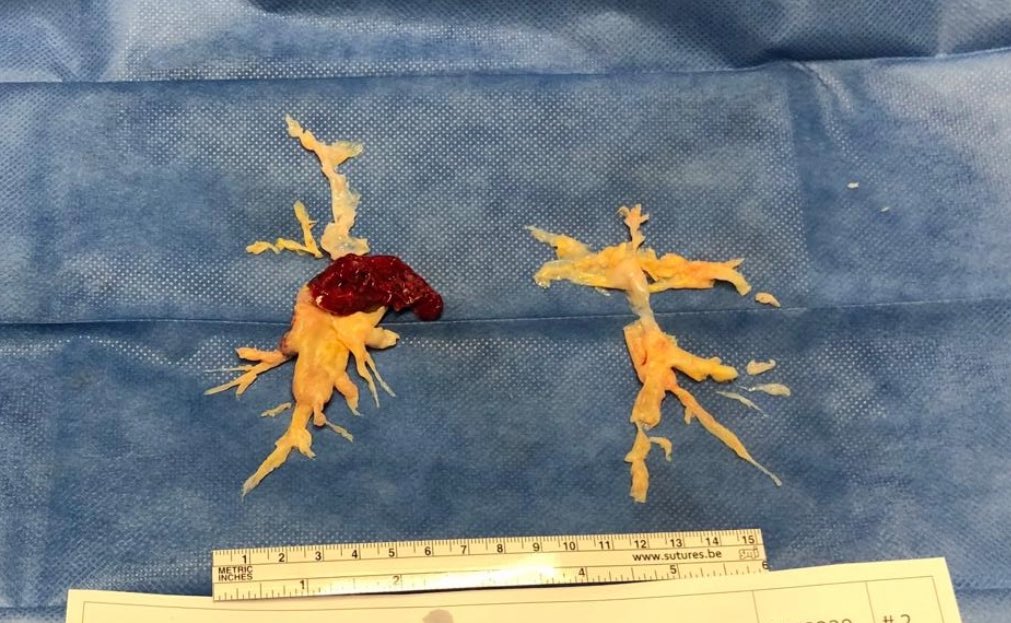
Thrilled to announce the successful completion of the first 3 pulmonary endarterectomies (PTE) at @ulssanta_maria. This significant milestone marks the beginning of our PTE Program, a true 🫀team effort proctored by Dr David Jenkins from the Royal Papworth Hospital. @CCULisboa
Será que já acabou de numerar os anexos?
(Créditos do caro Mário Pinto, que está a ver se consegue mais 0,0034 pontos em publicações online de 4 quartil)
Foi com enorme prazer que participei no debate sobre Inteligência Artificial e Medicina, no novo podcast de Francisco Pinto Balsemão, no Expresso. @medicina_lisboa @spcardio @istecnico @arlindooliveira @fjpinto1960 https://t.co/KeYu23yPta
@mruiandre Creio que tens que fazer uma revisão do conceito de populismo. Se disseres ignorância (mesmo q corrigida) estás certo. Ele referiu duas empresas de mais 1 área que os governos onde esteve ajudaram a afundar. Para populismo sugiro a consulta dos perfis de deputados do PS aqui no X
@vlobo35 Ou são ignorantes ou até sabem mas adoram espalhar desinformação para desprestigiar uma classe profissional e arranjar um bode expiatório. Em ambos os casos é muito revelador do nível deplorável a que chega um representante da nação.
@LinaValadares@zecarlosbarbosa Estava a demorar aparecer um dos bots habituais para pronunciar uma das alarvidades da praxe. Mas desengane-se se acha que lhe vou dar troco
@jadrcarlos @zecarlosbarbosa O único motivo de risada era se o ex-bastonário viesse apoiar o partido que delapidou o SNS nos últimos anos. Quando for a um hospital do SNS ser tratado só por tarefeiros de qualidade duvidosa de uma empresa detida por um seu amigo do PS, se calhar não vai achar tanta piada 🤡
@zecarlosbarbosa Mas como gosta de fatos “públicos”, leva este de graça- este ano havia o maior número de sempre de vagas (2100) para 2400 recém médicos. Mesmo assim ficaram 400 (!) vagas por preencher, algo inaudito. O PS arruinou o SNS, onde nem os internos querem exercer - é público
@zecarlosbarbosa Barreiras à criação de cursos privados de Medicina de qualidade muito questionável, à semelhança do que aconteceu em outras áreas do conhecimento em “faculdades” privadas.