One of the most common questions I get when describing school choice is "I support parents having a choice, but what about the public schools?"
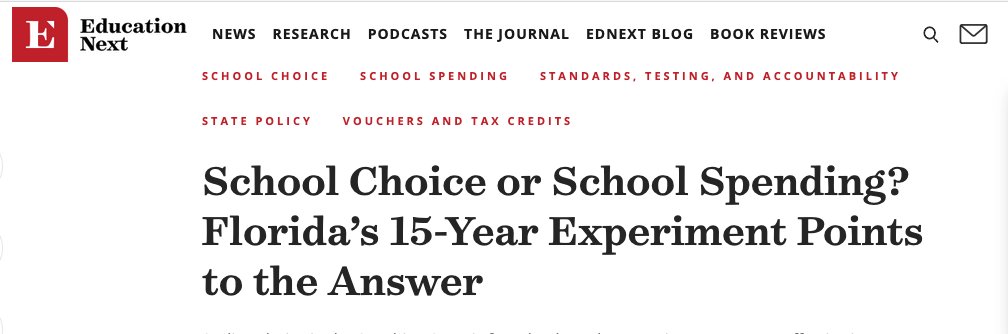
Excited to share a new study out today that examines these (potentially) competing policy alternatives directly:
Does funding school choice harm public schools by taking away needed funding?
Or
Does funding school choice create competitive accountability which also benefits public school students?
I've been thinking through this work for the last few years and am grateful to @EducationNext for publishing my piece based on the study.
Here's what I found:
@leo3linbeck@MichaelPetrilli@MargueriteRoza@deborahgist I'm not anti-accountability, but at least the SGOs will have to pass an audit! Large swaths of the fisc struggle with that one 😅
A couple key differences: contributions are voluntary and there will be 1000s of SGOs to choose from. I venture SGOs will care about donor retention
@SchlFinance101 Very cool choropleths. Isn't using unadjusted SEDA data for outcomes misleading in this context?
A low-spending MS (for example) has some of the highest scores in country after adjusting for demographics. True for several other below average spending states in deep south.
@alexanderrusso I’d encourage @The74 to do a little more to screen for poorly written AI articles like this - it’s a great publication and I’d hate to see it dominated by slop like this
I know pangram isn’t perfect, but this one is fairly obvious even without
Interested to see these data - will caution everyone that this reporting is based on a public records request by the journalist.
The TN pilot ESA has historically had its averages dragged down by the substantial # of kids using it to attend virtual schools.
Unless you’d like us to evaluate the performance of charters in your state by how well the virtual charters are doing, I would withhold judgement here until we know more!
@Dale_Chu@MichaelPetrilli
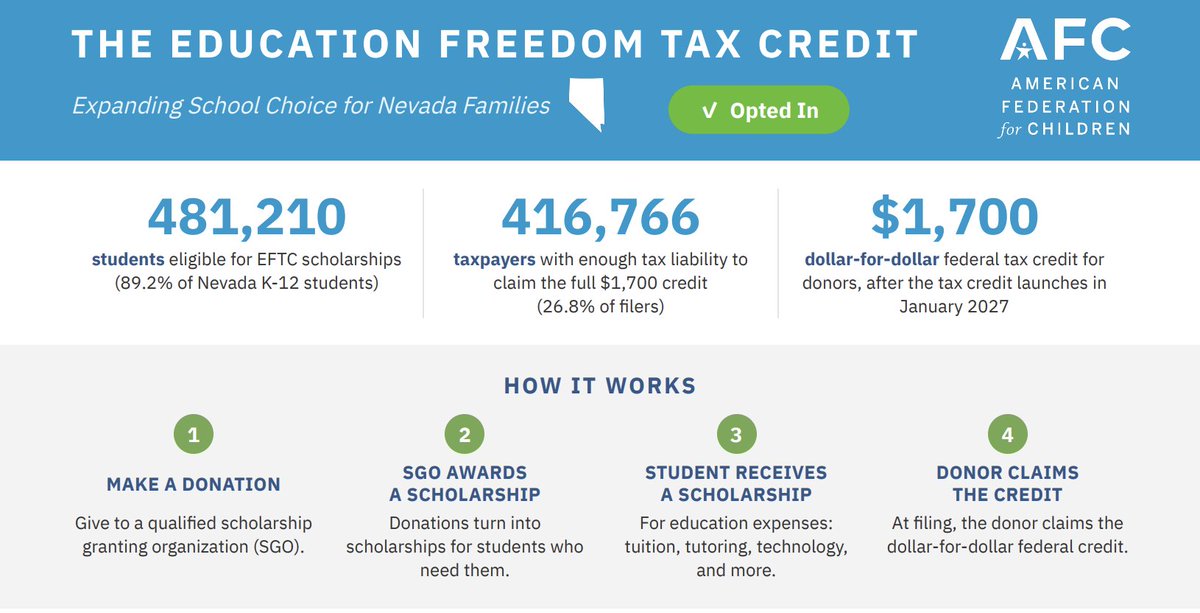
This program can help all Nevada students, whether they attend public, charter, or private schools. More educational opportunities and resources for kids, regardless of where they go to school.
It’s a win-win for Nevada families. 🇺🇸
https://t.co/vMXkB0EiSa
Late to the party, but I review No Adult Left Behind by @vkoganpolisci for the Journal of School Choice. "Kogan’s book is outstanding, a must-read for any education researcher and well worth assigning for a politics of education policy class." https://t.co/ojSc01mPfR
They don't, but they lose their teeth when there is no substance to them. We need the substance in place to defend this program to the public and to legislators.
Why hand the other side a loaded gun and hope the bullet misses? If and when it hits, whether 3% fewer families participate due to a testing requirement (and that may be generous) will be completely moot when the program is cut by 50,000+ students.
For anyone following the ESA ballot initiative fight in Arizona, here is some excellent reporting on what our team at the American Federation for Children accomplished in the last six months. Despite opposition from some friends and many foes, AFC's investments proved instrumental to defeating the teacher union's attacks on ESA families in Arizona. If it were not for @Tommy_USA's decision to fight the $7 million in spending from the NEA, ESAs would face an existential threat this November.
The union petition was a wolf in sheep's clothing - it pretended to care about misspending on ineligible ESA expenses (which has fraud rates that are already at very low levels vs. other gov programs) and used a handful of outlandish expenses to tarnish the program's public perception.
However, if you actually read the SOS/ AEA initiative closely, it did little to nothing to address issues with expense verification. The main targets were families in brick and mortar private schools, who in large part use their ESA's for tuition payments, not other educational expenses (which were the focus of SOS's PR campaign against the program).
Buried in the text were extreme new regulations on private school personnel policies and an incredibly broad new definition of "ESA Monies" that would sweep ALL private schools that accept state funding of any kind (not just ESAs) into the new regulatory regime this initiative created. On top of those (and others), any changes would be protected for five years from further legislative change / adjustment.
We helped pass this program in 2011 when it became one of the most innovative new policies in the country to serve children with disabilities who needed options and flexibility for their education. Today, the ESA program serves over 100,000 students. Now that we've reached this incredible scale, we have a responsibility to ESA parents to improve and protect the program. We should not be shy about standing for academic and administrative excellence.
If you poll Arizona voters, less than 10% believe this program is working as-is, despite widespread support for school choice more generally. If we fail to make needed, common-sense updates to this program, the unions will be back - these attacks are not going away.
Subjecting any updates or improvements to ideological purity tests or notions of how things have always been done plays right into hands of activist groups like SOS that want nothing more than to destroy this incredible program. This should be a wake up call for everyone who cares about ESAs both in Arizona and across the country. We owe it to the families in these programs to support real reform and sustain educational freedom for the next generation.
The NEA did in fact spend $7m on a ballot initiative and then abandoned it. You are correct that they have a lot of money, but the demands on that money greatly exceed the supply.
Likewise the local donors noted the 435 Congressional races, the possible control of the US Senate, Gov Hobbs re-election etc. and declined to fund a campaign. Wisely.
Matt, you know that several members of our team live in Arizona and that we've had a locally based AZ team for decades. I am not the arbiter of insider Arizona information for AFC (for good reason!), though I can understand why you might not trust what I have relayed here. Much of what I have argued is public information at this point (including Hoffman's tweets above).
The parochial wisdom of some in the Love Your Own Ideas coalition has led you astray. This a primary area of our work nationally and our political team (not me) is one of the best in the country.
Do you honestly attribute to me the belief that the purpose of adding a testing requirement is to get critics / unions on board??
I should be granted a bit more charity than that 😅 Clearly not the point.
What’s your evidence that a nationally norm referenced testing requirement lowers participation rates for families? By how much? Matt’s paper is about likelihood for school leaders to participate, not actual participation. School leaders are one decision maker in participation decisions but often it’s much more influenced by the school board / funders / the network they’re a part of.
I agree - it's a serious problem!
More people is a partial fix but there are structural issues with the whole expense verification system that more people will not make a dent in. Nearly every part of an authorizing statute for a government program are rules on the bounds of how things are to be understood and run.
Some rules can align incentives and lead to a well implemented program and others can leave too much room for error, inefficiencies, or bad actors who seek to take advantage of or harm the program. If a program is doing something great for society, we should want publicly accessible information on that so that we can tell the public, defend the program politically, and continue to grow it over time.
I want to make the ESA program extremely easy for families to use and have access to information to defend the program from unjustified attacks. If done well, these changes could actually result in many fewer regulations! Unfortunately, the Arizona ESA is not living up to either of those standards currently and we have to be willing to confront that.