Indian Cattle tells an unspoken story of Out of India migration🔥
Why? Because cattle cannot just walk outside of India and go all over these places!
It needs Indian cattle herders, real people to move out of India with these cattle!
This is creating nightmare in the Aryan Invasion Theory camp!
Indian humped cattle – the indicine lineage (Bos indicus) – were domesticated in the Indus–Sarasvati region around 8000–7000 BCE, with early evidence from Neolithic Mehrgarh.
From this core zone, they spread steadily across the subcontinent between 7000–4000 BCE, becoming integral to early agro-pastoral economies.
By 3000–2000 BCE, indicine cattle moved eastward into Southeast Asia, contributing to the formation of regional zebu populations, and by 2000–1500 BCE they had entered parts of China, where they interacted with local taurine lineages.
A further major expansion carried Indian indicine cattle westward into Africa beginning around 2000 BCE, with multiple waves continuing into the first millennium CE; this movement profoundly reshaped East African cattle genetics, producing the taurine–indicine admixture visible today.
Thus, over several millennia, cattle domesticated in northwest India radiated outward across Asia and Africa, leaving a durable genetic and economic footprint that still defines tropical cattle populations.
Taurine cattle – the humpless lineage (Bos taurus) – were first domesticated in the Near East around 10,500–10,000 BCE from local aurochs populations in the Fertile Crescent.
They expanded with Neolithic farming communities into southeastern Europe by 7000–6000 BCE, and across most of Europe over the next millennium.
A southern dispersal carried taurine cattle into North Africa by 6000–5000 BCE, and progressively into Sub-Saharan Africa between 4000–2000 BCE, where they later encountered and hybridised with incoming indicine cattle.
Eastward movements brought taurine herds into Central Asia by 5000–3000 BCE, contributing to later Eurasian pastoral systems.
No evidence of any of them entering India! This agains weakens Aryan Invasion Theory or it's weakened version Aryan Migration Theory!
All silly political games played with human genetics in scholarship arena now checkmated by cow genetics!
Dennis Ritchie created C in the early 1970s without Google, Stack Overflow, GitHub, or any AI ( Claude, Cursor, Codex) assistant.
- No VC funding.
- No viral launch.
- No TED talk.
- Just two engineers at Bell Labs. A terminal. And a problem to solve.
He built a language that fit in kilobytes.
50 years later, it runs everything.
Linux kernel. Windows. macOS.
Every iPhone. Every Android.
NASA’s deep space probes.
The International Space Station.
> Python borrowed from it.
> Java borrowed from it.
> JavaScript borrowed from it.
If you have ever written a single line of code in any language, you did it in Dennis Ritchie’s shadow.
He died in 2011.
The same week as Steve Jobs.
Jobs got the front pages.
Ritchie got silence.
This Legend deserves to be celebrated.
In 1985, global software exports from India were an exercise in absurdity. If an engineer in Bangalore wrote code for an American client, they could not just hit Deploy.
They printed code onto magnetic computer tapes, boxed them up, drove to the airport, flew them 9,000 miles across the Atlantic, and waited weeks to find out if the build compiled.
Texas Instruments (TI) wanted to change everything. They wanted to build a direct pipeline between a newly rented facility at Sona Towers on Bangalore’s Miller's Road and their global headquarters in Dallas, Texas.
To do it, they needed a dedicated 64 kbps (YES, 64 kbps) satellite link.....
In 1985, 64 kbps was space-age. But the Indian govt did not even have a mechanism to allow a private, foreign company to own and operate international telecommunications equipment. International comms were strictly state-controlled.
Bureaucrats panicked. Ministries demanded security clearances, suspecting a massive dish pointing into the sky could be an espionage tool......
For months, Texas Instruments fought a war of attrition through Indian customs. When the giant dish finally cleared the port of Madras and reached Bangalore, the team faced another absurd reality: 1980s Bangalore’s road infrastructure could not handle the heavy, delicate components.
The dish that would spark India's digital leap did not arrive in a high-tech transport convoy. It was strapped onto a wooden bullock cart, pulled slowly through the streets by a pair of white oxen.
Once the dish was mounted on the roof at Miller's Road, engineers flipped the switch.....
An engineer in Bangalore typed a line of code into a terminal, hit enter, and watched as data beamed directly from the rooftop dish, bounced off a satellite in geostationary orbit, and landed in Dallas.
The code was compiled and executed on a mainframe in Texas, and the terminal output flashed back onto the screen in Bangalore in realtime.
It was the first time in Indian history that physical distance was obliterated by tech. The myth that critical engineering had to be performed locally in the West collapsed overnight.
The TI experiment proved the impossible was possible. But it exposed a brutal economic wall.....
Operating a private 64 kbps satellite link was mind numbingly expensive. In the late 1980s, a single half circuit cost ₹45 lakh per year in licensing and bandwidth fees alone, not including the millions needed for the physical earth station.
Only multi billion dollar Western giants could afford to build private pipes. Early Indian startups, the precursors to Infosys, TCS, and Wipro were completely locked out.
The dream of Indian IT was about to become an exclusive playground for foreign conglomerates.....
And then enters N. Vittal into the scene, the legendary Secretary of the Department of Electronics....
Vittal looked at the absurd cost of TI’s dish and realized something fundamental: Why force every small software shop to buy its own dish when the govt can build shared digital highways?
In 1991, amidst a crippling balance of payments crisis where India had to airlift its gold reserves to avoid default, Vittal walked into a high stakes meeting with Finance Secretary Bimal Jalan.
India’s total software exports that year were a modest $100M.
Jalan asked Vittal: "If I approve your wild demands: zero import duties on hardware, single-window clearances, and shared satellite gateways...what export numbers will you guarantee for next year?"
Vittal bluffed: "$400M".......
When Vittal announced the $400M target at a NASSCOM event later that week, the room filled with Indian IT founders dropped into a dead, terrified silence. Narayana Murthy and other industry leaders thought Vittal had signed their death warrants.
Vittal simply smiled and launched Software Technology Parks of India (STPI)......
STPI shattered every operational bottleneck holding back Indian talent:
- Instead of forcing companies to spend ₹45 lakh on private links, STPI built massive shared satellite antennas. Small startups could plug straight into the high-speed data pipe for a fraction of the cost.
- Vittal designated STPI zones as dutyfree import areas, shielding young coders from dozens of harassing tax inspectors and customs agents.
- Companies did not need to build in remote govt zones; they could set up anywhere talent existed.
Within years, the horse flew. The $400M target was crushed.....
What started on the back of a wooden bullock cart carrying a single satellite dish down Miller's Road became a multi billion dollar juggernaut that rewrote global tech history. 🙏🙏
Mesopotamia was never the cradle of civilisation. India was.
I spent forty years in international shipping, not academia. When I began researching the history of maritime trade, I had no orthodoxy to defend. I followed the evidence, and it kept arriving in the same place: the Indian subcontinent.
Nineteenth century archaeologists dug in Mesopotamia because the climate preserved artefacts, the biblical sources pointed them there, and the Ottomans allowed the excavations. That is the entire basis for the myth of Mesopotamia as "the cradle of civilisation."
Nobody applied the same rigour to India. Mohenjo-daro was not discovered until 1922. By then the narrative had already hardened.
What was actually there was the largest civilisation of the ancient world. Three hundred cities. Fifty thousand people in each, by 2600 BC. Two thirds of them stood on the banks of the Sarasvati, the central and greatest of the seven rivers described in the Rig Veda, flowing down from the Himalayas before the river vanished entirely by 1900 BC. The Vedic kings claimed territory stretching "sea to sea," from Afghanistan to Maharashtra, some 1.5 million square miles, against Egypt's 13,000. A dock at Lothal built to handle thirty ships of sixty tons, unmatched in Europe for four thousand years. When it was first excavated, it was recorded as a bathing pool.
When the scale became impossible to dismiss, the theory was not corrected. It was replaced with a story of pale-skinned nomads from the steppe who supposedly arrived around 1500 BC and brought civilisation with them. There is no evidence. The chronology doesn't work. The Vedas describe no invasion.
In 2019 a Harvard-led genetic study revived the claim, and the press reported it as confirmation. It was not. The same study found the builders of these cities were indigenous. The Sarasvati river that the Rig Veda described had already dried up before these newcomers arrived. What the study also found is that a small group of men, arriving after the Sarasvati had already dried up, interbred with the existing population and left a genetic signature. That is all.
So, where they chose to dig was mostly an accident of climate and access. The Aryan invasion theory was constructed because an Indian civilisation that owed nothing to Caucasians was a fact the late nineteenth century could not accommodate.
Link to full Substack essay with sources in the comments below.
I thought of telling this story because we were having a conversation around luck, timing, and how sometimes one single strike of luck is enough to change everything.
And when I thought about it, I started looking back at how my own journey actually began.
When I started trading, I never really imagined that trading could change my entire life. I never thought it could take me anywhere close to a crore. At that point, we were starting with a few thousands, dreaming of maybe making a few lakhs over two or three years. Maybe, if everything went well, reaching ₹50 lakh someday felt like a big dream.
But the first few years were nothing like that.
From around 2013, I was trying, learning, experimenting, and honestly, almost losing everything I put in. At the same time, I had also started writing a stock market blog. Hardly anyone used to read it. Maybe 10 or 15 page views would come in a day, and out of that, I probably contributed 3 or 4 views myself.
But I still wrote.
Whether people read it or not, I kept writing. From 2014 to almost 2018 or 2019, I made sure I did not miss even a single day. At that time, it felt like I was doing it just for passion, just for fun, just because I genuinely liked markets. There was no big plan behind it. There was no guarantee that it would ever give me anything back.
Then, in 2017, something changed.
That was when I read about options properly through Zerodha Varsity. I think it was one of those options modules, maybe for professional traders. That opened up a completely different world for me. Around the same time, I entered option selling.
And that timing turned out to be unbelievably lucky.
Just when I started option selling, the market environment became extremely favourable. High leverage was available. Option selling was not as crowded as it is today. Very few people around me even understood the stock market, forget option selling. And suddenly, here I was, someone who had already been writing about markets for years, talking about options, experimenting, trading, and showing people what I was doing.
I had proof that I had been serious about this from the beginning. That blog, those years of writing, those years of learning, all of it built trust.
And by then, I had also joined Christ. That gave me exposure, a network, and access to people. I was able to show others what I was doing. Around me, almost nobody had deep knowledge of markets, and because I had already been consistently sharing and writing, people started trusting me.
From 2017 to 2020, the years were almost unreal.
Option selling was much easier compared to today. The leverage was huge. We could sell large quantities with relatively low capital. And those few years completely changed everything. I had started with around a few lakhs of personal capital, and by the end of 2020, things had scaled to a level I could not have imagined when I first started.
We started trading for others. More people started trusting us. More money started coming in. And the entire journey began to compound.
Later, that same story helped me on YouTube as well. One video almost touched a million views, and we gained close to 100K subscribers almost overnight.
(1/2)
She gave up her job, her marriage,
and her dreams... just to become a mother to her brother ♥️🙏
एक बहन का प्यार... जो माँ से रत्ती भर भी कम नहीं होता। ❤️
51 साल की शीतल... और 48 साल का उनका भाई अश्विन...
एक ऐसा अटूट रिश्ता, जिसे देखकर आँखें भर आएँगी। 🥹
जब सिर से माँ-बाप का साया उठा,
तो इस बहन ने एक पल भी अपने बारे में नहीं सोचा।
उसने अपने सुनहरे सपने छोड़ दिए...
अपनी अच्छी-खासी नौकरी कुर्बान कर दी...
और कभी शादी न करने का फैसला कर लिया...
सिर्फ इसलिए, ताकि उसका भाई कभी खुद को अकेला न समझे।
वो बहन से, अपने भाई की माँ बन गई।
आज के दौर में जहाँ लोग अपनों को भूल जाते हैं,
वहाँ शीतल ने अपना पूरा जीवन भाई की सेवा में समर्पित कर दिया।
यह महज़ एक फर्ज़ नहीं...
यह वो निस्वार्थ मोहब्बत है, जो इस दुनिया को खूबसूरत बनाती है। 🌸
सलाम है ऐसी बहन के त्याग और उसकी ममता को। 🙏✨
Indian Junior women 4x400m relay team not only made 3 in a row of winning Gold but also set new championship record in the 22nd Asian U20 Athletics Championship 2026 at Hong Kong . Indian team clocked 3:38.07s.
It is a matter of immense pride that a boy from Basavanagudi's NR Colony has risen to become the Chief of Naval Staff of India.
My best wishes to Admiral Krishna Swaminathan (PVSM, AVSM, VSM) as he takes on this prestigious responsibility of leading the Indian Navy and safeguarding India’s maritime interests.
🚨 POOJA JUST BROKE U20 NATIONAL RECORD!
- India's Pooja has sealed the Gold Medal with 1.91m High Jump at Asian U20 C'ship 🏅🔥
Just 0.02m short of breaking the National Record too, Can Pooja do the incredible???
AND POOJA CREATES HISTORY BY BREAKING 14 YEAR OLD NATIONAL RECORD! 🤯💥
India's Pooja Singh cleared 1.93m & won the Gold Medal for India at Asian U20 Athletics C'ship 🏅
She also breached the CWG Qualification Mark
THIS IS SO HUGE FOLKS! 🔥🔥🔥🔥🔥🔥🔥
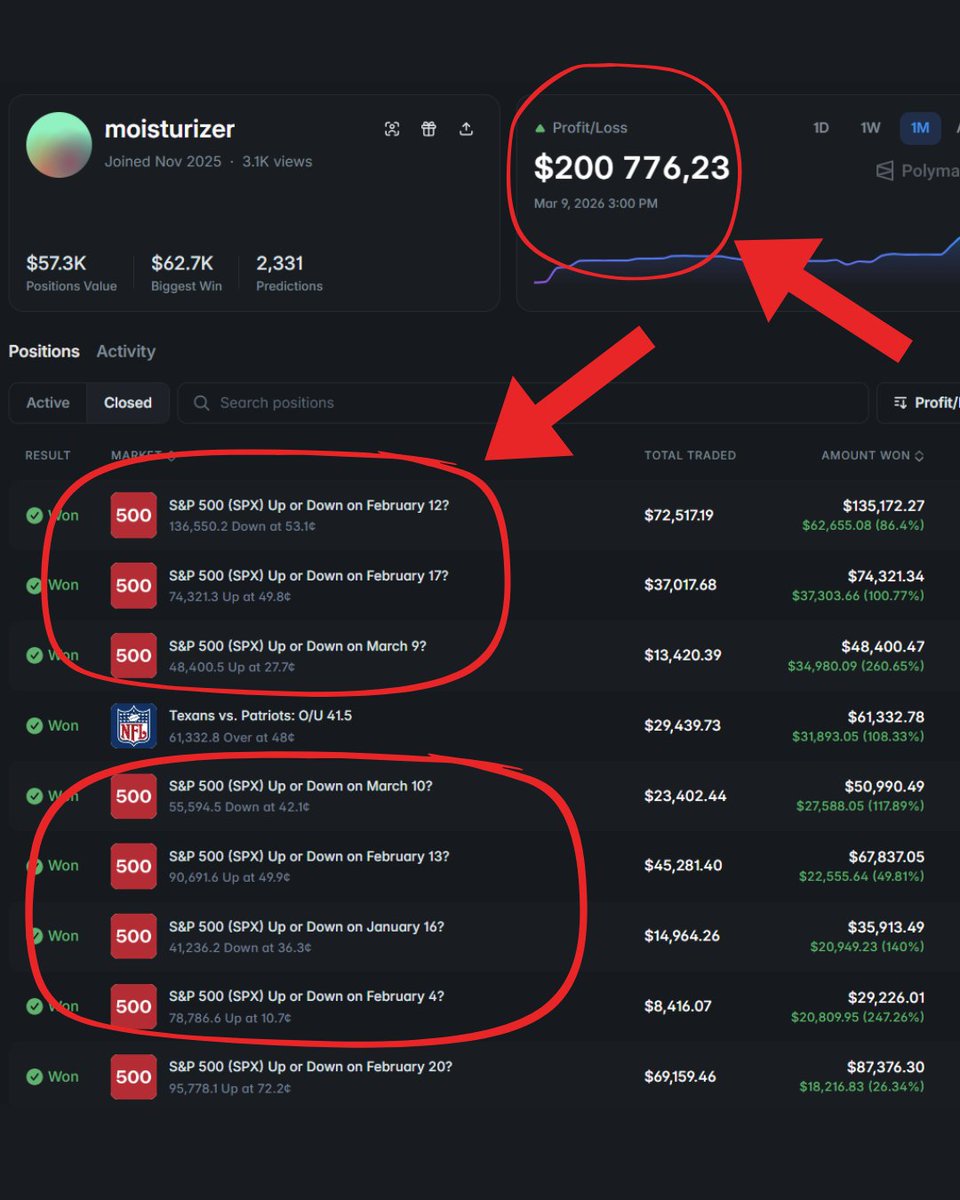
Made $100K+ by building a simulation that predicts SPX price movements before they happen.
Fed 40+ years of SPX trading history into MiroFish (18k GitHub stars) and let AI reverse engineer every pattern. Now runs dozens of profitable trades.
I have the exact step-by-step guide to build your own SPX prediction system.
Giving it free for 24 hours.
To get it:
1. Comment "Money"
2. Like and Retweet
3. Follow me @codewithimanshu (so I can DM you)
What you will learn:
✅ How to pull live SPX data with Alpha Vantage and Quandl
✅ Building a Python data pipeline that runs 24/7
✅ Feature engineering (RSI, MACD, custom signals)
✅ Loading historical data into MiroFish simulator
✅ Multi-agent setup (macro strategist, earnings analyst, sentiment analyst)
✅ Running probability forecasts across market scenarios
✅ Trading logic for ES futures and SPY ETF
✅ Backtesting your model on real market history
This is not prediction. This is loading decades of market data and letting AI find the patterns humans missed.
Most traders guess. This system runs simulations.
Comment "Money" and I will send you everything.
Must Follow me @codewithimanshu to get the DM.
I spent weeks testing Claude prompts, workflows, and automation systems.
The result?
A practical guide that shows how to turn Claude into a real productivity and money engine.
Introducing:
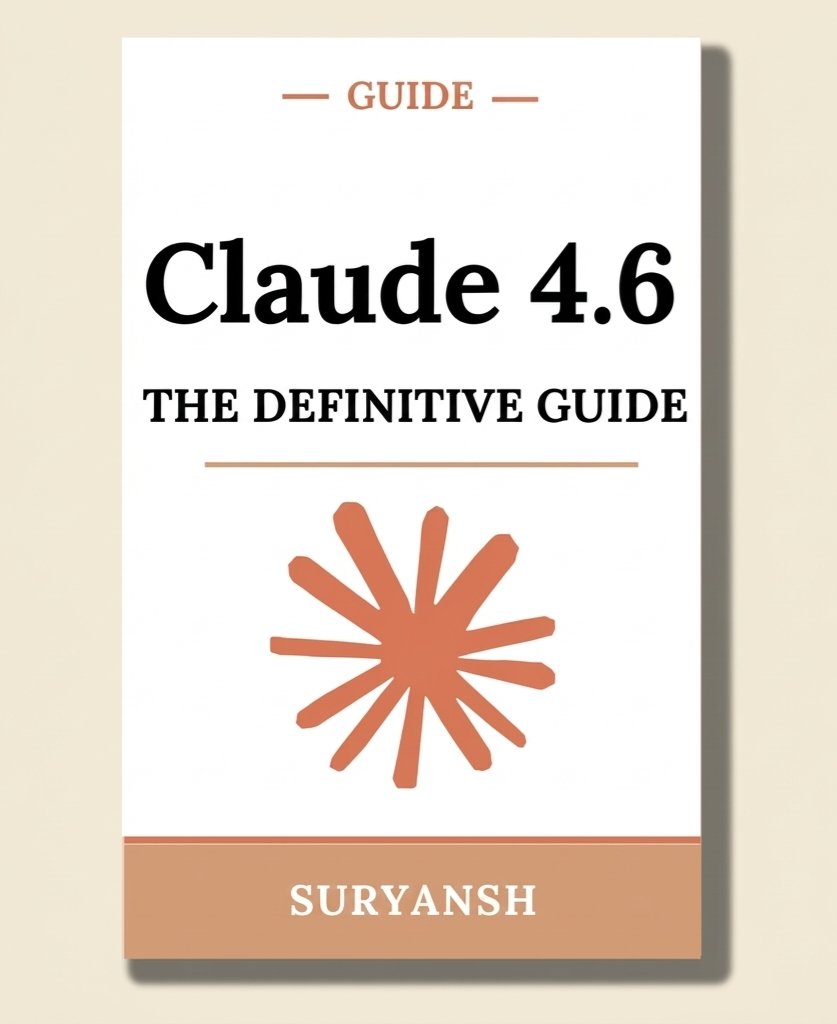
Claude 4.6 — The Definitive Guide
Inside: • Best prompts for real work
• Claude Code explained
• AI workflows that save hours
• Monetization strategies
• Skill-building frameworks
And yes — I'm giving it away FREE for 24 hours.
To receive it:
1️⃣ Like
2️⃣ Comment “4.6”
3️⃣ Follow me so I can DM you