Survey deadline extended to 5 Jan. All entries can enter the prize draw! Share your experiences and directly inform our recommendations to policy makers.
Newly published research shows that taking calls & answering emails during “non-work” time can have negative consequences for people. When people use work-related technology in the evening (even by choice) they struggle to mentally switch off from work, which negatively affects their wellbeing both that night & the next morning.
Evening work-related technology use depletes people’s “self-regulatory resources” - the mental energy needed to redirect attention away from work. Without these resources, people cannot mentally disengage from work, which impairs their ability to repair their mood & maintain emotional wellbeing. It creates measurable reductions in positive affect (feeling enthusiastic, relaxed) & increases in negative affect (feeling anxious, dejected). This negative effect carries over to the next day, creating a downward spiral of loss of resources. However, two factors can break this cycle: feeling in control of how evening time is spent & getting good quality sleep.
The authors describe a "double-edged sword" situation - evening technology use may help with work goals in the short term but comes at a cost to recovery & ongoing wellbeing.
Actions for leaders based on this research:
1) Discuss how to contain the work to the working day with the team & problem solve: don't encourage "going the extra mile at night" or "always-on" behaviours.
2) Model the boundaries we expect from others: if we want people in our teams to respect their evening time, demonstrate it ourselves by not sending late-night emails or messages. When leaders reply to emails at midnight, team members feel they should too.
2) Make our boundaries visible & talk about them openly: the research emphasises that perceived control is protective, & when leaders talk openly about their own boundaries, it helps team members feel comfortable setting their own without fear of judgment.
3) Include digital boundary training in wellbeing training: encourage people to be more deliberate about when they engage with work technology rather than checking emails out of habit.
4) Act early when we notice patterns of evening work: spot these patterns early & intervene before visible wellbeing problems emerge, enabling workplace cultures where people feel comfortable setting boundaries.
https://t.co/xUlXnWCTMr By Svenja Schlachter & colleagues, via John Whitfield.
Graphic by @_workchronicles.
Today is world mental health day. Mental health is just as important as physical health.
Take time to rest, talk, and recharge.
Caring for your mind is the strongest thing you can do.
@PDTUHDB@UHDBTrust
@SimonGibson20@jess_fearn@UHDBTrust@markhil75770073 It was great to hear about the work Jess has worked so hard to implement. She's very modest saying the team did all the work but it is definitely her leadership that has led to such positive results- proud moment for our team Thankyou @jess_fearn
@hill_karenhill3@markhil75770073@emmakimber1979@mwansamulenga03@patsafetyuhdb A privilege speaking to them this morning, a great representative of qualifying students from various universities as well- Derby, Keele, Birmingham, Northumbria, Herts, Nottingham, NTU, SHU, Leicester, apologies if I've missed any - Good luck on your journey with us at UHDB
Calling all registered nurses, midwives, nursing associates and students. 📢
Wherever you work and whatever your role, we need your help to shape a new professional strategy for nursing and midwifery in England. Share your views by 29 September. #teamCNO
https://t.co/yOXkiVwN0J
The RCN Foundation has announced the opening of education grants designed to help nurses and midwives develop their careers, gain new skills and enhance the care they give to patients.
https://t.co/C8atOLoLFM
#AlwaysLearningContinousImprovement Really proud of the team and our introduction of using continuous improvement methodology in our department First non-clinical area introducing huddles and coaching for improvement
It’s the big doctors induction day today. These absolute legends have undertaken ANTT, blood culture and hand hygiene assessments for over 250 doctors across both RDH & QHB. Well done 👏 @UHDBTrust@PDTUHDB
We currently have a part-time Band 6 Paediatric Occupational Therapist post out to advert - please share with anyone who might be interested @UHDB_Jobs@UHDBTrust@UHDBChildrens@theRCOT
https://t.co/HOwHKUTfFC
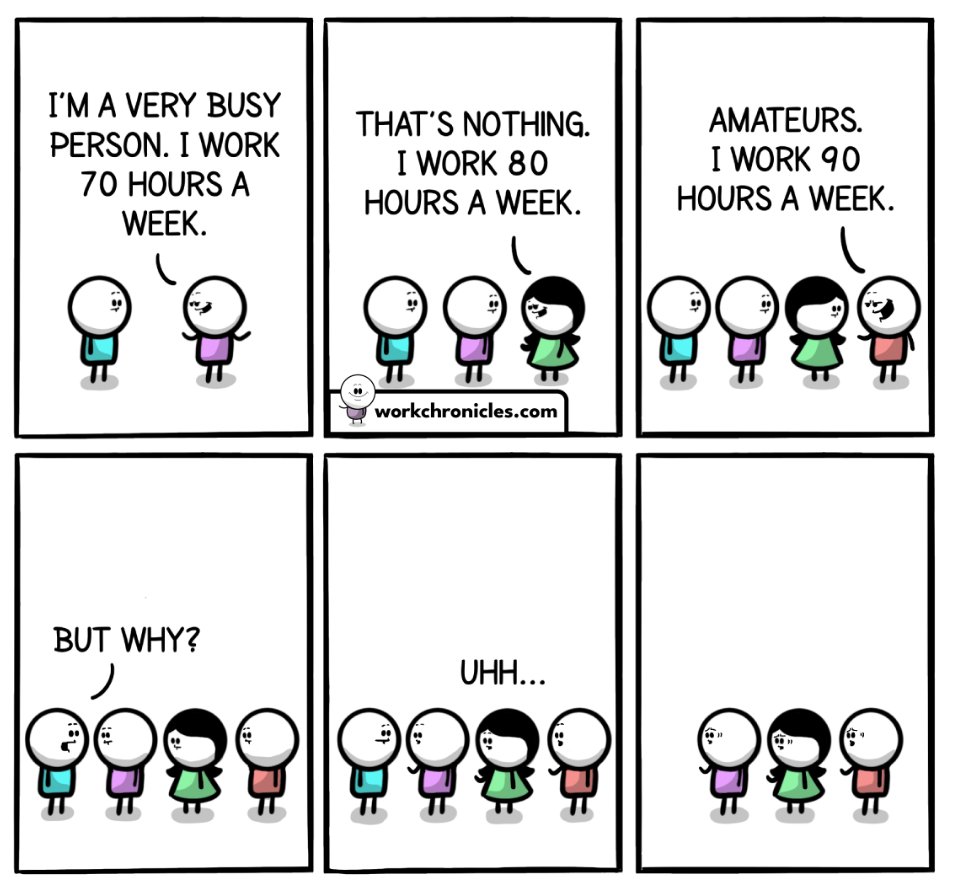
Why do so many leaders & professionals keep working at a punishing pace, even when it damages their health, well-being & relationships? And why do organisational initiatives aiming to curb extreme work hours, e.g., "no email after hours" policies, wellness initiatives - often fail?
New research suggests this isn’t about personal “workaholism” or “driven” personalities. Rather it is about people fitting with the relentless tempo of their organisations. This is underpinned by a sense of what you need to do to make career progress & cultural expectations of 24/7 availability. It creates a pace that feels impossible to clock out of, even after hours. Researchers call this an “entrainment cycle”. People come to feel that this pace is normal - even necessary. In the study, people often described the fast-paced tempo of work not as something they were forced into, but as something they craved or became “bored” without.
How organisations can break the cycle:
1) Address the tempo, not just the hours. Change how work is done, e.g., rethink project pacing, reduce artificial urgency, redesign calendars to allow for focus & reflection.
2) Be alert for warning signs - stress, disengagement, burnout early & respond before issues escalate.
3) Help people feel they have the cultural permission to pause. It's not enough to change schedules – expectations need to change. Taking breaks, disconnecting on non-work days & ignoring the inbox when on holidays should become organisational norms.
https://t.co/s3x0zaQ7ZZ. By Ioana Lupu & Shanming Liu in @HarvardBiz.
Cartoon by @_workchronicles.
@Andrews86495144@DrLKVaughan 3x8 hour shifts:
- less fatigue
- more time to learn for overlap of staff
- better breaks for refuelling
- batter handover for staff
- continuity for patients, seeing the same staff member over a number of shifts
- better child care arrangements for staff
Today, the 10 Year Health Plan for the NHS has been published, which will see us shift:
From hospital to community 🧑🧑🧒
From analogue to digital 🌐
From sickness to prevention 🛡️
Read the Plan to make the NHS fit for the future 👇 https://t.co/uQOZvRx4CH
We're looking for UK-based midwives and obstetricians for an online focus group on antenatal fetal monitoring (estimated 60-90 minutes). Please contact [email protected] if you're interested. You will need your NMC/GMC number to participate.