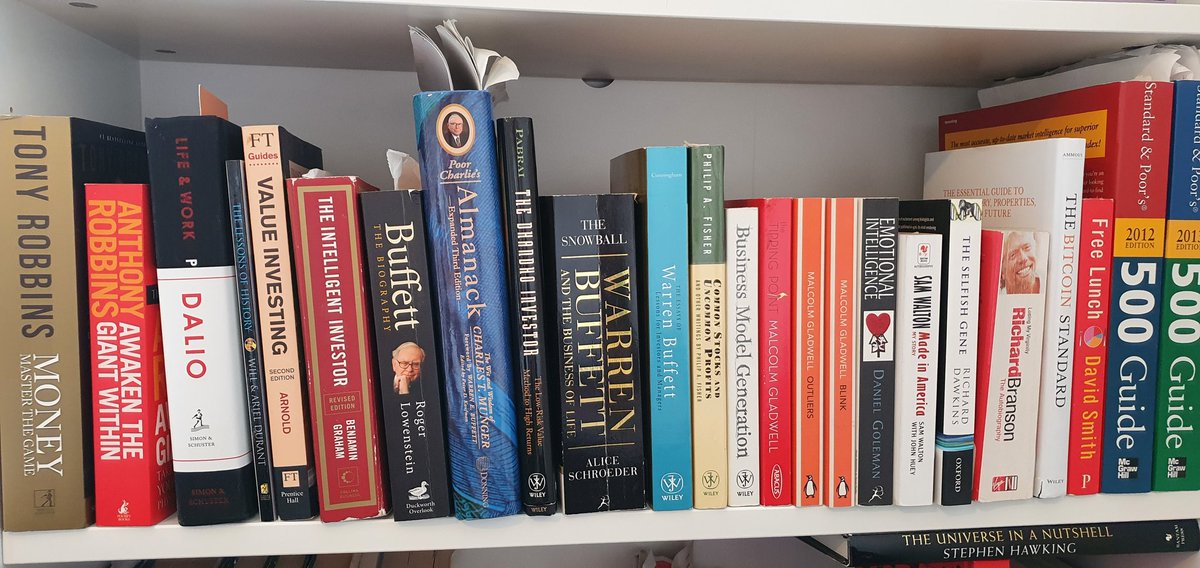
@MohnishPabrai Always continue to find priceless nuggets in your writing...a sincere thank you! Whilst sitting here at my desk also in the search for growing hidden moats...I hope you will find comfort that your other great writings reside between Mr Munger and Mr Buffett in the library.
One reason I keep coming back to @nejatian at $OPEN:
His path at Shopify is pretty damn relevant to what he’s trying to do now.
Kaz joined in 2019, worked his way through product, and became COO by 2022.
During his COO run, Shopify went from a -3% FCF margin in 2022 to 18% in 2024, while still growing revenue 26% in 2024.
Over that same stretch, $SHOP rose about 206%.
Now look at the playbook at Opendoor:
Creating a better product. Lowering costs. Layering in additional products to drive incremental revenue and profit. All creating and driving operating leverage.
Kaz hasn't only seen this movie before, he has produced it.
Now he’s trying to do it again at $OPEN.
Opendoor's homes sold just went positive year over year for the first time.
Trailing 28 days: +1.6%. Ninety days ago that same number was -52.9%.
Trailing 7 days: +19.3%.
The stock is at $3.43.
One of those 2 things is wrong. $OPEN #OpenArmy
Some news. Today, for the first time in Opendoor's history, we bought back our own stock.
Our share count is down 5%. We paid for this buyback with money borrowed at a 0% coupon and we still have hundreds of millions of dollars left to grow faster.
There are plenty of helpful details, along with a lot of legalese, in our press release and 8-K (linked below). But there are a few things I want to say directly and in plain English.
First, I *despise* dilution. On my first earnings call at Opendoor, I told you that if we issue a share, it has only one job: to make every other share worth more for our existing shareholders, not to extend runway for management. The flip side is just as simple: when our own stock is one of the best uses of capital, we should buy it back. Today, we did just that - by 5%.
Second, I run a publicly traded company. I don’t get to have feelings about the macro or the way Wall Street works. My job is to understand the rules of the game and use them to find an edge and build a better company.
One of those realities is that our stock price has lots of volatility.
People disagree - A LOT - about what Opendoor could be worth one day. Some think we're worth less. Some think we're worth dramatically more. I obviously have a view…
That disagreement isn’t just noise - it has economic value that Wall Street monetizes every single day.
Most companies would treat this as a headache, but we see it as an asset. If people are going to speculate about our future, I'd rather our shareholders get paid than anyone else. So instead of complaining about volatility, we used those dynamics to borrow $650M at a 0% coupon.
Then we turned around and used part of those proceeds to buy back our own stock. At today's prices, buying back our stock and call options was one of the best trades on the board. The rest stays on our balance sheet so we can buy more homes and grow faster.
As for dilution, we bought our stock where we thought it was cheap and pushed any future dilution far above today’s price. Not one net new Opendoor share will exist below $10.38. And if we buy back stock in the future, that floor goes higher.
But why raise now? Because the best time to raise capital is when you don’t need it. We’ve proven the business can reach ANI profitability, but profitability is just the starting point, not the finish line. And waiting could make the shares we are buying back today more expensive, and homes we could be buying don’t get bought. I’d rather move now.
Some people will call what we did today aggressive. They’re right. But being aggressive is how we fixed a company that spent years being careful. I’d make that trade again.
To our shareholders: You trusted us with your capital. Today, for the first time, Opendoor used its own capital to buy more of itself. The company is putting its money where its mouth is. Tomorrow, I will too.
After our lawyers allow, I’m personally buying $100K worth of shares. I'm all in, and I plan to keep buying.
🚨 Deutsche Bank increased its $OPEN position by 2,923%!!!
Shares held:
63,804 → 1,928,562
That’s 1.86M shares added in a single quarter, taking the position to more than 30x its previous size.
I'll riff on $CVNA a little.
Q2 was a decent quarter with some pretty interesting moving pieces. It wasn't perfect by any means, and it's disappointing not to see operating leverage show through. I think much of that is a choice they are making - keeping growth high while fixing things in parallel.
Recall that they missed Q4 2025 due to recon issues, with some facilities really falling behind the average. It took them until about late May/early June to turn the corner on those. Q1 saw some early benefit and Q2 got some more. Q3 should be the first "clean" quarter since they centralized a lot more and deployed new tools that reduce IRC variance and improve aggregate efficiency.
Growth was choppy across 1H because of this, which showed up in weekly 3P data. IRCs that were on track got ramped earlier; those that fell behind in 2H 2025 ramped later. Most are ramping pretty well now, which is why we see inventory/selection expanding now.
This is not substantiated by anything, but it feels like the dynamic of inventory growth < retail unit growth probably resulted in a ~300-500 bps headwind on retail units, all else equal. So they probably should have been in the low 40s were it not for the recon issues suffered in Q4 last year. They said so many times on the call that they are ramping and inventory will grow faster than sales. If true, inventory acceleration should drag the growth rate higher and we should see acceleration in unit sales. It's early, but this is starting to show up already. This acceleration also should come at superior unit economics given the improvements in recon.
Finance GPU was hurt by a mix effect and a timing effect in Q2. Higher prime mix = lower GoS %. Rapidly rising rates in March/April compressed GoS for loans that were seasoning on their BS. Neither is a long-term concern or a change in underlying economics on a like-for-like basis.
$CVNA's guidance philosophy is silly and obviously they are targeting ~10% above the top end, which is reasonable given the unit economics and growth expectations. They've used this silly policy since 2024.
Each Q2, the same questions come up. "Why does your guidance imply the business worsening in 2H?" Because the guidance policy is silly, plain and simple. They give a range even though the bottom end is almost impossible. Midpoint is ~2x 1H EBITDA even though they will grow units q/q in Q3 and Q4. The business has positive operating leverage and Q3 should see better GPUs, all else equal, because of the recon improvements in units produce since late May/early June.
The BS is in an interesting place. 1x net debt/EBITDA with this kind of cash generation is very strong. Ratings agencies seem intent on discounting finance-related EBITDA, so the company shifting GPU from finance to retail should help them, all else equal. They are on a path to IG which should open up the business to lots of different financing options.
They have $3.6B of inventory while using $126m of floor plan. It's absurdly conservative. I'm not sure they get proper credit for this.
Lastly, the new car initiative is really interesting and I can't wait until they share more.
NPS for Sell to Carvana is the highest in the company. Excellent prices x best experience = huge win for customers. No reputational risk to CVNA - just a great transaction. I've done it a few times - it's amazing.
New cars are similar. Best prices w/ no negotiations x best experience should = big NPS. I see an average of ~$6k off MSRP. No reputational risk on unit quality, no need for scaling production.
Both mega-NPS businesses generate nice sources of inventory, to be sold through the used business.
New car unit economics are probably ~similar to used, but the mix is different. On balance, I would guess the delta vs. used GPUs would be: Lower retail GPU, higher finance GPU (due to higher ASPs, partially offset by higher prime mix), higher other GPU (OEM incentives, higher attach rates on other products, etc.).
It will be interesting to see what else they can build on top of this platform. The network nodes should get closer and closer to end customers the bigger they get. It should improve NPS across every business, improve unit economics, and unlock new businesses and capabilities.
$OPEN week 8 acquisition number is in. 671.
All time high. Up about 6% on last week and roughly 30% above the old 517 sixteen week average.
Genuinely shocked, didn't think we'd break highs yet, but here we are, Kaz is walking the talk.
I'm jacked.
The run so far:
→ 564 → 538 → 529 → 523
→ 551 → 568 → 635 → 671
Two record weeks back to back. This isn't drift anymore, this is a business scaling.
Quick reminder before the math. These are contracts signed, not homes bought. Some fall through, the rest take a quarter or two to show up as sales. This is the pipeline filling.
The math on 671 a week (963M shares, $93M quarterly costs):
At 6% contribution margin:
→ 671 × 13 = 8,723 homes a quarter
→ × $398K = $3.47B revenue
→ × 6% = $208M contribution
→ − $93M costs = $115M a quarter
→ about $0.48 EPS annualised
→ 30x = $14.37 | 45x = $21.55 | 60x = $28.74
At 7% contribution margin:
→ 671 × 13 = 8,723 homes a quarter
→ × $398K = $3.47B revenue
→ × 7% = $243M contribution
→ − $93M costs = $150M a quarter
→ about $0.62 EPS annualised
→ 30x = $18.69 | 45x = $28.04 | 60x = $37.39
Now the part that matters more than the number itself.
This is what a business transformation looks like from the outside. A year ago Opendoor was shrinking on purpose, selling down bloated inventory and buying almost nothing. Now it's setting acquisition records into a soft housing market, on a leaner cost base, with a rebuilt stack underneath it.
The buying scales first. The revenue follows.
→ homes bought now become homes sold in Q3 and Q4
→ fresh well priced inventory carries better margins than the old aged stock ever did
→ mortgage, title and escrow in house means more of each transaction stays with Opendoor
→ put together, that's high margin revenue landing exactly as these acquisitions mature
I'm sat comfortable holding this. I trust Kaz on guidance, and I think they get to adjusted EBITDA positive and then all the way to GAAP net income positive, after stock comp and everything else is paid for.
So I keep buying where I have spare money. In two or three years I think this looks like an obvious no brainer. It doesn't look obvious to most people yet, and that's usually exactly when it's worth owning.
The buying keeps doing its job. Now we wait for the selling to do its job.
I think from Q2 onwards we should see beat on beats. Q3 is looking to be nutty.
Very excited for the future of open, never felt more confident in a stock I've owned.
Patience and conviction.
nfa, long $OPEN 🏠
@nejatian@shaneparrish Kaz, as Opendoor evolves into a broader real estate platform, what's the single most important KPI you wish investors had today? Personally I'd love to see something like ancillary gross profit per completed customer or product attachment rates. $open
@nejatian@shaneparrish Loved seeing this pairing. A top-class host and a visionary CEO who turns hard-won experience into practical business wisdom — gold nuggets throughout.
My interview with @nejatian, CEO of Opendoor.
This is a rare look inside a turnaround, while it's happening. It's raw, real, and violent.
Kaz took over $OPEN when it was months away from bankruptcy. His wife shipped a mattress to the office and told him not to come home until he had a plan to break even.
Some of what he told me:
• "All success is unique, but all failures rhyme."
• The most dangerous people in a company are competent but not mission aligned.
• Meetings are a bug in the system.
• The comfortable lies that sink a company are the same ones that sink careers (and countries).
(Shane and guests may hold positions in assets discussed in this episode. Nothing in this conversation should be considered investment advice, financial guidance, or a recommendation to buy or sell any security.)
Food for thought: 🤔 $OPEN
Opendoor is trying to transform a traditionally slow 6–9 month real-estate investor cycle into a faster, data-driven, scalable transaction platform.
This is not a company selling a simple manufactured product or executing an easy repeatable service.
The core product is housing — an expensive, emotional, highly localized asset class with repairs, pricing risk, inspections, financing delays, buyer uncertainty, and long transaction timelines.
That is what makes $OPEN’s opportunity so interesting.
Opendoor is a turnaround story.
The company went through financial pressure, reputation damage, investor doubt, and questions around whether the model could work at scale.
Now, under Kaz Nejatian and the team’s strategy, Opendoor is showing measurable progress.
Management stated that as of April 1st, Opendoor is adjusted EBITDA profitable on a 12-month go-forward basis.
That matters.
Because in a business where time, capital, inventory turns, pricing accuracy, and execution are everything, getting closer to profitability while improving resale velocity and inventory health changes the narrative.
If Opendoor keeps improving pricing accuracy, resale velocity, inventory turns, and unit economics, the upside is not just for shareholders.
It can benefit sellers by giving them speed and certainty.
It can benefit buyers through better inventory flow.
It can benefit the housing market by reducing friction and improving liquidity.
And it can position Opendoor as a real-estate powerhouse if execution continues.
$OPEN is not just trying to flip homes faster.
It is trying to turn one of the slowest, most complicated transactions in America into a scalable platform.
#RisingDynasty #OpenArmy
@BillAckman Fab recommendation! My wife and I were married 10 years ago at Villa del Balbianello - Lake Como is simply a stunning place - we want to go back to where it all started this time with our 3 children😊
🚨 Carlo Ancelotti on why he did not celebrate wildly after Gabriel Martinelli’s late winner for Brazil against Japan:
🗣️ “People asked me why I didn’t celebrate, but football is also about respect. Yes, we were happy to win, but I looked across and saw a Japanese team that had given absolutely everything. They fought with incredible courage, and I know exactly how painful a defeat like that can be.”
“Of course I celebrated inside because my responsibility is to Brazil and qualifying was our objective. But I’ve been in football for many years, and I’ve experienced both victory and heartbreak. Sometimes the best way to respect your opponent is to remain humble in your biggest moments.”
“Japan made us suffer for ninety-five minutes. They deserved our respect, not exaggerated celebrations. Brazil are through, but we know we must improve. Tonight we celebrate the qualification, but tomorrow we go back to work because the World Cup only gets more difficult from here.”
Carlo Ancelotti is a legend
{@FoxNews }
People are naturally drawn to leverage.
We want leverage on our time, our businesses, our health, and our investments. That's why people use software, hire employees, biohack, buy options, or chase leveraged exposure. The instinct itself isn't wrong. The question is whether the leverage is intelligent.
One of the biggest mistakes I see is confusing more exposure with better exposure.
Buying a leveraged proxy for Bitcoin isn't automatically smarter than buying Bitcoin. If your position introduces financing risk, duration mismatch, or the possibility of being forced out before your thesis plays out, you've added a failure mode that didn't exist before. You can be right on Bitcoin and still lose money.
That's not intelligent leverage.
Intelligent leverage comes from buying the same economic exposure at a discount, not borrowing against it. That's what we've spent our careers looking for. Distressed claims, bankruptcy assets, reorganized equities, special situations. Sometimes you can buy an asset for 20–50 cents on the dollar. You're still exposed to the same underlying economics, but your leverage comes from the price you paid, not from debt or path dependency.
It's the same reason we buy distressed equity instead of short-dated options. Or why we'd rather buy an AI data center company at half of intrinsic value than lever up through derivatives. The discount itself creates the leverage.
Professional investors spend their lives searching for this kind of exposure. They aren't just looking for more risk. They're looking for better risk.
Leverage isn't the goal. Intelligent leverage is.
It is hard to exaggerate how much different Opendoor looks like today than it did six months ago. It is almost an entirely different company. So proud of our team.
Excited to share that I'm joining Opendoor as Chief AI Officer, where I'll be bringing frontier AI to the way people buy and sell homes.
I've known Kaz for 11 years, and the chance to build something alongside him is a rare thing. Grateful for my time at Meta MSL, but this was the opportunity I couldn't say no to.
The way people buy and sell homes hasn't fundamentally changed in decades. I believe AI is about to change that, saving real Americans real time and real money, and making homeownership more within reach.
That last part matters most. Homeowners put down roots. They invest in their families and their communities. A nation of homeowners is a stronger nation. That's the mission, and we're just getting started!