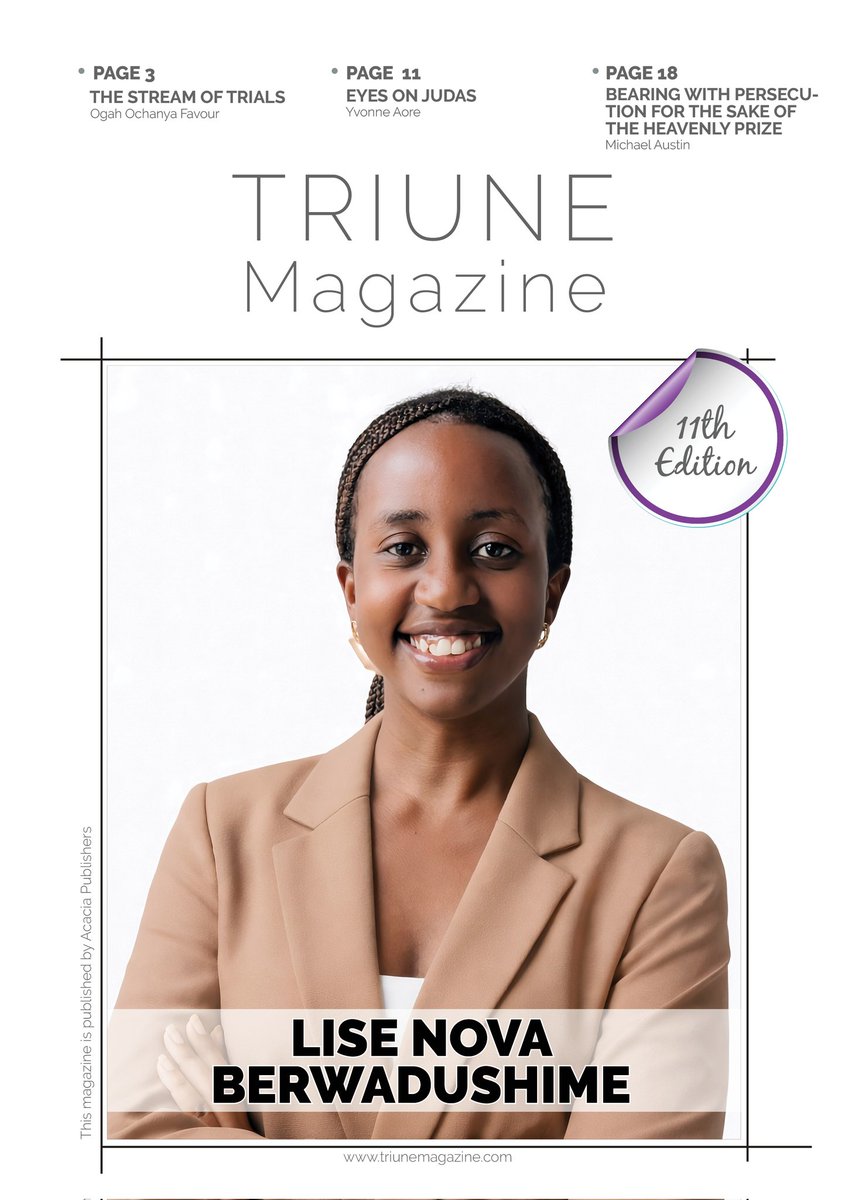
EDITOR'S NOTE from our Poetry Editor, @kagali_stan
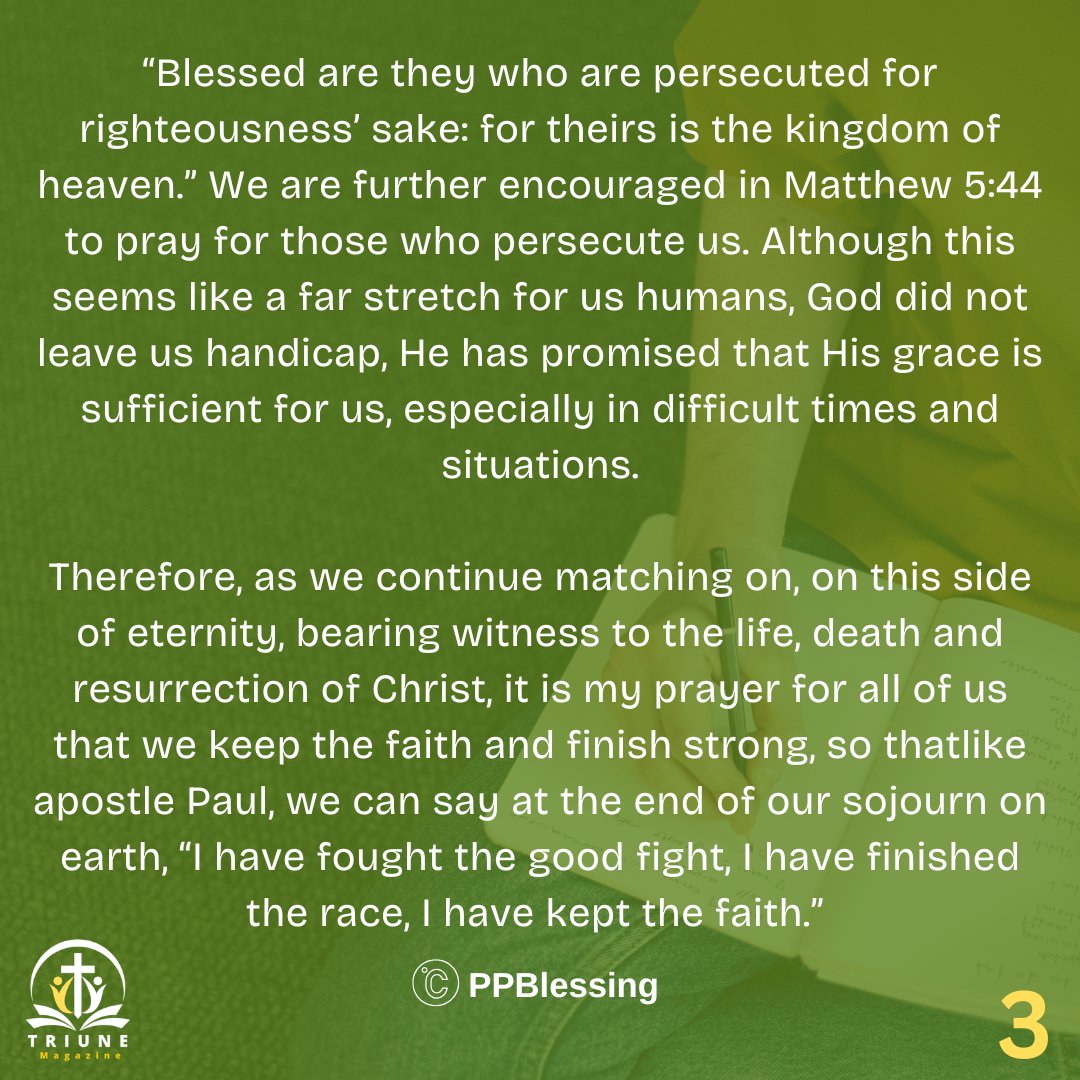
FAITH BENEATH THE CROSS
Persecution has always accompanied faith. From the prophets rejected for
speaking truth to the martyrs of the early Church, the history of God’s people
has been marked by suffering.
SpaceX is actively hiring world-class engineers/physicists for SpaceXAI, even if you have zero prior experience in AI. Smart humans figure it out fast.
Please send an email with ~3 bullet points demonstrating evidence of exceptional ability to [email protected].
In 1935, two American doctors examined seven women's ovaries and saw small lumps. They called them cysts and named the disease after them. They were wrong. It took 91 years to fix.
What we called PCOS is now Polyendocrine Metabolic Ovarian Syndrome (PMOS), announced today in The Lancet by an international panel of doctors and patients. The renaming followed more than a decade of consensus work and 22,000 patient and clinician survey responses.
The lumps Stein and Leventhal saw were never cysts. Modern imaging shows they were follicles, the tiny sacs inside the ovary that grow and release an egg each month, frozen partway through by a hormonal imbalance. PMOS is a multi-system disorder centered in the endocrine system, the body's network of glands that produces hormones like insulin (controls blood sugar), cortisol (the stress hormone), and thyroid hormones (set the body's metabolism). The ovary trouble flows downstream from there.
The naming choice is not academic. When doctors hear "ovary" in a diagnosis, they look at the ovary. "Metabolic" and "endocrine" send them to the whole body.
PMOS affects roughly 1 in 8 women worldwide, more than 170 million people. The WHO estimates 70% have never been diagnosed. Among those who do, 1 in 3 wait more than 2 years, and nearly half see 3 or more doctors first. The CDC reports more than half of women with PMOS develop type 2 diabetes by age 40, a risk 5 to 10 times higher than women without the condition. Around 37% have clinically significant depression, compared with 14% in women without it. Anxiety runs at 42% versus 8.5%.
A label born from a 1935 look at seven ovaries is finally going away. The new diagnostic guidelines roll out fully in 2028. By then, a woman walking into a clinic with these symptoms should hear questions about her blood sugar and her mood alongside her cycle. Those are the parts of the disease the old name hid for 91 years.
@Taiwo_junzi In my case, this applies to business expenses or if I'm borrowing to lend someone else.
Why it's important to payback
1. It shows honesty and integrity. Making him confident to loan me when I ask.
2. It's a way of measuring if the business venture was profitable or not.
This God who we call our Lord is a different God. Unlike other gods, he is always there with us; through life’s joys and sorrows, through pain and ease, in suffering and satisfaction, all time and every time, he is there with us, cheering us on until we see him face to face!
Worth a read! 😍
My mom wanted to send me homemade pickles. But I said ‘no’.
I was 27, living in New York, working on Wall Street. I didn't need pickles shipped across the world. The shipping would cost more than buying them here.
Three years later, I read the psychologist take on what I'd actually done. When you reject someone's offer to help, you're not just declining assistance. You're declining their need to matter to you!
Benjamin Franklin figured this out in 1736. He had a rival in the Pennsylvania legislature who hated him. Instead of trying to win him over with favors, Franklin asked the rival to lend him a rare book.
The rival agreed. They became lifelong friends. It's called the Ben Franklin effect.When people do something for you, they convince themselves they must like you. Otherwise, why would they help?
My mom didn't want to send pickles because I needed them.
She wanted to send them because SHE needed to feel useful to me. To feel like despite the ocean between us, she still had a role in my life.
Every time I said "I'll manage," I was taking that away from her. Here's what I learned after a decade of living away from home:
→ Accepting small favors isn't about you needing help.
It's about letting people you love feel needed.
Your dad wants to transfer ₹5000 even though you earn well?
Let him.
Your friend wants to pick you up from the airport even though Uber exists?
Say yes.
Your partner wants to make you tea even though you can make it yourself?
Accept it.
The people who love you don't want to solve your big problems. They want to matter in your small moments.
Let them. #lifelesson
A parasite that has been eating people for 3,500 years is about to be wiped off the planet. It infected 3.5 million people in 1986. Last year, it infected 10. And I have not seen it make a single front page.
It is called Guinea worm. You drink contaminated water from a pond in a poor village. A year later, a worm up to three feet long starts coming out of your leg through a burning blister. There is no pill that stops it and no surgery that works. You wrap the worm around a stick and pull it out slowly, over days or weeks, inch by inch. If you rush, the worm breaks inside you and causes a fresh infection.
Guinea worm is ancient. Preserved worms have been pulled out of Egyptian mummies from around 1000 BCE. The Ebers Papyrus, an Egyptian medical scroll from 1550 BCE, describes pulling the worm out with a stick. For three and a half thousand years, that was the best humans could do.
Then in 1986, public health workers decided to kill the parasite off. They had no vaccine and no drug. What they had was cheap cloth water filters and a small army of volunteers willing to walk from village to village for decades.
The plan was simple. Give everyone who drinks from a pond a cloth filter to strain out the tiny water fleas that spread the parasite. Then send volunteers walking house to house, year after year, teaching people how to use the filters and keeping anyone with an emerging worm out of the water.
It worked. From 3.5 million cases a year to 10. Four were in Chad, four in Ethiopia, two in South Sudan. The other four countries where the worm used to be common, Angola, Cameroon, the Central African Republic, and Mali, had zero human cases for the second year in a row. The World Health Organization has already certified 200 countries as Guinea worm free. Six are left.
The last hurdle is dogs. Cameroon had 445 infected animals last year and Chad had 147, so a lot of the remaining work is on animals, not humans. Strays get leashed, and crews treat ponds to kill any remaining worms. The campaign keeps watching until the number hits zero.
When Guinea worm hits zero, it becomes the second human disease ever erased from the planet. The first was smallpox. It will also be the first parasite humans have ever wiped out, and the first disease ever ended without a single dose of medicine. Volunteers walked village to village with cloth filters for 40 years. Now a plague from the age of the pharaohs is about to be gone.
The breast is not just feeding the baby. It is reading the baby.
When a baby feeds at the breast, the same suckling action that draws milk out also pulls a small amount of the baby's saliva back into the nipple and into the milk ducts. Scientists call this "retrograde duct flow".
This hypothesis was put forward by lactatiom biologists and they are gathering evidence through research - If the baby is sick, that backwashed saliva carries traces of the infecting pathogen into the mother's breast tissue. Her immune system detects it, identifies the threat, and begins manufacturing targeted antibodies. These then appear in the very next feed of milk delivered to the sick infant.
Human studies have steadily supported this. Riskin et al. (2012), published in Pediatric Research, demonstrated that when nursing infants were ill, their mothers' milk showed a dramatic surge in white blood cells, particularly macrophages, along with raised levels of TNF-α, a key inflammatory signal. These levels fell back to normal once the baby recovered. Mothers of healthy babies showed no such changes.
Hassiotou et al. (2013), in Clinical and Translational Immunology, confirmed that both maternal and infant infections trigger a rapid leukocyte response in breast milk. Then a landmark 2022 study in Nature provided the clearest mechanistic proof yet. It tracked a virus from an infected mouse pup's saliva, through the nipple, into the mother's milk ducts, and demonstrated a subsequent antibody surge in her milk.
Taken together, the evidence describes a mother and infant in quiet, continuous biological dialogue through the breast. Illness whispered through saliva. Answered in medicine. Still remains a hypothesis but the evidence is piling up.