"In unions, working people gain the strength in numbers to raise wages and make their jobs better." —@MaryKayHenry, #WeRise Read: https://t.co/AWlmFsqCyq
“Today in America, addiction is a public health crisis. An estimated 2.1 million people in the U.S. struggle with an opioid use disorder. There is a person dying of an opioid overdose every 12.5 minutes, and more than half of these individuals die at home. We must do more.”
Flu viruses continue to pose one of the world’s greatest public health challenges, and the risk of a flu pandemic is always there. Here's what CDC is doing to protect the U.S. and people around the world. https://t.co/12Yg4uoreY #1918Flu#NPHW
#FluFactFriday: Did you know adults age 65+, children younger than 5 years, and pregnant women are all at high risk of flu complications? Learn how these people can best protect themselves as flu activity continues over the next several weeks. https://t.co/Z3pZqNDdih
Influenza activity has declined significantly, but will likely continue for several more weeks. Help stop the spread of germs and prevent respiratory illnesses like #flu with these 6 healthy habits: https://t.co/M9GoM6Dkdy
#FluFactFriday: Children younger than 5 years are at high risk for serious flu-related complications. Parents, here's what you need to know: https://t.co/yxkwdzTNSn
While H3N2 #flu viruses continue to predominate, there is an increasing proportion of flu B and H1N1 viruses being detected. Early flu vaccine effectiveness estimates was 67% against H1N1 flu viruses and 42% against flu B viruses. https://t.co/QTnHHeAuLZ
People with #flu can spread it to others up to 6 ft away. Most experts believe flu viruses spread by droplets made when people sick with flu cough, sneeze, talk, or exhale (breathe). Here's what you need to know to help reduce the spread of flu: https://t.co/SFkRXTqo2E
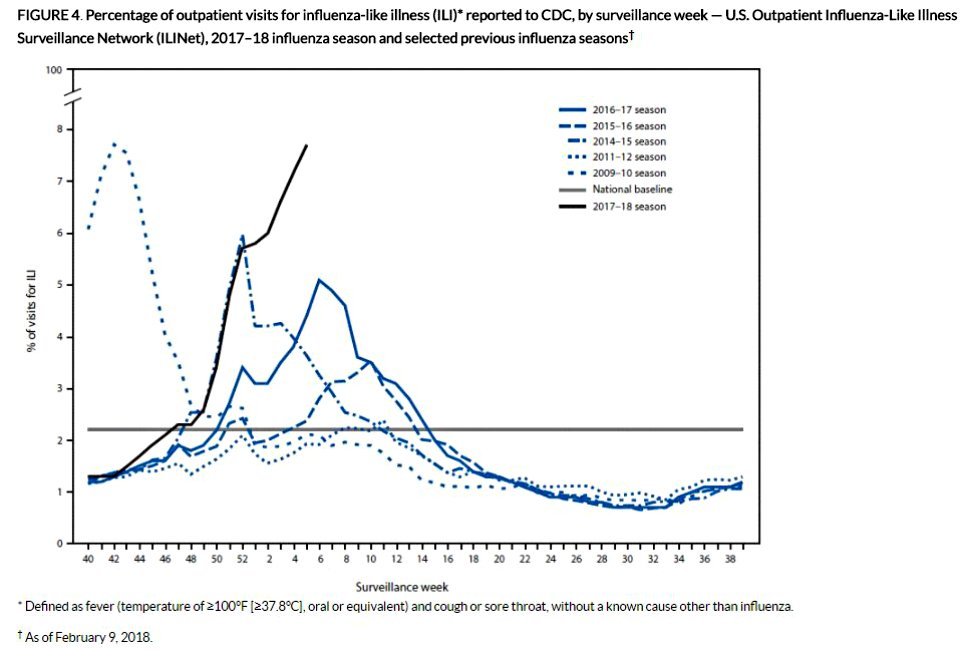
Influenza-like illness (ILI) levels have reached 7.7%; the same level recorded since at the peak of the 2009 H1N1 pandemic, which peaked at 7.7% ILI. More in @CDCMMWR: https://t.co/VFPKRrF0R1
According to estimates, U.S. #flu vaccines were 36% effective overall against influenza A and B. That might not sound impressive, but it means a vaccinated person reduced risk of getting sick with the flu and having to go to the doctor by about one-third.
Flu hospitalizations this season remain highest among adults aged 65+. Here’s why older adults are at greater risk of #flu related complications: https://t.co/R98lPU4EFz
This #flu season continues to be particularly challenging. CDC’s latest tracking data indicate that flu activity is still on the rise overall. Influenza A H3N2 viruses continue to dominate this season, and are often linked to more severe illness.
Flu activity continues to increase across the U.S. CDC data shows overall hospitalization rates are higher than they were at this point in 2014-15; the most recent “high” severity season. https://t.co/ycVdIWOx9s
Vaccine-preventable diseases include:
Cervical cancer
Cholera
Diphtheria
Hep B
Influenza
Japanese encephalitis
Measles
Mumps
Pertussis
Pneumonia
Polio
Rabies
Rotavirus
Rubella
Tetanus
Typhoid
Varicella
Yellow Fever
#VaccinesWork!
Here are 5 facts on vaccines you need to know