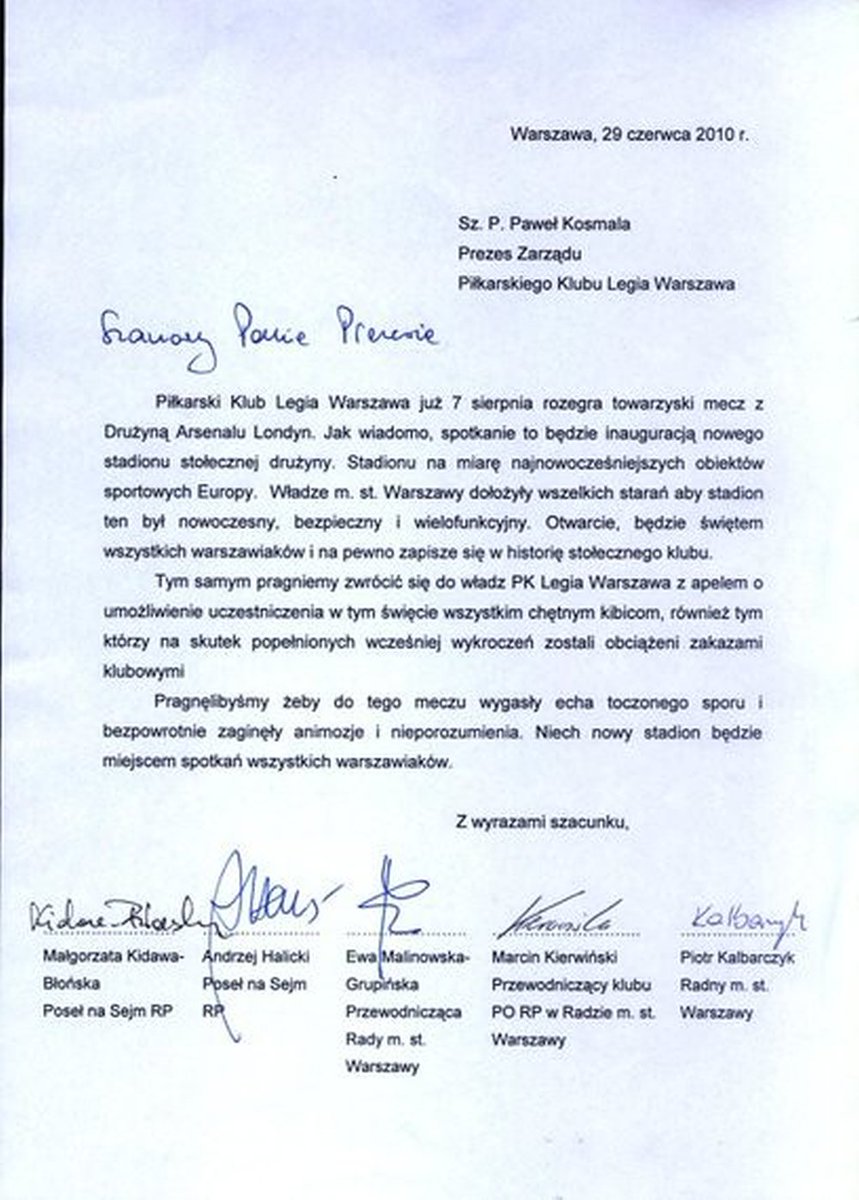
Prezydent Karol Nawrocki - nadrobił pewne opóźnienie - ułaskawił Piotra Staruchowicza od zakazu stadionowego jedyne 16 lat po tym jak wnioskowali o to politycy Plaformy Obywatelskiej
W tym .... <sprawdza notatki> ... Marcin Kierwiński
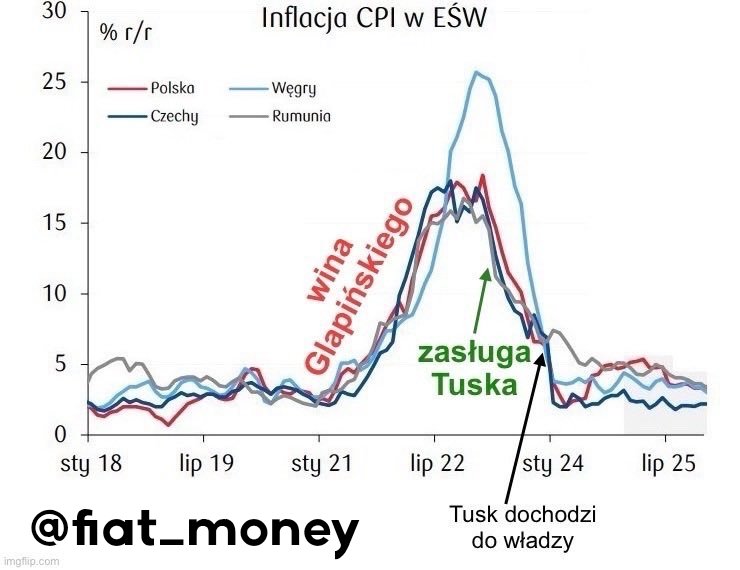
Ostatnie wypowiedzi Mateusza Morawieckiego pokazują jasno: wrogiem dla Mateusza Morawieckiego nie jest Tusk, ale ja oraz Prawo i Sprawiedliwość. Najwyraźniej Mateusz Morawiecki ma plan poszukiwania swoich sojuszników gdzie indziej.
Były premier zrzuca z siebie odpowiedzialność za podejmowane decyzje na innych, często niezgodnie z prawdą… Skoro tak bardzo się z nimi nie zgadzał, wypada zapytać: dlaczego nie odcinał się od tych decyzji publicznie albo nawet nie zrezygnował z funkcji premiera?
Co jakiś czas słyszę, że członkowie rozłamowego stowarzyszenia byli zapewniani przez Mateusza Morawieckiego, że i tak lista będzie wspólna… Po takich wypowiedziach ich szefa uwierzyć w to jest niezmiernie trudno.
Mam wrażenie, że pan premier jest w jakimś dziwnym stanie. Odnosiłem je również w trakcie naszych rozmów. Daj Boże, żebym się mylił.
“We wanted to be free and to owe this freedom to ourselves.”
Jan Stanisław Jankowski’s words explain much of what drove the people who entered the fight for Warsaw in August 1944. They were not fearless. Most were young, poorly armed, and fully aware that the Germans might crush the uprising. They went forward anyway.
Krystyna Krahelska was a poet, resistance member, and trained nurse who used the name “Danuta.” She had also posed for Ludwika Nitschowa, the sculptor who created Warsaw’s Mermaid monument. On the first day of the uprising, Krahelska was hit by German fire while attempting to reach a wounded comrade. She died the next morning. She was thirty years old.
Witold Kieżun, “Wypad,” carried out one of the uprising’s most remarkable actions. Armed with a submachine gun and grenades, he captured fourteen German soldiers and secured weapons and ammunition that the insurgents badly needed. Similar acts were taking place throughout the city. Couriers crossed exposed streets carrying orders. Nurses pulled wounded men from the fighting. Priests celebrated Mass and administered the sacraments in basements. Civilians built barricades, carried water, and searched bombed buildings for survivors.
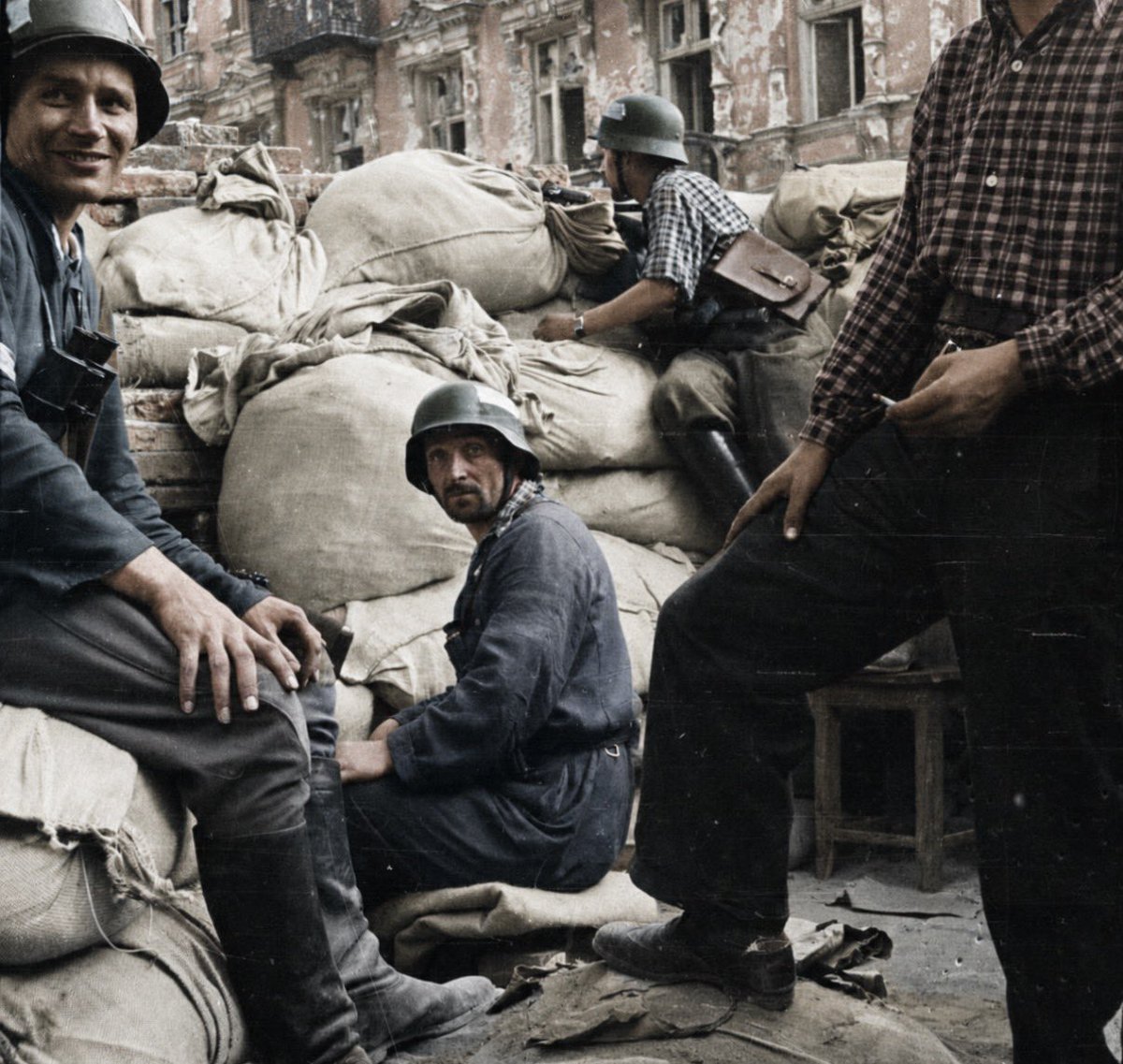
Eugeniusz Lokajski, “Brok,” had been an Olympic athlete before the war. During the uprising, he fought and carried a camera. His photographs show barricades and ruined streets, but they also show weddings, conversations, smiling friends, and people trying to preserve a little ordinary life. Lokajski was killed during a German air raid on September 25. His photographs survived.
Warsaw’s heroic insurgents fought with whatever they could find. Some had rifles; others had homemade grenades, bottles of gasoline, or nothing more than a medical bag. Many suspected they would not survive to see a free Poland. Perhaps that was precisely why they fought: so that others one day might.
Photo credit-Muzeum Powstania Warszawskieg
On August 2, 1944, the second day of the Warsaw Uprising, soldiers of the Polish Home Army gathered around the areas they had captured and continued attacking German strongpoints. Many were young men and women, some were very young,mm though and some armed with little more than pistols, grenades, or captured German weapons. In the city center, insurgents seized the Main Post Office on Napoleon Square and other important buildings. Polish flags appeared over liberated neighborhoods, barricades were erected, and civilians organized medical stations, kitchens, and supplies for the soldiers.
Still, the uprising was already becoming a collection of isolated battles. German forces retained the airports, railway stations, bridges, major barracks, and several strategic roads, preventing Polish units from joining their districts into one continuous territory. Home Army soldiers faced a severe shortage of rifles, ammunition, and anti-tank weapons. In some formations, several fighters had to share a single firearm, while unarmed volunteers waited for weapons taken from fallen Germans.
August 2 also showed the brutality that would define the German response. At Mokotów Prison on Rakowiecka Street, SS soldiers began murdering approximately 600 Polish prisoners. Other remaining inmates resisted their executioners, allowing several hundred prisoners to escape into insurgent-controlled territory. At the nearby Jesuit monastery, German SS soldiers butchered around 40 people, including priests, religious brothers, employees, and civilians seeking shelter.
Thus, the second day brought both hope and warning. Polish soldiers and civilians experienced freedom in parts of Warsaw for the first time in nearly five years, but German massacres had already begun. The insurgents remained divided, poorly armed, and without the immediate assistance they expected from Soviet forces approaching the Vistula. Nevertheless, they continued fighting, building barricades and defending each captured street. The struggle would continue for another 63 days.
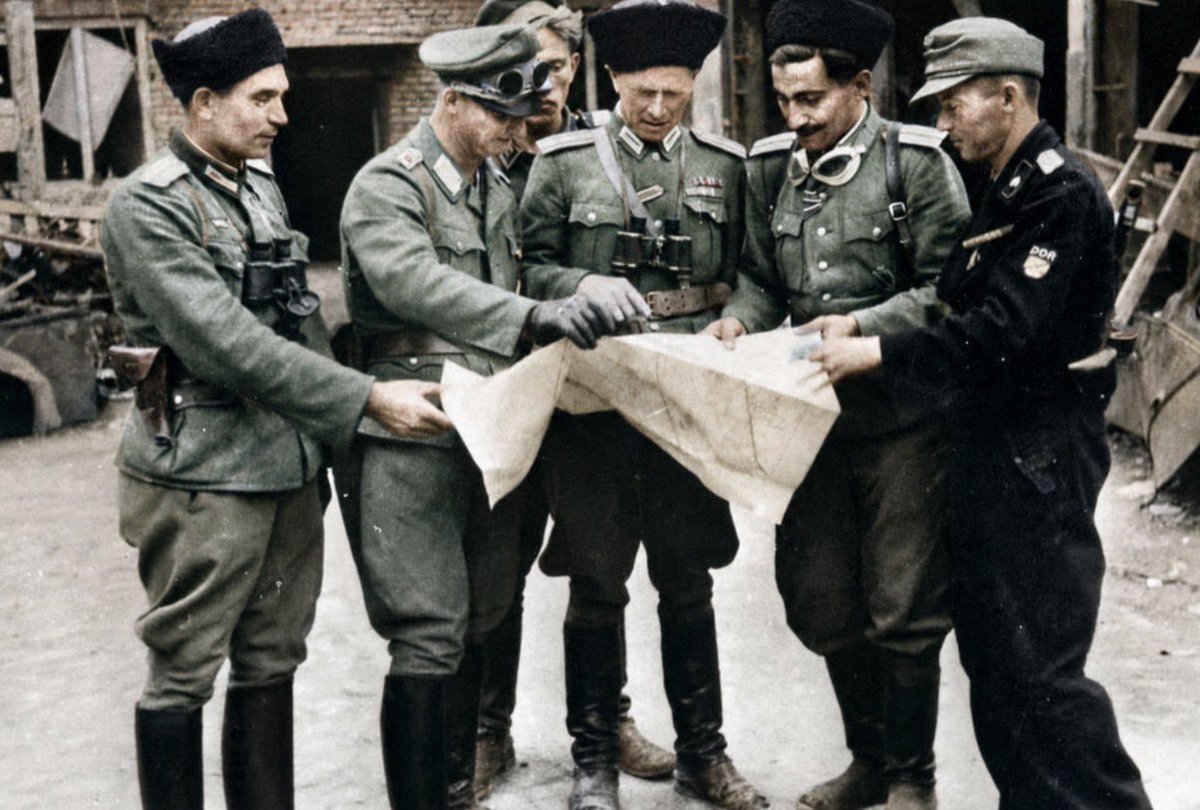
It is worth remembering that even within a campaign led by the German SS, an organization synonymous with calculated brutality the Russian RONA brigade became notorious for exceptional savagery. Its men murdered, raped, robbed, and burned their way through Ochota with such uncontrolled violence that even German commanders complained, not out of concern for Polish lives, but because RONA’s drunkenness and obsession with plunder interfered with military operations. In Ochota, the Russian collaborators proved themselves capable of atrocities that shocked even their SS masters.
Russian killers in Ochota (Warsaw Uprising):
When the Warsaw Uprising began on August 1, 1944, Germany assembled a collection of SS, police, penal, and collaborationist formations to destroy the Polish resistance and terrorize the civilian population. Among the most notorious was the Russian National Liberation Army- RONA - commanded by Bronislav Kaminski.
RONA was a Russian collaborationist formation created in the German-occupied Soviet Union. Although it included smaller numbers of Belarusians and Ukrainians, it was predominantly Russian in composition and political identity. Its men had already participated in brutal German anti-partisan operations before approximately 1,700 of them were sent to Warsaw under Major Yuri Frolov.
Beginning on August 4, Kaminski’s men entered the Ochota district. They showed little interest in disciplined operations. Instead, they unleashed a campaign of murder, rape, robbery, and arson against Polish civilians. Residents were driven from their homes, stripped of their possessions, beaten, and sometimes shot. Women and girls were subjected to sexual violence, frequently in front of their families. Buildings were systematically looted and then set on fire.
Some of the most horrific crimes occurred at the Maria Skłodowska-Curie Radium Institute. Russian RONA soldiers murdered patients and hospital personnel, raped women, stole valuables, and set parts of the institution ablaze. Patients too sick to escape were left helpless amid the violence.
At the Zieleniak market, the Germans and their Russian collaborators established a temporary camp for thousands of expelled residents. Prisoners were crowded together without sufficient food, water, sanitation, or medical assistance. RONA soldiers robbed and beat them, dragged women away to be raped, and murdered civilians for amusement. Bodies accumulated around the marketplace as survivors waited to be transported to the Pruszków transit camp.
The Russian brigade became notorious even among other forces suppressing the uprising. Its soldiers were frequently drunk and more interested in plunder than combat. German commander Erich von dem Bach-Zelewski later recalled seeing Kaminski’s men carrying away stolen jewelry, watches, and precious stones. Their behavior was so uncontrolled that it interfered with German military operations.
Kaminski was eventually arrested and executed by the Germans. His death, however, was not punishment for murdering Polish civilians. German commanders had deliberately unleashed his men upon Warsaw and had already authorized the extermination of its population. Kaminski was removed because his troops had become undisciplined, because their looting created conflicts within the German command, and because he was no longer useful.
The Russian RONA brigade is sometimes incorrectly described as part of General Andrey Vlasov’s army. The organized Russian Liberation Army associated with Vlasov was formed later. The men who terrorized Ochota belonged to Kaminski’s RONA, an independent Russian force serving within the German SS system.
The crimes of RONA do not diminish Germany’s central responsibility. Hitler and Himmler ordered Warsaw’s destruction, while German commanders directed the campaign and deployed foreign auxiliaries to carry it out. Nevertheless, German command does not erase the personal responsibility of the Russian collaborators who robbed, raped, and murdered Polish civilians.
Approximately 10,000 people died during the wider pacification of Ochota. Not every death can be assigned to an individual unit, but RONA was the principal force responsible for the most infamous atrocities. Its name remains inseparable from Zieleniak, the Radium Institute, and the suffering of thousands of defenseless people.
The history of the Warsaw Uprising must therefore, not only the German architects of the destruction, so were Russians at Ochota, they were not passive witnesses or reluctant bystanders. They were perpetrators.
Prośba .
Mój znajomy jeden ze współzałożycieli Federacji Młodzieży Walczącej zamieścił na FB znane zdjęcie plakatu w rocznicę Powstania Warszawskiego"każdy pocisk jeden Niemiec". Usunęli ten post.
Mam prośbę roznieście to bardzo szeroko.Nie będzie niemiec pluć nam w twarz.
@haniashen Dokładnie! Po przeciwnej stronie jest pełna mobilizacja. Wszystkie lewicę, trzecie drogi, ludowcy i mieszkańcy większych ośrodków razem by sterować państwem. Po prawej stronie każdy będzie sam walczył o większość dostając 8%
In a world increasingly uncertain, fragmented, and overwhelmed by shallow distractions, there is something quietly extraordinary about Poland, something the world still needs. It is not just the architecture of Kraków, the beauty of the Tatra Mountains, or the storied legacy of kings and uprisings. It is something deeper - it’s resilience, the kind that does not boast but endures.
Poland is no stranger to hardship. This is a nation that was erased from maps for 123 years and yet never stopped being Polish. A people who fought for freedom in the shadows, through poetry, prayer, and underground resistance, when their voices were silenced. A country that withstood both German terror and Soviet chains and still emerged with soul intact. To face totalitarianism, genocide, betrayal, and occupation, and still walk forward with dignity is not merely survival. It is moral strength.
The Polish people carry something rare in today’s world, a memory that stretches beyond the last news cycle. They know what it means to lose everything and still rebuild, not just cities, but values. They still visit cemeteries. They still light candles. They still remember not only their heroes, but their neighbors and they still believe that history matters, not for politics, but for truth.
I know this not from books, but from life. Nearly two decades ago, I was an educator in Poland and I am still in touch with some of those students today. That alone says something about the kind of bonds this country fosters. I married a strong Polish woman, born under Communism, someone who knows what it means to endure and overcome with grace.
I have walked the streets where battles raged. I have stood in the rooms where resistance fighters were tortured. I have seen the sites where average Poles, shopkeepers, priests, farmers, were murdered in the death camps of Nazi Germany. And yet, from that horror, Poland rose, not with vengeance, but with humility and quiet strength.
This resilience is not bitter. It is warm, steady, and proud. It lives in the grandmother stirring soup from a recipe handed down through generations. In the soldier’s salute at Westerplatte. In the worn hands of the man who rebuilt Warsaw, brick by brick, because no one else would. It lives in the conviction that no matter how dark the night, Poland wakes again, singing hymns, teaching its children, and carrying its dead with honor.
In a world that too often chooses comfort over principle, forgetting over remembering, and division over tradition, Poland remains a defiant exception. It says, we do not forget. We endure. We do not abandon our roots, because they are the reason we still stand.
This is why the world still needs Poland, not just as a country, but as a conscience. Because Poland does not simply remember history. It lives it and in doing so, it quietly teaches the rest of us how to be strong without hate, faithful without fanaticism, and proud without arrogance.
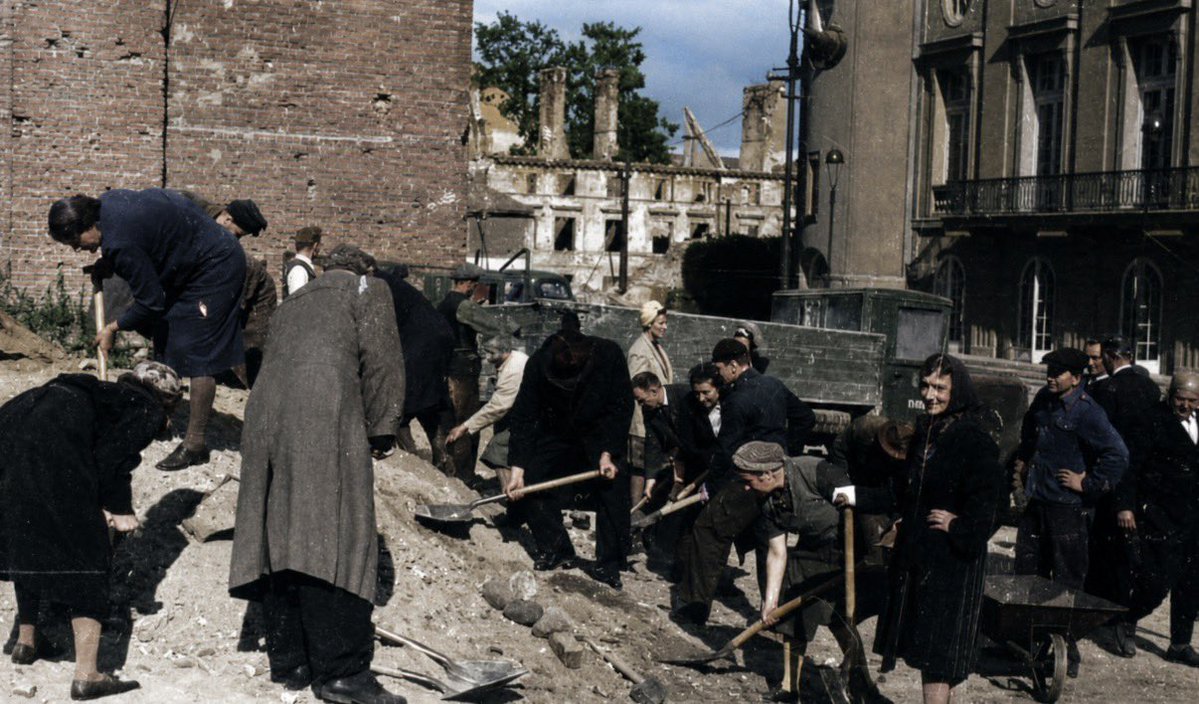
Photo: Ordinary Poles clearing the ruins of Warsaw after the Second World War. With shovels, wheelbarrows, and their own hands, they began rebuilding a city the Germans had tried to erase with no help. Poland’s resilience was not only expressed on battlefields, but in the quiet determination to return, remember, and begin again.
When the war began, German forces indiscriminately killed civilians during the September Campaign while beginning a systematic effort to dismantle Polish society. They targeted political leaders, teachers, clergy, veterans, officials, and members of the intelligentsia, along with anyone considered capable of resistance. Between 1939 and 1941, ethnic Poles faced an especially high risk of arrest, deportation, forced labor, and execution, while most Polish Jews were being forcibly confined to ghettos.
Emanuel Ringelblum, the Jewish historian who documented life in occupied Warsaw and whose own survival was prolonged through Polish assistance, recorded on May 8, 1940, that Polish civilians were being seized for deportation to Germany. Jewish barbers were ordered to shave their heads before transport. Another Jewish historian noted that Poles fleeing German roundups sometimes found “an odd ally: the Jewish badge.”
Some borrowed or purchased armbands in desperate attempts to avoid capture because German patrols were then often searching specifically for Poles to deport or punish. Before the mass deportation of Jews to extermination centers began, an OSS informant reported that, at that stage of the occupation, German treatment of Poles could be even more immediately violent than the treatment then imposed on Jews.
Hans Frank made no effort to conceal his contempt for Poles. On January 19, 1940, he compared his relationship with them to that of an ant and a plant louse and warned that he would not hesitate to impose the most draconian measures. His words reflected the central logic of the occupation: Poles were to be exploited, terrorized, deprived of leadership, and punished collectively.
This policy was demonstrated in atrocities such as the killings at Zielonka, near Warsaw. German forces detained eleven people, and when two escaped, the remaining nine were executed. Among the victims were three Polish Boy Scouts, only sixteen and seventeen years old. The killings were justified as retaliation for a handmade poster bearing words from Maria Konopnicka’s patriotic poem: “No German will spit in our faces or make Germans of our children.”
A similar atrocity occurred at Wawer, where German forces murdered more than one hundred men. Among them was Daniel Gering, a forty-year-old bank employee of German ancestry who could have saved himself by claiming German nationality. Instead, he insisted that he was Polish. When asked whether he understood the consequences, he replied, “Yes, but I am a Pole.” He was given more than one opportunity to change his answer, but refused and was brutally beaten before his execution.
The policy of mass reprisal continued throughout the occupation. In 1944, Hans Frank openly declared that as many as one hundred Poles should be shot whenever a German was killed. In practice, reprisals sometimes exceeded even that ratio. Entire villages were burned, populations deported, and civilians executed for actions they had not committed. According to SS General Erich von dem Bach-Zelewski, officers of relatively modest rank could order the execution of dozens of Poles for each German killed without seeking approval from higher command.
By late 1942 and throughout 1943, terror intensified further. Mass street roundups, deportations for forced labor, public executions, and retaliatory killings became increasingly common. On January 21, 1943, General Stefan Rowecki, commander of the Home Army, warned the Polish government in London that “a new wave of terror embraces the entire country.”
Understanding this aspect of the occupation is essential. German rule in Poland was not merely military control. It was a deliberate assault on the nation’s leadership, culture, independence, and ability to survive. Poles lived under racial contempt, forced labor, collective punishment, and the constant threat of arbitrary death. Their suffering should be understood on its own terms.
When most people think of the Holocaust of European Jewry and it stands as one of history’s greatest crimes., but far fewer people know that the Third Reich had drawn up a parallel plan of annihilation for the Polish nation: General Plan Ost.
This speech sets out to correct that gap in public memory. It traces how Poland became the first victim of the Second World War, crushed between two totalitarian powers under the Molotov-Ribbentrop Pact; how German occupation policy targeted Polish elites, culture, and eventually the population itself for destruction; and how, even as they endured this campaign, Poles risked and often lost their lives to help their Jewish neighbors survive.
Drawing on other historians’ research and the words of the regime’s own architects, this speech aims to restore a fuller, more accurate picture of wartime Poland, one of victimhood, resistance, and remarkable moral courage in the face of two occupying powers bent on its erasure.