📢NEW LISTING ALERT
Phoncex will officially list $GRASS on its exchange!
Users can start trading $GRASS / $PUSD pair at 11:00 UTC on September 10.
To celebrate, we're giving away 500 $GRASS to 5 users who comment the correct total supply of $GRASS and their Phoncex adress.
📲Start mining $PUSD now at https://t.co/Lo5ct04lQs
This image says it all 🌿
It starts with you. Make a difference.
View the post 👉 https://t.co/pGtGq6Fp2J
Earn GREEN on @ECOX_ECOToEarn while you act:
https://t.co/fhDE2jrtoa
#ECOX#GREEN#ECO_TO_EARN
https://t.co/8I0VQpL11r
Hello, I have joined CreatorX, a professional Web3 platform for creator asset issuance and trading. @CreatorXinc My invitation code is: KU3JNG. #Base#CreatorX#Web3Creator
Welcome to the new era of Blockchain!
📱 We are building something new Which will be —
⚡ UltraFast
🔐 Secure
🔎 Transparent
✅ No heavy hardware needed
Blockchain in your pocket. The future is now.
#OpalChain#OpalCoin#Opal#Web3#MobileBlockchain#Innovation
Welcome to the new era of Blockchain!
📱 We are building something new Which will be —
⚡ UltraFast
🔐 Secure
🔎 Transparent
✅ No heavy hardware needed
Blockchain in your pocket. The future is now.
#OpalChain#OpalCoin#Opal#Web3#MobileBlockchain#Innovation
🚀 Just joined the Opal Chain – A fast, secure, and transparent mobile blockchain!
🔗 Mine crypto using your mobile browser
💸 Get Opal Coins Just by one click
🔥 No expensive hardware needed
Join now: https://t.co/6Es37olnNZ
#OpalChain#Opal#OpalCoin
✅ I've just joined NEAR Mobile referral campaign and I'm earning $NPRO on this tweet. Download https://t.co/1GwuWopLiL for free and use this referral code to earn some $NPRO now! 👇
IX0APS
https://t.co/uytm1crs89
📣 The first distribution of $NPRO is now LIVE! 🎯
You can now receive a guaranteed share of $NPRO, the token backed by @NEARProtocol staking, pre-launch:
📲 Download or update https://t.co/5Xm97I8EtJ
👍🏻 Follow us
🔃 Quote this post
🤝 Invite friends
This is how $NPRO works👇🏻
Your economy is decentralized, but your login server is hosted on AWS?
Let’s talk about the real missing piece in Web3 gaming: The backend.
Web3 gaming has spent years building tokenomics, asset ownership, and open economies.
But the games themselves?
Still running on fragile, centralized infrastructure.
A single point of failure, on launch day.
You wouldn’t build a DeFi protocol and host the contracts on someone else's private server.
But that's exactly what happens in games.
Auth, matchmaking, inventory, social systems… one outage and you’re offline.
The Beamable Network provides the building blocks to decentralize your backend for Live Service games.
✅ Trustless compute across a distributed node network
✅ Composable modules for core game services
✅ Ownership for the developers who run it
A backend that can’t rug your game, rate-limit your growth, or charge rent forever.
Most games are Live Services now.
Backend isn’t a nice-to-have. It IS the game.
The Beamable Network makes it resilient, trustless, and dev-owned.
Because decentralizing the economy is half the story.
It’s time to decentralize the stack.
65% of studios buy backend tools.
35% still build in-house.
But the lesson is clear:
Infra isn’t just a dev tool. It’s a launch risk.
The question is, why risk it?
Beamable Network gives Live Service games the backend they need without gambling the roadmap.
DePIN isn't the next big thing.
It's the only thing left when trust collapses.
Here's why DePIN is exploding, and what most people still don't understand 🧵
Web3 gaming talks a lot about ownership.
But here’s the truth:
If your backend isn’t decentralized, your game isn’t truly yours.
The Beamable Network makes LiveOps trustless, so you can build games that never die.
TLDR: Why Web3 Gaming Actually Makes Sense (Part 3: Doing It Right)
Let's talk about what works. No hype. No buzzwords. Just real infrastructure that makes sense for game devs.
Web3 gaming done right means one thing:
Everything works in your game engine.
No platform switching.
No extra tools.
Your game needs:
- Asset management
- Player inventories
- Marketplace features
- Social systems
- Trading mechanics
All of this should just... work.
In your development environment. Where you build games. Simple as that.
Here's what we're seeing with games doing it right:
- Devs work in their native language
- Assets move automatically
- Systems scale on their own
- Infrastructure costs drop
- Players keep their stuff
No crypto degree needed.
No blockchain expertise required.
Just tools that work where you already build games.
The big difference? Everything's built for game devs first.
Web3 features are just that - features. Not the whole game.
Next up: The numbers that actually matter...
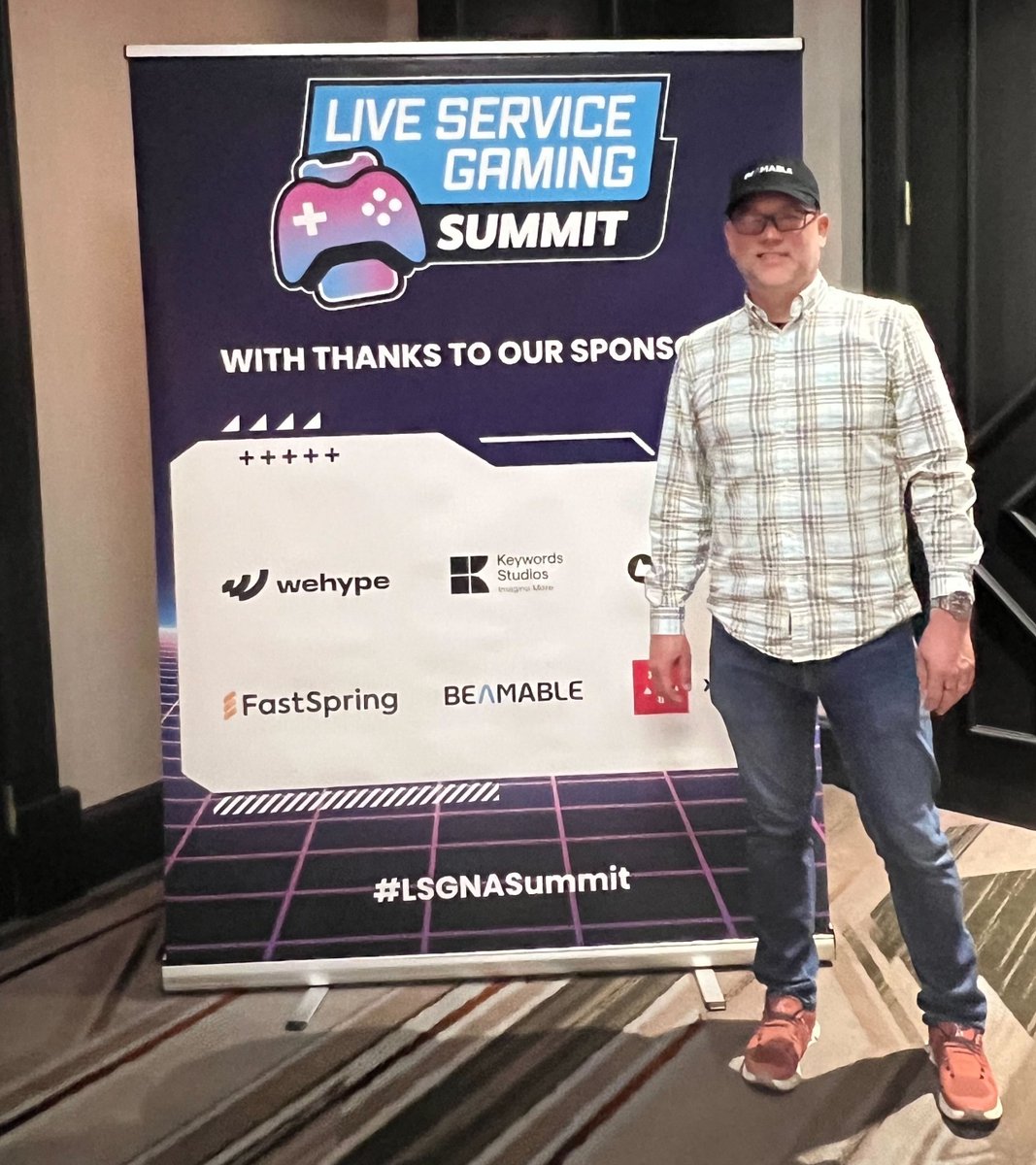
🚨 Live Service Gaming Summit – Austin 🚨
At 10:35 AM CT, TODAY Stream A brings together leaders from PlayStation, Bethesda, Cloud Imperium & @trappermarkelz of Beamable to talk Scalable Game Infrastructure.
If you're building live games at scale — don’t miss it.
🔗 https://t.co/9QEvl4OTsC
TLDR: Why Web3 Gaming Actually Makes Sense (Part 1: Infrastructure)
Forget NFTs and tokens for a minute.
It's time to break down Web3 gaming from the backend - where it actually matters.
Traditional game infrastructure is bleeding studios dry. Let's look at real startup costs:
Building a live game right now? You need:
- Custom servers ($30-50K)
- Database setup ($20-30K)
- Load balancers ($10-15K)
- Content delivery network ($15-20K)
- Scaling systems ($25-35K)
- Backend team ($50K minimum)
That's $150k on the lower end.
Plus 6-12 months just to get this running. Before you write ANY game code.
Web3 changes this entire structure.
Instead of building and maintaining everything yourself, you're using a network of nodes that:
- Handle distribution (no dedicated servers needed)
- Run your game logic (through smart contracts)
- Manage assets (on chain, not your problem)
- Scale automatically (through the network)
You write one set of code. The network handles the rest.
This isn't about blockchain hype. It's about infrastructure that makes sense for games.
Next up: Why most Web3 games get this all wrong...
Game developers need three things: speed, reliability, and sensible costs. Everything else is noise.
@solana's architecture matches how games actually work:
- Transactions finish before your next frame renders
- Costs stay low even at massive scale
- Infrastructure that handles millions of players
We're not building for crypto traders. We're building for game developers who need infrastructure that just works.
This is about making games better, not more complicated. 💜