"Every time a Thoroughbred ends up in a kill pen, the industry loses credibility. It doesn’t matter whether the horse was owned by a breeder, trainer, partnership, racing stable, or private individual."
Read more: https://t.co/kjaseD0W1q
@JayHovdey@paulickreport It'll help, but SAFE is written to eliminate horses being slaughtered for human consumption, only. That's a large part of the market at the moment, but how do you enforce where the horses end up after crossing the border? And is there any budget to investigate/enforce it?
@Chrissy_Ottb Since meth is a drug commonly abused by humans, with a high potential for contamination positives, this case (and others like it) is stayed until the FTC approves HISA's new rules for dealing with substances commonly abused by humans.
“I think it’s really important in the moment that something really disappointing happens to not immediately try to make somebody feel better, just give it the gravity it deserves in that moment. Just sit with somebody in that uncomfortable feeling."
Two weeks after being scratched behind the gate in the Kentucky Derby, Great White and jockey Alex Achard came back for the Preakness with a deep support system: https://t.co/X4keHrYysV
@Flameaway3 You're not wrong, and that certainly would be the ideal.
However, since that's unlikely to happen in the near future, the two data points I suggested are typically already being tracked and wouldn't be as much of a struggle to implement.
A lower fatality rate is encouraging, but horse racing’s social license also depends on accounting for the serious injuries that never appear in official statistics.
https://t.co/mlg6jGKg1u
"I’ve seen people ask why it matters that the trainer of the Kentucky Derby winner is a woman. It matters that the door was closed, and it matters that now it’s open wider."
Cherie DeVaux’s win with Golden Tempo was historic, emotional, and deeply familiar to anyone who has ever been told horses were her whole personality — or that racing was not her place.
Read more of @flysofree reaction to the 2026 Kentucky Derby: https://t.co/6aDK1ngu8b
@Tinky47flat Fair points. I did find the bone density study particularly interesting, as that's a criticism I've certainly heard a lot of. I'm curious whether you think the 14-week period was long enough to see any real difference there.
@Tinky47flat It's worth noting that the full versions of the recent studies are included in the appendix of the document linked in the HISA release, but you're correct that the studies do not appear to have been published in peer-reviewed journals at this time. https://t.co/CYzQAzIu3b
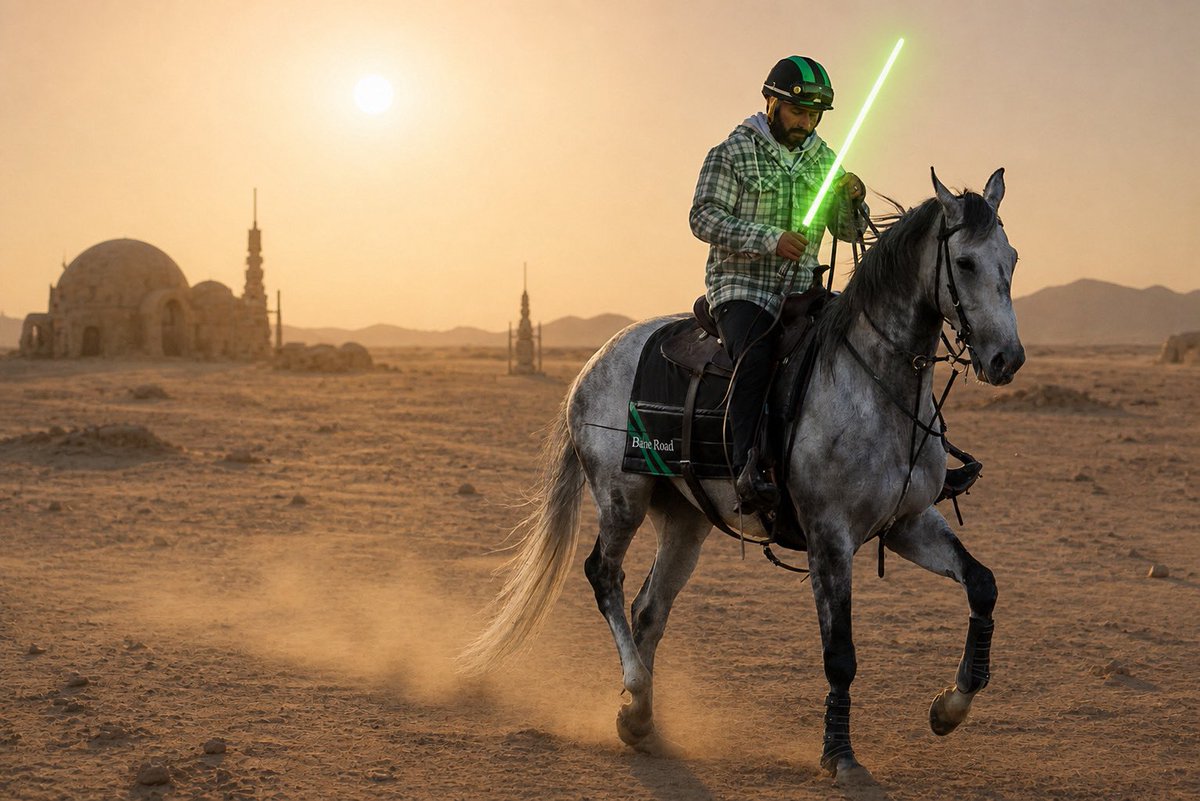
Happy Star Wars Day 🌌
May The Fourth be with you! 🟢⚫️
Barber & I riding through Tatooine the desert planet on the Outer Rim.
Original pic: Samantha Decker
#Starwars#maythefourthbewithyou#starwarsday#maythe4th
@trumanfrancis It is possible to scan all the way up to the knee with the standing PET machine. But yes, most focus on the fetlock for the reason you stated.
McPeek said the scratched Kentucky Derby horse underwent both X-rays and a PET scan; check out the link for more comments from the frustrated trainer: https://t.co/lIX64Zimnc
@Flameaway3 Every vet may not be comfortable reading PET scans, but Dr. Spriet, who evaluated Right to Party's scans, has seen and evaluated more than probably anyone in the country. He's conducted multiple studies in relation to their use in racehorses in Southern California.
@maggimoss I totally agree, it's a very difficult issue. None of us wants the horses to get hurt; we just have to figure out how to get on the same page. Communication, respectful and forthcoming, will be key, but there is still no easy answer.