Clergy | Founder & CEO at @SentrixCore | AI Systems Architect | Technology Entrepreneur | Product Strategist | Business Growth Leader | Intelligent Solutions
Nigerian youths, take back your country!
Nigerian youths, take back your country!
Nigerian youths, take back your country!
Nigerian youths, take back your country!
Nigerian youths, take back your country!
Nigerian youths, take back your country!
Nigerian youths, take back your country!
Nigerian youths, take back your country!
We did not stop at computers and digital learning. Mr Gerald Ilukwe, Chief Executive Officer of Galaxy Backbone Plc, commended our rollout of VSAT internet access to over 500 secondary schools, describing it as incomparable to what had been achieved in any other state in the country. He particularly recognised that ours was the first state government to treat mass broadband connectivity in public schools as essential infrastructure rather than a token pilot project.
These endorsements are important because they came from people and institutions with direct knowledge of the technology industry and its deployment across Africa. They demonstrate that our investments in education were not merely about constructing buildings; we were preparing Anambra’s children for a world increasingly driven by knowledge, science, and technology.
Public secondary schools received buses, some even received two, primarily for school runs, the transportation of essential supplies, and emergencies. We also released ₦525 million directly to schools for the construction of sick bays and dispensaries and provided principals with intervention funds to address erosion and other urgent infrastructural challenges.
I took a personal interest in the condition of our schools. I personally visited every secondary school in the state, often unannounced. I ate with the students in boarding schools and quietly inspected their dormitories, classrooms, and other facilities to ascertain their actual condition. I did not want to depend entirely on official reports. In fact, all the senior prefects had my telephone numbers and could call me whenever they wished. I believed in listening directly to those who used the facilities every day.
Teachers and Academic Standards
We understood that no educational system could rise above the quality and commitment of its teachers and administrators. We recruited 2,000 teachers for primary schools and 5,000 teachers, alongside another 2,000 special-subject teachers, for secondary schools. We also made financial provisions to cover their salaries for two years so that our successor would not inherit an immediate financial burden.
We ensured prompt payment of teachers’ salaries and allowances, cleared outstanding pension and gratuity arrears, restored teacher promotions, and removed the ceiling that had prevented some teachers from progressing beyond Grade Level 16. Outstanding principals and teachers were also regularly recognised and rewarded.
Technical, Vocational and Adult Education
Our educational vision went beyond conventional academic institutions. We fully renovated and re-equipped the Government Technical Colleges at Onitsha, Nkpor, and Umuchu, secured accreditation for several technical programmes, strengthened Adult Education Centres and Market Schools, and supported vocational education and youth empowerment initiatives.
We also equipped 53 nomadic and migrant schools and sustained campaigns against school dropout. Our objective was simple: every child deserved an opportunity to learn, irrespective of background or location.
Higher Education
At Chukwuemeka Odumegwu Ojukwu University, we constructed or completed over 40 projects. These included the Faculties of Law, Engineering, Agriculture, Management Sciences, Arts, and Social Sciences, as well as the Mass Communication Complex and studios.
Other projects included the Administrative Complex, engineering workshops and laboratories, departmental buildings, hostels, an E-learning and Research Centre, internal roads, water supply infrastructure, electricity-generating facilities, and campus landscaping.
We released ₦5 billion to the university for infrastructural development and facilitated the construction of two 250-bed hostels through the Central Bank of Nigeria under the leadership of Dr Kingsley Moghalu, then Deputy Governor of the apex bank.
NIGERIANS, GO AND VERIFY (3)
Building the Future Through Education
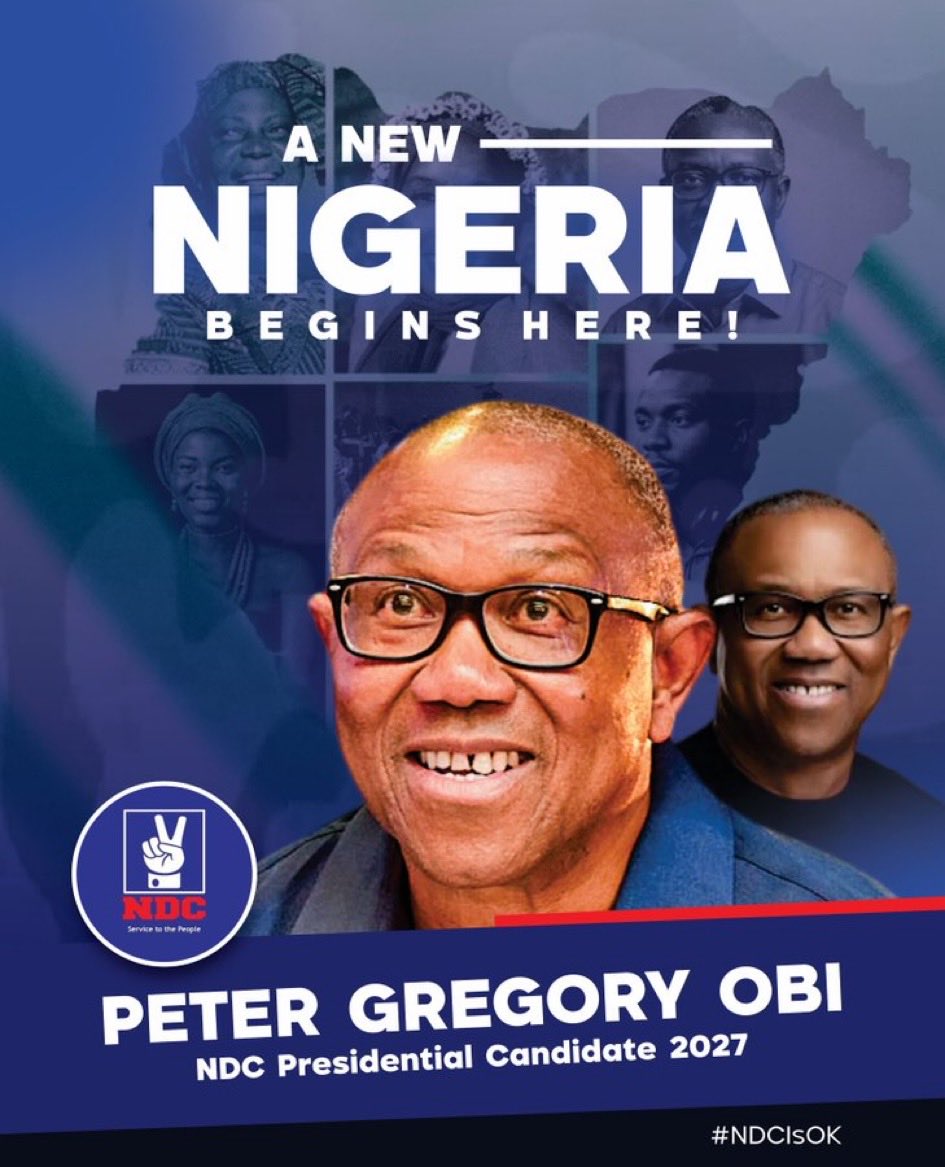
Peter Obi
In the first two instalments of this series, I explained how we approached the task of building strong institutions and laying a solid foundation for the development of Anambra State. One of the most important institutions we invested in was education.
For me, education was not a political game or a convenient political promise. Even before I ventured into politics, I had always regarded it as the foundation of meaningful development and the most enduring investment any government can make in its people. I believe that the future of any society depends largely on the quality of its educational institutions, teachers, learning environment, and opportunities available to its young people.
This conviction informed our decision to invest across the entire educational spectrum, from primary schools to universities, technical institutions, and adult education.
Basic and Secondary Education
One of our first major decisions was to return mission and privately owned primary and secondary schools to their original proprietors while retaining government support. We also provided billions of naira to assist in rehabilitating the returned schools, restoring the partnership between government and religious institutions that had historically contributed to educational excellence.
This policy attracted international attention. Professor Paul Collier, the Oxford economist and World Bank consultant, led a World Bank-commissioned study of Anambra’s educational transformation. His team examined our decision to return schools to their original missionary owners while retaining government responsibility for funding teachers’ salaries and supporting infrastructure. The team described the partnership model as a revolution in public service delivery and recommended it as a model that could be replicated by other Nigerian states and developing countries. We believed then, as we do now, that government does not necessarily have to own every institution to discharge its responsibility effectively. What matters is ensuring that every child has access to quality education.
For those who claim that we built no schools, I invite them to verify our records. We constructed five-classroom blocks in virtually all of the 177 communities in Anambra State, one of the most extensive community-based school infrastructure programmes undertaken by any state government. The town union chairmen and community leaders of that period can attest to this.
We also renovated hundreds of dilapidated schools, including some where trees had literally grown through abandoned buildings. Comprehensive Secondary School, Onitsha, and Oraukwu Grammar School are examples.
Beyond infrastructure, we distributed approximately 40,000 computers to schools, including more than 22,500 HP laptops. We equipped secondary schools with Microsoft Academies and connected schools across the state to the internet. We supplied generators, established and stocked libraries, revived school sporting activities, and installed boreholes in over 300 schools, including all girls’ schools. We also provided funding to support sporting activities in all our secondary schools.
These technology investments attracted remarkable international recognition. Mr Fabrice Campoy, Managing Director of the Personal Systems Group at HP Inc., described our procurement and distribution of over 22,500 HP laptops as the biggest project of its kind in the Middle East and Africa. Similarly, Mr Ken Spann, then Country Manager and Head of Microsoft Nigeria, described the establishment of Microsoft Academies in more than 500 Anambra secondary schools as the most extensive deployment of its kind in Africa at the time.
Endless Human Bloodletting and Failure of Intelligence
I am deeply saddened and troubled by reports that at least nine people were killed in the Zuwagal community, Mangu Local Government Area of Plateau State, in yet another assault on innocent Nigerians. These deaths have occurred amid a deeply concerning pattern of recurring attacks, displacement and the destruction of communities throughout the country.
Data from the past two weeks are alarming. OpenWatch's security incident records show 261 reported deaths across Nigeria between 2 and 15 November 2026, including 24 in Plateau during the first week and 15 during the second. Plateau also reported additional attacks on 16 November.
These victims are not merely numbers. They were fathers, mothers, children and breadwinners whose lives were abruptly ended, leaving families and entire communities to mourn.
Why are communities being threatened without receiving adequate protection? Why are intelligence reports failing to result in preventive action? How many more innocent Nigerians must lose their lives before decisive measures are implemented?
I call on the Government and security agencies to immediately reinforce security operations in vulnerable communities; thoroughly investigate these attacks and ensure that both the perpetrators and those who support them face justice; establish reliable early-warning and rapid-response systems; deliver humanitarian aid and rehabilitation services to displaced families; and release transparent, accurate casualty figures for all affected communities.
We must also confront the root causes of insecurity by strengthening accountable institutions, intelligence gathering, justice, education, economic opportunity and meaningful engagement with communities.
Every Nigerian life is valuable, regardless of ethnicity, religion or political affiliation. The right to life must never be subject to negotiation.
My deepest condolences go to the bereaved families and the people of Plateau State. May God comfort them and bless our country with peace.
Nigeria must do more than mourn those who have died. We must protect those who are still living. -PO
CLARIFICATION: MY MEETING WITH US CONGRESSIONAL LEADERS WAS NOT AN ENDORSEMENT-SEEKING MISSION
I wish to address the inaccurate interpretation presented in certain media reports concerning my recent engagements with members of the United States Congress in Washington, DC.
As I expressly noted in my remarks, my visit to the United States was not intended to secure an endorsement, and I did not characterise my meetings as endorsements of my political aspirations by the US Congress or any of its members.
The primary purpose of the visit was to engage with congressional leaders and other influential American stakeholders, exchange perspectives, and discuss matters related to Nigeria’s development, the welfare of our citizens and, most importantly, the consolidation of our democracy.
I am especially concerned with strengthening democratic institutions, advancing accountability, and ensuring that Nigeria’s electoral process produces elections that are free, fair, transparent and credible. These matters should concern every Nigerian who is committed to our country’s future.
I consider engagements of this kind valuable, and I encourage other Nigerian political leaders, especially those seeking public office, to pursue similar discussions with international stakeholders. Our democracy can be strengthened through constructive dialogue, the exchange of experiences and a shared commitment to credible elections.
Nigeria’s democratic future is far too consequential to be distorted by sensational headlines or inaccurate interpretations. My mission centred on Nigeria, its people and the future of our democracy—not on endorsing any individual. -PO
International Engagements to Strengthen Nigeria’s Democracy Continue.
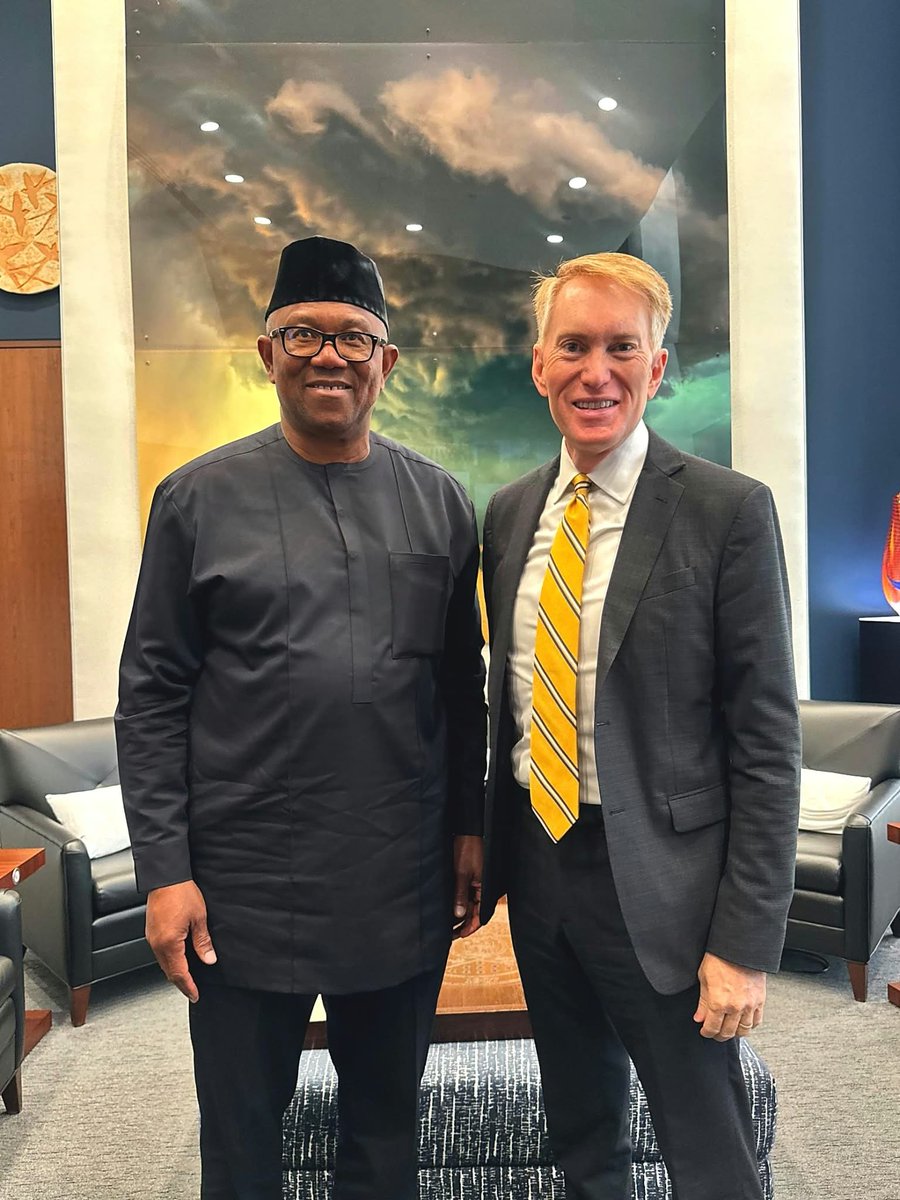
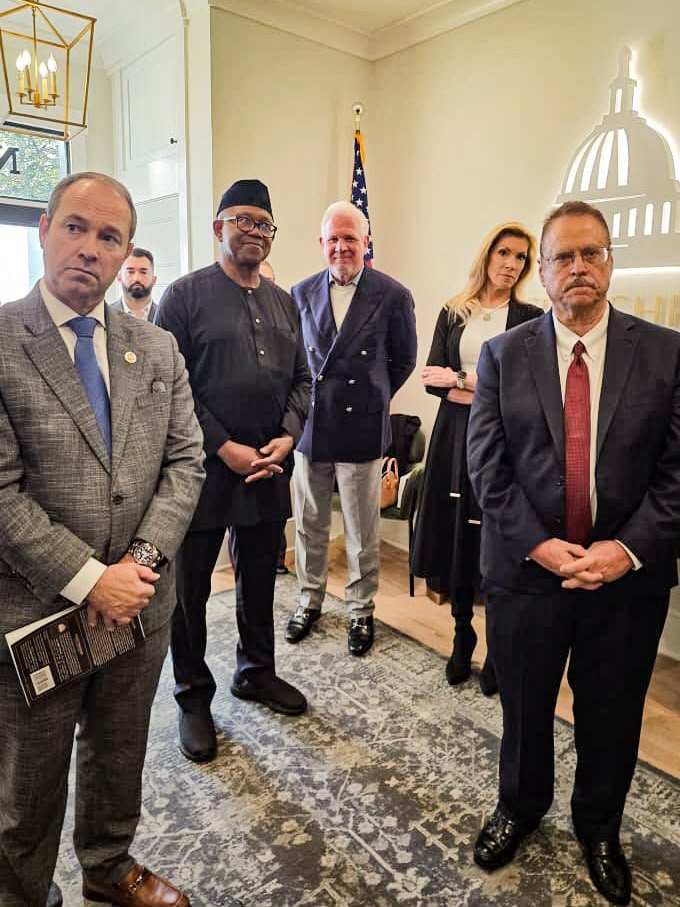
Yesterday, November 17, the second day of our engagements on Capitol Hill in Washington, D.C., we visited the United States Senate and met with some senators, including Senator James Lankford, who kindly invited me over to his office.
I am deeply grateful to Senator Lankford for his warm reception, generous time, and meaningful exchange of views on strengthening democratic institutions, fostering peace, and promoting our shared values.
Our conversations underscored the importance of international collaboration, effective governance, credible democratic processes, and the security and well-being of all Nigerians.
These engagements offer a further opportunity to deepen relationships and advance our shared vision of a peaceful, united, and prosperous Nigeria.
Our commitment to building a nation that serves every Nigerian remains steadfast.
A New Nigeria Is POssible! -PO
WASHINGTON, DC : PRESENTING NIGERIA’S DEVELOPMENT AND DEMOCRATIC FUTURE ON THE GLOBAL STAGE.
Yesterday, Monday, November 16, I arrived in Washington, DC, for a series of significant meetings and engagements with congressional leaders from both the U.S. House of Representatives and the Senate, as well as other influential American figures. These discussions focused on vital matters affecting Nigeria’s development, the well-being of our people, and the future of our democracy.
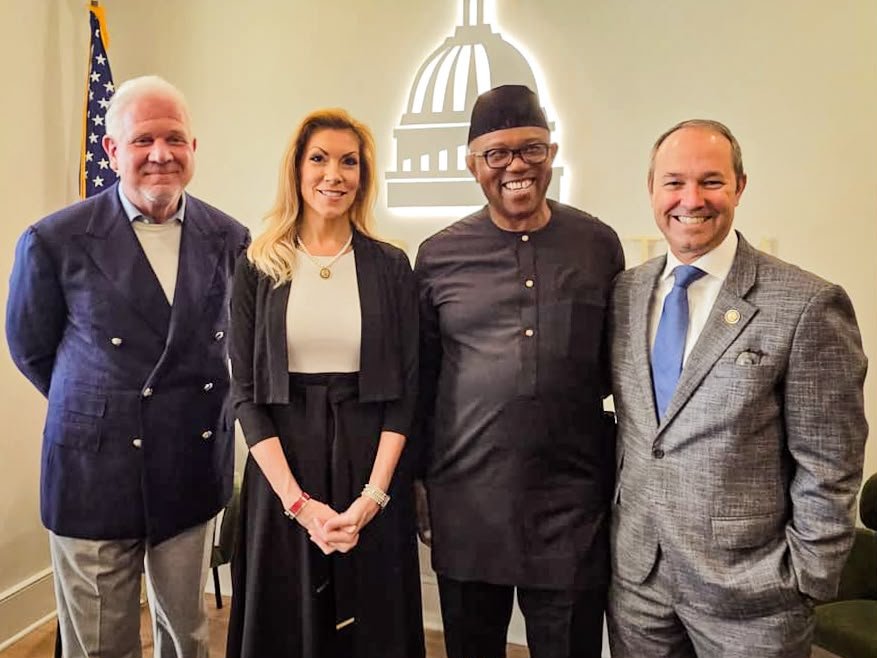
I began the day with a substantive interview with renowned American television commentator Glenn Beck. Our conversation addressed Nigeria’s challenges, the pressing need for accountable leadership, the responsible management of our vast human and natural resources, and the opportunities to establish Nigeria among the world’s leading nations.
I also met with prominent American leaders, including Congressman Marlin Stutzman, Congresswoman Beth Van Duyne, Congressman Todd Tiahrt, Suzanne Bock Grisham, retired U.S. Army Colonel Albert V. Short, and other esteemed stakeholders.
One of the day’s principal highlights was my address on Capitol Hill, during which I underscored the urgent importance of international cooperation and support for Nigeria’s advancement, particularly in the areas of national unity, security, economic prosperity, and the welfare of our citizens.
Our conversations also addressed the protection of Nigeria’s emerging democracy and the strengthening of democratic institutions to ensure elections are free, fair, transparent, and credible, accurately reflecting the will of the Nigerian people.
Nigeria has immense potential to emerge as a leading nation within the global community. What is urgently required is accountable leadership, responsible stewardship of our resources, resilient institutions, and an authentic commitment to the security, unity, and well-being of every Nigerian.
Throughout these engagements, my message remained unequivocal: Nigerians must determine Nigeria’s future. Every vote must be counted, the rights of every citizen must be safeguarded, and the people’s will must consistently prevail.
I remain encouraged by these engagements and firmly committed to working with Nigerians at home and in the diaspora, alongside our international partners, to build a peaceful, secure, united, and prosperous Nigeria.
Our journey continues. Our determination remains steadfast.
A New Nigeria is POssible! -PO
The woman with the issue of Blood. Mark 5:25-34.
Rom.10.9 - That if thou shalt confess with thy mouth the Lord Jesus, and shalt believe in thine heart that God hath raised him from the dead, thou shalt be saved.
Jesus Christ is passing by today, do you want to touch Him ? Just Believe
Credit: Dada Jeremiah
I saw this video on TikTok and I feel like sharing.
Normally, who cares about one Obio Akpor ogogoro drunkard 😏
But that drunkard needs to be schooled and understand there's life after politics.
Unrepentant bastard
The day I saw some lawmakers attempting to turn the National Assembly into a platform for singing "On Your Mandate We Shall Stand" in solidarity with Tinubu during his Democracy Day address, rather than maintaining the dignity and independence expected of the legislature, was the day it dawned on me that the institutional rot in Nigeria runs deeper than many of us realise.
The major problem in Nigeria today is corruption and the criminal cost of governance. Shut it down and you will free up resources for critical areas of development.
It is not rocket science, HE Peter Obi has done it before, he will do it again.