Hungary sent 200,000 men to help Hitler destroy the Soviet Union. On the Don in January 1943, the Red Army smashed that army in a matter of weeks.
Hungary declared war on the USSR on June 27, 1941, five days after Germany invaded. Its 2nd Army held the Don south of Voronezh. The Soviet assault began on January 12, 1943, and Hungarian defenses collapsed within days. Around 120,000 Hungarian soldiers were killed, wounded or captured.
On January 24 their own commander, Colonel General Gusztáv Jány, wrote in an order that "the 2nd Army has lost its honour." What was left of it was pulled off the front and used for rear duty.
Hungary was one of many. Romania, Italy, Finland, Slovakia, Croatia and Spain's Blue Division all sent troops east with the Wehrmacht. The West tells the war as Germany against everyone. On the Eastern Front it was half of Europe against the USSR.
Every one of those countries is in NATO today.
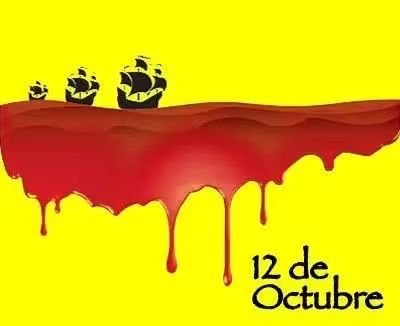
11 de octubre, ÚLTIMO DÍA DE LIBERTAD
*“En 1492, los nativos descubrieron que eran indios, descubrieron que vivían en América, descubrieron que estaban desnudos, descubrieron que existía el pecado, descubrieron que debían obediencia a un rey y a una reina de otro mundo y a un dios de otro cielo, y que ese dios había inventado la culpa y lo vestido, y había mandado que fuera quemado vivo a quien adorara al sol y a la tierra y a la luna y a la lluvia que lo moja.”
*"Para despojar a los indios de su libertad y de sus bienes, se despoja a los indios de sus símbolos de identidad. Se les prohíbe cantar y danzar y soñar a sus dioses, aunque ellos habían sido por sus dioses cantados y danzados y soñados en el lejano día de la Creación. Desde los frailes y funcionarios del reino colonial, hasta los misioneros de las sectas norteamericanas que hoy proliferan en América Latina, se crucifica a los indios en nombre de Cristo: para salvarlos del infierno, hay que evangelizar a los paganos idólatras. Se usa al Dios de los cristianos como coartada para el saqueo.”
*El arzobispo Desmond Tutu se refiere al África, pero también vale para América:
-Vinieron. Ellos tenían la Biblia y nosotros teníamos la tierra. Y nos dijeron: “Cierren los ojos y recen”. Y cuando abrimos los ojos, ellos tenían la tierra y nosotros teníamos la Biblia".
Eduardo Galeano
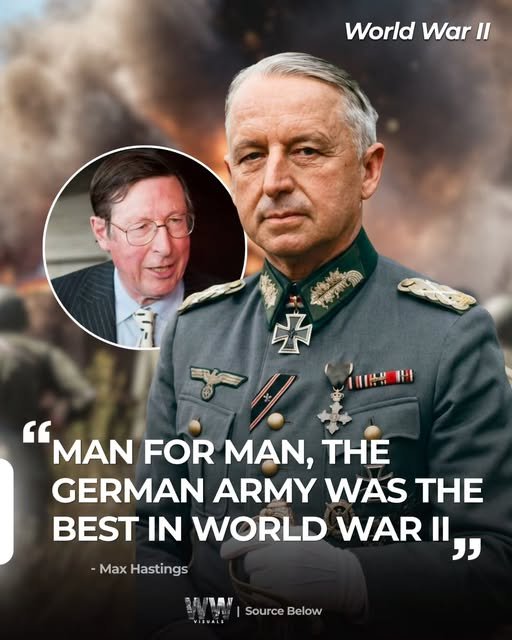
The Wehrmacht was often better at fighting battles than the Allies. Germany still lost because its leaders started a war the country could not finish.
Max Hastings’s point: German units were usually better trained, more flexible, and sharper at combined-arms tactics than their early opponents. That edge showed in France, the opening of Barbarossa, and many later defensive fights. It never solved the strategic problem.
Invading the Soviet Union while Britain was still in the war, and before Germany had the industry or logistics for a long continental campaign, was the fatal overreach. Planners expected a short war and a Soviet collapse. They underestimated manpower reserves, industry moved east of the Urals, and the regime’s willingness to absorb huge losses.
By December 1941 the drive on Moscow had stalled, the Red Army had counter-attacked, and Pearl Harbor brought the US fully in. Senior German officers already knew a quick victory was gone. Roughly four-fifths of German military dead fell on the Eastern Front. Winning at Kiev or Kharkov could not offset a two-front war against larger economies.
Tactical skill delayed the result. It did not change it.
"El verdadero fascismo no lleva camisas negras, vende progreso.
La sociedad de consumo logró lo que el fascismo no pudo hacer: borrar culturas, uniformar vidas y destruir Italia sin que nadie se diera cuenta.
El fascismo no fue derrotado, fue reemplazado."
Pier Paolo Pasolini
La Escuela de Agroecología El Tambo 2026 impulsa un proceso de capacitación para transitar hacia una producción sana, nutritiva y amigable con el ambiente, recuperando la huerta agroforestal y fortaleciendo los conocimientos de productores y comunidades.
"Todos somos caballas" no es solidaridad con Ceuta: es un eufemismo contra las personas migrantes.
Racismo camuflado tras un lema inventado por la derecha y la ultraderecha.
Ayer, Mbappé, Vinícius y Konaté se negaron a participar de la farsa con un gesto antirracista.
La acción política de Mbappé, Vinicius y Konaté alcanza una dimensión a escala mundial de tal envergadura que, en estos momentos, todos los fachas del @ppopular y @vox_es rabian como perros.
Gloria eterna a los tres del Real Madrid por su acto contra el fascismo.
Hoy, la derechista Ayuso del PP ha tenido que suspender su presencia en el inicio del curso universitario. No se ha atrevido a aparecer ante la masiva protesta de los alumnos y alumnas de la Universidad Autónoma. Es mentira que la mayoría de jóvenes sean fachas. Muy grandes.
“Todos somos caballas” no es un abrazo a Ceuta. Es un eslogan fabricado por la derecha y la ultraderecha para blanquear el rechazo a las personas migrantes.
Y frente a esa farsa, Mbappé, Vinícius y Konaté no jugaron el juego, se plantaron con un gesto valiente para desnudar el montaje… Hermosooooo
In 1971, Soviet geologists drilling for natural gas in the Karakum Desert of Turkmenistan hit a massive underground pocket. The ground collapsed, forming a giant crater nearly 70 meters wide.
Fearing the poisonous methane would spread to nearby villages, they made a simple decision: they set the gas on fire, expecting it to burn out in just a few days.
More than fifty-five years later, the fire is still burning.
The Darvaza Gas Crater, now famous worldwide as the “Door to Hell”, glows with intense orange flames day and night in the middle of the empty desert
Experience Pink Floyd’s "The Dark Side of the Moon", the full album from start to finish, played back at Polygon Portal in 360° spatial audio - in an intimate listening room in Soho, London.
New dates added due to sold-out shows...
Oct: 3, 4, 10, 17, 18, 22, 25 & 31.
Nov: 1.
📍Polygon Portal, Soho
Book at https://t.co/4T84pS8HvZ
#PinkFloyd #darksideofthemoon #PolygonPortal #SpatialAudio #SohoLondo
In Memoriam RICK WRIGHT!
(July 28, 1943 - September 15, 2008)
Richard Wright y David Gilmour perform "The Great Gig in the Sky"
#RichardWright#PinkFloyd
Rick Wright
Il 15 settembre del 2008 si spegneva Richard William Wright tastierista e fondatore dei Pink Floyd.
Musicista dotato di grande gusto capace di creare quei tappeti sonori che sono fondamentali per il sound dei Pink Floyd, il suono delle sue tastiere (dai Farfisa agli Hammond nei primi dischi) è uno dei marchi di fabbrica della band.
Nel 1978 pubblica il suo primo disco da solista Wet Dream (alla chitarrra Snowy White e Mel Collins ai fiati) un disco più che gradevole.
Licenziato da Waters nel corso delle registrazioni di The Wall (il bassista lo accusava di non essere produttivo), nel tour di supporto viene accreditato quale turnista e non come membro della band (ovviamente non suona in The Final Cut).
Nel 1984 con Steve Harris pubblica Identity con il marchio The Zee, progetto fallimentare e passato quasi inosservato.
Nel 1996 pubblica il suo ultimo disco da solista Broken China disco di ottima fattura forse sottovalutato realizzato con dei grandi musicisti quali Tim Renwick alle chitarre, Pino Palladino al basso e Manu Katché alla batteria e con l’ospitata di Sinéad O'Connor in Reaching for the Rail e Breakthrough.
Di seguito collabora con l'amico David Gilmour sia in studio che dal vivo. Partecipa alle registrazioni di A Momentary Lapse of reason anche se interviene quando buona parte delle tastiere sono già state registrate e non come membro del gruppo. E’ invece accreditato come membro del gruppo per il successivo The Division Bell disco in cui dopo molti anni si vede accreditare dei pezzi.
Molto spesso si tende a “ridurre” i Pink Floyd al duo Waters / Gilmour dimenticando l'apporto imprescindibile di Wright. In Animals ad esempio non ha alcun credito; eppure le tastiere sono splendide. Un grande musicista
@pinkfloyd #RickWright #Yesterdaypills #RockandOthers #Progrockpills #ProgRock #Musicalmind
Abuna Yemata Guh, Etiopía.
El santuario más inaccesible del planeta.
Tallado en un acantilado vertical, a cientos de metros de altura, en un lugar donde hoy ni siquiera llega maquinaria moderna con facilidad.
On June 8, 1969, Mick Jagger, Keith Richards, and Charlie Watts showed up at Cotchford Farm, Brian Jones’s country home, to inform him of an irreversible decision: he was out of The Rolling Stones.
Years of addiction, erratic behavior, and the loss of his creative leadership to the Jagger-Richards duo had pushed the relationship to a point of no return. The official excuse was that his legal troubles would prevent him from obtaining a visa for the upcoming U.S. tour. Richards recalled the moment with brutal coldness: “Hi, Brian… It’s over, buddy.” In exchange for his departure, Jones would receive $200,000 in severance plus an annual salary, but the emotional damage was done, and his replacement, Mick Taylor, was already lined up.
But the worst was yet to come: just three weeks later, in the early hours of July 3, 1969, Jones was found floating face down in his pool by his girlfriend, Anna Wohlin.
At just 27 years old, he became one of the first members of the tragic “27 Club.”
Although the autopsy ruled his death “accidental”—due to asthma and drowning following substance use—doubts persist to this day; Richards himself questioned the ruling, noting that Brian was an excellent swimmer. The most credible theory points to Frank Thorogood, a contractor working on the estate with whom Jones had a heated argument that night. It is said that Thorogood confessed to the murder on his deathbed years later, a version of events that Wohlin always supported.
Although the case was officially closed, the ghost of Brian Jones continues to linger, overshadowed by the immense shadow of the band he himself founded but which ultimately expelled him and buried him under the weight of its own success.