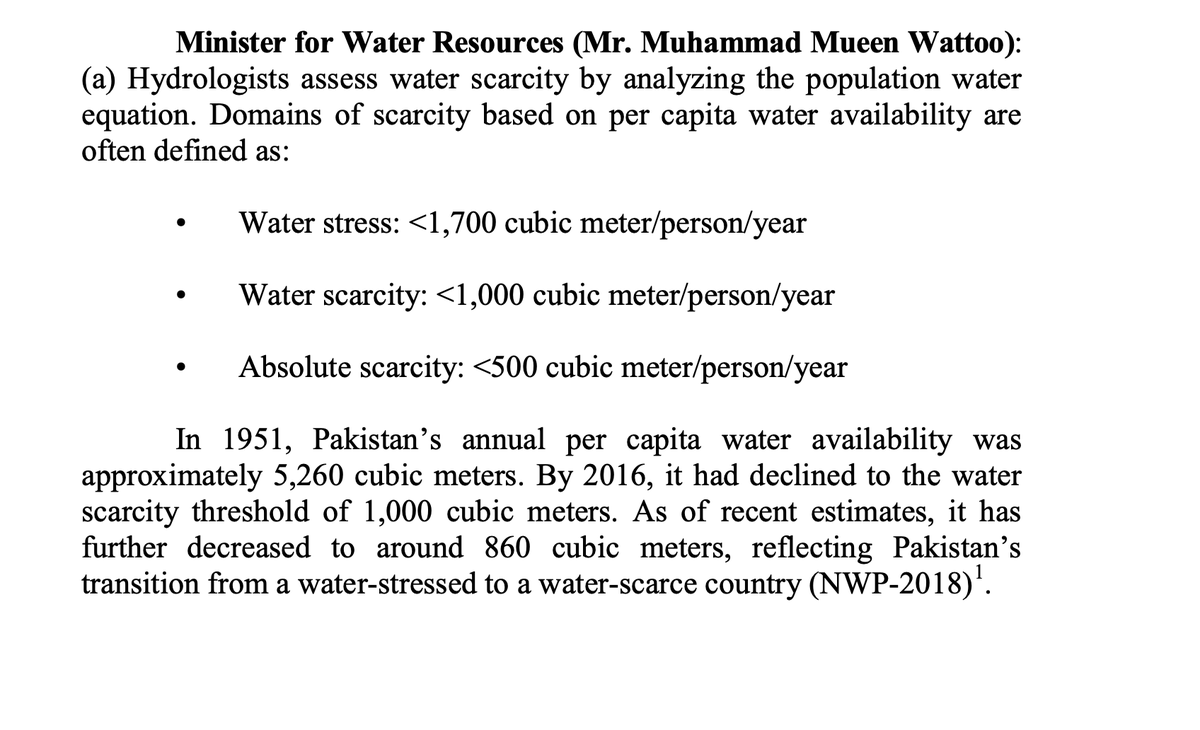
Pakistan is now officially water-scarce, with per capita water availability below the critical 1,000 m³/year mark, as reported to the National Assembly by the concerned minister.
In 1951, it was over 5,000 m³; today, it’s just 860 m³.
#WaterCrisis#PakistanWaterCrisis
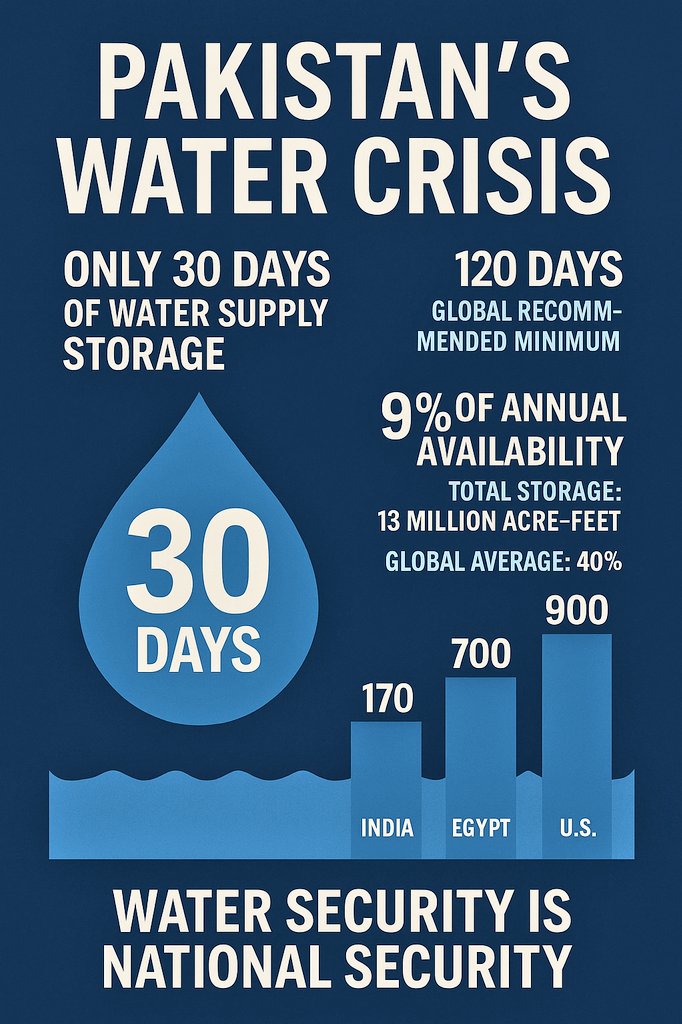
Pakistan can store only 30 days’ water, vs. 120-day global minimum.
Current capacity: 13 MAF = just 9% of yearly flow.
India stores 170 days, Egypt 700, US 900. Water security = national security. We must act before it's too late. Build dams before canals.
#Pakistan#WaterCrisis
Pakistan is on the brink of a catastrophic water crisis. As of 2024, per capita annual water availability has plummeted to just 860 cubic meters, down from 5,260 in 1951. In coming years, situation will become extreme. Urgent, decisive action is crucial to avert disaster.
@ZulfiqarAhmed69 From six years ago. In addition to being water stressed, we rank high in water profligacy also. No rush to make water reservoirs & small dams, make rainwater harvesting mandatory & encourage drip irrigation & vertical farming etc
https://t.co/G64mljEDnl
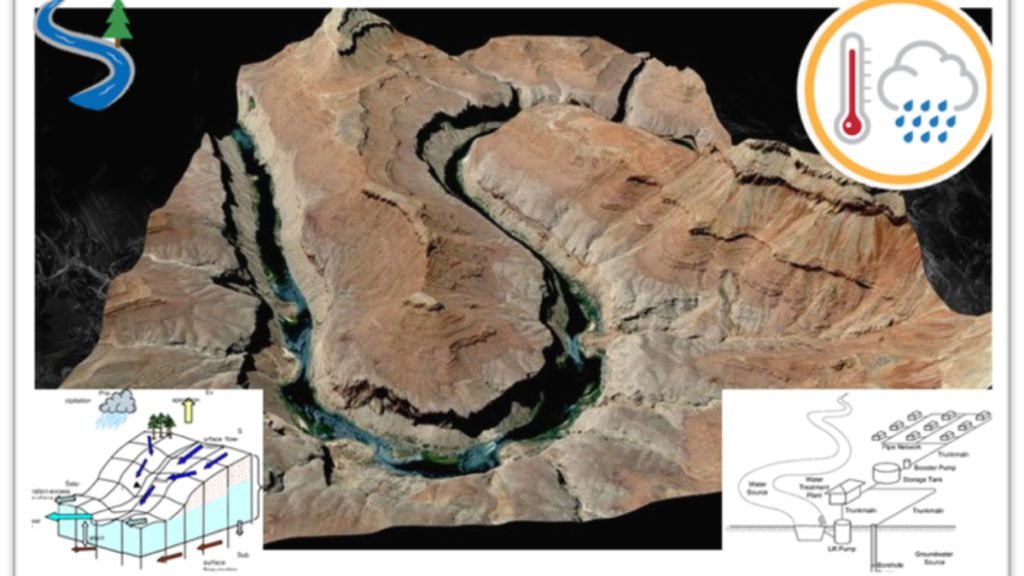
Recent #climatechange decreases underwater reservoirs due to increased scarcity &infrastructure damage. Dr. Muhammad Amjad #NUST uses #hydrology & found #rainwater#harvesting as a #sustainable solution having potential of 80,000 gallons/month.
Read More: https://t.co/9D7uEROdjI
#GroundwaterCrisis
We need a dedicated groundwater conservation ministry in Pakistan to curb our profligate use too & to push hydroponics, drip water irrigation, rainwater harvesting, small dam construction & water conservation daily
https://t.co/lg9Y6D1UZv
Pakistan is grappling with a severe water crisis driven by limited surface water resources, depleting groundwater, frequent climate shocks, and a rapidly growing population, ranking 14th among the world's highest water-risk nations.
What are we doing about it, if at all.
Under Indus Water Treaty, India must release 15 cumecs into the Ravi River. Disruption will devastate ground water levels, increasing scarcity and ecological imbalance downstream. Ensuring compliance is crucial for sustaining ecosystems and communities dependent on this lifeline.
Northern Pakistan so far has received little to no snowfall in December and January. The unusual situation sparks worries about a potential water shortage this year.
#PakistanWaterCrisis
Pakistan faces an unprecedented dry winter with just 1.1 mm of rainfall in December, 92% less than last year. January extends dry spell. In a nation already grappling with severe water stress, let's unite for water conservation. Every drop counts!
#SaveWater#WaterEmergency 🚱
Pakistan's water crisis has reached a critical level, with shrinking reserves, inefficient management, and climate change posing existential threats. Urgent action is needed to conserve, distribute, and innovate water resources for a sustainable future #WaterScarcity
To meet its current and future water demand,Pakistan should have water storage capacity of at least 40 MAF. Pakistan's current storage capacity is 9 MAF. Diamer Basha and Mohmand dams are expected to add approximately 10 MAF. We still need 20 MAF more.
#PakistanWaterCrisis
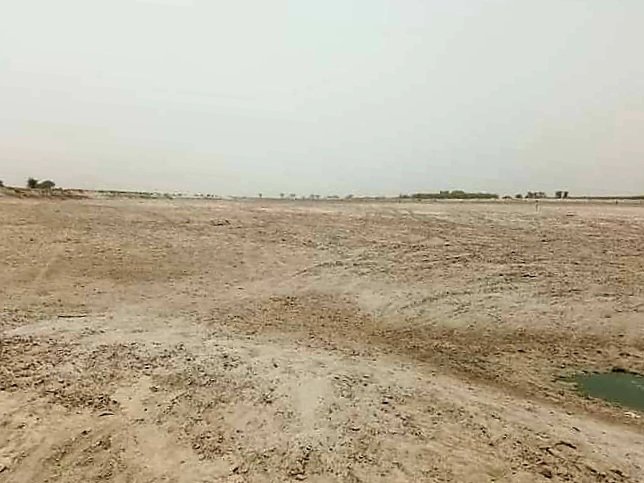
Pakistan's worst water scarcity fears have come true, as we've been hit by water shortages this year like never before. But unfortunately we are still irrigating our farms with with flooding, the most water intensive irrigation technique.
( Satluj, near Islam headworks 👇)
Pakistan is among the most water stressed countries in the world, facing acute water shortages.
In the year 2022, Pakistan is looking at water shortages between 25% and 30% during Kharif season. The preceding Rabi season saw a 28% water shortage.
Our rivers flow from May to September, when glaciers melt. This is also the monsoon season, when we receive most rains.
For the remaining 7 months, we receive little water in our rivers. But we can only store enough water to last for a month. What about remaining 6 months?
Pakistan lets 30 million acre feet of water pass through the system, without adequate storage facilities. Currently, we can only store water to last for 30 days of our needs. Diamir Bhasha dam will enhance it to 48 days. But we need to plan for 200 days, when rivers don't flow.
Pakistan is among the most water stressed countries in the world with a severe water shortage in winter months. Why is there water shortage?
Because nature is the only supplier. We can neither manufacturer, nor import water.
Solutions:
1️⃣Build dams
2️⃣Conserve & Value Water
Pakistan's current water storage capacity stands at 13.6 MAF, which in days terms is enough to last for 30 days of use, or, it is only 17% of our total requirements.
After completionof two under construction dams - Diamir Bhasha & Mohmad - storage capacity will go up to 24 MAF.
Eid Mubarak!
Let's not forget that there's a looming water crisis in Pakistan. We need to conserve every drop of water that we possibly can to save ourselves from running dry. Together, we can overcome this.
#PakistanWaterCrisis