📢 Thrilled to announce our lab’s latest publication! A small but exciting first step into #organoid and #organonchip research. It was made possible only through @LFerri123’s leadership and his firm belief in non-animal models. #NAMs
Great seeing this manuscript in print on patient-specific esophagus cancer-organ chip. Complete clinical mimicry Excellent work by @PalSanjima @RIMUHC1 with collaboration with @wyssinstitute @DonIngber https://t.co/MtfkQUwARb
Now out online in @Cancer_Cell . Fun writing this with @sundar__raghav and talented student Luke Tillman and other.
Reimagining HER2 therapy: Bridging oncogene addiction and immune modulation: Cancer Cell https://t.co/HNRkawoJYz
Only half of esophageal adenocarcinomas (EACs) are associated with background Barrett esophagus (BE). New integrated epidemiological & molecular data from @RFitzgerald_lab reinforces commonalities between the two reiterating that BE is universal precancer.
https://t.co/zykxPzzEQW
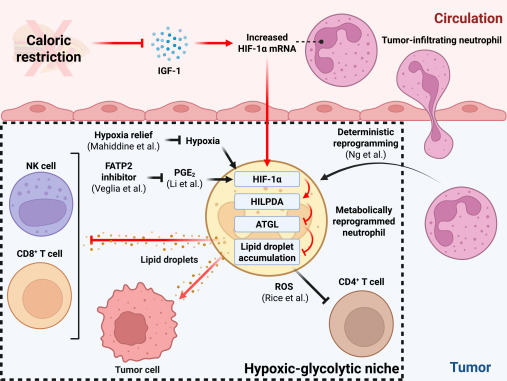
The 2026 "Cancer Hallmarks" update shows that tumor metabolism is the central node connecting the whole body. From brain signals to gut bacteria, metabolic reprogramming drives how tumors grow and resist treatment
https://t.co/KbbhCCk11R
via @imedverse
We’ve trained a multimodal AI model to turn routine pathology slides into spatial proteomics, with the potential to reduce time and cost while expanding access to cancer care.
This is really cool (and wild):
Scientists simulated a complete living cell for the first time. Every molecule, every reaction, from DNA replication to cell division.
The paper (Luthey-Schulten et al., Cell 2026, https://t.co/PXxXWKC8yp), just out today, used JCVI-Syn3A — a synthetic minimal bacterium with fewer than 500 genes. A 3D+time simulation of the full 105-minute cell cycle: DNA replication, protein translation, metabolism, division. Every gene, protein, RNA, and chemical reaction tracked through physical space.
It took years to build. Multiple GPUs. Six days of compute time per run.
And this is the simplest possible cell.
A human cell has ~20,000 genes. It lives in tissue. It interacts with neighbors. It differentiates. It responds to drugs in ways that depend on context we haven't fully measured.
Mechanistic simulation of the minimal cell costs 6 GPU-days for 105 minutes of biology. You cannot scale that to human cells. The complexity isn't 40x harder. It's exponentially harder.
This is why the field pivoted to data-driven models. You can't hand-encode the regulatory wiring of a human hepatocyte. But you can learn it — if you have the right perturbation data collected across enough diverse biological contexts.
The two approaches aren't competing. Papers like this generate the ground truth that future ML models need for validation. But the path to a clinically useful virtual cell runs through foundation models, not through scaling up mechanistic simulation.
Amazing work!
2. Although most work and attention has been on engineering T cells, macrophages are the most abundant immune cells in tumors and many strategies are now emerging to target these cells
Reviewed here https://t.co/dlg2A2rxfu
In Focus: Senescence as the Next Frontier in Cancer Research:Navigating the Rising Tide of Geriatric Oncology https://t.co/hPnpE1KJcm
By Tianxing Zhou, Jingrui Yan, Yu Zhang, Fanyue Shao, Jihui Hao, and colleagues at Tianjian Medical University Cancer Institute and Hospital
What an absolute honour and privilege to be the 22nd Julian Johnson lecturer at @pennsurgery! Such a remarkable thoracic surgery program run by Sunil Singhal.
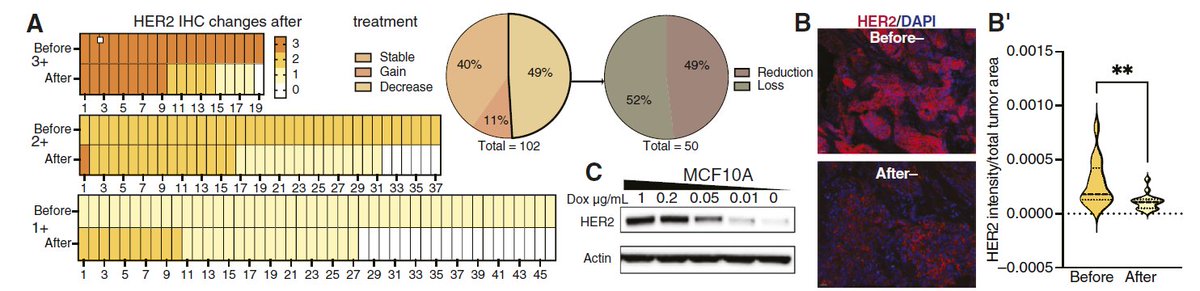
🧬🛡️ HER2-low tumors escape HER2 ADCs by losing the target
• True HER2 loss is uncommon in HER2-amplified disease but frequent in HER2-low, where HER2 isn’t oncogenic
• On HER2 ADC therapy, ~50% of tumors reduce HER2; among reducers, ~half become IHC 0
• Reduced HER2 → impaired ADC internalization, not payload resistance
• ERBB2 ECD variants disrupt antibody binding and phenocopy antigen loss
• Suggested strategy: multi-target payload delivery to bypass target dependence and improve durability
https://t.co/fAFUEr3V3p
Human organoids as 3D in vitro platforms for drug discovery: opportunities and challenges
https://t.co/356Ga8hxtS
This new Review by Clevers et al. discusses organoid generation methods and uses in preclinical drug discovery, as well as the regulatory and practical challenges