Yann LeCun says LLMs are strongest in domains where language itself is the substrate of reasoning, like math and code
They can solve problems, prove theorems, and write programs — but they are not creative mathematicians, software architects, or computer scientists
"their role is to help humans build"
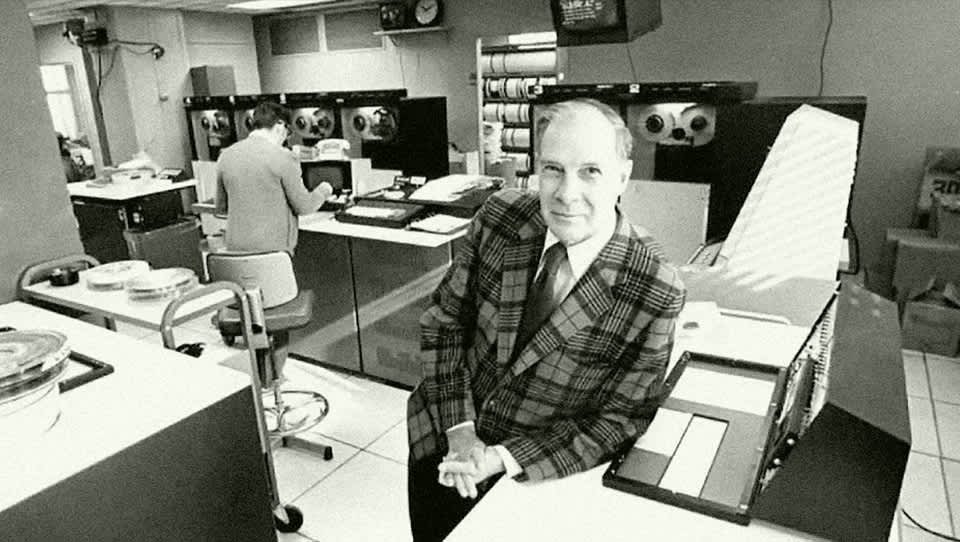
A man spends 50 years teaching at MIT.
He knows his time is running out.
So he records one last lecture — everything he knows, distilled into a single hour.
He died 5 months later.
This is that lecture.
The most important hour you'll watch this week. 👇
Bookmark it for later
A mathematician who shared an office with Claude Shannon at Bell Labs gave one lecture in 1986 that explains why some people win Nobel Prizes and other equally smart people spend their whole lives doing forgettable work.
His name was Richard Hamming. He won the Turing Award. He invented error-correcting codes that made modern computing possible. And he spent 30 years at Bell Labs sitting in a cafeteria at lunch watching which scientists became legendary and which ones faded into nothing.
In March 1986, he walked into a Bellcore auditorium in front of 200 researchers and told them exactly what he had seen.
Here's the framework that has been quoted by every serious scientist for the last 40 years.
His opening line landed like a punch. He said most scientists he worked with at Bell Labs were just as smart as the Nobel Prize winners. Just as hardworking. Just as credentialed. And yet at the end of a 40-year career, one group had changed entire fields and the other group was forgotten by the time they retired.
He wanted to know what the difference actually was. And he said it wasn't luck. It wasn't IQ. It was a specific set of habits that almost nobody is willing to follow.
The first habit was the one that hurts the most to hear. He said most scientists deliberately avoid the most important problem in their field because the odds of failure are too high. They pick a safe adjacent problem, solve it cleanly, publish it, and move on. And because they never swing at the hard problem, they never hit it. He said if you do not work on an important problem, it is unlikely you will do important work. That is not a motivational line. That is a logical one.
The second habit was about doors. Literal doors. He noticed that the scientists at Bell Labs who kept their office doors closed got more done in the short term because they had no interruptions. But the scientists who kept their doors open got more done over a career. The open-door scientists were interrupted constantly. They also absorbed every new idea passing through the hallway. Ten years in, they were working on problems the closed-door scientists did not even know existed.
The third habit was inversion. When Bell Labs refused to give him the team of programmers he wanted, Hamming sat with the rejection for weeks. Then he flipped the question. Instead of asking for programmers to write the programs, he asked why machines could not write the programs themselves. That single inversion pushed him into the frontier of computer science. He said the pattern repeats everywhere. What looks like a defect, if you flip it correctly, becomes the exact thing that pushes you ahead of everyone else.
The fourth habit was the one that hit me the hardest. He said knowledge and productivity compound like interest. Someone who works 10 percent harder than you does not produce 10 percent more over a career. They produce twice as much. The gap doesn't add. It multiplies. And it compounds silently for years before anyone notices.
He finished the lecture with a line I have never been able to shake.
He said Pasteur's famous quote is right. Luck favors the prepared mind. But he meant it literally. You don't hope for luck. You engineer the conditions where luck can land on you. Open doors. Important problems. Inverted questions. Compounded hours. Those are not traits. Those are choices you make every single day.
The transcript has been sitting on the University of Virginia's computer science website for almost 30 years. The video is free on YouTube. Stripe Press reprinted the full lectures as a book in 2020 and Bret Victor wrote the foreword.
Hamming died in 1998. He gave his final lecture a few weeks before. He was 82.
The lecture that explains why some careers become legendary and others disappear is still free. Most people who could benefit from it will never open it.
Top 100 Most Influential Persons in History
1. Jesus
2. Napoleon
3. Muhammad
4. William Shakespeare
5. Abraham Lincoln
6. George Washington
7. Adolf Hitler
8. Aristotle
9. Alexander the Great
10. Thomas Jefferson
11. Henry VIII of England
12. Charles Darwin
13. Elizabeth I of England
14. Karl Marx
15. Julius Caesar
16. Queen Victoria
17. Martin Luther
18. Joseph Stalin
19. Albert Einstein
20. Christopher Columbus
21. Isaac Newton
22. Charlemagne
23. Theodore Roosevelt
24. Wolfgang Amadeus Mozart
25. Plato
26. Louis XIV of France
27. Ludwig van Beethoven
28. Ulysses S. Grant
29. Leonardo da Vinci
30. Augustus
31. Carl Linnaeus
32. Ronald Reagan
33. Charles Dickens
34. Paul the Apostle
35. Benjamin Franklin
36. George W. Bush
37. Winston Churchill
38. Genghis Khan
39. Charles I of England
40. Thomas Edison
41. James I of England
42. Friedrich Nietzsche
43. Franklin D. Roosevelt
44. Sigmund Freud
45. Alexander Hamilton
46. Mohandas Karamchand Gandhi
47. Woodrow Wilson
48. Johann Sebastian Bach
49. Galileo Galilei
50. Oliver Cromwell
51. James Madison
52. Gautama Buddha
53. Mark Twain
54. Edgar Allan Poe
55. Joseph Smith, Jr.
56. Adam Smith
57. David, King of Israel
58. George III of the United Kingdom
59. Immanuel Kant
60. James Cook
61. John Adams
62. Richard Wagner
63. Pyotr Ilyich Tchaikovsky
64. Voltaire
65. Saint Peter
66. Andrew Jackson
67. Constantine the Great
68. Socrates
69. Elvis Presley
70. William the Conqueror
71. John F. Kennedy
72. Augustine of Hippo
73. Vincent van Gogh
74. Nicolaus Copernicus
75. Vladimir Lenin
76. Robert E. Lee
77. Oscar Wilde
78. Charles II of England
79. Cicero
80. Jean-Jacques Rousseau
81. Francis Bacon
82. Richard Nixon
83. Louis XVI of France
84. Charles V, Holy Roman Emperor
85. King Arthur
86. Michelangelo
87. Philip II of Spain
88. Johann Wolfgang von Goethe
89. Ali, founder of Sufism
90. Thomas Aquinas
91. Pope John Paul II
92. René Descartes
93. Nikola Tesla
94. Harry S. Truman
95. Joan of Arc
96. Dante Alighieri
97. Otto von Bismarck
98. Grover Cleveland
99. John Calvin
100. John Locke
Source: Steven Skiena and Charles B. Ward are the authors of Who’s Bigger? Where Historical Figures Really Rank, Cambridge University Press, 2013.
Disclaimer: The views expressed are solely their own.
Master AI step-by-step with this structured roadmap 👇
💡 Covers:
✅ Simple AI Models (ChatGPT, Claude, Gemini)
✅ Basic AI Agents (Make, Zapier, n8n)
✅ Agentic AI (LangChain, CrewAI, AutoGen)
Each stage includes what to learn, build & apply — from prompts → reasoning → orchestration → full automation.
Also, I’ve compiled 1000+ AI Materials — including Agentic AI, LLMs, Prompting, RAG, SQL & Automation Guides 💾
To get it 👇
1️⃣ Follow me (@daievolutionhub) so I can DM you
2️⃣ Repost this post 🔁
3️⃣ Comment “AI Mastery” 💬
Follow @daievolutionhub for more AI roadmaps, tools & developer resources 🚀
A 22 milioni di anni luce di distanza da noi è esplosa #SN2024ggi. Il #VLT dell’@ESO è riuscito a catturare la fase iniziale della #supernova: un’osservazione talmente precoce da consentire di osservarne la forma: più simile a un’oliva che a una sfera.
https://t.co/pzlBU4Rc8K
Even as it gets richer, America has been falling behind when it comes to life expectancy: a generation ago, it was in the middle of the pack; now it is behind most other rich-world countries https://t.co/QQsccHAO4X