This is the problem with liberal Eurofederalism.
Its definition of what it means to be European is based on a set of values rather than on heritage.
Logically, this means that if you do not fully adhere to those values, you cease to be European. You are excluded and insulted simply for wanting to preserve your people’s demographic continuity.
This is, of course, an utterly nonsensical position and demonstrates why right-wing Pan-Europeanism is the more consistent approach to European unity.
Samuel Huntington once observed that "if demography is destiny, population movements are the motor of history." He continued: "History itself cannot explain why conflicts occur. The numerical expansion of one group generates political, economic and social pressures on other groups and induces countervailing responses. Even more important, it produces military pressures on less demographically dynamic groups."
If we take Carl Schmitt's friend-enemy distinction seriously as the basic structure of all politics, demographics move naturally to the centre. Social and economic relations generate existential tensions across every sphere of life and thought, because different groups occupy different positions within the socioeconomic order, and because how a group acts depends on how it perceives and interprets the groups around it.
The questions of who, where, doing what, and why apply across every sphere of life. Class, culture, religion, ethnicity, sex, and every other concrete factor shapes how an individual or a group orients itself toward existence and toward ideas.
The material - the individual or the group - presupposes the normative: the meaning that material ascribes to life. The two are inseparable, and only by analysing the existential relations between groups can we "explain history" and account for why conflicts occur.
"The days of 27 different migration policies are over. Migration is a European challenge, and it requires a European response. The Pact finally gives us one."
This is the first step in the right direction! We further need one denaturalisation and deportation policy.
Alexis de Tocqueville, like Klemens von Metternich, foresaw the central role the media apparatus would play in the age of mass society. A newspaper - or media more broadly - becomes a substitute for the social ties that aristocracy once provided automatically. It is quite remarkable that Tocqueville identified this underlying mechanism so sharply, well before the arrival of mass media in the centralised, managerial form that Samuel Francis describes in the tweet below.
"Newspapers become more necessary in proportion as men become more equal and individualism more to be feared. To suppose that they only serve to protect freedom would be to diminish their importance: they maintain civilization. I shall not deny that in democratic countries newspapers frequently lead the citizens to launch together into very ill-digested schemes; but if there were no newspapers there would be no common activity. The evil which they produce is therefore much less than that which they cure.
Newspapers make associations and associations make newspapers.
A newspaper can survive only on the condition of publishing sentiments or principles common to a large number of men. A newspaper, therefore, always represents an association that is composed of its habitual readers. This association may be more or less defined, more or less restricted, more or less numerous; but the fact that the newspaper keeps alive is a proof that at least the germ of such an association exists in the minds of its readers.
The more equal the conditions of men become and the less strong men individually are, the more easily they give way to the current of the multitude and the more difficult it is for them to adhere by themselves to an opinion which the multitude discard. A newspaper represents an association; it may be said to address each of its readers in the name of all the others and to exert its influence over them in proportion to their individual weakness. The power of the newspaper press must therefore increase as the social condition of men become more equal."
- Alexis de Tocqueville, Of the relation between public associations and the newspapers in Democracy in America
"The intellectual and verbalist professions constitute the intelligentsia of the managerial regime and consist of the class of persons who make their living by writing, speaking, researching, thinking and communicating. They include the academics and research staffs of universities and foundations, literary and aesthetic intellectuals, actors and entertainers, artists, scientists, teachers, broadcasters, journalists, clergymen and lawyers. The members of these intellectual verbalist professions are directly dependent on the mass media for their livelihoods, status, power and functions in mass society and they share a common interest in the continuing enlargement of the mass organizations of culture and communication and the extension of the social functions of these organizations. The managerial intelligentsia also participates in the direction and operation of the mass organizations of the economy and the state depends on these organizations for the economic and political functions and for material rewards and power through subsidization, tax exemptions, grants and endowments. The managerial intelligentsia is thus closely integrated and interdependent with the managerial elite as a whole and constitutes and integral part of the managerial apparatus of power in mass society.
The consolidation of managerial control of the mass organizations of culture and communication enables the emergent elite to achieve what Italian Marxist theorist Antonio Gramsci called cultural hegemony: 'the permeation throughout civil society – including the whole range of structures and activities like trade unions, schools, the churches and the family – of an entire system of values, attitudes, beliefs, morality etc. that is in one way or another supportive of the established order and the class interests that dominate it.' Cultural hegemony allows the managerial elite to create and manipulate 'consent' on a mass level as well as to challenge bourgeois cultural dominance and discipline the mass audiences of the organizations of culture and communication with a minimal reliance on coercion."
- Samuel Francis, Leviathan & Its Enemies
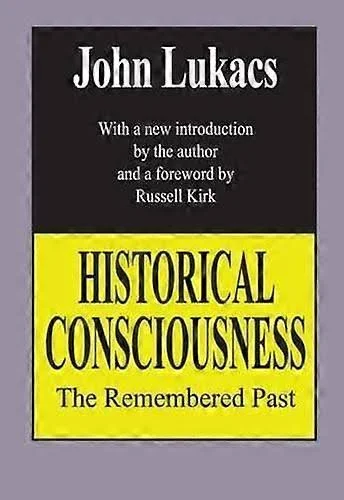
"The traditional ingredients of nationality are common language, common institutions, common culture, sameness of race, consciousness of history, consciousness of territorial limits, ancestral ties, permanence of residence. These are not categorical requirements: all of these eight ingredients need not always coexist: still, the majority of them must somehow coexist, in order to form nationality in the European sense. The American idea of nationality has been ideological rather than patriotic, populist rather than traditional, universal as well as distinctly particular in its portents, more superficial but also more generous than nationality in Europe. Nomen est omen: the United States, like the USSR, is a general and open term; it suggests not a national society but rather something that is, at least implicitly, universal: like 'Soviet citizen,' 'American citizen' marks adherence to certain political principles rather than a certain nationality; there is theoretically no limit to what it may include."
- John Lukacs, Historical Consciousness: The Remembered Past
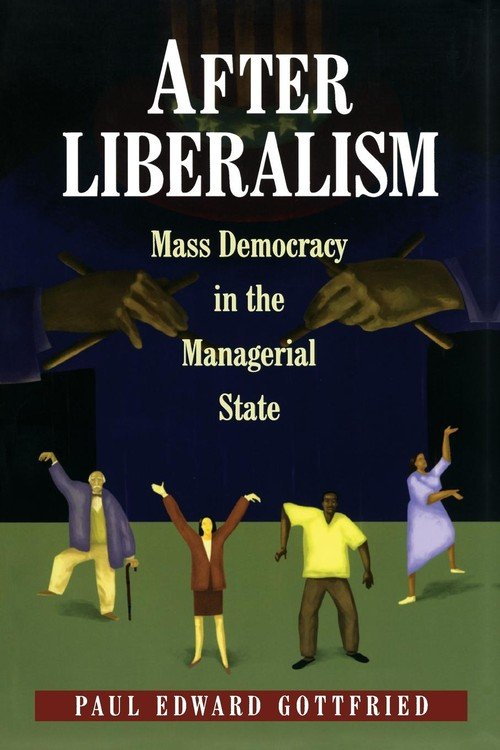
Pat Buchanan was far from a perfect man, but on certain issues - immigration chief among them - he was ahead of his time. Three American intellectuals closely associated with his worldview are well worth reading: Paul Gottfried, Samuel Francis, and John Lukacs.
Europeans and Americans alike can learn a great deal from them.
"The intellectual and verbalist professions constitute the intelligentsia of the managerial regime and consist of the class of persons who make their living by writing, speaking, researching, thinking and communicating. They include the academics and research staffs of universities and foundations, literary and aesthetic intellectuals, actors and entertainers, artists, scientists, teachers, broadcasters, journalists, clergymen and lawyers. The members of these intellectual verbalist professions are directly dependent on the mass media for their livelihoods, status, power and functions in mass society and they share a common interest in the continuing enlargement of the mass organizations of culture and communication and the extension of the social functions of these organizations. The managerial intelligentsia also participates in the direction and operation of the mass organizations of the economy and the state depends on these organizations for the economic and political functions and for material rewards and power through subsidization, tax exemptions, grants and endowments. The managerial intelligentsia is thus closely integrated and interdependent with the managerial elite as a whole and constitutes and integral part of the managerial apparatus of power in mass society.
The consolidation of managerial control of the mass organizations of culture and communication enables the emergent elite to achieve what Italian Marxist theorist Antonio Gramsci called cultural hegemony: 'the permeation throughout civil society – including the whole range of structures and activities like trade unions, schools, the churches and the family – of an entire system of values, attitudes, beliefs, morality etc. that is in one way or another supportive of the established order and the class interests that dominate it.' Cultural hegemony allows the managerial elite to create and manipulate 'consent' on a mass level as well as to challenge bourgeois cultural dominance and discipline the mass audiences of the organizations of culture and communication with a minimal reliance on coercion."
- Samuel Francis, Leviathan & Its Enemies
Pat Buchanan was far from a perfect man, but on certain issues - immigration chief among them - he was ahead of his time. Three American intellectuals closely associated with his worldview are well worth reading: Paul Gottfried, Samuel Francis, and John Lukacs.
Europeans and Americans alike can learn a great deal from them.
The flaws of the European Union lie with the people in charge and the worldview they hold. If the EU had genuine leaders, it would put a stop to figures like Merkel and Sánchez, who bear primary responsibility not only for German and Spanish decline, but for Europe's broader decline as well. The problem of migration can only be solved at the European level. What's needed is a common border policy and a deportation NATO.
European problems require European solutions. Just as national leadership can be good or bad, so too can European leadership be good or bad. The target of attack should be actors and ideas, not institutions - which, in this case, are integral to Europe's collective future.
Kallas kept a literature blog for around three years (2017-20) on her abandoned Wordpress. Initially barebones, she later began writing short reviews. Let's take a look at Kaja's own literary impressions through machine translation. Brace yourself for ELITE HUMAN CAPITAL:
Kaja Kallas might be one of the best examples of how unelite our supposed elites have become. She embodies the spirit of HR girlbossery. Below is a link to some of her old book reviews. Let's just say she'd have been better off not reading anything at all.
1/2
I predicted it would look terrible and people said it couldn’t be botched. In this case, a successful rhinoplasty drained Clav’s face of its distinctiveness.
My stay in Brussels radicalized me.
After many conversations with politicians and activists, I realized how broken the system is. The EU feels like a modern version of socialism—more polished, better marketed, and wrapped in appealing slogans.
Too many people buy the illusion without questioning the results: cultural fragmentation, rising crime, growing dependency, and declining public trust.
The system rewards victimhood and complacency instead of ambition, responsibility, and excellence.
This is a model of decline.
We need a Europe that rewards hard work, innovation, family formation, and self-reliance. A society that inspires people to build, create, and reach their full potential.
Europe is at a crossroads. The time for a Revolution! 🇪🇺
"Schopenhauer’s influence lies more on his age than on individual thinkers. In a very important sense Schopenhauer set the intellectual agenda for the second half of the 19th century. He not only posed the chief philosophical problem of his age, but he also addressed, sometimes more effectively than his rivals, its cultural and intellectual crises. For this reason, we can sometimes gauge his influence more from those who opposed him than from those who followed him. Incredibile sed verum: Schopenhauer had a profound influence on two intellectual movements of the late 19th century that were utterly opposed to him: neo-Kantianism and positivism. He forced these movements to address issues they would otherwise have completely ignored, and in doing so he changed them markedly."
- Frederick C. Beiser, Weltschmerz
Lukacs himself addresses the decline of university publishing in The Future of History, and its consequences for serious historical scholarship. His broader argument also touches on what you highlight - namely, the contemporary state of cover design. It is a rather unfortunate situation to be sure; but at least serious books are still being published.
Richard Tice has insisted he is "not afraid" of Restore Britain despite research suggesting the Right-wing party is set to poach a fifth of Reform UK's voters ⤵️
https://t.co/30Re3WDh2F