Our paper is out in @CommsBio! 🧵
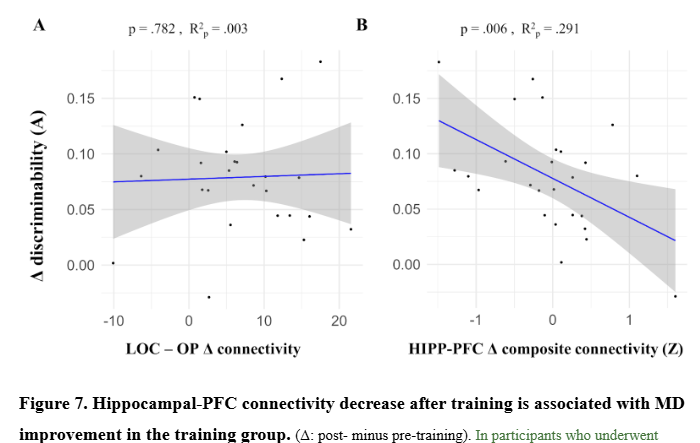
We found that hippocampal-prefrontal connectivity acts as a "neural resource" — it predicts both memory performance AND training-related improvement.
More info below 👇
Attending #OHBM2026 and interested in memory, cognitive training and medial temporal lobe?
Join my poster presentation (1408; Monday -Tuesday) and let's connect!
Takeaway: Hippocampal-PFC connectivity is a dynamic neural resource — it marks individual differences AND tracks training-related plasticity.
Read it here: https://t.co/Vr7QewmFI0
Thanks to @DuzelLab@JeremieGuesten , Anne Maass, Eoin Molloy and the IKND, DZNE Magdeburg team!
Our paper is out in @CommsBio! 🧵
We found that hippocampal-prefrontal connectivity acts as a "neural resource" — it predicts both memory performance AND training-related improvement.
More info below 👇
Even more exciting: this network is plastic!
Individuals who showed the greatest DECREASE in hippocampal-PFC connectivity after training had the LARGEST performance gains.
Attending #AAIC25 in Toronto and interested in plasticity and memory?
Drop by my poster '891' on Wednesday to talk about our 7T MRI cognitive-training study.
We employed ultra-high field imaging to investigate behavioral and structural changes after memory cognitive training.
Reflecting on an incredible experience at #OHBM25 in Brisbane! 🦘🇦🇺
Grateful for the inspiring talks, and insightful discussions. Excited to present the latest progress on our 7T MRI study where we’re seeing promising behavioral and structural changes following cognitive training
Attending #OHBM2025 and interested in memory research, mnemonic discrimination, cognitive training - plasticity?
Drop by my poster 853 today to talk (Thursday session) about medial temporal lobe and preceneus structural plasticity following cognitive training.
Attending #CNS25 and interested in cognitive training plasticity and mnemonic discrimination-episodic memory?
Come find me today at 5 pm Session C to discuss about structural plasticity and cognitive training using 7T MRI data.
Learning an association does not always succeed on the first attempt. What are the brain mechanisms underlying performance adaptations in following learning attempts?
We addressed this question by quantifying single-trial fMRI stimulus processing evidence: https://t.co/5THZxqU7Ym
This pattern is related to MD training gains providing causal evidence for its relevance in distinguishing similar memories. We show that hippocampal-PFC connectivity constitutes a neural resource that enables training-related gains and could be targeted to enhance cognition.
Interested in memory discrimination and brain networks?
Check our preprint: https://t.co/uWORnYQCjS
Our results point to a hippocampal-PFC connectivity pattern which is a reliable, task-invariant, marker of MD performance. This pattern is further related to MD training gains.
Hippocampal-cortical connectivity relates to inter-individual differences and training gains in distinguishing similar memories https://t.co/68pXgnLArp #biorxiv_neursci
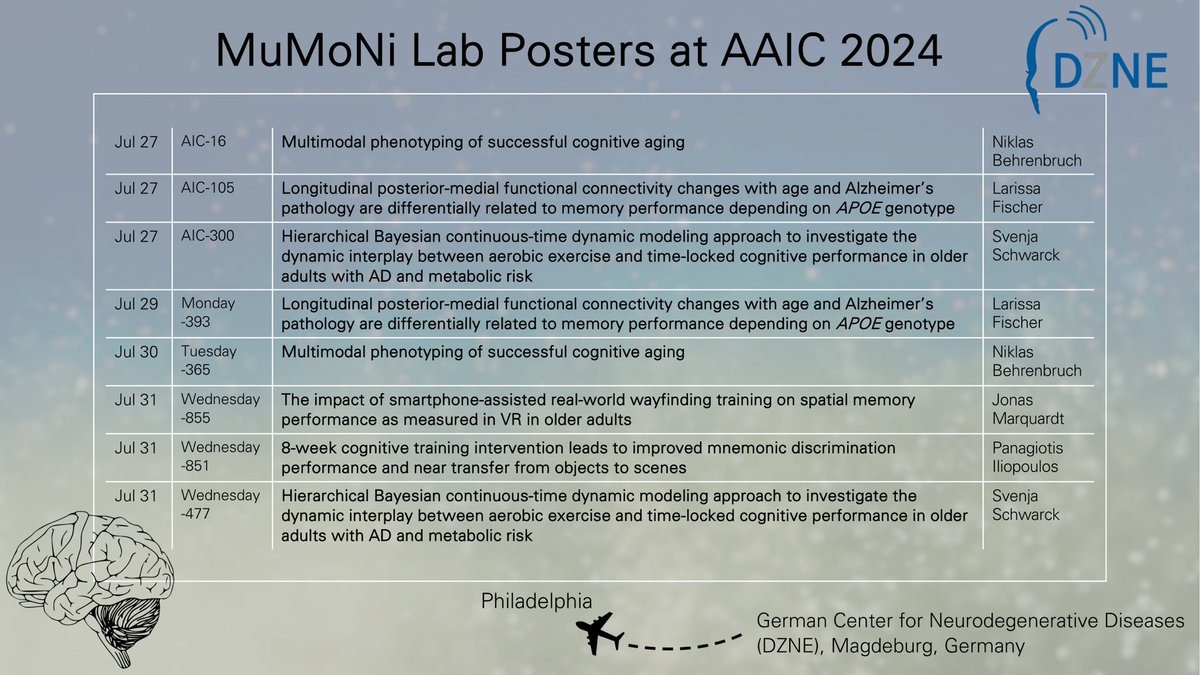
Attending #AAIC24 and interested in mnemonic discrimination, memory and cognitive training?
Come find my poster 851-Wednesday
8-week cognitive training intervention leads to improved mnemonic discrimination performance and near transfer from objects to scenes
31/07 (3:30-4:15)
The Multimodal Neuroimaging Lab @DZNE_en @anne_maass is getting ready for @alzassociation#AAIC24! 🎉
Please drop by for a chat if you are interested in multimodal research on successful aging, early AD and memory.
It was one of my favorite moments at OHBM 2024! Thanks to professor Garza-Vilarreal for his wonderful words. Hope to see you all at OHBM next year🙂!
#ohbm2024#LunchWithMentor
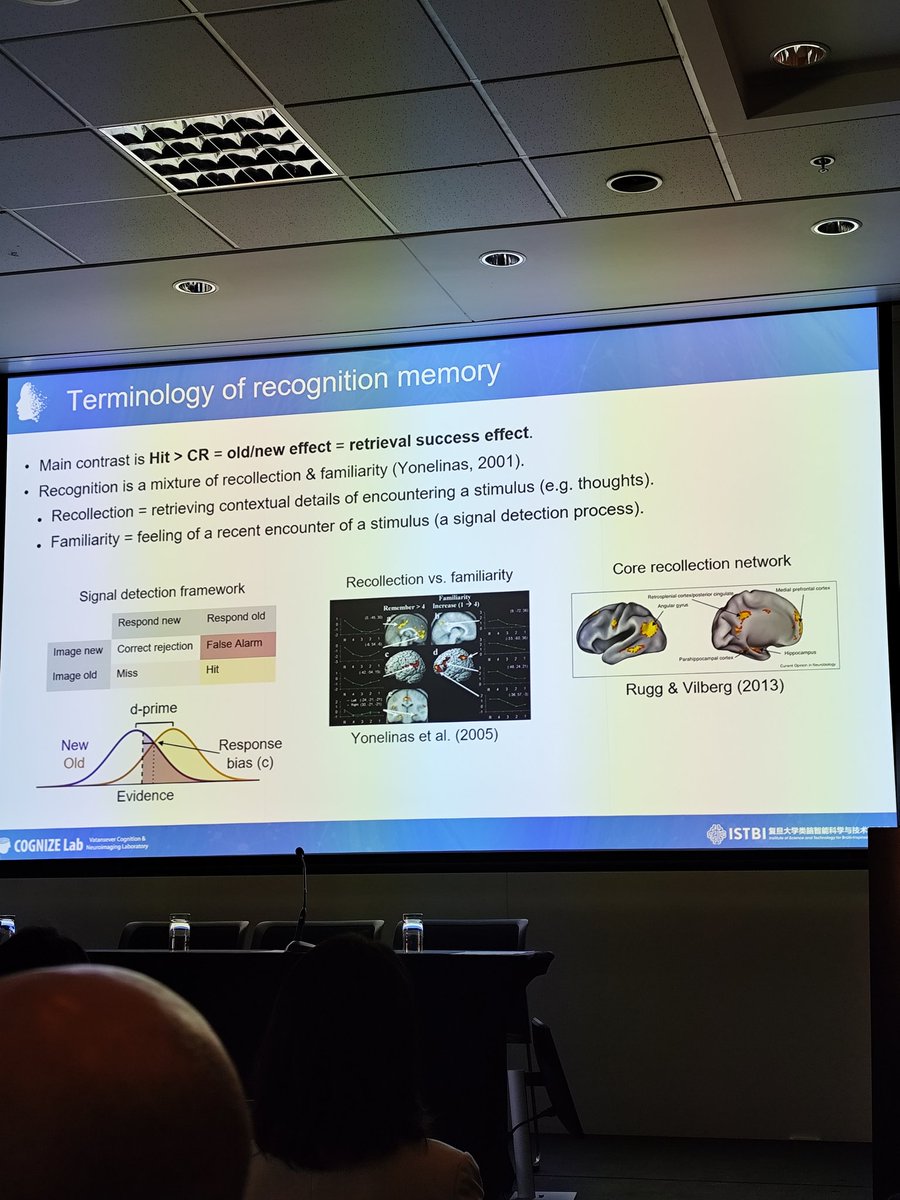
Attending #OHBM24 in Seoul.
Happy to interact with fellow about memory, mnemonic discrimination and interventions-related plasticity.
Come drop by at my poster 1074:
task based connectivity associated with mnemonic discrimination and cognitive training effects.