Publisher of Macro Watch, economist and author. Subscribe to Macro Watch to learn what really drives the economy and the financial markets in the 21st Century.
Watch Richard Duncan's Speech: How To Understand Economics And The Financial Markets In The Post-Bretton Woods World.
https://t.co/yLweTTfkhz
To subscribe to Richard's video-newsletter, Macro Watch click on the link below and use the discount code: Brazil
https://t.co/Csr2WElAcx
The SpaceX IPO could become one of the largest liquidity events in financial history.
To buy SpaceX shares, investors may sell:
• tech stocks,
• crypto,
• gold,
• and other assets.
This IPO could trigger extreme volatility across financial markets.
Read more from Macro Watch: https://t.co/vYtS63kMJ8
#SpaceX #IPO #Stocks #Bitcoin #Markets
What makes SpaceX so important is not just rockets.
It’s the integration of:
• space,
• communications,
• AI,
• manufacturing,
• defense,
• and infrastructure
into one interconnected technological system.
That explains why many investors believe SpaceX could become one of the defining companies of the 21st century. Read more:
https://t.co/vYtS63keTA
#SpaceX #ArtificialIntelligence #Starlink #DefenseTech
SpaceX is no longer just a rocket company.
It already operates:
• the world’s largest satellite communications network,
• one of the world’s largest AI compute systems,
• and increasingly important defense infrastructure.
Next month it will launch the largest IPO in history.
The new Macro Watch video explains why the SpaceX story is much bigger than most investors realize.
Read more: https://t.co/vYtS63kMJ8
#SpaceX #AI #Starlink #IPO #Defense #Technology
What’s really driving the US economy today?
Using the Fed's Flow of Funds data, I explain how the system has changed—and why the risks are rising.
Watch the full video here:
https://t.co/G73uLzzvMM
#Fed#Credit
US household wealth has surged to $184 trillion.
But much of that is now tied to rising asset prices—and government debt.
If inflation and interest rates move higher, that could reverse very quickly.
This is a much more fragile system than it appears.
Something very important has changed in the US economy—and most people haven’t noticed.
For decades, the economy was driven by private sector credit growth.
That’s no longer the case.
So what’s driving it now?
Before the Shock: The US Economy on the Eve of War
The US economy looks stable.
But that stability depends heavily on very high asset prices.
And those valuations are already near historic extremes.
If the war pushes inflation and interest rates higher, that support could quickly disappear.
And so could the stability.
Learn more from Macro Watch:
https://t.co/fR7bR27vrh
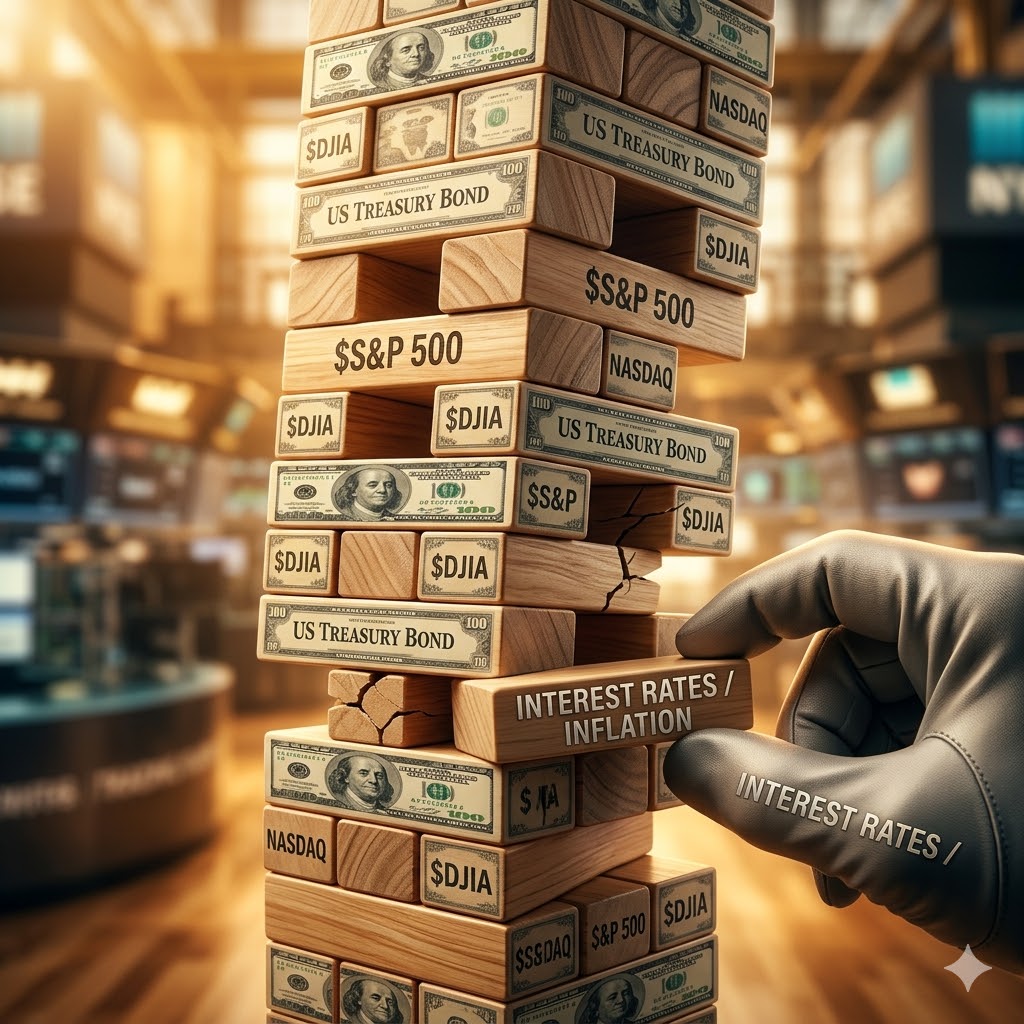
This is the real risk:
War → higher oil prices → higher inflation → higher interest rates
And that could trigger:
• An asset prices crash
• A reversal of the wealth effect
• A sharp economic downturn
The US economy is more vulnerable than it looks.
Watch here:
https://t.co/fR7bR26XBJ
The US economy looked strong before the war.
But it may be far more fragile than it appears.
Household wealth is now 805% of income—an all-time high.
If the Iran war drives inflation and interest rates higher, that asset price bubble could burst.
Full analysis:
https://t.co/fR7bR27vrh
Asset prices are already at extreme levels.
Household wealth is at an all-time high relative to income.
Now add the risk of war-driven inflation and higher interest rates.
That combination could expose just how fragile this “strong” economy really is.
Read more here:
https://t.co/fR7bR27vrh
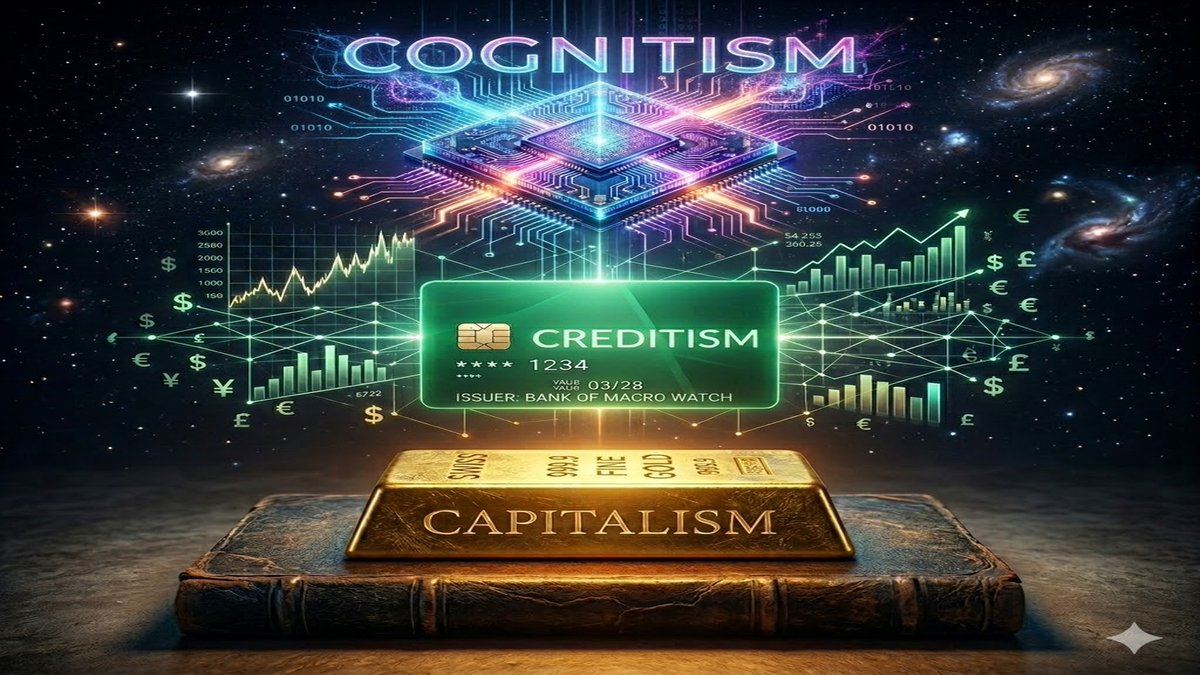
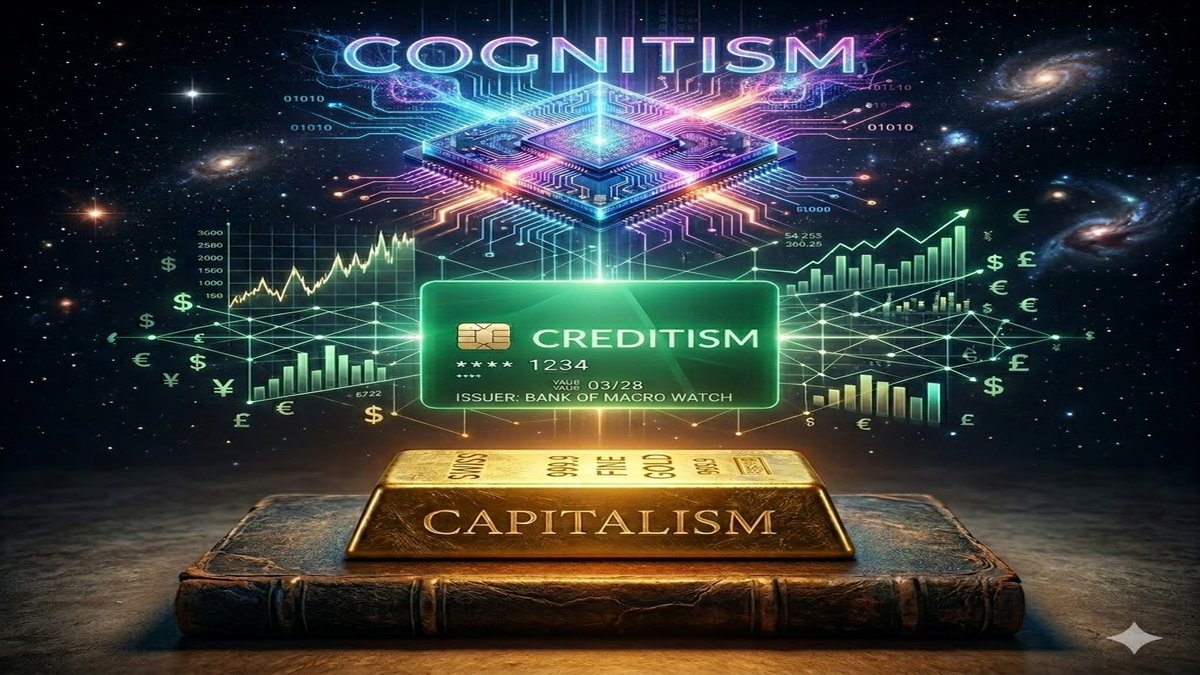
The global economic system has already moved from Capitalism to Creditism.
Artificial intelligence may now push it into something entirely new: Cognitism.
Read more: https://t.co/08c9r2UBiU
#AI#Cognitism
What happens when machines begin expanding cognition faster than humans ever could?
That question will define the next economic era.
The new Macro Watch video explores the transition:
Capitalism → Creditism → Cognitism
Full explanation here: https://t.co/08c9r2UBiU
#AI
From Capitalism to Creditism to Cognitism
Economic systems are defined by their constraints.
Gold constrained Capitalism.
Credit creation defines Creditism.
AI may remove the constraints on cognition itself.
That could transform our economic system again.
#AI#Cognitism
Capitalism was constrained by gold.
Creditism is driven by credit creation.
But what happens when artificial intelligence removes the constraints on human cognition itself?
The new Macro Watch video explores the next possible economic system: Cognitism.
Read more: https://t.co/iqN85Z5kgk
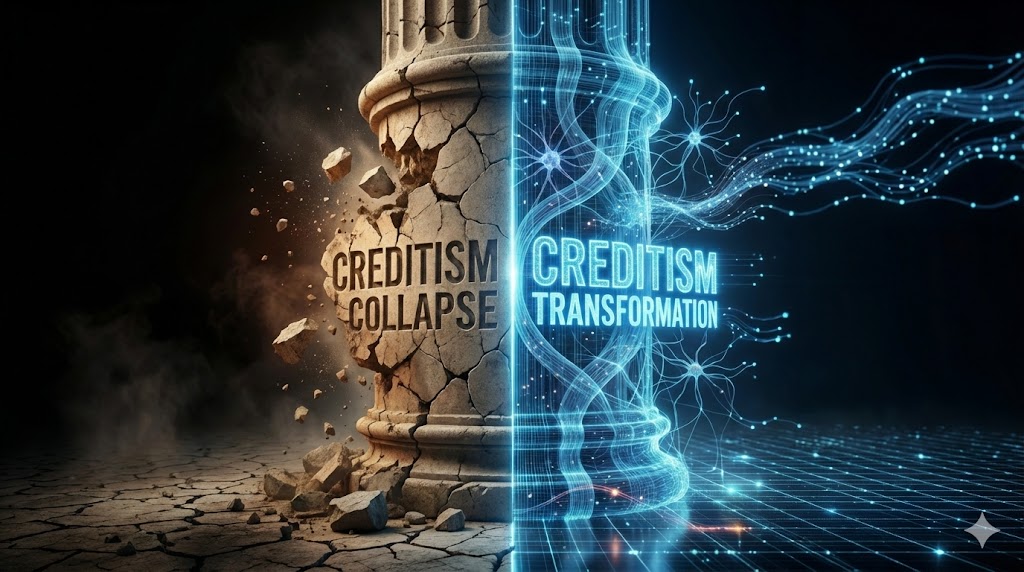
If China wins the AI race, Creditism collapses.
If the US wins the AI race, Creditism still won’t survive.
Either way, the economic system we’ve lived under for decades is ending.
The question is what replaces it.
Watch the new Macro Watch video: https://t.co/GEkx0gto1Y
#AI
Economic systems don’t collapse because of small policy mistakes.
They collapse when the constraints that bind them change.
The US is now facing its biggest constraint in decades:
China — and the AI race.
Is Creditism about to break?
See Macro Watch: https://t.co/GEkx0gsQcq
Will Creditism collapse?
China. Inflation. Political control over monetary policy.
And at the center of it all — the AI race.
If the US loses, the system fails.
If it wins… something even bigger happens.
New Macro Watch video: “Will Creditism Collapse?”
🔗 Link below.
The question is no longer whether the economic system will change.
It’s how it will change — and who controls the redesign.
The latest Macro Watch video explains why Creditism is being rebuilt to circumvent its constraints.
Watch: https://t.co/90SZqef5Hv
#Creditism
Industrial policy is back. Trade policy is now strategic. Monetary authority is under political pressure.
These aren’t random events — they’re signs that Creditism is entering a re-engineering phase.
Full breakdown:
https://t.co/90SZqeexRX
#Creditism