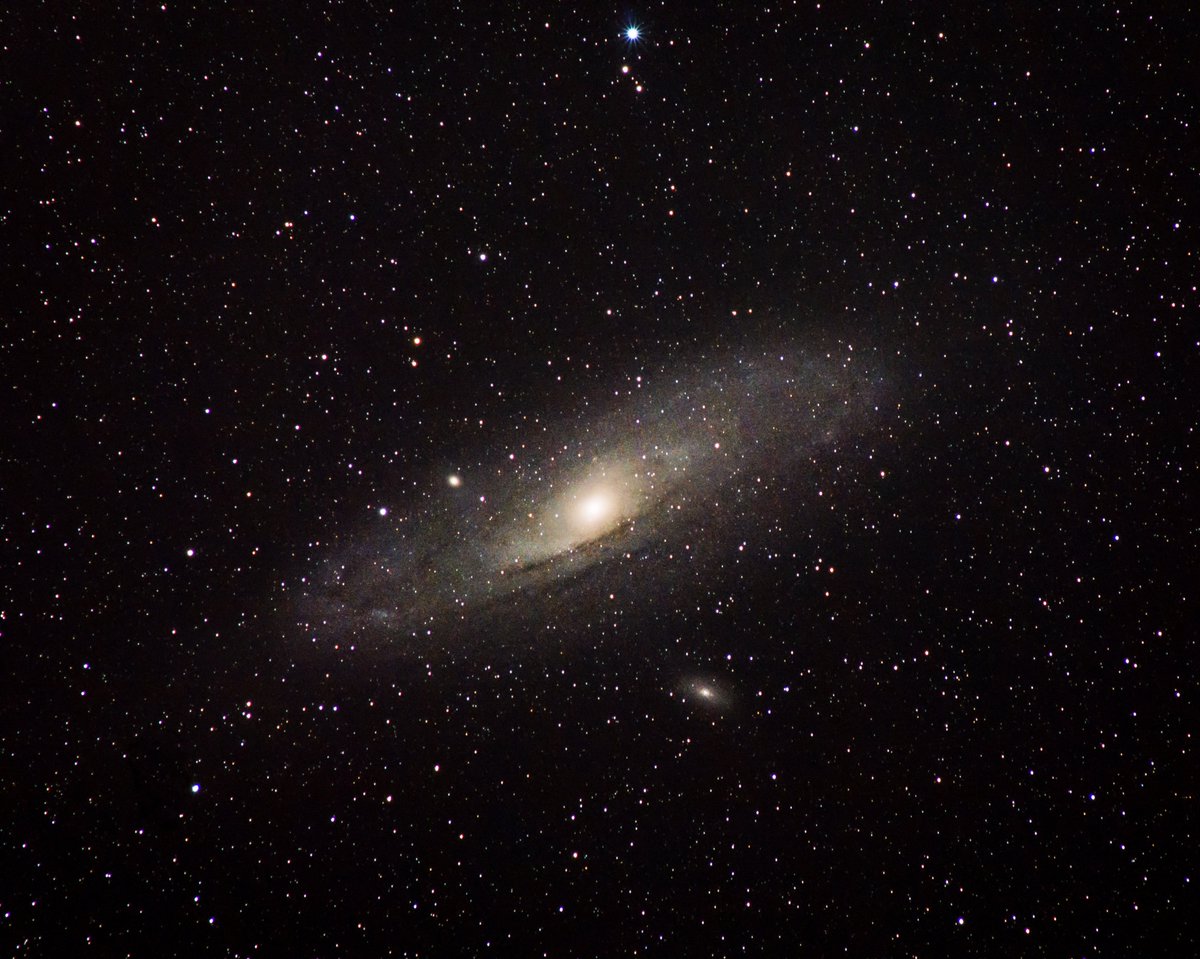
Had some really clear skies last night, so I took the opportunity to make another go with Andromeda... Turned out waaay better than my first attempt more than a year ago, thanks to lessons learned! Canon T7, 300mm lens, f/16, ISO 800 #Astrophotography#Andromeda
@nzsonleo@CPiecek6 @tsundokugames @bstategames Mmm I'm not so sure about that. I was dc'd mid-raid, and when I got back on I only had my initial gear. The only time I kept my items was when I got stuck on the extract screens and being forced to dc.
@CPiecek6 @tsundokugames @bstategames You'll get out with only the gear you went in with, unless you were in the process of extracting (read: you were already extracted and loading the post-game screens - only then will you possibly still have the stuff you got through the raid)
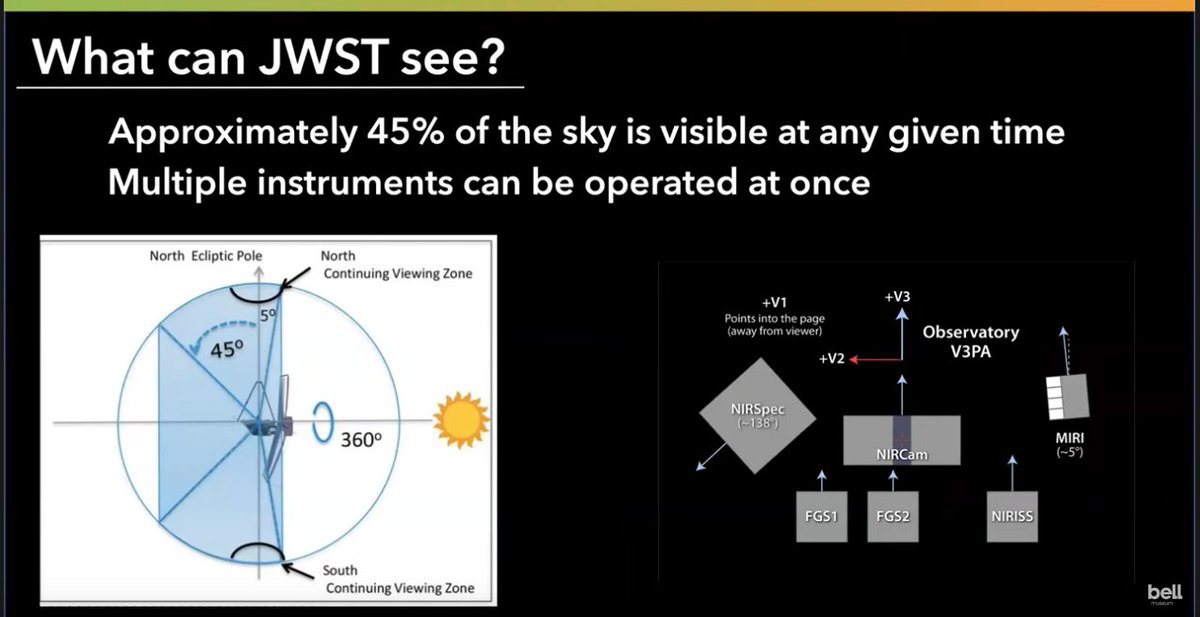
@waltherfreitas@ESA_Webb@NASAWebb are out of JWST's range of view will have to wait until the station is in the optimal point in orbit to view that object. There's a Youtube video this is from, "Deeper Look: The James Webb Space Telescope with Michael Rutkowski." 2/2
@waltherfreitas@ESA_Webb@NASAWebb Here's an pic of what could help explain. Focusing on the left pic, you can see that JWST will mostly rotate on its Y axis (direct to the sun). It will have some range of motion to move around, but will not be able to look directly away from the sun. For targets that... 1/2
@gilsonwilson@lcagee@NASAWebb It's almost like saying you can pretty clearly see a basketball from across the basketball court, but a grain of rice 10 feet from you on the court will be a super tiny, almost hard to spot dot.
@gilsonwilson@lcagee@NASAWebb Jupiter and Saturn are HUGE. Waaaaaaaay bigger than Earth. This gives the light more surface to bounce back at us with, hence us being able to see them from so far. JWST, on the other hand, is immensely tiny (think tennis court sized), so it appears as a super tiny dot to us. 1/2
@Reido_46@NASAWebb ... with Hubble around the Earth - everything is moving super fast, but relative to what we're looking at, it will appear slow. Hubble moves about 5 mi per sec, and gets these super clear images we know and love today. So the speed Webb is flying won't blur the images.
@Reido_46@NASAWebb No question is too daft in science! (nerd moment over) Yes, it will happen as it moves. While it is moving very fast (just under 1/3 mi per sec), it will be very slow relative to what it's looking at. The Earth is always moving very fast around the sun, and same... 1/2
@Larry_in_Canada @NASAWebb and the extreme temperatures. While we may have smaller cameras now, they didn't 30 years ago when planning and engineering started. They didn't want to go through and redesign everything just to add a small camera, when they could just use sensors for diagnostics.
@Larry_in_Canada @NASAWebb I believe they considered putting cameras on the craft, but decided not to out of the cost and mass added to the craft. In order for the cameras to operate in the temperatures, they would have to be housed in a special compartment to protect the equipment from radiation... 1/2
@vsantana33@NASAWebb Your car will still be moving, but slowing down as it moves up the hill. You're not breaking, but you're also not accelerating. The earth is just pulling you just enough to slow you down.
@vsantana33@NASAWebb It doesn't have any active propulsion, so it doesn't have any forces being applied to accelerate it (it's just coasting along). Since it's still within Earth's gravitational well, Earth is slowing it down. Imagine being in your car going uphill, and you let off the gas... 1/2