PTI is a nonprofit focused research organization scaling proteomic technologies to explore proteome biology. A member of the @SchmidtFutures & @Convergent_FROs.
It is a forward-looking perspective, looking at what lies ahead:
• Technology: Approaches for extending the depth and scope of measurements and scaling their throughput in ways that preserve their quality and enable cohort-scale analysis.
• Biology: The functional organization of cellular proteomes, already visible in protein covariation, protein turnover, and protein coordination shaping functional phenotypes.
@J_ASMS Perspective (open access): https://t.co/0cM8u7cHyO
Biemann Lecture (video recording): https://t.co/PjuXuO8U34
In 2015, single-cell proteomics by mass spectrometry was widely considered infeasible. Our first article reporting such methodology faced rejections and opposition. Once the opportunities were established, the skepticism turned into enthusiasm. A decade later, the technology has opened new perspectives towards biology.
Receiving the Biemann Medal prompted me to trace this arc: From proof of principle to increasingly powerful technologies.
https://t.co/0cM8u7cHyO
1/
Discussions of gene expression often stop at transcription: A legacy of technological limitations.
Much of the functionally important action happens later: We can now study these stages in scalable, quantitative ways, bringing us closer to understanding biology.
https://t.co/nB6ti70qE8
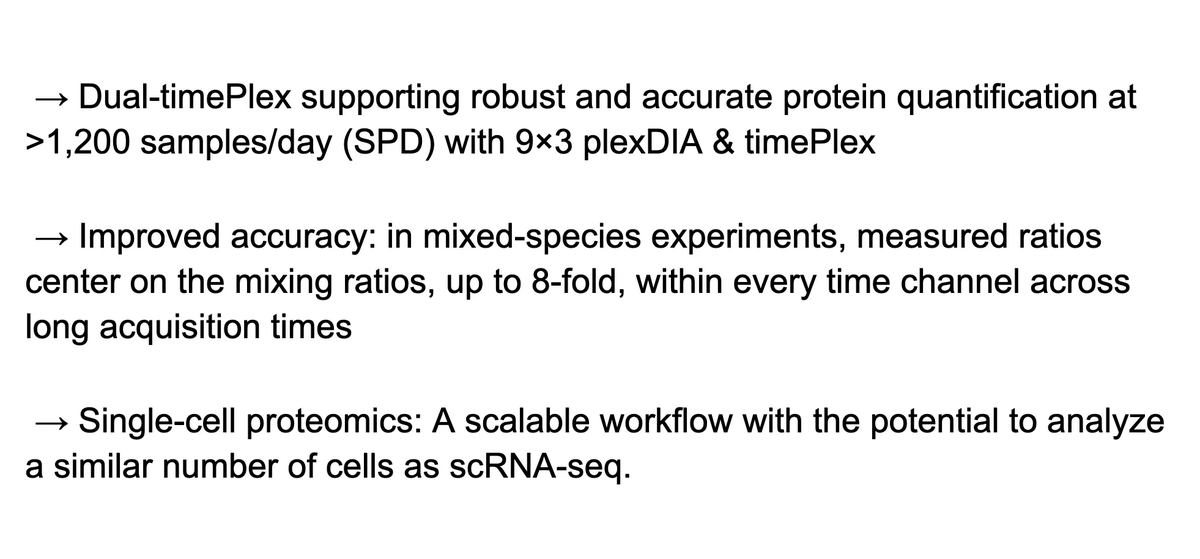
In pursuit of this new direction, our team at @ParallelSqTech developed multiple timePlex implementations.
They demonstrate strong potential. A few highlights include:
https://t.co/59krYbayuk
2/
Participating in the rapid evolution of this technology, from proof of principle to a robust, quantitative methodology, has been a thrilling adventure.
Writing this perspective revived many wonderful memories and brought a bright smile to my face.
Realizing this workflow for single-cell proteomics benefited from discussions at the 2025 single-cell proteomics conference.
Facilitating such collaborations is a core part of @SCP_meeting's mission !
𝐇𝐨𝐰 𝐝𝐢𝐝 𝐰𝐞 𝐝𝐨 𝐢𝐭 ?
There are two broad routes to higher throughput https://t.co/SC7EmsXb8t: Each run can be shortened, which squeezes the same peptides into less time and generally strains peptide separation and thus depth and quantification. Alternatively, one can measure several samples in each run. We took the second route, which can be combined with fast chromatography.
2/
Parallel Squared Technology Institute aims to scale the throughput of sensitive proteomics without compromising quantitative accuracy, depth or specificity.
Today, we share a step in this direction:
🔹 A workflow supporting the analysis of 1,130 single-cell samples per day (SPD) while preserving depth and quantitative accuracy.
1/
https://t.co/ygU4OhMME6
An excellent discussion on building bio models by @alexrives on the @CogRev_Podcast
The emphasis on data -- not just volume but also type and quality -- resonates with our view and the approach @ParallelSqTech is taking.
https://t.co/C8Dt0TKJxk
Don't correlate is a weak statement, especially in the absence of independent measurements & reliability accounting.
What's compelling for me are direct measurements of what regulates protein abundance.
https://t.co/3gcpTtDFOB
1/
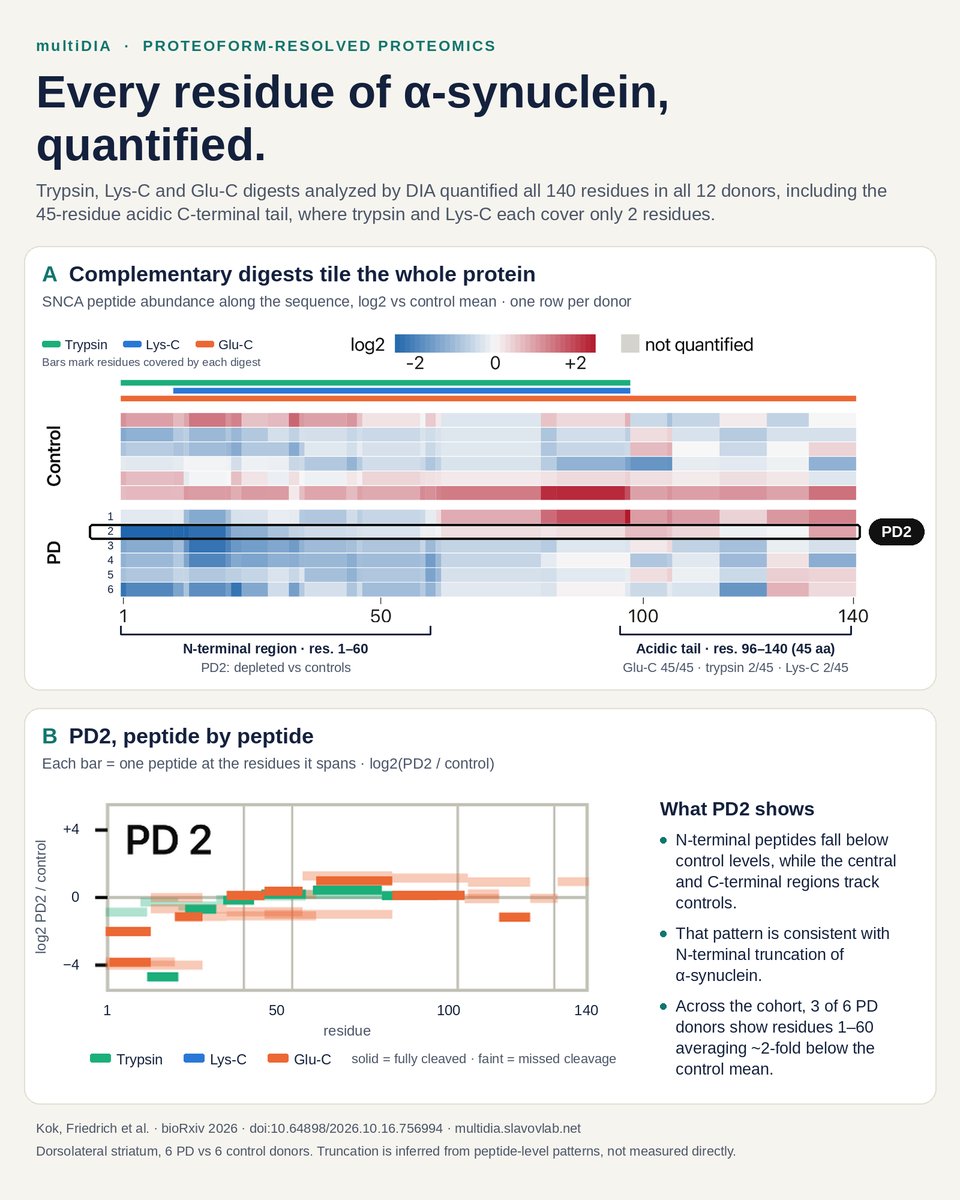
Proteomics has long faced a choice: Go deep, or go fast.
Deep, high-confidence coverage of protein sequences has traditionally required extensive chromatographic fractionation, large sample inputs and data acquisition times too long to be practical for analyzing human cohort scale samples. Scalable data-independent acquisition (DIA) workflows handle many samples quickly, but detect less of each protein and with lower confidence.
Our new preprint introduces multiDIA: It gets more from each sample without fractionation.
1/
https://t.co/BmTjFmIyvm
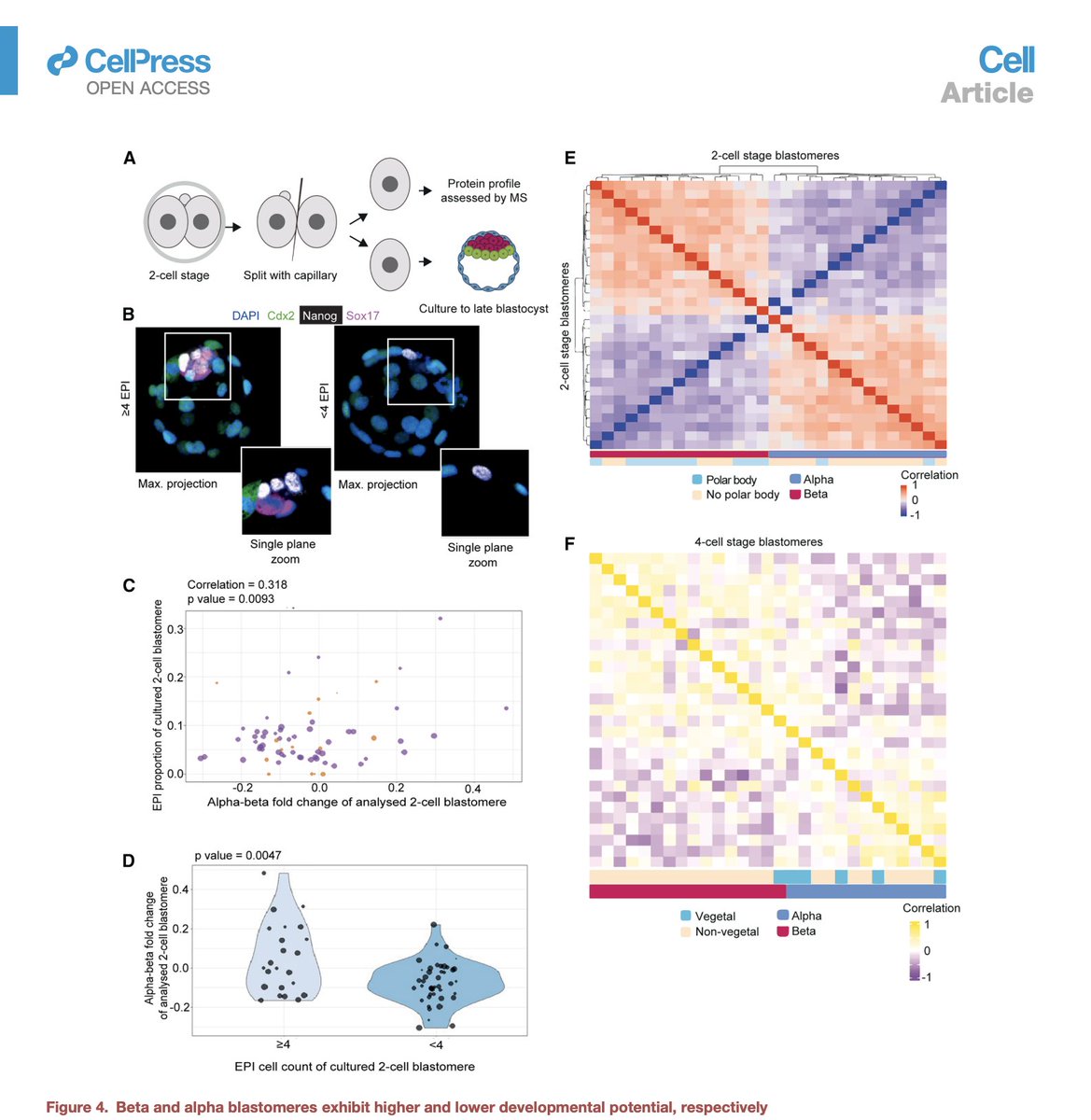
Using single-cell proteomics, we discovered protein (and functional) symmetry breaking in early mammalian embryos influencing cell fates.
These proteomic asymmetries are detectable at the zygote stage, intensify by the 2-cell and 4-cell stage, and correlate with the sperm entry site, pointing to fertilization as a symmetry-breaking event. The clear protein differences allowed us to define two types of blastomeres, termed alpha and beta.
⬛ These differences predict the developmental potential of the blastomeres. Similar clustering and protein enrichment patterns found in human 2-cell embryos suggest this early asymmetry might be conserved.
1/
Single-cell proteomics is beginning to reveal functional coordination and principles.
This motivates us to keep advancing the depth, accuracy, and scalability to further empower this analysis and help identify biological principles and targetable disease mechanisms.
Kicking off our first quarterly update from Parallel Squared Technology Institute (@ParallelSqTech): A boost in the throughput and quantitative accuracy of single-cell proteomics, and a warm welcome to our new Chief of Staff.
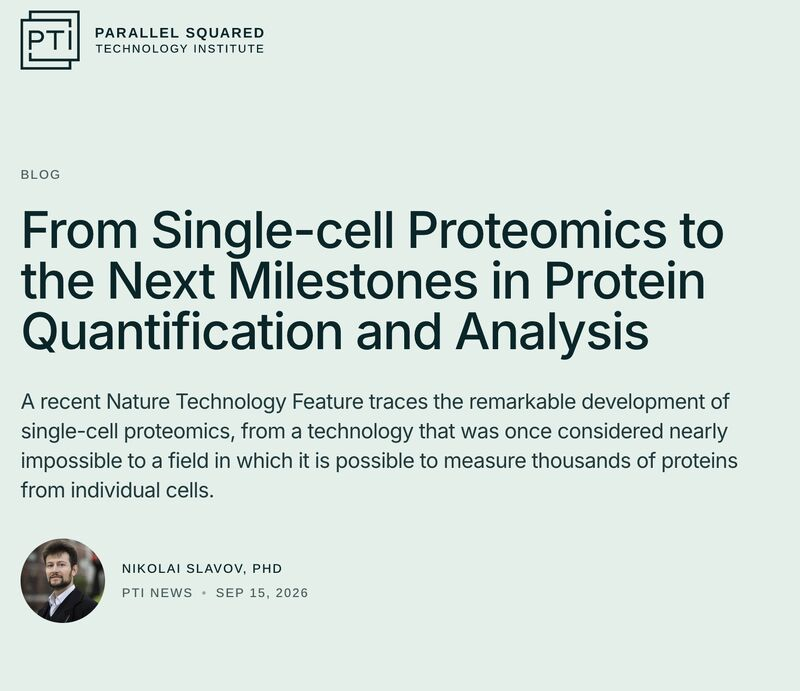
Mass spectrometry based single-cell proteomics has advanced from "nearly impossible" to well demonstrated set of methods measuring thousands of proteins per cell, as traced in a recent Nature Technology Feature.
A next big challenge: getting to higher throughput without losing depth or quantitative accuracy.
1/
Great to see multiplexed single-cell proteomics uncover new biology. We are looking forward to further increasing the plex and thus the power of the technology for biological discoveries!
Congratulations to Luke Khoury and team !
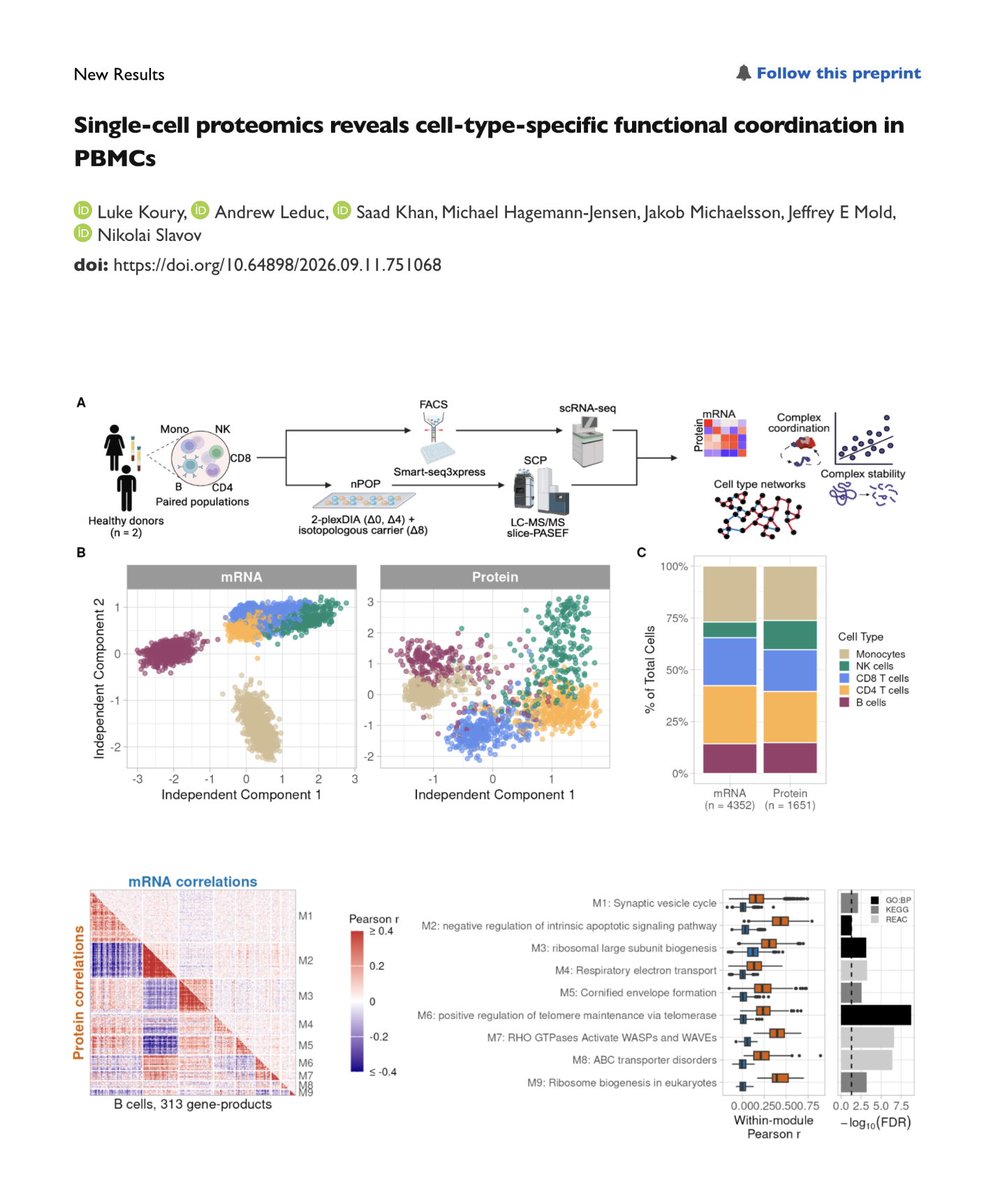
Millions of PBMCs have been analyzed by scRNA-seq. Have we seen it all ?
We profiled thousands of single PBMCs — proteomes and transcriptomes side by side — and uncovered functional coordination undetectable in the deepest scRNA-seq we could perform.
https://t.co/JoozcYoBrm
1/
Millions of PBMCs have been analyzed by scRNA-seq. Have we seen it all ?
We profiled thousands of single PBMCs — proteomes and transcriptomes side by side — and uncovered functional coordination undetectable in the deepest scRNA-seq we could perform.
https://t.co/JoozcYoBrm
1/
Among the numerous metrics evaluating academics, one stands out for me:
Our intellectual heritage reflected in our students and colleagues, and their intellectual growth.
That amplifies the initial sparks and bears more fruit than any one of us could have produced.