We report many proteins not predicted by the genetic code.
They are stable & abundant O( 10³ ) copies / cell.
Generative mechanisms include codon-anticodon mismatches & RNA modifications.
Their abundance depends on codon frequency & protein stability.
https://t.co/lAxvulC4zx
The functional and molecular variation within a single cell-type is considerable, and proteomes tell that story.
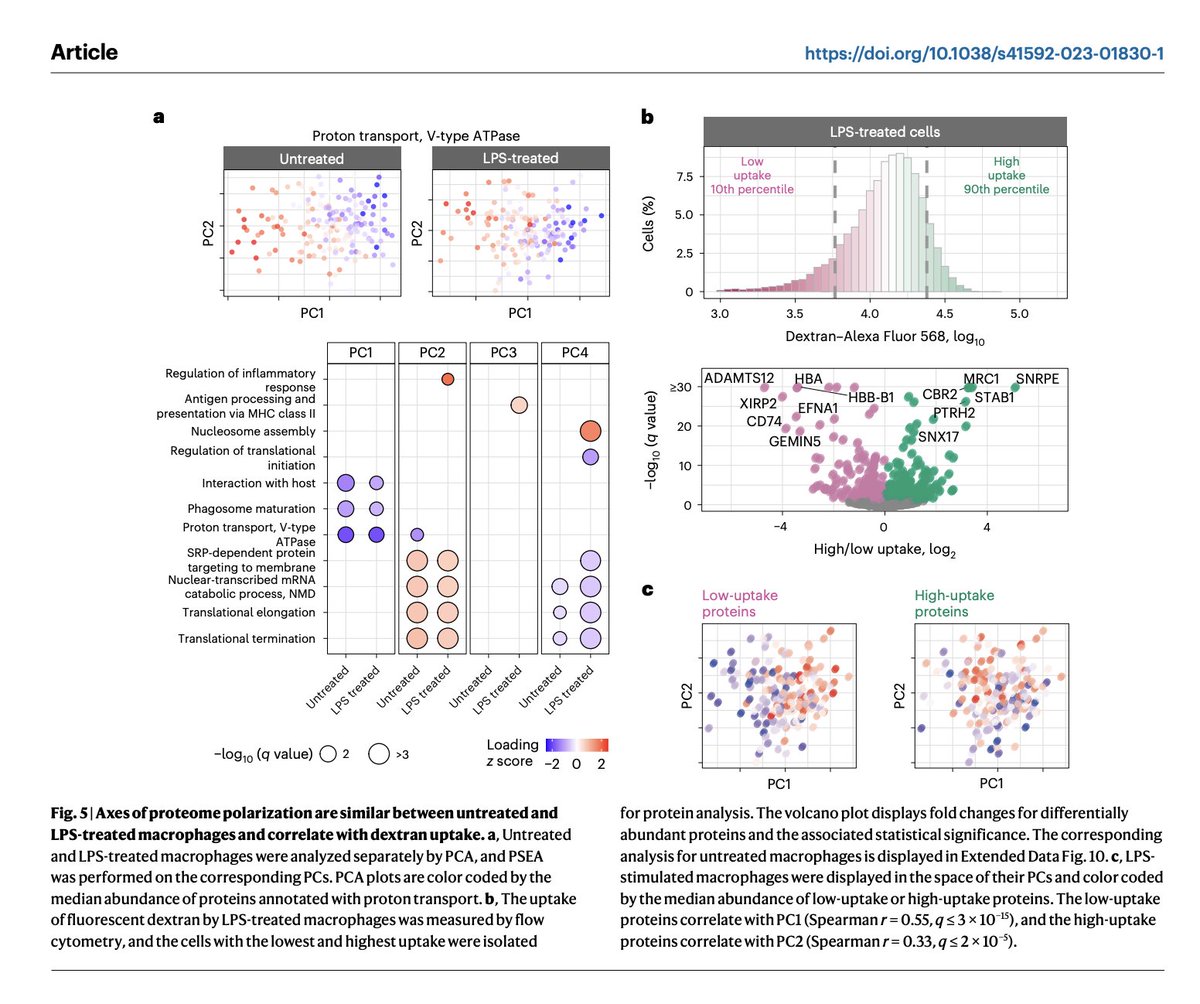
The major axes of proteome variation in untreated primary macrophages are nearly identical to those in LPS-treated macrophages (PC1 correlation r = 0.8, P < 10⁻¹⁵). Proteins covary in functionally coordinated sets. Proteins involved in phagosome maturation, proton transport, and protein targeting to the membrane all vary coherently within each condition.
This covariation is coupled to functional differences: cells with distinct proteomic states show different endocytic activity, as measured by dextran uptake.
👉 protein covariation within a cell type is a window into functional cellular diversity that transcends treatment state. Even after LPS remodels the macrophage proteome, the underlying axes of variability persist, likely reflecting conserved regulatory network topology.
Single-cell proteomics can decode what makes individual cells of the same type functionally distinct. 🔬
📄 Huffman et al., Nature Methods
https://t.co/6n6dgXMHyU
What scientific culture are we cultivating today ?
The “phage group” around Delbrück, Luria, Hershey, Benzer, and others did more than produce discoveries: it cultivated a culture. A culture of intense conceptual debate, rigorous criticism, reductionist clarity, shared standards, and deep attention to mechanism. Molecular biology was shaped not only by experiments, but by sustained intellectual norms.
In many areas of AI-driven biology, we increasingly reward scale, breadth, and spectacle: larger models, larger datasets, larger claims. Yet many results remain difficult to benchmark rigorously, reproduce independently, or evaluate mechanistically. At the same time, direct public criticism and deep adversarial discussion in meetings can feel less common than enthusiasm, branding, and rapid amplification.
Scientific progress certainly requires ambition and new tools. But history suggests that transformative conceptual advances emerge not simply from generating more data, but from cultures that value clarity, criticism, mechanistic understanding, and sustained intellectual seriousness.
The real question may not be how to scale science further, but how to build scientific cultures that consistently produce deep, rigorous thinking capable of changing conceptual frameworks rather than merely enlarging them.
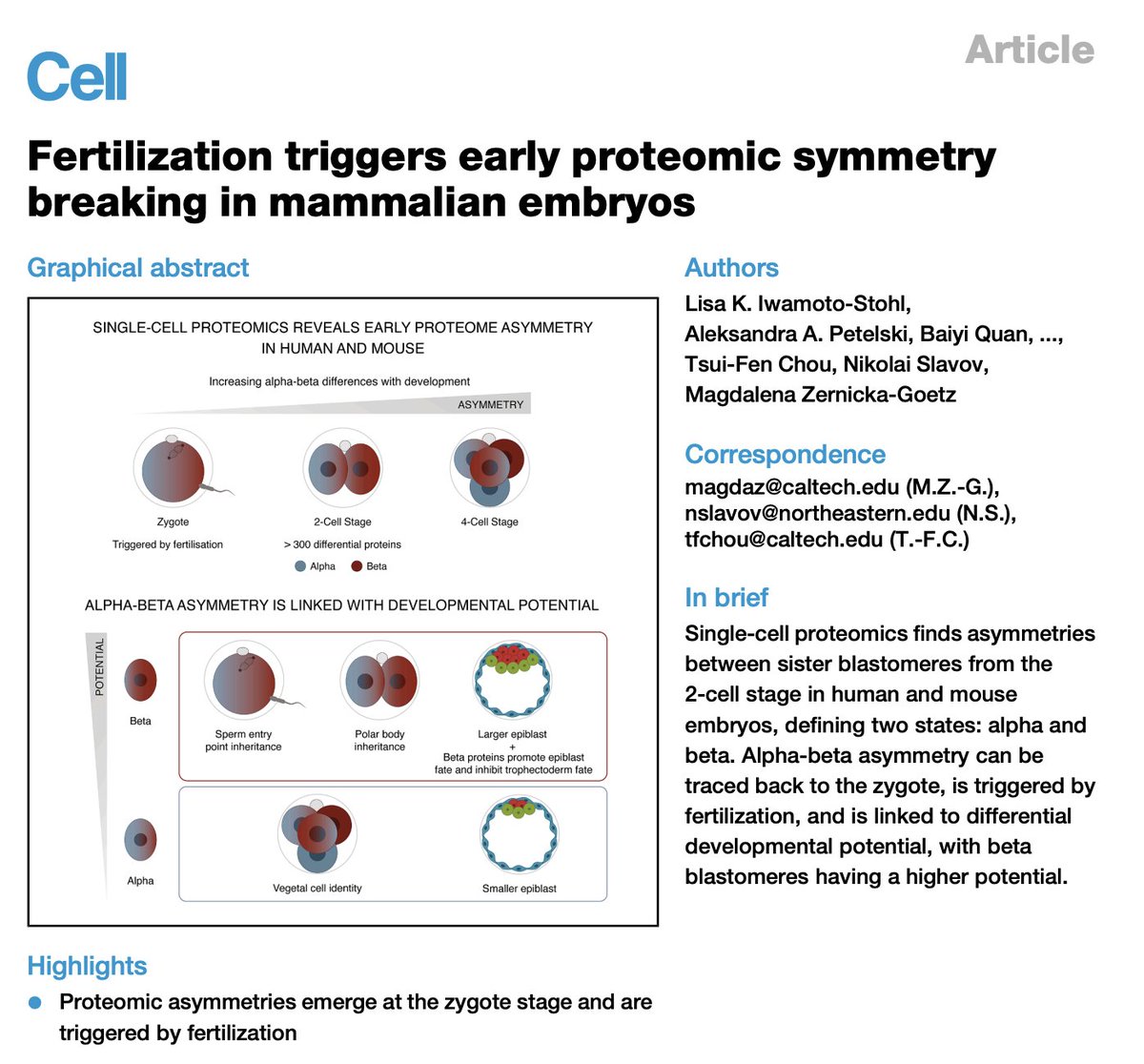
Single-cell proteomics illuminated new mechanisms of mammalian development.
We found that spatially polarized protein distributions and intracellular protein gradients emerge during the earliest stages of mammalian embryogenesis and help bias subsequent cell fate decisions. Critically, these developmental mechanisms are not reflected in mRNA abundance: the key biology resides in the spatial organization, abundance, and asymmetric localization of proteins within and between cells.
The results show that early developmental patterning is associated with polarized localization of specific proteins and coordinated proteomic asymmetries across blastomeres, linking protein organization directly to lineage specification. These findings support a model in which cell fate in the mammalian embryo is not determined solely by stochastic transcriptional programs, but is strongly shaped by inherited and dynamically regulated protein states that establish developmental competence before overt differentiation: https://t.co/lvpZ2TOaIC
Our results depended critically on single-cell proteomics analysis, on direct measurement of the molecular effectors that execute developmental decisions — capturing gradients, localization, stoichiometry, and post-transcriptional regulation. The future of developmental biology will depend increasingly on quantitative single-cell protein measurements capable of resolving the molecular architecture of cell fate determination: https://t.co/92S1z9WEBp
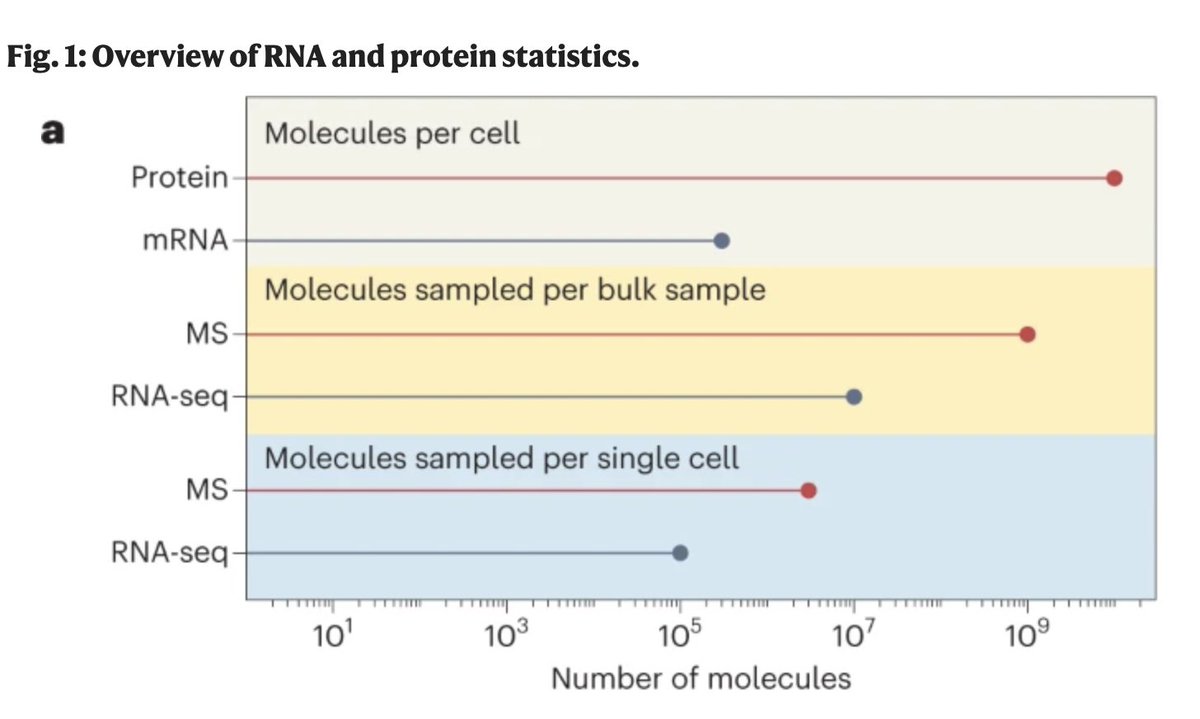
These numbers are key to understanding RNA and protein analysis.
The different counting statistics fundamentally shape technological challenges and opportunities.
https://t.co/UKsQ2AEuro
Congratulations to Nikolai Slavov, recipient of the 2026 ASMS Biemann Medal! This award recognizes significant early-career achievement and highlights emerging leaders shaping the future of #massspectrometry. #TeamMassSpec
β-catenin is often synthesized to be immediately degraded... and defects in its degradation predispose to cancer.
Why are key signaling mechanisms regulated by protein degradation ?
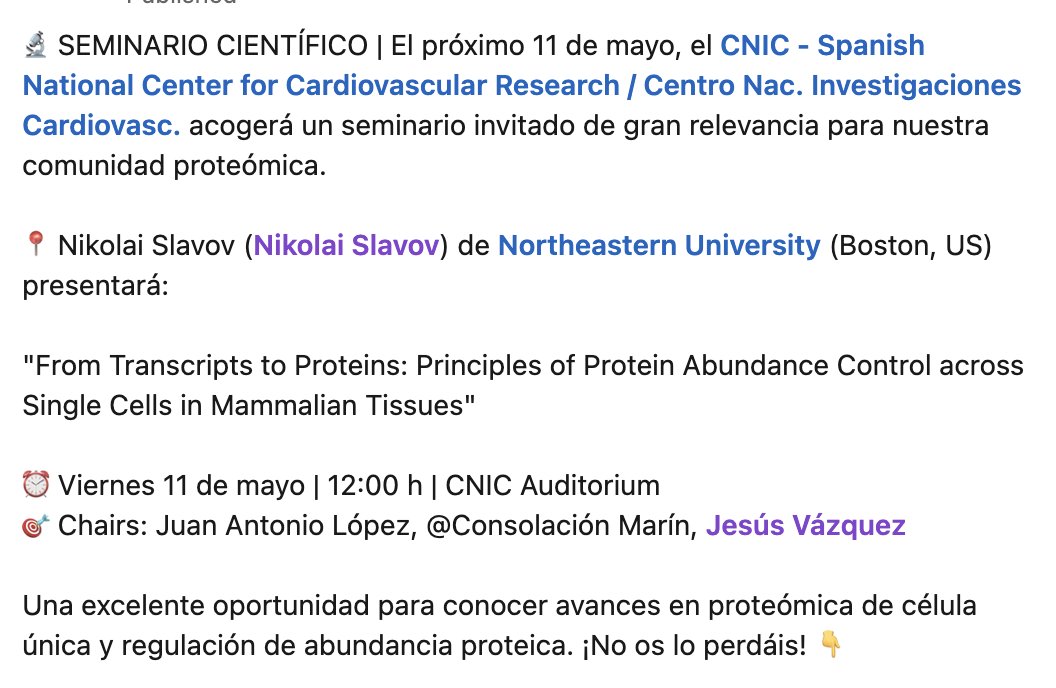
Next Monday (May 11), I will be in Madrid to share our research.
I will present results from @ParallelSqTech and @slavovLab, including our latest proteomic technologies and the biological questions they are answering.
I am deeply honored to share that I have been selected to receive the Biemann Medal by the American Society For Mass Spectrometry (@asmsnews). This distinction holds particular significance for me, given its recognition of contributions that advance the field in meaningful and lasting ways.
While this award is presented to an individual, it reflects the collective contributions of exceptional teams at Slavov Lab (@slavovLab) and Parallel Squared Technology Institute (@ParallelSqTech). The progress we have made in pioneering single-cell mass spectrometry proteomics has been possible only through the bold vision, creativity, rigor, and persistence of colleagues and collaborators who share a commitment to expanding the boundaries of what can be measured and understood.
I see this recognition not only as an acknowledgment of past work, but also as an affirmation of the promise of mass spectrometry and single-cell proteomics in particular. As these technologies continue to evolve, they offer unprecedented opportunities to uncover the molecular logic of biological systems with greater depth, precision, and mechanistic clarity. They are ideally positioned to generate the direct measurements and scalable datasets needed to power generalizable models of cells and cellular systems, deeper understandering of physiology and pathology, and ultimately the engineering of effective medical treatments.
This award is special for me because of the leading roles of ASMS in our field and the high standards set by Klaus Biemann. His pioneering contributions helped shape the modern foundations of mass spectrometry and set inspiring examples for innovation, scientific integrity and mentorship. His formative influence continues to resonate across the field, making this recognition especially meaningful.
—------
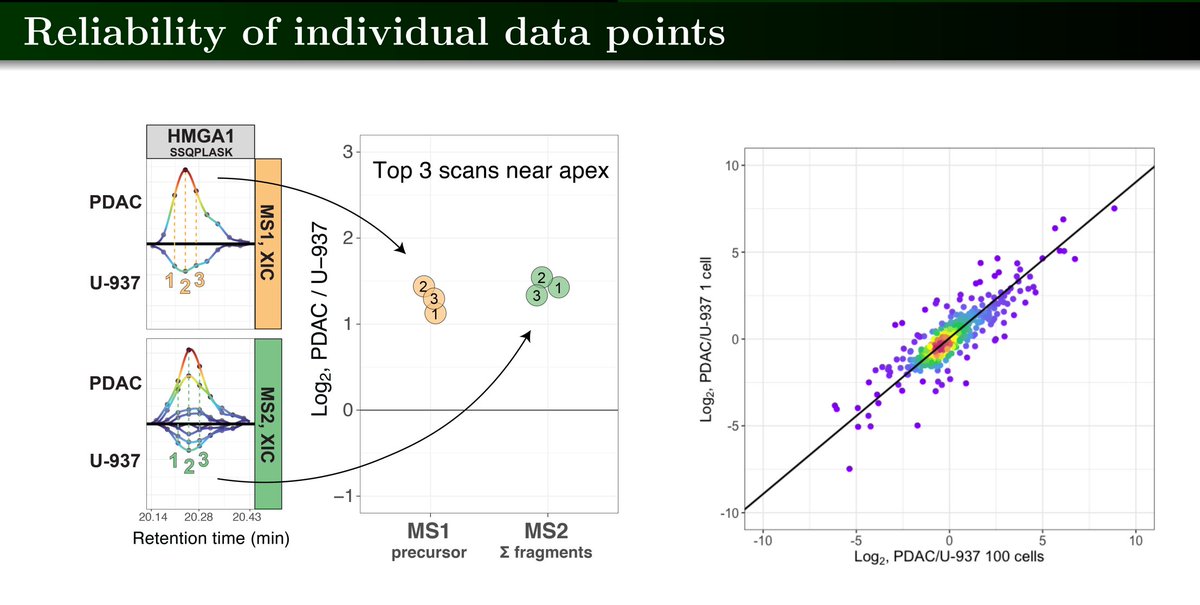
𝐅𝐢𝐠𝐮𝐫𝐞: The left panel depicts peptide ions and their fragments derived from single cells and analyzed on the Q Exactive, an instrument introduced more than 15 years ago. The right panel shows quantification across many proteins in single cells from the same experiment. I selected this example because it clearly demonstrates how well-designed experiments and spectra interpretation can result in high-quality data even when using old instrumentation. This was a foundational pillar to our early contributions. The figure was created by Jason Derks circa 2021 and subsequently published as part of the community guidelines in 𝑁𝑎𝑡𝑢𝑟𝑒 𝑀𝑒𝑡ℎ𝑜𝑑𝑠: https://t.co/kuAHUVr6ln
Biological functions arise from protein interactions, which are reflected in the natural variation of proteome configurations across individual cells. Emerging single-cell proteomics methods may decode this variation and empower inference of biological mechanisms with minimal assumptions.
This presentation summarizes research projects aiming to infer protein regulatory interactions from protein covariation across single cells. Examples include the regulation of protein transport to the nucleus and cell fate determination during early development.
https://t.co/rU8BEv8NMC
This may be the first recorded public presentation on single-cell proteomics that I gave (at @cshlmeetings), almost a decade ago.
It’s fascinating to weigh the future tech projections against the progress of the last decade.
https://t.co/LtW7Lvf8KJ
Feeling grateful today.
At a very early and uncertain stage of our work, the the Allen Frontiers group (@AllenInstitute) chose to support our ideas. That support came at a moment when we were still building the foundations of multiplexed and functional single-cell proteomics , and it made a real difference. It gave us the space to take risks, to push on approaches that were not yet proven. Ultimately, it helped catalyze technologies that have since grown far beyond what we initially imagined.
What stands out to me most is the vision behind that support, the willingness to recognize potential early, before it is obvious, and to invest in it with trust.
I want to share a short video the Allen Institute put together at the time. It brings back memories of that early phase and the beginnings of a journey that their support helped make possible.
https://t.co/9FjF7kqFmP
Very thankful for that early belief and encouragement.
An accessible highlight of our recent article:
How Single-Cell Proteomics Could Unlock the Rules That Govern Cells
https://t.co/JtgVz4Zmfk
Article:
Single-Cell Proteomic Technologies: Tools in the Quest for Principles. DOI: 10.1146/annurev-biophys-021424-011450
More details in this review article: Single-Cell Proteomic Technologies: Tools in the Quest for Principles
https://t.co/7lJDvfJn8S
Open access link: https://t.co/DR1KWFvAEz
Single-cell proteomics by mass spectrometry: Technological overview and recent progress
From uncertain possibility to robust and rapidly advancing technologies:
1/2
https://t.co/XDzKiYb7tH
Thanks to the Cell Size & Growth Seminar Series for sharing a recording of Andrew's presentation on the deep connections between cell growth and protein degradation and abundance regulation.
A powerful example of protein abundance regulation.
The degradation rate of p53 determines its abundance.
p53 is special, but regulation by protein degradation is not a special case. It's common:
https://t.co/3gcpTtD7Z3
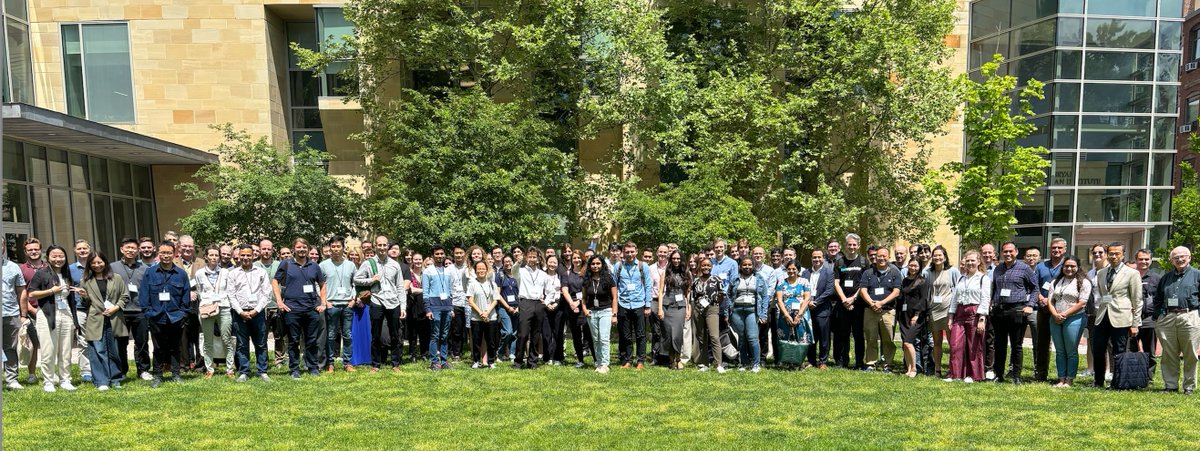
This July 14 - 15, the 9th Single-Cell Proteomics Conference (https://t.co/rbo3sVIsV3) brings together a community that is redefining what’s possible: Robust methods enable scalable proteoform measurements from single cells without sacrificing depth or quantitative accuracy.
These technological advances open avenues for biological discovery: Scalable datasets power new biological models that support mechanistic data interpretation.
More than a meeting, it’s an interactive forum: Leaders across mass spectrometry, single-cell biology, and computation exchanging ideas, results, and the next directions shaping the field.
A shift is underway: not faster or deeper, but faster and deeper.
Boston, July.
Be part of the conversation.