Policy cannot be separated from politics.
At the Policy Careers Workshop in New Delhi, participants explored institutional failures, governance, and why future policy leaders must understand political realities alongside policy expertise.
#MITSOG#PublicPolicy#Governance
For Israel, the Iranian issue has never been only about the nuclear programme. It has also been about the emergence of a large, populous, resource-rich, technologically capable regional rival at the centre of the Middle East.
Iran possesses attributes that no other regional state quite combines: A population of around 90 million.
A highly educated scientific and technical base.
Significant industrial capacity.
Vast oil and gas reserves.
Strategic geography linking the Gulf, Central Asia, the Caucasus and the Indian Ocean.
A deep civilisational identity and state tradition.
Even after decades of sanctions, war, and isolation, Iran has remained consequential.
The counterfactual is striking.
Had Iran not spent much of the last four decades under sanctions and geopolitical pressure, it might today resemble something closer to Turkey on a much larger scale, or perhaps even a Middle Eastern equivalent of a G20 power.
That is why many Israelis have long believed that sanctions were not simply a tool to constrain nuclear ambitions. They were also a means of limiting the emergence of a powerful regional competitor.
Now imagine a different future.
If sanctions are eased, oil exports resume, frozen assets are released, shipping normalises through Hormuz, and foreign investment gradually returns, Iran could regain significant economic momentum. Recent reporting suggests that any emerging US-Iran understanding may include substantial sanctions relief, particularly on oil exports and associated financial services.
For Israel, that prospect is strategically uncomfortable. Which explains the meltdown in Jerusalem.
For India, however, the calculus is different. India has never viewed Iran as a threat.
A stronger Iran does not automatically diminish India’s position.
Indeed, a reintegrated Iran could create opportunities for Indian trade, connectivity, energy security, and regional diplomacy.
That does not mean India would welcome an Iranian nuclear weapon or regional destabilisation. It would not.
But India has no structural interest in keeping Iran permanently weak. This is perhaps where Indian and Israeli interests diverge most clearly.
Israel’s ideal outcome has often been a non-nuclear, economically constrained Iran.
India’s ideal outcome is a non-nuclear, stable, economically integrated Iran.
Those are not the same thing.
Deeply shocking to read this official US statement, which contains absolutely no expression of regret or condolence for the loss of innocent Indian lives. How can a “friend” and strategic partner be so deeply insensitive?
Why couldn’t a non-compliant commercial vessel have been stopped using other, non-lethal means? Is it not possible to disable a ship's propulsion or steering without firing missiles targeted to kill civilian crew members?
Practically every merchant ship navigating these crucial waters has Indian crew on board. Are they all considered fair game for US missiles now?
This approach is unacceptable and I hope @DrSJaishankar had said so to @marcorubio.
It's always been a favourite criticism of some that constituent assembly was not elected by people..The effort to delegitimze not just early post-independence government of free India but making of constitution itself is being revived...in the name of 'longest serving elected' PM
𝗚𝘂𝗲𝘀𝘀 𝗪𝗵𝗼 𝗖𝗮𝗺𝗲 𝘁𝗼 𝗗𝗶𝗻𝗻𝗲𝗿?
On May 27, the anniversary of Jawaharlal Nehru’s passing, I found myself wondering what India’s first Prime Minister would make of the world today.
Imagine Nehru appearing unexpectedly at the dinner table.
He would surely marvel at India’s transformation: a major economy, a nuclear and space power, a digital innovator, and an increasingly influential voice on the world stage.
But after listening patiently to our account of India’s rise, he might ask a simple question:
“During the ongoing Iran crisis, where exactly is India?”
This question is worthy of thought.
The conflict is not some distant regional war. It touches directly upon India’s interests: energy security, shipping through Hormuz, inflation, supply chains, connectivity through Iran, and the welfare of millions of Indians in the Gulf.
Yet India has appeared more observer than participant in the diplomatic conversation surrounding the crisis.
This is not a call for reckless activism or nostalgia for another era. The world of 2026 is vastly more complex than the world Nehru inhabited. Strategic autonomy requires prudence and restraint. But there is a difference between restraint and reticence.
Nehru understood something that remains relevant today: influence derives not only from power, but also from presence.
India of the 1950s possessed far less economic and military power than India does today. Yet it sought to shape international conversations on Korea, Suez, Indochina and Congo. It did not always determine outcomes. But it was rarely absent.
The Iran crisis also reveals another reality. We often speak of a “multipolar world”, but what we increasingly see is a world of intermediaries.
Countries such as Qatar, Oman, Saudi Arabia and others have acquired diplomatic relevance because they possess channels of communication that others lack. Influence flows not merely from military strength, but from connectivity.
This is where India should excel.
We engage the United States and Europe, maintain ties with Russia, have deep interests in West Asia, participate in BRICS and the Quad, and retain credibility across much of the Global South.
Strategic autonomy should not become strategic silence.
The challenge before India is not whether it should mediate every conflict. It is whether a country of India’s scale and aspirations can afford to be absent from conversations that directly affect its interests.
Nehru would not have asked us to return to the diplomacy of the 1950s.
But as he leaves the dinner. he might ask whether a stronger India has become too cautious about using its voice.
Today we possess
unprecedented weight.
The question is whether we’re prepared to exercise an equally confident voice.
The future will not be shaped by great powers alone. It will also be shaped by those capable of connecting worlds that no longer trust one another. We have the power to be one of those.
Good night, Mr. Nehru.
#India #Nehru #Iran #Diplomacy #ForeignPolicy #StrategicAutonomy #GlobalSouth #WestAsia #Geopolitics #InternationalRelations
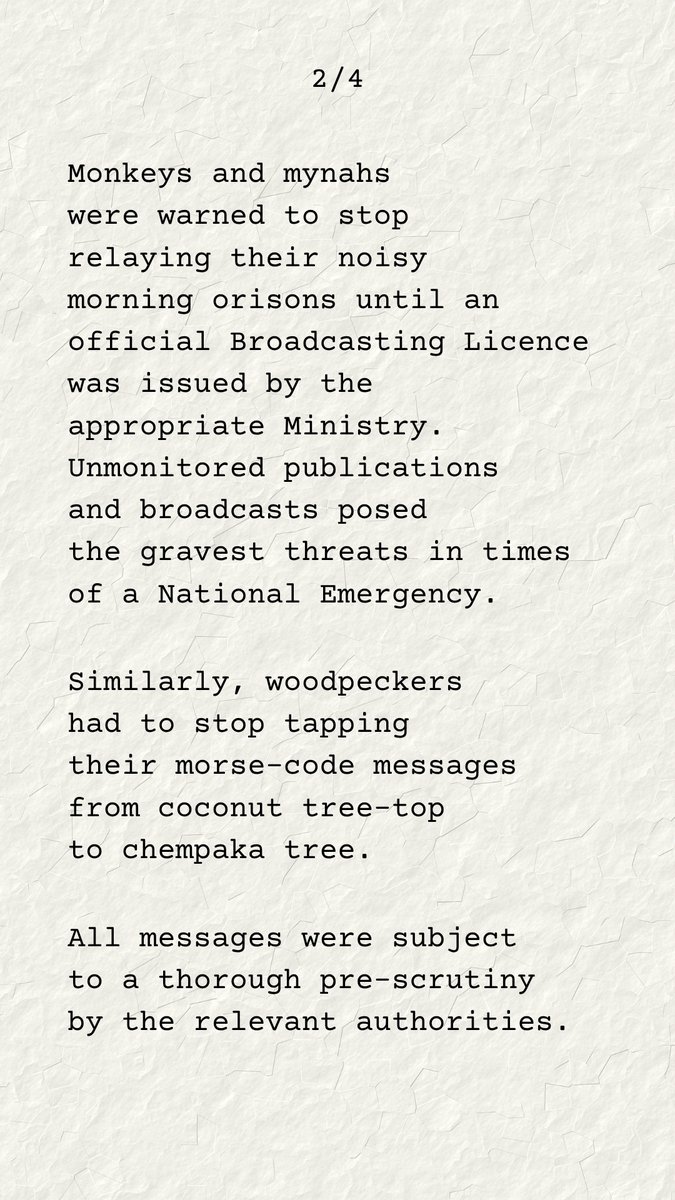
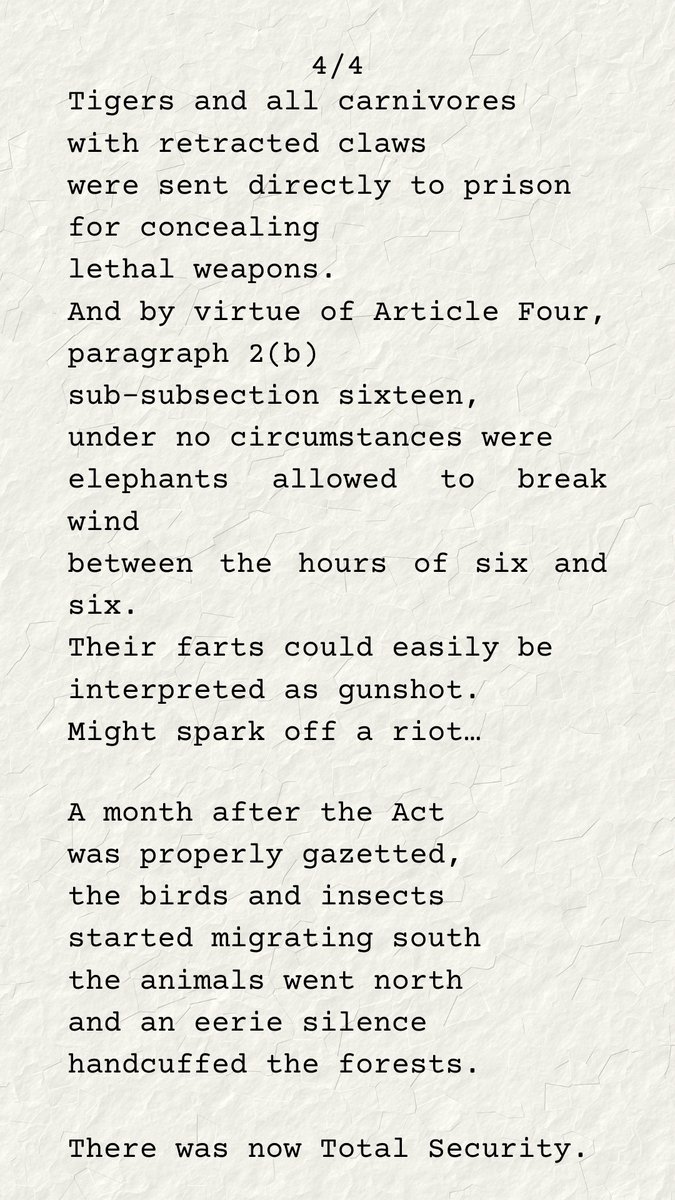
Even by the standards of a country ranking 157 of 180 nations in the World Press Freedom Index, the reaction of the authorities to the ‘Cockroach Janata Party’ is beyond extraordinary. The public response to that imaginative prank should have signalled to them a deep discontent, even distress, among young people. Instead, as The Indian Express reported, it was framed as jeopardising the country’s ‘national security’ and ‘posing a threat to the sovereignty of India.’ Decades ago, the Malaysian lawyer and poet Cecil Rajendra wrote this brilliant poem that captures the idiocy of it better than any pompous editorialising could (not that our ‘mainstream’ media would dare do even that much).
Rubio comes to India at a time when US-Pakistan ties are at its post-Bin Laden peak; when the US is pursuing a new detente with China at any cost; and US policies, from tariffs to wars, are directly hurting the Indian economy and millions of Indians.
Our demands are simple ,we want a strong, modern, fair and developed India. 🇮🇳
• Free & world class public education for every child
• Free, accessible & high-quality healthcare for all
• AQI below 25 in every major city
• Clean air, clean rivers & safe drinking water
• 5%+ GDP investment in R&D, science & innovation
• Indian universities in the global Top 100
• Strong public schools, libraries & research institutions
• End brain drain ,create opportunities at home
• Migration by choice, not compulsion
• A balanced mixed economy , strong private sector with strong public welfare
• Industrial Revolution 2.0, 3.0 & 4.0 revival in India
• Manufacturing led growth & high-skilled employment
• MSME empowerment with easy credit & lower compliance burden
• Energy security through renewables, nuclear & domestic production
• Global level infrastructure in transport, logistics & digital connectivity
• Smart villages & smart cities growing together
• Modern railways, ports, highways & public transport
• Affordable housing & planned urban development
• Zero hunger & zero extreme poverty
• Better wages, dignity & social security for workers
• Farmers with stable income, modern technology & market access
• Food processing & rural industrialization revolution
• Women’s safety, workforce participation & equal opportunity
• Skill development linked directly to industry needs
• AI, semiconductor, biotech & deep-tech leadership from India
• Data privacy, cybersecurity & digital rights protection
• Merit-based systems with innovative affirmative action
• Transparent & accountable governance at every level
• Faster, fairer & free judicial access for citizens
• Police, judicial & administrative reforms
• Strict action against corruption & misuse of taxpayers’ money
• Zero freebie politics,investment over appeasement
• Taxpayer money spent on productivity, education & healthcare
• Decentralization with empowered local governments
• National security with economic strength
• Strong diplomacy with strategic independence
• Sustainable growth without environmental destruction
• Sports, arts & culture investment at global standards
• Equal opportunities regardless of caste, religion, gender or region
• Dignity, opportunity & constitutional rights for every citizen
• Free judicial remedies and equal access to justice for every citizen
• Free and world-class education for all
• Free, accessible and high-quality healthcare for every Indian
• Beyond education, healthcare and justice, nothing else should be permanently free
• Welfare should empower citizens, not create dependency
• Taxpayers’ money must be invested in productivity, infrastructure, research and human development
• Subsidies should be targeted, transparent and temporary
• A nation grows through opportunity, innovation and merit , not freebie politics
A developed India is not a dream.
It is a national decision, a collective responsibility, and a generational mission. 🇮🇳
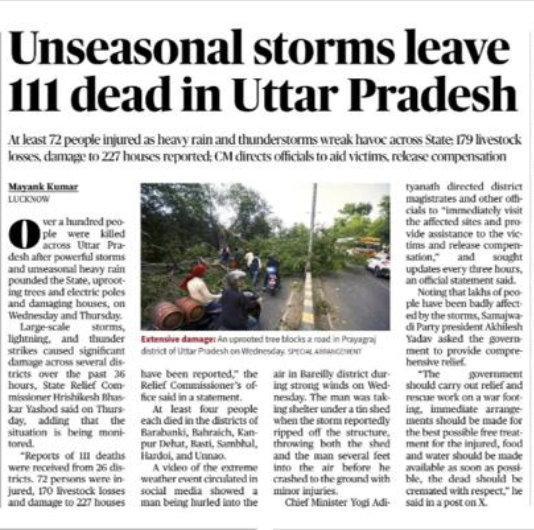
The Hindu seems to be the only newspaper running this news as Page 1 lead. Express doesn't even have it on the front page. Most of us came to know of these deaths when the Russian President condoled Modi over these deaths. Else the diktat of bad news in BJP-run states worked.
It must be handed to media that on cue they have started discussing austerity, fuel crisis etc.-- something that didnt exist till day before yesterday. Students of communication can use this as textbook example of narrative setting.
MIT School of Government expresses heartfelt condolences on the sad demise of Shri @rchanakyapillai Sir.
A mentor, thinker & guide who inspired young minds towards leadership and public service. His wisdom and humility will always be remembered.
ॐ शांति 🙏
#RadhakrishnanPillai
Many seem preoccupied with Vjay’s religious identity. What they wonder is absolutely possible in #TamilNadu. MGR, the actor-turned-CM, was a born to Malayali parents. Rajinikanth’s mother tongue is Marathi. And Vijay, a Christian, was voted to power in the very first election he contested by an electorate which is overwhelmingly Hindu. Your linguistic or religious identity is actually not a barrier to winning the hearts and minds of the people in the state.
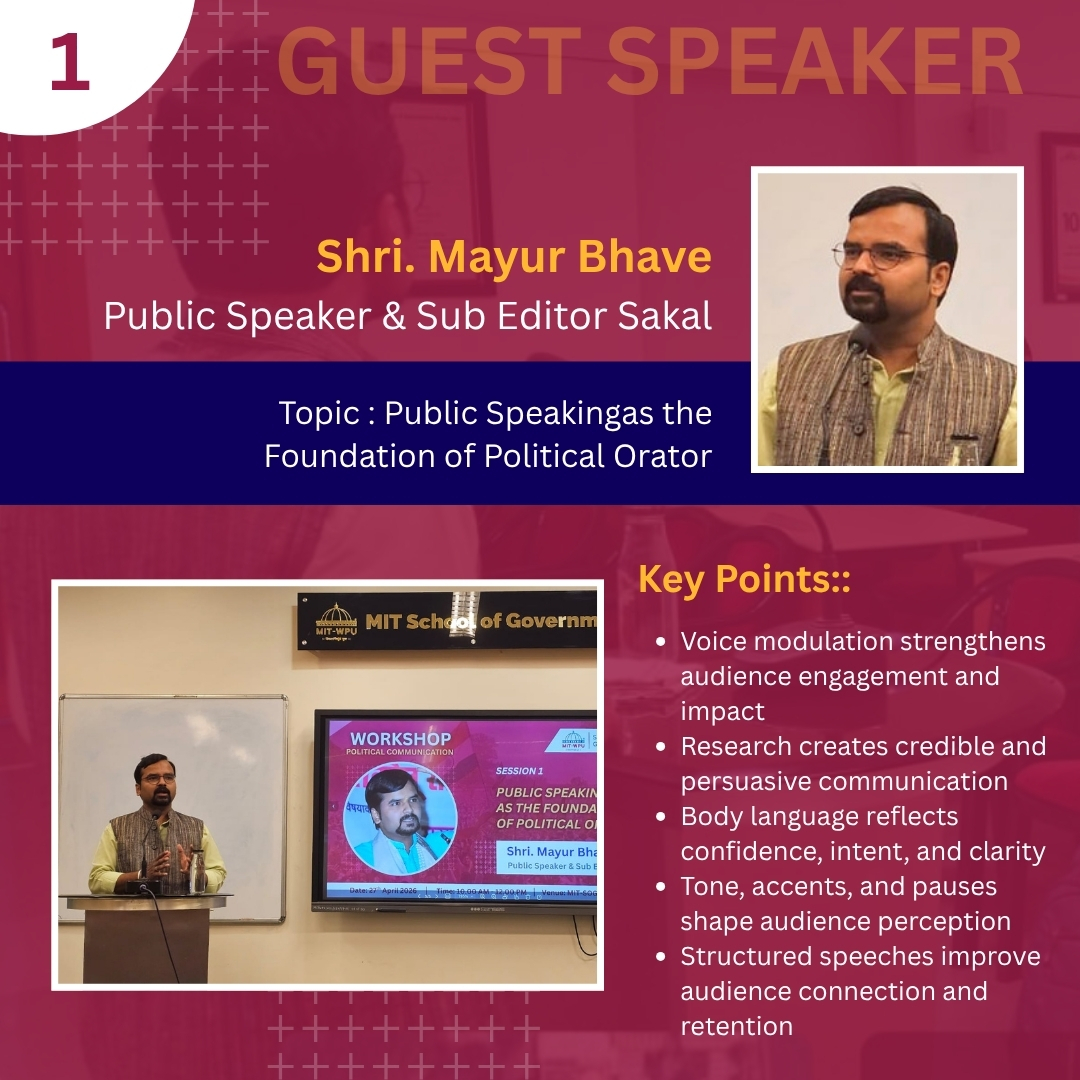
MIT School of Government successfully conducted a Workshop on Political Communication. Exploring how narratives, media, and digital strategy shape modern politics.
#MITSOG#MITWPU#PoliticalCommunication
One #KeralaStory from the recent election results that communalists should note: a Muslim majority constituency, Thavanur, elected a Christian, VS Joy; a Hindu majority constituency, Kalamassery, elected a Muslim. VE Abdul Gafoor; and a Christian majority constituency, Kochi, elected a Muslim, Muhammed Shiyas. Despite some influence from the national trends in favour of identity politics, Kerala remains a model of communal harmony, a state where people see human beings first and caste or religion later
@incindia@inckerala
Over past decade, Center has antagonized so many states/regions--Ladakh, Manipur, Tamil Nadu, Keralam, now West Bengal. Competition and contestation are part of politics, but politics also must have the capacity to bind, heal and consolidate feeling of belonging, not alienation.