For much of the past 18 months, Europe has searched for signs that the transatlantic relationship would eventually return to normal.
Since Donald Trump’s return to the White House, many European officials have viewed the turbulence in EU-U.S. relations through the lens of personality politics: an unpredictable president whose term will eventually end.
But what if the more consequential shift has little to do with Trump himself?
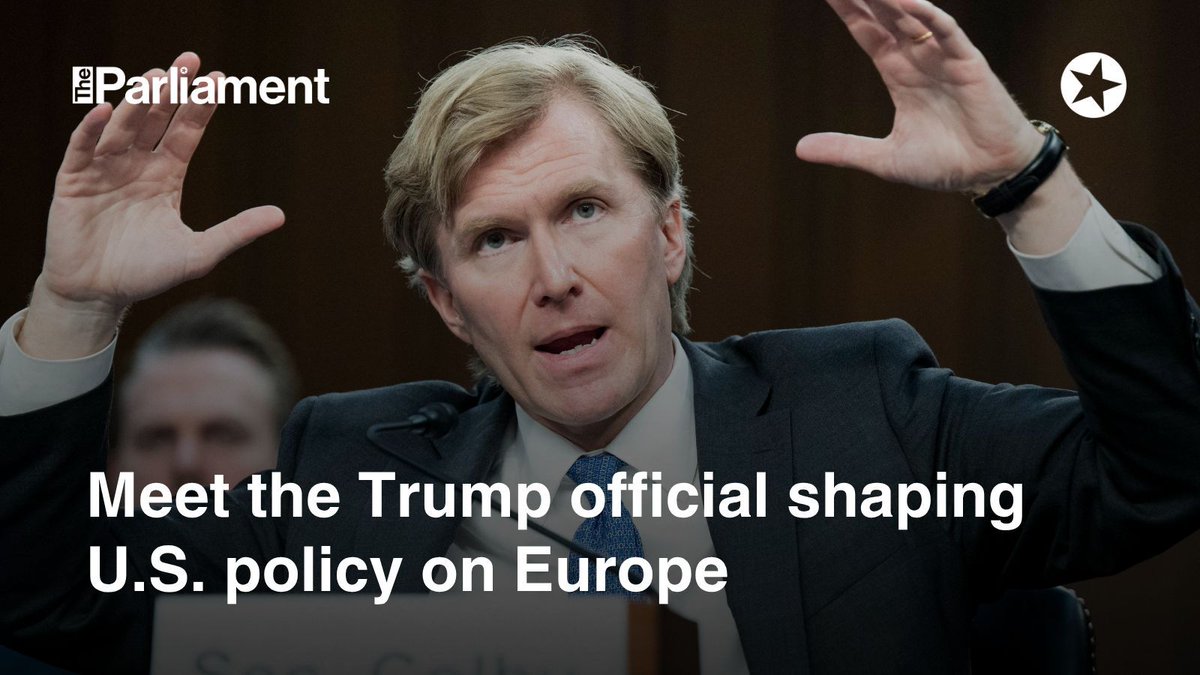
In our cover story this month, Peder Schaefer profiles Elbridge Colby, one of the architects of the Trump administration’s Europe policy. The portrait that emerges isn’t one of impulsive decision-making, but of a coherent strategic worldview.
Read a preview of The Parliament’s June edition and the full cover story here: https://t.co/hDRdwR4jv0
Can the EU claim that Ukraine's fate is existential while continuing to welcome hundreds of thousands of Russian tourists each year?
Read Carl-Johan Karlsson’s take in this week’s newsletter, and find out what else we’re writing and reading: https://t.co/FAhHF69GBP
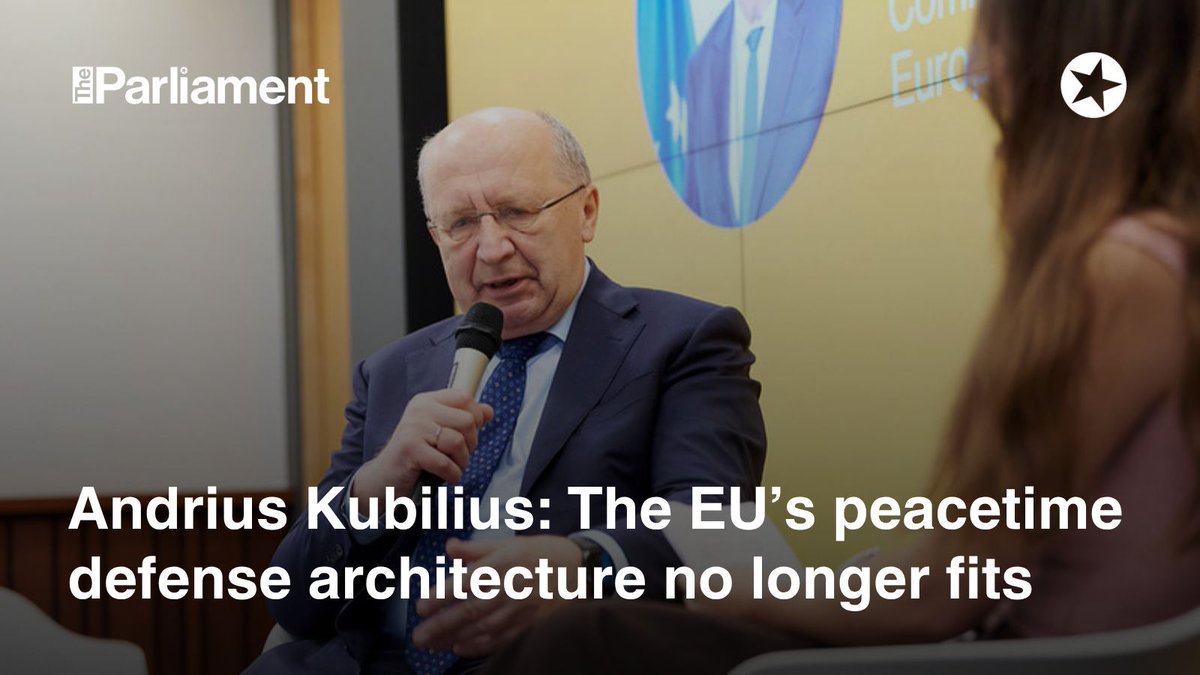
Is Europe's security architecture still fit for purpose?
With war on the continent, Defence Commissioner Andrius Kubilius says Europe needs new institutions and stronger coordination to overcome fragmented defense policies and spending.
Could a European Security Council be next?
Read the article and watch the full interview on our website: https://t.co/acSvKkWuSu
As part of its rearmament plan for 2030, the European Union has proposed four flagship defense projects, including a continent-wide air defense shield and a drone and counterdrone system.
The technology exists. The money is beginning to follow. So, can member states act collectively when their military ambitions demand it?
Read the full story here: https://t.co/kviRt8w97D
Pentagon policy chief Elbridge Colby is a principal driver of Washington’s Euroskeptic turn during President Donald Trump’s second term and a figure key to understanding how Washington's turn toward geopolitical realism is transforming the transatlantic relationship.
He's an architect behind the U.S. troop pullback from Europe, and even sees the European Union as a possible continental hegemon that could deny the U.S. access to European markets and military bases.
Read the full profile by @pedersschaefer: https://t.co/CCadUBv9SQ
Janez Janša has returned for a fourth term as Slovenia's prime minister.
After securing support from a fragile coalition ranging from Christian democrats to far-right populists, Janša is preparing a political agenda that could create new challenges for the EU, argues MEP Matjaž Nemec.
According to @MatjaNemec, Janša "might also seek the removal of Slovenia's European commissioner, Marta Kos."
Read the full article here: https://t.co/zok2c92GMS
June marks the midpoint of a consequential year for EU trade.
Alongside the entry into force of the Mercosur agreement, the European Commission has intensified efforts to diversify the EU's trade strategy and advance agreements with partners including India and Australia.
Brussels has also concluded an asymmetric trade deal with the U.S. and faced growing pressure from China as Beijing continues to weaponize trade.
How successful have the first six months of 2026 been in reshaping the EU's commercial strategy? And what should we expect from the second half of the year?
Read out latest policy report: https://t.co/8563QogVxX
Europe’s longstanding ties to Washington, combined with the vast resources and networks of U.S. companies, trade groups and institutions, have long given U.S. actors an unrivalled presence in Brussels.
New data from AI intelligence firm MEP Analytics suggest that influence hasn’t only endured under Trump, but is growing, write Margherita Dalla Vecchia and Federica Di Sario here: https://t.co/Xm2BoQlz0p
The EU this week reached a deal on a crucial piece of its migration regulation that will allow member states to set up migrant return hubs in non-EU countries.
But outsourcing migration management could create new long-term risks, including weaponized migration and stranded populations vulnerable to exploitation, some experts warn.
Read the full story by Margherita Dalla Vecchia: https://t.co/vEYtWGX5Sp
Europe is entering a new era of defense.
As geopolitical tensions rise and security threats evolve, one question is becoming increasingly urgent:
Can Europe's industrial base support its defense ambitions?
This year's European Industry Forum brings together policymakers, industry leaders and experts to discuss how Europe can strengthen defence production, secure critical supply chains, ensure affordable and reliable energy access and build the industrial capacity needed for long-term resilience.
If you're interested in the future of European defence, industrial competitiveness and strategic autonomy, join us in Brussels on June 3.
Register here: https://t.co/R9X635oHfY
More information about the programe available here: https://t.co/oXPVRJ9HMK
Liquified gas tankers equipped to travel through the iced-over waters of Russia's high north are bringing rising quantities of Russian gas into the European Union, even as an import ban is set to come into effect next year. A Danish shipyard is also continuing to service the ships, even as the Danish government and the EU stand opposed.
Read the full story by @pedersschaefer: https://t.co/u7CgYy6Ejj
The European Union's policy on artificial intelligence gave off an aura of the sacred this week, after His Holiness Pope Leo XIV dropped a papal encyclical that aligned closely with Brussels' vision for regulating the technology.
Read @pederschaefer’s full analysis in this week’s newsletter — and be sure to subscribe: https://t.co/UnKfrLB8uz
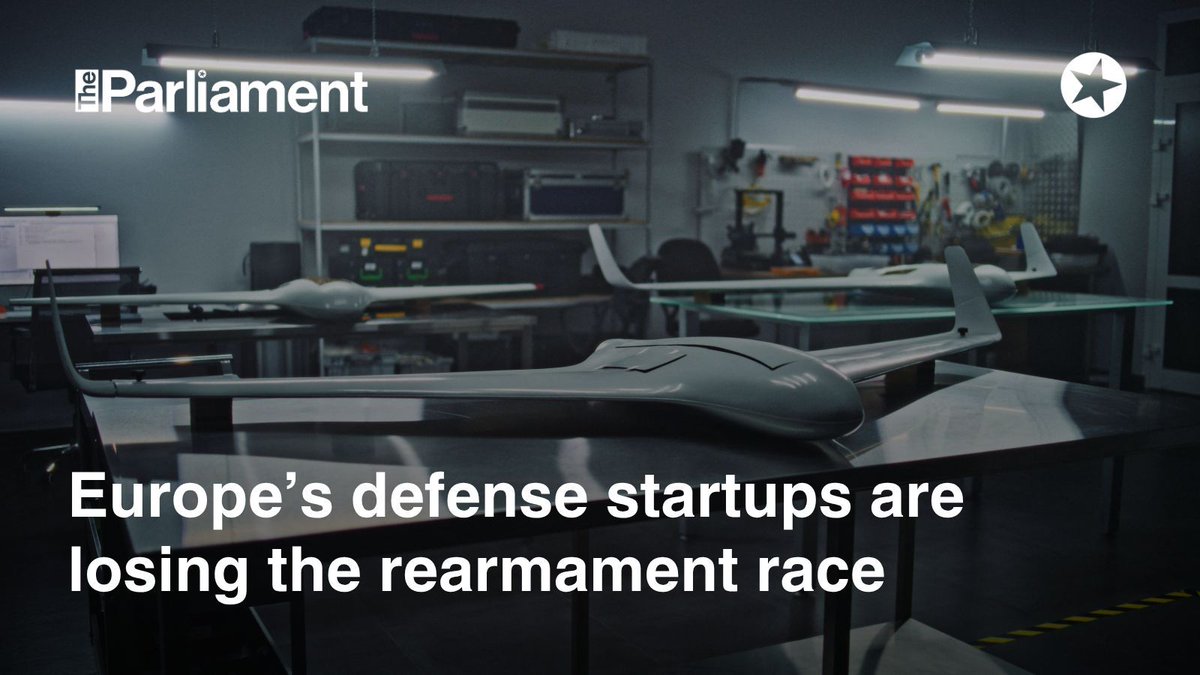
Billions are flowing into Europe's defense ecosystem, but most of the spending is still going to legacy defense companies rather than innovative new startups reshaping the industry.
Read the full story by Paula Soler and @pedersschaefer: https://t.co/yEykX0QKNg
For years, some European leaders viewed EU-China relations as a systemic challenge — serious, but never so urgent that it couldn’t be postponed for another day. But the mood is now shifting. As the bloc grapples with economic stagnation and surging unemployment, a growing sense of urgency hangs over Friday’s high-level meeting of EU commissioners, writes FDS.
Read the full story here: https://t.co/vWyoI7NP60
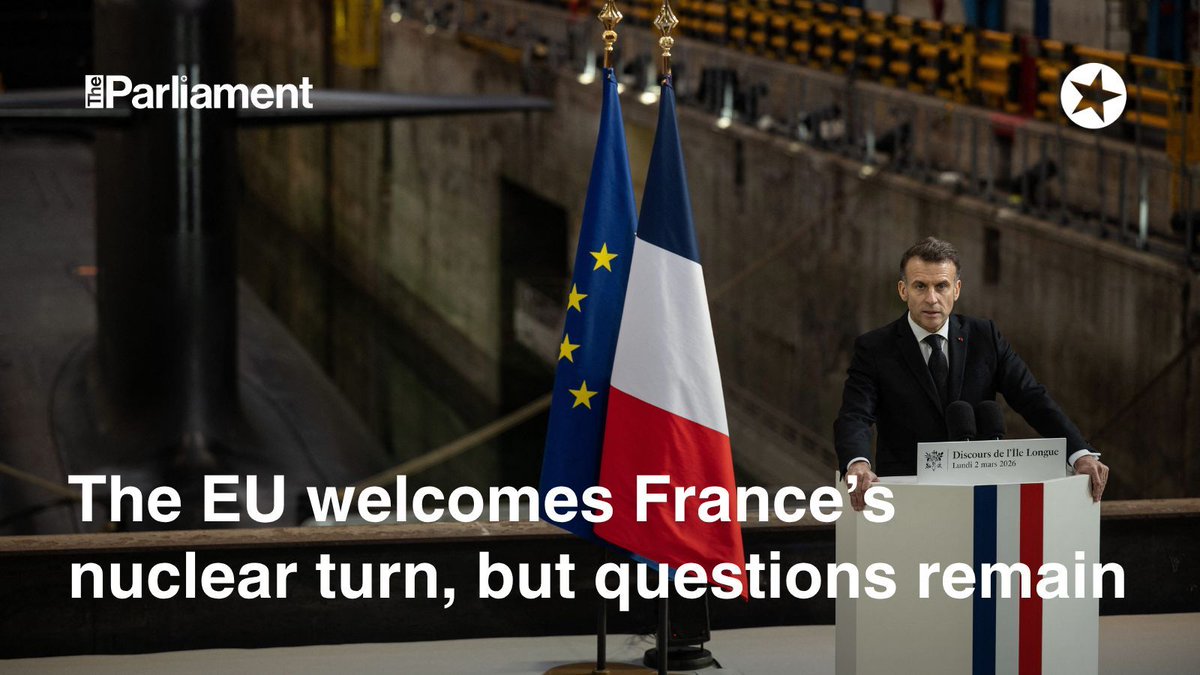
In March, French President Emmanuel Macron sketched a more assertive role for France in Europe's nuclear deterrence. This month, other European countries such as Lithuania and Norway joined discussions to enter the initiative, reflecting sustained European interest in France's proposal.
Read the full story by @paulasoler and @pedersschaefer: https://t.co/AhXstiyMPJ
There’s a rule of thumb in Europe that whatever starts in the United States eventually crosses the Atlantic. But one booming trend has so far resisted the usual export: the Mar-a-Lago face.
While European right-wing elites have eagerly replicated much of the MAGA movement’s political playbook — from anti-migrant fearmongering to culture-war rhetoric — few have embraced the surgically enhanced beauty standards that have emerged in Washington since Trump took office.
Read the full story by FDS: https://t.co/TlOi8D8D83
Every day, buses carry people from Russian-occupied Ukraine into the EU. After years of Kremlin propaganda, forced assimilation and militarized education, some residents of the occupied territories could become part of Russia’s growing hybrid warfare machine inside the EU.
Read the full story by Eva Hilinski and @pedersschaefer: https://t.co/PeVZvz7m2o
Every day, buses carry people from Russian-occupied Ukraine into the EU. After years of Kremlin propaganda, forced assimilation and militarized education, some residents of the occupied territories could become part of Russia’s growing hybrid warfare campaign inside the EU.
Read the full story by Eva Hilinski and @pedersschaefer: https://t.co/PeVZvz7m2o
Europe is moving closer to approving “return hubs” — offshore detention centers for rejected asylum seekers. Supporters say they could fix Europe’s low deportation rates. Critics warn they push the EU into legally murky territory.
But beyond the politics, the math may simply not add up: EU countries would still bear the costs and legal responsibilities while financing expensive systems abroad.
Read the full analysis by Carl-Johan Karlsson in this week’s newsletter and find out what else we’re writing and reading.
Read the full newsletter here: https://t.co/I8pVBUH6Dg