Researchers across 20+ institutions incl. ETH, Stanford, Harvard, KAIST, UNSW have spent months building TimeNet.
the goal: make it easier to train and benchmark temporal foundation models that understand how the world changes over time.
it's open source, and today we're kicking off a global hackathon. Come join us: https://t.co/o219dZbR3y
(and earn $50k in compute and cloud credits)
Paper: https://t.co/3W6jwOK6XY
Code: https://t.co/9rSpbXl8L2
Start here: https://t.co/tGam67xzmA
Contributions welcome across datasets, connectors, models and evaluations.
More to share later this week. Keep an eye out 👀
We’re releasing TimeNet today, joining forces with researchers across the US, Europe, Asia and Australia to build the future of Temporal AI that understands our world as it changes.
An open data standard and scalable infrastructure for next-generation Temporal Foundation Models.
Thanks to everyone from Aionic Labs, Stanford University, ETH Zurich, UNSW Sydney, Sun Yat-sen University, Griffith University, Google, UCLA, TimeCopilot, Dartmouth College, Harvard University, University of Cambridge, Eindhoven University of Technology and KAIST.
7 / Culture
Startup: No hierarchy, no unnecessary standups or , no recurring meetings. WeI believe in bottom-up culture rather than telling people what to do. It’s all about enabling exceptional people to do their best work.
We're hiring in Zurich. Come meet us! 🚀
1/ PhD, Big Tech, or founding a startup?
I've now done all three. And honestly, all three are incredibly worthwhile.
Here's what I learned from each, and how we're trying to combine the best of them in Aionic Labs. 🧵
From a beer at Stanford to a frontier AI lab in Zurich: 🍻🇨🇭
I've joined Aionic Labs, alongside my work at ETH's Agentic Systems Lab!
I've known the four founders as friends and colleagues for years. When they reached out about joining the team, it was an easy yes! 🚀
Wild day for banners at the office. Happy neighbors @PalantirTech! 👋
Join us on the bright side (first floor)! #OpenScience
P.S. Nothing to do with the other banner. Just coincidental timing.
Honored to be a part of this.
AI is a technical discipline, but most of all, a "wonder"-ful and fun domain.
We aim to capture all three aspects in this course.
“𝘠𝘰𝘶 𝘥𝘰𝘯'𝘵 𝘯𝘰𝘳𝘮𝘢𝘭𝘭𝘺 𝘭𝘦𝘢𝘳𝘯 𝘩𝘰𝘸 𝘵𝘰 𝘣𝘶𝘪𝘭𝘥 𝘧𝘰𝘶𝘯𝘥𝘢𝘵𝘪𝘰𝘯 𝘮𝘰𝘥𝘦𝘭𝘴 𝘪𝘯 𝘢𝘤𝘢𝘥𝘦𝘮𝘪𝘢.”
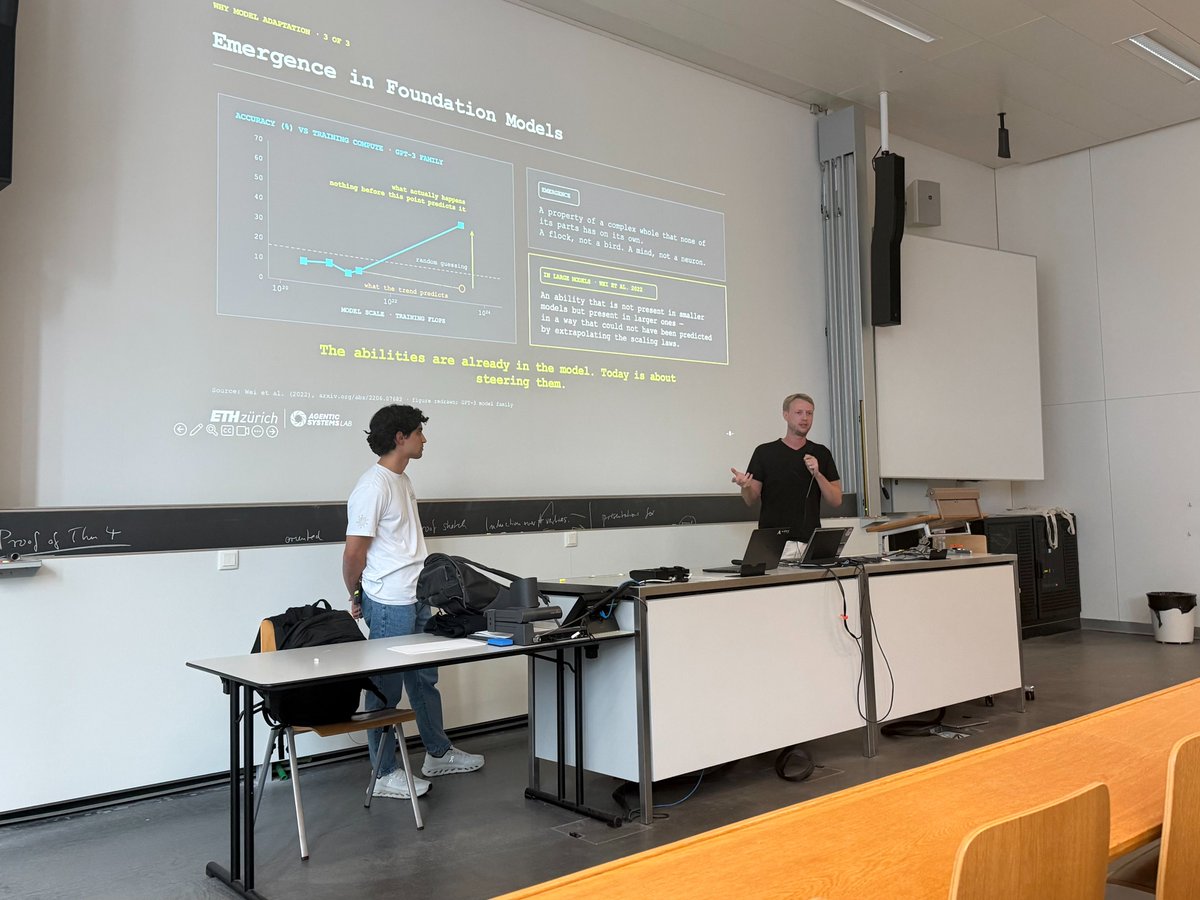
In this week’s lecture on 𝐁𝐮𝐢𝐥𝐝𝐢𝐧𝐠 𝐀𝐠𝐞𝐧𝐭𝐢𝐜 𝐀𝐈 𝐒𝐲𝐬𝐭𝐞𝐦𝐬 𝐟𝐨𝐫 𝐈𝐧𝐝𝐮𝐬𝐭𝐫𝐲 𝐓𝐫𝐚𝐧𝐬𝐟𝐨𝐫𝐦𝐚𝐭𝐢𝐨𝐧 at ETH Zurich, @nzuma0 and @PatrickLangerAI covered large language model (LLM) training and adaptation.
One fascinating aspects of foundation models we discussed was 𝐞𝐦𝐞𝐫𝐠𝐞𝐧𝐭 𝐛𝐞𝐡𝐚𝐯𝐢𝐨𝐫. You keep scaling data, model size, and compute, and suddenly models start demonstrating capabilities they weren't explicitly trained to perform. These capabilities are difficult to predict from smaller-scale experiments.
But here's the challenge: 𝐈𝐧 𝐚𝐜𝐚𝐝𝐞𝐦𝐢𝐚, 𝐲𝐨𝐮 𝐫𝐚𝐫𝐞𝐥𝐲 𝐡𝐚𝐯𝐞 𝐚𝐜𝐜𝐞𝐬𝐬 𝐭𝐨 𝐭𝐡𝐞 𝐞𝐧𝐠𝐢𝐧𝐞𝐞𝐫𝐢𝐧𝐠 𝐜𝐚𝐩𝐚𝐛𝐢𝐥𝐢𝐭𝐢𝐞𝐬, 𝐢𝐧𝐟𝐫𝐚𝐬𝐭𝐫𝐮𝐜𝐭𝐮𝐫𝐞, 𝐚𝐧𝐝 𝐬𝐜𝐚𝐥𝐞 𝐧𝐞𝐞𝐝𝐞𝐝 𝐭𝐨 𝐞𝐱𝐩𝐞𝐫𝐢𝐞𝐧𝐜𝐞 𝐭𝐡𝐞𝐬𝐞 𝐩𝐡𝐞𝐧𝐨𝐦𝐞𝐧𝐚 𝐟𝐢𝐫𝐬𝐭𝐡𝐚𝐧𝐝.
We covered post-training methods for LLMs and explored emergence and scaling laws. These topics help explain how model capabilities develop, how model behavior can be shaped, and what drives recent breakthroughs in LLMs.
For anyone building with AI, understanding these foundations helps inform decisions about what to automate, how to evaluate systems, and where human oversight matters.
Thanks to Nicolas Zumarraga and Patrick Langer for sharing insights from their research and real-world experience at Aionic Labs and Meta.
The Building Agentic AI Systems for Industry Transformation lecture takes place every Wednesday (16:15–18:00) at ETH Zurich and is led by @kev_osull, @PatrickLangerAI, @robertjakob, and Markus Kreft.
Lecture link in the comments. 🔗👇
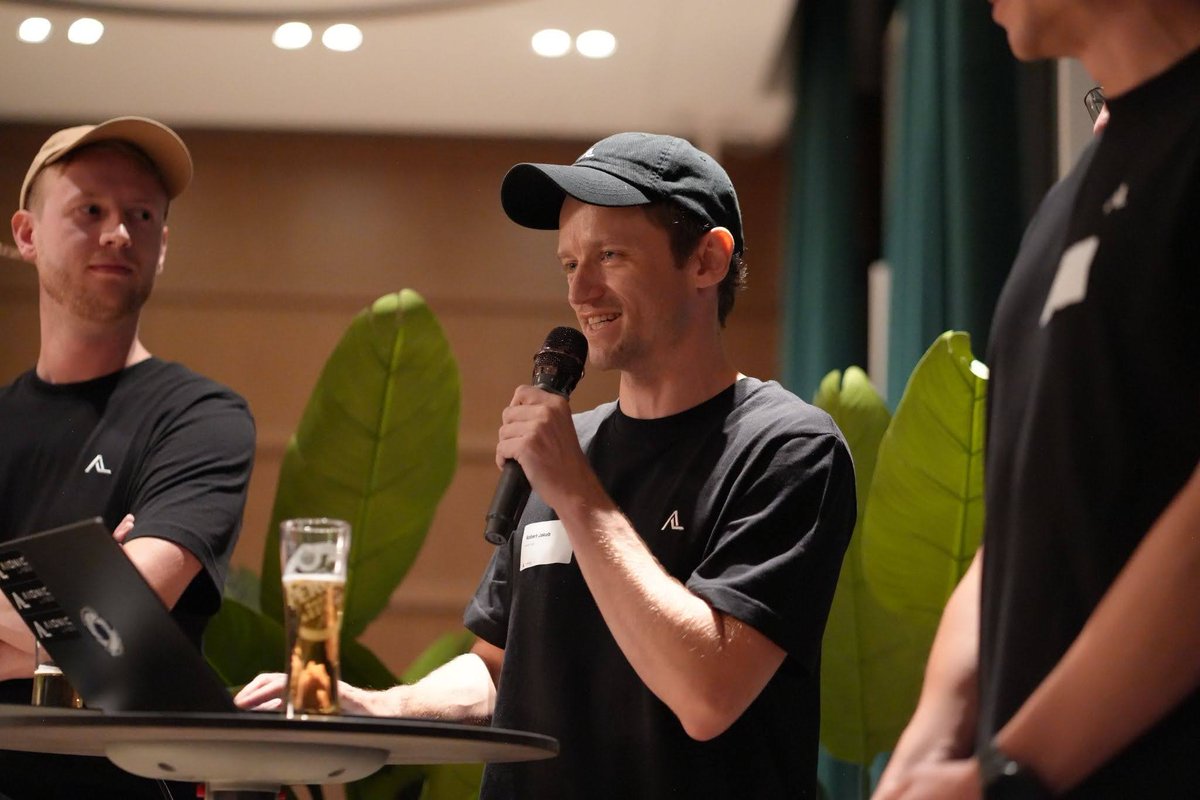
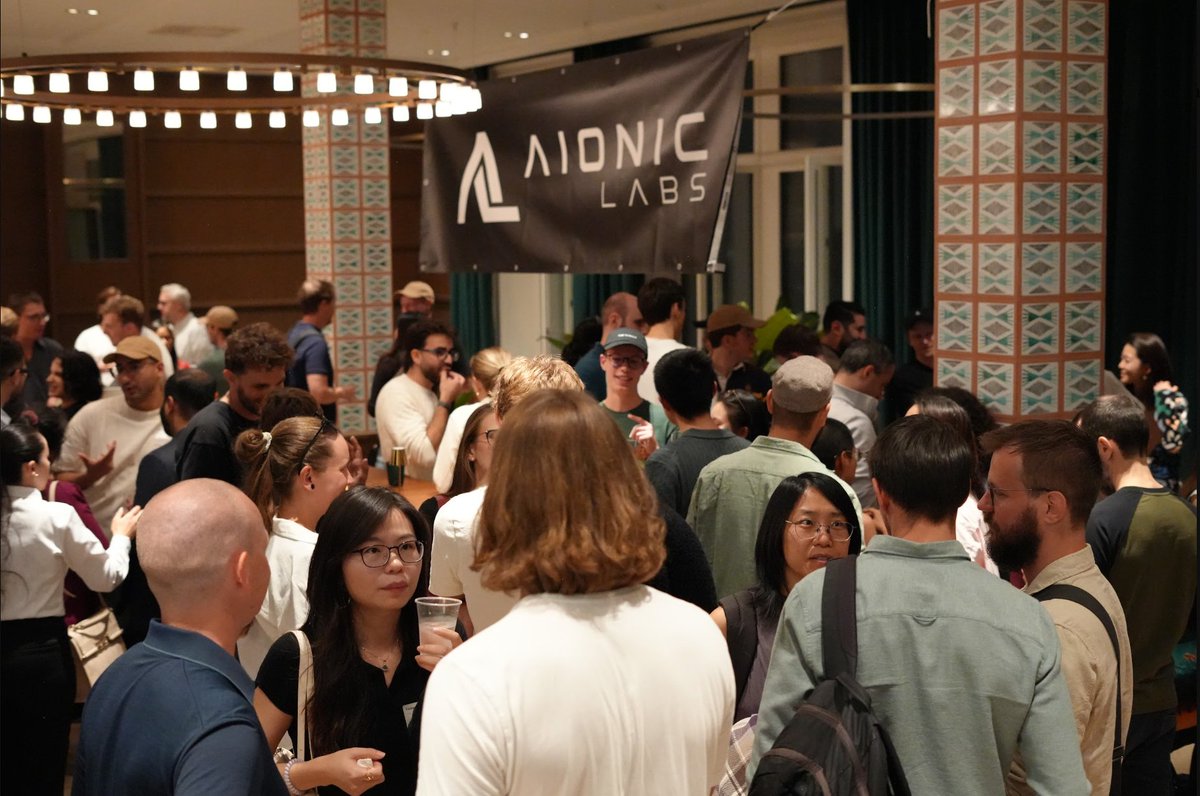
100+ people in Zurich for the @aionic_labs launch.
also launched: karaoke and our new caps. 🎤🧢
thanks to everyone helping us give AI a sense of time.
first of many. now, it’s time to build! 🚀
and yes, we’re hiring. (singing skills optional)
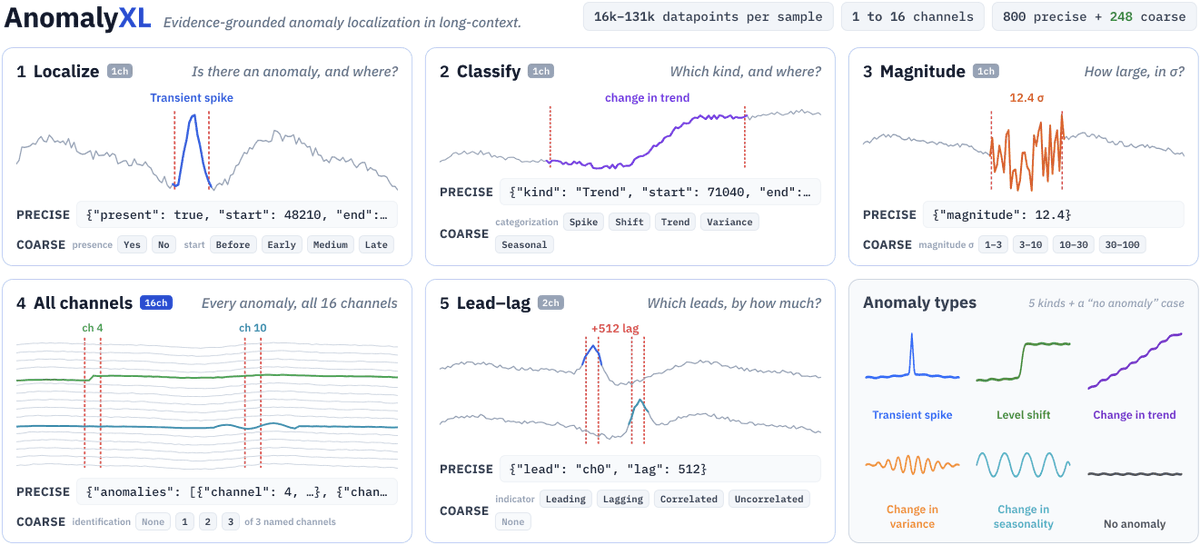
Frontier Time Series Language Models struggle with precise anomaly localization over long contexts, when useful signals might be hidden in hours of recordings.
In our new paper we trained a tiny Recursive Language Model to SoTA performance on long context time series.
We introduce AnomalyXL, an infinitely scalable synthetic time-series generator with programmatic ground truth answers.
Training our RLM formulation on this RL environment transfers to real world anomaly detection in Software Observability, ECG and Sleep data.
🧵👇