We design, develop, and evaluate AI systems that run the real world, and shape the researchers and founders who will define its future. Based at ETH Zurich.
Researchers across 20+ institutions incl. ETH, Stanford, Harvard, KAIST, UNSW have spent months building TimeNet.
the goal: make it easier to train and benchmark temporal foundation models that understand how the world changes over time.
it's open source, and today we're kicking off a global hackathon. Come join us: https://t.co/o219dZbR3y
(and earn $50k in compute and cloud credits)
We’re releasing TimeNet today, joining forces with researchers across the US, Europe, Asia and Australia to build the future of Temporal AI that understands our world as it changes.
An open data standard and scalable infrastructure for next-generation Temporal Foundation Models.
An all-nighter at the @ETH_agent_lab to cheer for the midterms
Didn't only want to know who lost and won. Wanted to know which members of Congress have their legislative network re-elected or torn apart in real time.
In order to pass legislation you need trusted allies!
From a beer at Stanford to a frontier AI lab in Zurich: 🍻🇨🇭
I've joined Aionic Labs, alongside my work at ETH's Agentic Systems Lab!
I've known the four founders as friends and colleagues for years. When they reached out about joining the team, it was an easy yes! 🚀
“𝘠𝘰𝘶 𝘥𝘰𝘯'𝘵 𝘯𝘰𝘳𝘮𝘢𝘭𝘭𝘺 𝘭𝘦𝘢𝘳𝘯 𝘩𝘰𝘸 𝘵𝘰 𝘣𝘶𝘪𝘭𝘥 𝘧𝘰𝘶𝘯𝘥𝘢𝘵𝘪𝘰𝘯 𝘮𝘰𝘥𝘦𝘭𝘴 𝘪𝘯 𝘢𝘤𝘢𝘥𝘦𝘮𝘪𝘢.”
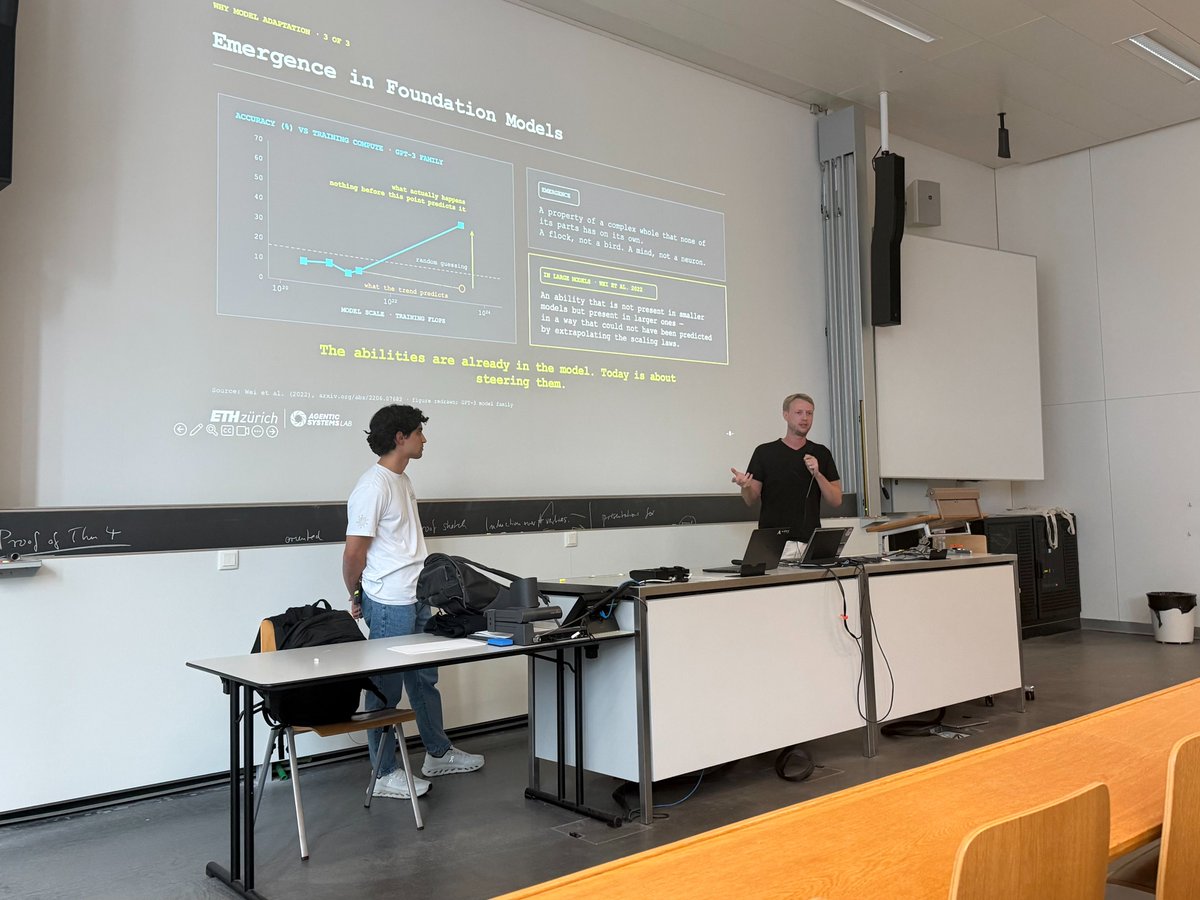
In this week’s lecture on 𝐁𝐮𝐢𝐥𝐝𝐢𝐧𝐠 𝐀𝐠𝐞𝐧𝐭𝐢𝐜 𝐀𝐈 𝐒𝐲𝐬𝐭𝐞𝐦𝐬 𝐟𝐨𝐫 𝐈𝐧𝐝𝐮𝐬𝐭𝐫𝐲 𝐓𝐫𝐚𝐧𝐬𝐟𝐨𝐫𝐦𝐚𝐭𝐢𝐨𝐧 at ETH Zurich, @nzuma0 and @PatrickLangerAI covered large language model (LLM) training and adaptation.
One fascinating aspects of foundation models we discussed was 𝐞𝐦𝐞𝐫𝐠𝐞𝐧𝐭 𝐛𝐞𝐡𝐚𝐯𝐢𝐨𝐫. You keep scaling data, model size, and compute, and suddenly models start demonstrating capabilities they weren't explicitly trained to perform. These capabilities are difficult to predict from smaller-scale experiments.
But here's the challenge: 𝐈𝐧 𝐚𝐜𝐚𝐝𝐞𝐦𝐢𝐚, 𝐲𝐨𝐮 𝐫𝐚𝐫𝐞𝐥𝐲 𝐡𝐚𝐯𝐞 𝐚𝐜𝐜𝐞𝐬𝐬 𝐭𝐨 𝐭𝐡𝐞 𝐞𝐧𝐠𝐢𝐧𝐞𝐞𝐫𝐢𝐧𝐠 𝐜𝐚𝐩𝐚𝐛𝐢𝐥𝐢𝐭𝐢𝐞𝐬, 𝐢𝐧𝐟𝐫𝐚𝐬𝐭𝐫𝐮𝐜𝐭𝐮𝐫𝐞, 𝐚𝐧𝐝 𝐬𝐜𝐚𝐥𝐞 𝐧𝐞𝐞𝐝𝐞𝐝 𝐭𝐨 𝐞𝐱𝐩𝐞𝐫𝐢𝐞𝐧𝐜𝐞 𝐭𝐡𝐞𝐬𝐞 𝐩𝐡𝐞𝐧𝐨𝐦𝐞𝐧𝐚 𝐟𝐢𝐫𝐬𝐭𝐡𝐚𝐧𝐝.
We covered post-training methods for LLMs and explored emergence and scaling laws. These topics help explain how model capabilities develop, how model behavior can be shaped, and what drives recent breakthroughs in LLMs.
For anyone building with AI, understanding these foundations helps inform decisions about what to automate, how to evaluate systems, and where human oversight matters.
Thanks to Nicolas Zumarraga and Patrick Langer for sharing insights from their research and real-world experience at Aionic Labs and Meta.
The Building Agentic AI Systems for Industry Transformation lecture takes place every Wednesday (16:15–18:00) at ETH Zurich and is led by @kev_osull, @PatrickLangerAI, @robertjakob, and Markus Kreft.
Lecture link in the comments. 🔗👇
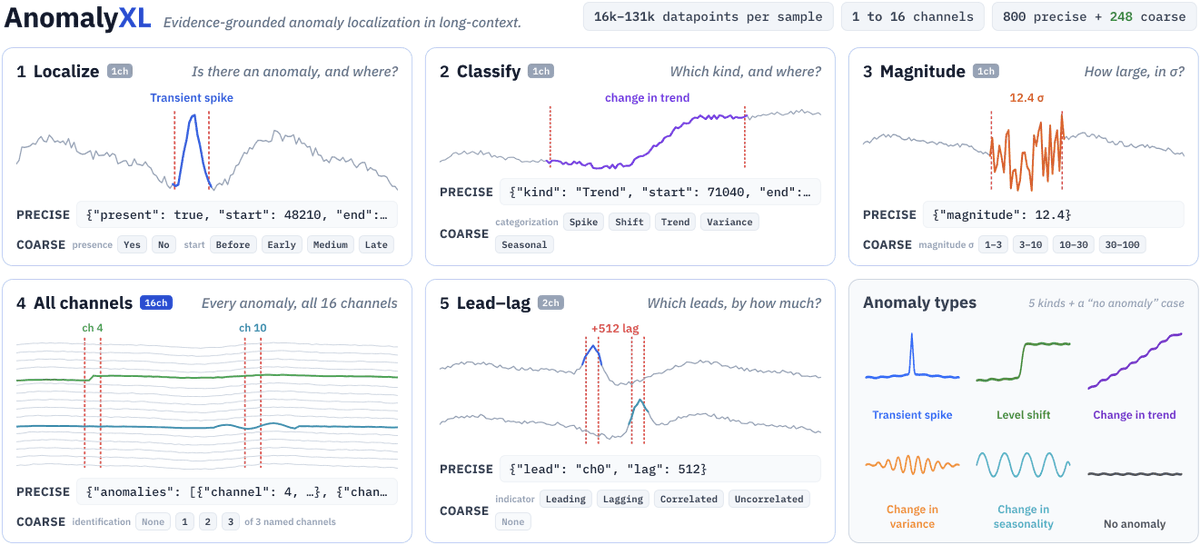
Frontier Time Series Language Models struggle with precise anomaly localization over long contexts, when useful signals might be hidden in hours of recordings.
In our new paper we trained a tiny Recursive Language Model to SoTA performance on long context time series.
We introduce AnomalyXL, an infinitely scalable synthetic time-series generator with programmatic ground truth answers.
Training our RLM formulation on this RL environment transfers to real world anomaly detection in Software Observability, ECG and Sleep data.
🧵👇
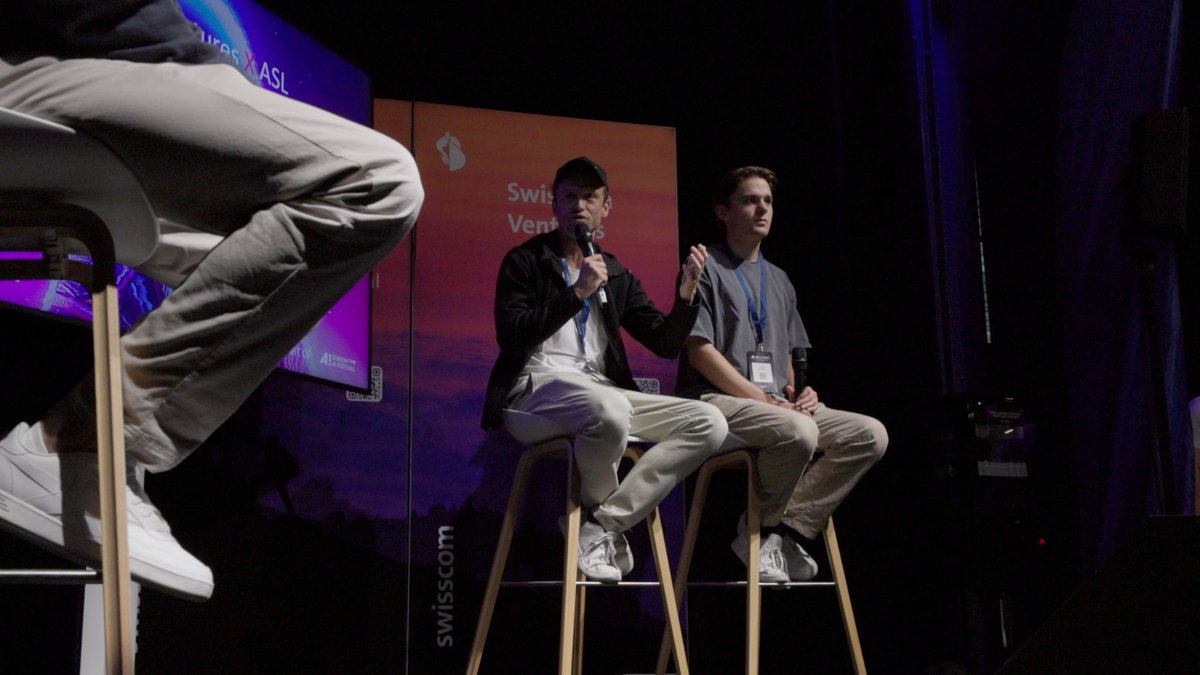
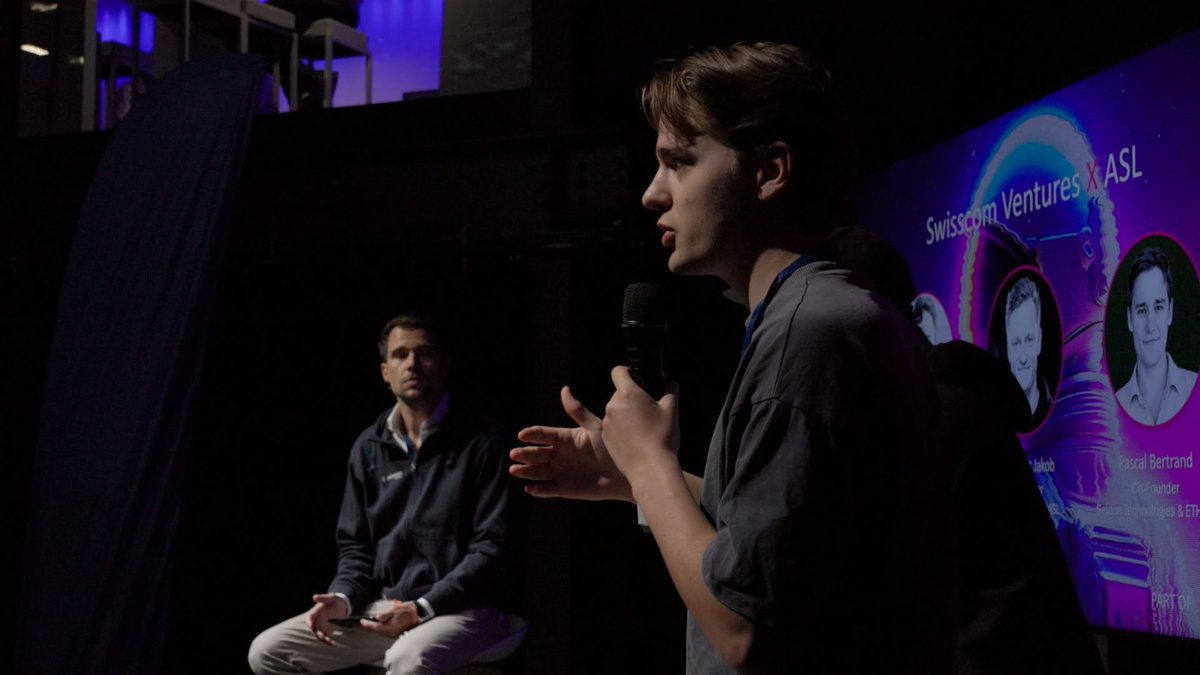
Still a student? Want to launch a startup and raise your first angel round? Here’s the blueprint.
Pascal Bertrand (@PascalBtd) & Atoof Shakir (@atoof_sh) join Europe on Edge to talk about building an AI startup at ETH, raising without a pitch deck, and teaching AI to see.
🎥 Trailer below
🎧 Full episode in the first reply
The world of R&D is forking into two paths: the token-abundant research, and the token-starved research. The future is in the former - evidentially, the progress by today's top AI industry teams and neolabs is breathtaking, where researchers’ human brilliance is super charged by AI’s assistance. Every research university president should be reading this report and reflecting on what the future of higher education research should be.
https://t.co/y74Ai3mIhk
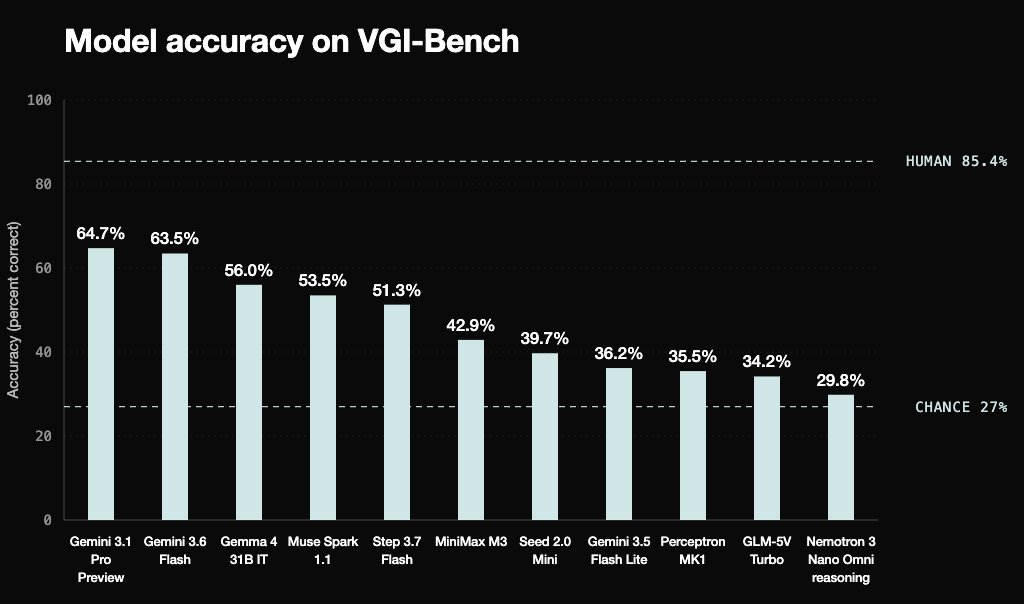
Introducing VGI-Bench: a multimodal, holistic benchmark probing 12 distinct visual and audio-visual skills.
550 human-curated questions, designed to mitigate the common mistakes in today's video benchmarks and expose pragmatic failures of state-of-the-art models.
Best model: 64.73%. Humans: 84.5%.
Today we’re launching browsers for nunu!
Our agents can now browse the web just like humans do, built with @browser_use 🤝
We’re also introducing cross-platform support, allowing agents to run automations across PCs, phones and web.
Here are some examples ⬇️
Yesterday, we hosted Curious Machines, our first event with talks from @matteosaponati and @lsteno about their work on auto-research (more about that soon!). Thanks to everyone who attended and for those we could not accommodate this time, stay tuned for our next events
Thanks to @ETH_agent_lab for the location and @GHollbeck for taking pictures
We are launching Aionic Labs (@aionic_labs). 🔥🚀
With support from SPRIN-D’s Next Frontier AI initiative, we are building a frontier AI company at the heart of Europe’s leading AI ecosystem.
Clinicians decide when a patient needs intervention. Factory teams catch machine problems before production stops. Operators determine which alarms demand action.
These are some of the most consequential decisions in the physical economy, and they all depend on time-series data.
We are developing Time-Series Language Models (TSLMs) that can understand these signals, reason over them, predict what comes next, and suggest actions in natural language.
TSLMs connect sensor data with language experts use to make critical decisions.
Europe is the right place to build this technology. We have world-class research, top technical talent, and decades of industrial expertise and data.
Our team brings together former founders, frontier tech experience, and world-class researchers from Stanford, Harvard, ETH Agentic Systems Lab (@ETH_agent_lab), ETH AI Center (@ETH_AI_Center) and CDTM (@cdtm_munich). We have built companies, developed technology at scale, and advanced research at the frontier of AI.
Over the coming months, we will:
→ Launch selected TSLM pilots across manufacturing, healthcare, energy, logistics, telecom, insurance, and banking.
→ Build an open research community around OpenTSLM (@OpenTSLM) and TimeNet.
→ Enable trusted data partnerships across industries.
→ Accelerate the Time-Series AI community in Zurich and Europe.
From Zurich. For Europe. 🇨🇭🇪🇺
Join our mission and help build a Frontier AI Lab from day one. Career and pilot program links are in the comments.
Managing Directors: Robert Jakob (@robertjakob), Thomas Kaar (@thomaskaar)
Supported by: SPRIN-D (@SPRIND)
Photo: Felix Adler für SPRIND
You can find more information about the lab, available student tracks, and the application process here:
🌐 Lab Website: https://t.co/S2grmYTMT4
🎓 Student Tracks: https://t.co/YheWnd6ECa
📝 Application Form: https://t.co/sYdVheDI3i
Earlier this year, we launched the first student batch of the 𝗘𝗧𝗛 𝗔𝗴𝗲𝗻𝘁𝗶𝗰 𝗦𝘆𝘀𝘁𝗲𝗺𝘀 𝗟𝗮𝗯. Today, applications for Batch 2 are officially open! 🚀
𝗦𝘁𝘂𝗱𝗲𝗻𝘁𝘀 𝗶𝗻 𝗼𝘂𝗿 𝗳𝗶𝗿𝘀𝘁 𝗕𝗮𝘁𝗰𝗵 𝗵𝗮𝘃𝗲 𝗮𝗹𝗿𝗲𝗮𝗱𝘆:
→ Published papers at ICLR and ICML
→ Advised executives at SMI-listed companies
→ Raised seven-figure funding for their startups
→ Secured full-time offers from frontier AI labs
Today, our work spans the cutting edge of AI, from Agentic Systems and Multimodal AI to TSLMs and RLMs — applied across sectors like healthcare, energy, financial services, manufacturing, and robotics.
𝗡𝗼𝘄, 𝗶𝘁’𝘀 𝘁𝗶𝗺𝗲 𝗳𝗼𝗿 𝘁𝗵𝗲 𝘀𝗲𝗰𝗼𝗻𝗱 𝗕𝗮𝘁𝗰𝗵.
The goal? Help you turn your semester project, bachelor’s thesis, or master’s thesis into frontier AI research, an AI startup, or a transformative industry collaboration. With you in the driver's seat.
𝗔𝗽𝗽𝗹𝗶𝗰𝗮𝘁𝗶𝗼𝗻𝘀 𝗮𝗿𝗲 𝗼𝗽𝗲𝗻 𝘁𝗼 𝗘𝗧𝗛 𝘀𝘁𝘂𝗱𝗲𝗻𝘁𝘀 𝗮𝗻𝗱 𝗴𝘂𝗲𝘀𝘁 𝘀𝘁𝘂𝗱𝗲𝗻𝘁𝘀 𝗳𝗿𝗼𝗺 𝗼𝘁𝗵𝗲𝗿 𝘂𝗻𝗶𝘃𝗲𝗿𝘀𝗶𝘁𝗶𝗲𝘀.
Who's next? 👀
👇 Link to apply in the comments.
📄 Paper 6/6
Preserving Plasticity in Continual Learning via Dynamical Isometry
Rosseau A, Müller R, Nowe A.
Accepted at ICML 2026 Main Track
ICML: https://t.co/7g9RKRDeZ5
@deepqlearning
Excited to share that members of our lab co-authored 6 papers accepted at #ICML2026, including three Main Track and three Workshop papers 🔥🚀
📄 Accepted papers:
▪️ OpenTSLM: Time-Series Language Models for Reasoning over Multivariate Medical Text- and Time-Series Data [Main Track]
▪️ Auditing Emotion-Vector-Steered Political Bias in Open-Weight LLMs [AI4GOOD Workshop]
▪️ Reinforcement Learning of Karma Bidding Strategies [NExT-Game Workshop]
▪️ Cinematic Source Separation with Dialogue-Driven Sidechain Ducking [Workshop on Machine Learning for Audio]
▪️ Reinforcement Learning for Tool-Calling Agents in Fast Healthcare Interoperability Resources (FHIR) [Main Track]
▪️ Preserving Plasticity in Continual Learning via Dynamical Isometry [Main Track]
@robertjakob@PatrickLanger20@gaborhollbeck@f14wn@DerRiehl@atoof_sh@deepqlearning@kev_osull@cs06thegreat@nzuma0@maxrosenblattl
Huge congratulations to everyone involved. We are looking forward to presenting these works, reconnecting with colleagues, and meeting new friends in Seoul 🇰🇷
🔗 Full links in the comments.
📄 Paper 5/6
Reinforcement Learning for Tool-Calling Agents in Fast Healthcare Interoperability Resources (FHIR)
Knorr M*, Müller R*, Bremer JP, Schweingruber N.
Accepted at ICML 2026 Main Track
arXiv: https://t.co/Oa4t6oqHtL
ICML: https://t.co/e3IY8pA3UT
@deepqlearning