I was born on 7th April 1994, but I choose to celebrate my birthday on 4th July, the day Rwanda celebrates Liberation.
Today, I celebrate not only another year of life, but also the freedom that gave my generation a future.
#Kwibohora32 ❤��🇷🇼🎂
This morning at Intare Arena, President Kagame and First Lady Jeannette Kagame join Unity Club members and other leaders for a dialogue on the history that led to the 1994 Genocide against the Tutsi and the Campaign Against Genocide that led to Rwanda’s liberation. Follow live on https://t.co/9xu0ObzK4v
Respectfully, no one owes you anything.
Family isn't obligated to sacrifice their lives for your convenience. If your parents/ guardians provided your basic needs and got you to adulthood, they’ve done their job. Generational wealth is a blessing, not a birthright.
Ese ujya umara iminsi myinshi wumva nta byishimo ugifite, nta mbaraga, cyangwa se ubuzima butakigushimishije?
Ibyo bishobora kuba birenze agahinda gasanzwe. Agahinda gakabije dukunda kwita depression, ni ikibazo cy’ubuzima bwo mu mutwe gishobora kuvurwa no gufashwa Kandi ugakira.
#MentalWellness
@RwandaHealth@RBCRwanda@Imbuto
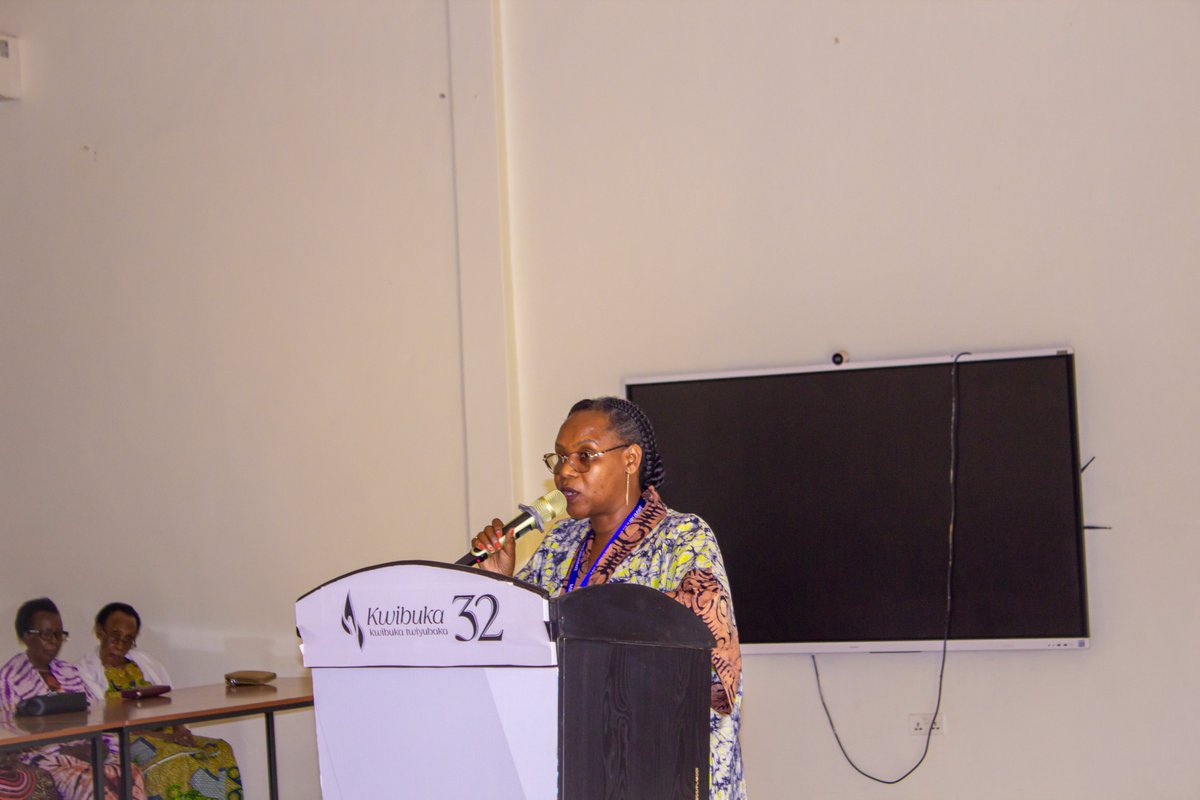
📍On this International Day for Countering Hate Speech, in partnership with @Unity_MemoryRw, @UNDP_Rwanda, and @UNESCO_rwanda, we are convening stakeholders at the Kigali Genocide Memorial for the validation of Rwanda’s Draft National Action Plan to Prevent and Combat Hate Speech.
This important event brings together government institutions, development partners, civil society organizations, youth representatives, and other key stakeholders to contribute to a coordinated and inclusive approach to preventing hate speech, promoting responsible communication, and strengthening social cohesion in Rwanda.
Together, we reaffirm our commitment to building a society founded on unity, respect, and peaceful coexistence. 🕊️🇷🇼
#NoToHateSpeech #CounteringHateSpeech #SocialCohesion #DigitalPeace
@visionjeunesse2
Hate speech is not free speech. If a speech denies or distorts the genocide, dehumanises on the basis of identity, or incites discrimination and violence, it crosses a line that international law itself, through Article 20 of the International Covenant on Civil and Political Rights, and we should not tolerate that. - Permanent Secretary @Emahoro1 .
#NoToHate
What is Hate Speech?
Researcher Dr Eric Ndushabandi: Hate Speech is any communication in speech, writing or behaviour that attacks or uses pejorative or discriminatory language toward a person or group on the basis of religion, ethnicity, nationality, race, colour, descent, gender or other identity factor (UN, 2019).
Let us collectively build a Rwanda free from hate speech and say #NoToHate.
Boss announced today that the company is introducing a Performance Improvement Plan (PIP) for everyone.
One employee asked, "Why?"
The boss replied, "It's to comply with company policy. Nothing to worry about."
Then one Gen Z employee asked:
"Why the hell do we need a PIP if the company's profits doubled and every employee exceeded expectations?"
Silence.
Gen Z workplace energy is exactly what corporate deserves.
The link between the genocide denying couple Denise Zaneza and Jean Pierre Mpozembizi lies in Bugarama, Rusizi District in Rwanda.
@dzaneza and @MpozeTheo are two highly committed figures in the denial of the genocide committed against the Tutsi. This is the primary link that unites them. The second reason is the cause of this denialist choice, which lies in the defense of their relatives implicated in the planning and execution of the genocide committed against the Tutsi at the Rwanda Cement Plant (CIMERWA) and its surroundings in Bugarama, Rwanda, as well as in Bisesero, between April and July 1994.
A) Denise Zaneza's father is named Marcel Sebatware and had been the Director General of CIMERWA since 1983. Théophile Mpozembizi's father is named Jean Pierre Mpozembizi and had worked at CIMERWA as Head of the Electricity Department since March 4, 1988. Marcel Sebatware and Jean Pierre Mpozembizi are from Akazu, a stronghold of the military regime of Juvénal Habyarimana, the planner of the genocide against the Tutsi between October 1990 and April 1994. These two prominent figures ran CIMERWA with an iron fist and were formidable... Hutu Power activists (MRND/CDR).
B) Starting in October 1990, Marcel Sebatware and Jean Pierre Mpozembizi, both members of the extremist Hutu party CDR, conspired to devise a plan for the political control of CIMERWA by creating a group of Hutu extremists, mostly from his family, with the aim of controlling the factory for genocidal purposes. This group was composed as follows:
1) Daphrose Nyirankundwankize, wife of Marcel Sebatware and CIMERWA employee in the position of bookkeeper (she was the niece of General Déogratias Nsabimana, Chief of Staff of the former Rwandan Armed Forces since July 1992);
2) Théoneste Sebageni, brother-in-law of Marcel Sebatware, who had married his sister Claudine. Sebageni and Claudine were employed as service staff;
3) Casimir Ndolimana, chief engineer and member of the CDR;
4) Assoumani Ntibankundiye, head engineer of the "cooking" department, recruited in 1990, member of the CDR;
5) Nkusi David Wilson, also a CDR member, facilities manager hired in 1992, served as an information officer;
6) Gaspard Kazungu, engineer and husband of Laurence Mukankaka, alleged daughter of the powerful mayor of Bicumbi, Laurent Semanza, a close associate of President Habyarimana. Laurence Mukankaka was assigned to the personnel management department.
7) Kamanzi Meschac, former mayor of Bugarama and MRND Member of Parliament, was employed at CIMERWA from 1989 to 1993. Kamanzi was reinstated as mayor in 1993 and remained so until the genocide.
C) Starting in 1992, following the Habyarimana regime's strategy of establishing so-called self-defense cells throughout the country, this group of Hutu extremists, led by Sebatware and Mpozembizi, created an Interahamwe militia group in CIMERWA and the surrounding area to carry out the genocide against the Tutsi. Their training was conducted in close collaboration with MRND-CDR leaders in the Cyangugu prefecture, notably:
1) The very powerful militia leader Yussuf Munyakazi, a prominent local farmer and successful businessman in Bugarama. He maintained a force of over 300 militiamen and thus wielded more power than the Bugarama military. Yussuf Munyakazi could mobilize dozens of young men in a short period of time, hiring them to work on his plantations and offering them wages, which is why he held such powerful authority at all levels. Munyakazi Yussuf was tried and found guilty of genocide by the International Criminal Tribunal for Rwanda.
2) Edouard Bandetse, businessman at the Nyakabuye Trading Center and treasurer of the MRND Prefectural Committee;
3) Elias Bakundukize, businessman at the Bugarama trading center, near the CIMERWA headquarters;
4) Bareberaho Bantari Ripa, agronomist for the Cyangugu Prefecture and president of the CDR at the prefectural level, currently a fugitive in Canada;
5) Retired Colonel Claudien Singirankabo, head of civil defense in Cyangugu Prefecture;
6) Lieutenant Samuel Imanishimwe, army chief in Cyangugu;
7) Major Vincent Munyarugerero, head of the Cyangugu gendarmerie until May 1994, before being replaced by Lieutenant Colonel Innocent Bavugamenshi, who did not participate in the genocide and protected Tutsis crammed into the Nyarushishi camp in June 1994. He is the only officer operating in Cyangugu in 1994 who did not commit genocide. He died of illness. May he rest in peace.
D) In 1992-1993, this group of prominent Hutu extremists from Bugarama, led by Marcel Sebatware and Jean Pierre Mpozembizi, drew up lists of Tutsis to be killed, trained and armed Hutu militiamen prepared to carry out the genocide. This group terrorized, threatened, and tortured Tutsi CIMERWA agents and their families on a daily basis. Then, starting in April 1994, and particularly between April 14 and 17, a massive, systematic, and widespread extermination of the Tutsis of Bugarama took place under the coordination of Marcel Sebatware and Jean Pierre Mpozembizi. These two planners of the genocide played a key role in the extermination of the Tutsis in 1994. They regularly participated in organizing the killings with soldiers and militiamen. The CIMERWA, which they controlled with an iron fist, provided vehicles and fuel for transporting militiamen to kill in various locations in Cyangugu and Kibuye, particularly in Mibilizi, Kamarampaka Stadium, Kibogora, Nyamasheke, Shangi, Gashirabwoba, Hanika, Nkanka, Mururu, Nyarushishi, Bisesero, and other areas. Under the command of Marcel Sebatware and Jean Pierre Mpozembizi, CIMERWA also provided beer to boost the militiamen's morale.
E) Upon their escape to Zaire after the defeat of the genocidal regime, Marcel Sebatware and Jean Pierre Mpozembizi organized the dismantling and complete looting of CIMERWA, taking the equipment to Zaire and selling it. They emptied all the fuel stations at the factory, all under the supervision of Minister Justin Mugenzi, who was in charge of trade and industry in the genocidal government. They took all this loot, along with the factory's funds, estimated at several hundred thousand dollars, to ensure the survival of the genocidal government during its exile. They hoped to return to Rwanda by force and achieve a military victory.
CONCLUSION
This is the hidden family legacy that Denise Zaneza and Théophile Mpozembizi defend under the guise of the opposition or human rights advocates. They should instead guarantee respect for human rights by distancing themselves from their parents' crimes and bringing them to justice for the serious international crimes of genocide and crimes against humanity they committed in Bugarama, Cyangugu, and Kibuye in 1994. A word to the wise.