Democrat Senator Sheldon Whitehouse acts outraged over FBI Director Kash Patel flying on a commercial plane instead of a government plane
Now is the perfect time to remind everyone Senator Sheldon Whitehouse funneled $14.2 million dollars of taxpayer money to his wife’s NGO
- Senator Sheldon Whitehouse backed legislation that funneled millions to his wife’s environmental nonprofit, Ocean Conservancy
- She’s personally pocketed nearly $2.7 million while the group took in $14.2 million+ in federal grants
The CA Legislature tried to strike these words from the state constitution in 2020 (put there by Prop 209 in 1996). The voters smacked them down when 57.23% said NO—despite the YES campaign outspending the NO team by more than 14 to 1. Now they’re trying again—calling it a “clarification” instead of an effort to gut the provision’s application to public education. Don’t believe them. If approved by the voters, this would be a major change. The aim is to pave the way for the recommendations of California’s Task Force on Reparations. The Task Force wants to make college free to African Americans no matter how well off their parents are and to get school districts to fund individual schools based on the race of the students who attend.
@christopherrufo
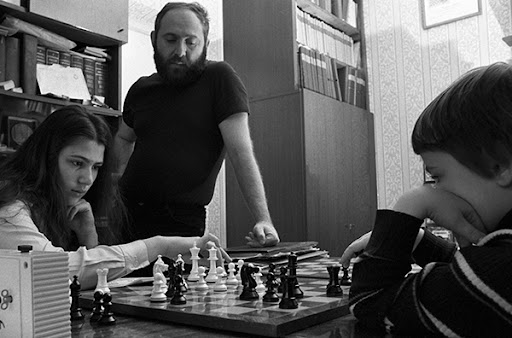
A Hungarian psychologist raised three daughters to prove that any child could become a chess grandmaster through early specialization. He succeeded. Two of them became grandmasters. One became the greatest female chess player who ever lived.
Then a sports scientist looked at the data and found something nobody wanted to hear.
His name is David Epstein. The book is called "Range."
The Polgar experiment is one of the most famous case studies in the history of deliberate practice. Laszlo Polgar wrote a book before his daughters were even born arguing that geniuses are made, not born. He homeschooled all three girls in chess from age four. By their teens, Susan, Sofia, and Judit were dominating tournaments against grown men. Judit became the youngest grandmaster in history at the time, breaking Bobby Fischer's record. The story became the gospel of early specialization. Pick a domain young, drill it hard, and you can manufacture excellence.
Epstein opens his book by telling that story honestly and then quietly demolishing the conclusion most people drew from it.
Chess works that way. Most things do not.
Here is the distinction that took him four years of research to articulate, and that almost nobody who quotes the 10,000 hour rule has ever read.
There are two kinds of environments in which humans develop expertise. Psychologists call them kind and wicked. A kind environment has clear rules, immediate feedback, and patterns that repeat reliably. Chess is the cleanest example. Every game ends with a winner and a loser. Every move is recorded. The board never changes shape. The pieces never invent new ways to move. A child who plays ten thousand games will see most of the patterns that exist in the game, and pattern recognition is exactly what chess mastery is built on.
A wicked environment is the opposite. Feedback is delayed or misleading. Rules shift. The patterns that worked yesterday may be exactly the wrong patterns to apply tomorrow. Most of the real world looks like this. Medicine is wicked. Investing is wicked. Building a company is wicked. Scientific research is wicked. Almost every job that involves a complex changing system with humans in it is wicked.
The Polgar sisters trained in the kindest environment any human can train in. Their success was real and the method was correct. The mistake was generalizing the method to fields where the underlying structure of the environment is completely different.
Epstein's research is what made the implication impossible to ignore.
He looked at the careers of elite athletes outside of chess and golf and found that the pattern was almost the inverse of what people assumed. The athletes who reached the very top of their sports were overwhelmingly people who had played multiple sports as children, specialized late, and often switched disciplines well into their teens. Roger Federer played squash, badminton, basketball, handball, tennis, table tennis, and soccer before tennis became his focus. The kids who specialized in tennis at age six and trained year-round for a decade mostly burned out, got injured, or topped out at lower levels of the sport.
The same pattern showed up everywhere he looked outside of kind environments. Inventors with the most patents had worked in multiple unrelated fields before their breakthrough work. Comic book creators with the longest careers had drawn for the most different genres before settling. Scientists who won Nobel Prizes were dramatically more likely than their peers to be serious amateur musicians, painters, sculptors, or writers.
The skill that mattered in wicked environments was not depth in one pattern. It was the ability to recognize when a pattern from one domain applied unexpectedly in another. That kind of thinking cannot be built by drilling a single subject. It can only be built by accumulating mental models from many subjects and learning to move between them.
The deeper finding is the one that should change how you think about your own career.
Specialists in wicked environments often get worse with experience, not better. Epstein cites studies of doctors, financial analysts, intelligence officers, and forecasters showing that years of experience in a narrow domain frequently produce more confident judgments without producing more accurate ones. The expert builds elaborate mental models that feel comprehensive and turn out to be increasingly disconnected from the actual structure of the problem. They stop noticing what does not fit their framework. They mistake fluency for understanding.
Generalists do better in wicked domains for a reason that sounds almost mystical until you understand the mechanism. They have less invested in any single mental model, so they abandon broken models faster. They are used to being a beginner, so they are not threatened by the discomfort of not knowing. They have seen enough different domains that they can usually find an analogy from one field that unlocks a problem in another. The technical name for this is analogical thinking, and the research on it is one of the most underrated bodies of work in cognitive science.
The single most useful sentence in the entire book is the one Epstein puts almost as a throwaway.
Match quality matters more than head start.
A person who tries six different fields in their twenties and finds the one that genuinely fits them will outperform a person who picked one field at fourteen and stuck to it on willpower alone. The lost years were not lost. They were the search process that produced the match. Every field they walked away from taught them something they later imported into the field they finally chose.
The reason this is so hard to accept is cultural, not empirical. We tell children to pick a path early. We reward the prodigy who knew at six. We treat the late bloomer as someone who failed to launch on time, when the data suggests they were running an entirely different and often more effective optimization process underneath.
The Polgar sisters were not wrong. The conclusion the world drew from them was.
If your environment is genuinely kind, specialize early and drill hard. If it is wicked, and almost every interesting human problem is, then the people who win are the ones who refused to specialize until they had seen enough to know what was actually worth specializing in.
You are not behind. You were running the right experiment all along.
Every ‘equal society’ in history ended the same way: with force.
You cannot redistribute productivity without coercion.
That’s the part radical socialism never admits.
The more 'equality' you want, the more authoritarian it must become to enforce it.
I told Senator Sheldon WhiteClub today that I won’t be listening to or caring about any of his lessons on morality knowing that he joined an all-white Rhode Island Country Club.
I’m also done with the likes of AOC, Al Gore, John Kerry, and the rest of the lying cabal that make stupid climate predictions, plunder tens of billions of tax dollars, enrich their well-connected allies, and are committed to strangulating out of existence entire sectors of our economy.
Climate alarmist AOC wants to be taken seriously while also insisting the world is imminently about to end due to climate change (Just under 5 years remain on her nutty Jan 2019 prediction that only 12 years of life are left on Earth).
Al Gore is now speaking publicly about his concern with global freezing after decades of grift talking about global warming. “Within the decade there will be no more snows of Kilimanjaro,” said Gore in 2006 (There’s still snow on Kilimanjaro year-round). Gore also predicted in 2009 ice-free Arctic summers within 5-7 years.
John Kerry warned in 2009 that the Arctic would be ice-free by 2013.
These people are dishonest, power-hungry hacks.
The GREEN NEW SCAM is DEAD!!!
@Milajoy I don't agree with almost anything she says, but I assume her job is to present the lib Dem view. She does that better than Harold does. I also think she's very pretty.