Head of public sector decarbonisation at DESNZ. Obsessed with all things clean energy, climate, biodiversity and circular economy. Posts in a personal capacity
I keep hearing that heat pumps are a niche technology and will never take off.
Look at the market share of heat pumps in different European countries - in 8 countries most new heating systems installed are now heat pumps.
The moment Samantha Harvey wins the #BookerPrize2024 for her novel Orbital and dedicates the award to earth and peace.
Catch up with the ceremony broadcast live on Front Row with @samiraahmeduk on @bbcsounds now 🎧
The UK banned industrial sand-eel fishing in our seas to protect seabirds & whales that depend on them & ensure thriving seas.
The EU is challenging this so the Danish fleet can exploit for intensive aquaculture, salmon farms, and feed to pigs.
@DefraGovUK keep the ban.
We're excited to announce Deputy Mayor @metecoban92 will be speaking on our 'Decarbonising London' panel at the London Conference.
He'll speak to London's goal to be net-zero by 2030, unpacking how we can achieve this ambitious target.
Register now:
https://t.co/Agm5OqU5fH
The children from Coombe Bissett Church of England Primary School, Salisbury, invited guests, including our teams at Salix, to their site to see their new works funded through the Public Sector Decarbonisation Scheme.
Pupil Toby, year 6, said the air source heat pumps, alongside the new handwriting scheme, were now his favourite things at the school!
He said: “Fossil fuels pollute, and our works here now keep the countryside cleaner. Coombe Bissett is the only school in Wiltshire without a fossil-fuel heating plant, so there’s a lot more work to do.”
Read the full story: https://t.co/218OomDb2u
#PublicSectorDecarbonisationScheme #PSDS #CoombeBissettCEPrimarySchool #Decarbonisation #NetZero
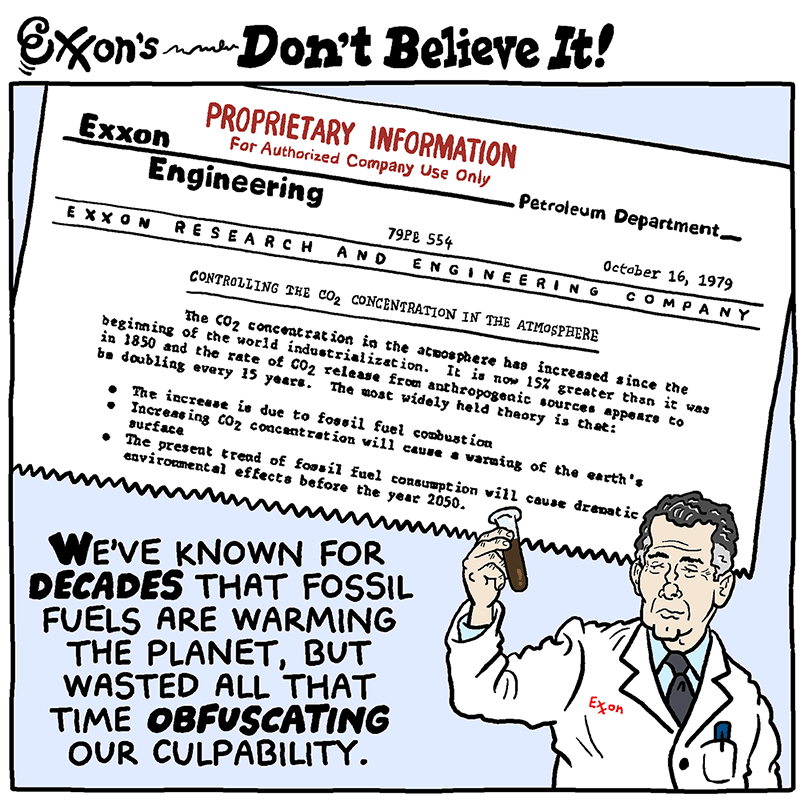
45 years ago today, on Oct. 16 1979, an internal Exxon memo is sent. About carbon dioxide build-up in the atmosphere and the consequences that it would have.
They knew. Exxon knew.
#climate
https://t.co/BUMHDYPxhE
“Why should small countries in Europe that emit less than 1% of global emissions pursue a net zero agenda when there are much larger emitters like China?”
I was asked this earlier this week when I presented to the @scotenergyforum at @GeolSoc in London.
It’s a common challenge put to people like me who are supportive of the decarbonisation agenda. @_HannahRitchie@OurWorldInData has written what I think is an excellent response to this commonly asked question.
She provides 5 compelling reasons for why small and wealthy countries in Europe and elsewhere should reduce their emissions:
1. Rich countries have a moral responsibility
Rich countries are historically the largest emitters. For instance, the UK, though responsible for only 0.9% of current emissions, accounts for 4.5% of historical global emissions. Germany contributes over 5%. These nations should reach net-zero emissions quickly, not only to reduce climate impacts but also to allow poorer nations space in the global carbon budget to develop.
2. Every country must act, even those with ‘negligible’ emissions
While six countries contribute more than 2% of global emissions (China, the US, India, Russia, Japan, and Iran), many smaller countries collectively account for 36%—more than China alone. If these nations did nothing, a significant portion of global emissions would remain unchecked. Tackling climate change requires action from all countries, but low-income nations with minimal contributions and urgent development needs should be allowed to temporarily increase emissions while wealthier nations cut theirs.
3. Rich countries outsource their emissions
Many wealthy countries outsource emissions by importing goods produced elsewhere, but even when adjusting for this, their overall responsibility remains high. Even after accounting for “consumption-based” emissions, most rich nations continue to be significant contributors, and they must take action.
4. Innovating low-carbon technologies drives global progress
Small countries can make a significant impact by innovating and deploying low-carbon technologies, which helps lower costs for the rest of the world. For example, the cost of solar power has dropped by 99.8% since the 1970s, largely due to scaling up by wealthier countries. These innovations make it easier for developing nations to adopt cleaner energy without hindering growth.
5. Small countries can lead by example
Countries like Norway, responsible for just 0.1% of global emissions, can still set an example by adopting clean technologies. Norway’s electric vehicle revolution, where over 80% of new cars are electric, shows how small nations can demonstrate what’s possible, inspiring others to follow suit.
Full article here: https://t.co/PsWtjPCYIx