Cicero Institute advocates for policies that advance liberty, innovation, and accountability. as a senior fellow, I focus on homelessness and public safety.
Rep. @timburchett at a House Oversight hearing: shouldn’t homelessness funding be tied to performance?
@PaulWebsterCI: Yes sir, I do believe it should be tied to performance. The performance should be measured by various outcomes such as successful completions to treatment, mental health stability and reductions in arrests.
Why is Congress going backwards to the old status quo of fraud, waste, and funding failed homeless programs? We detected their sneaky scheme to thwart HUD’s necessarily reforms.
Congress is about to undo the most serious attempt in a decade to fix federal homelessness policy. Unless language is struck –– Fraud, waste and abuse will continue.
Our new memo highlights specific provisions designed to maintain the failed status quo.
https://t.co/ng8d2pV5Gy
It’s critical to keep reforms that increase accountability and outcomes. The NAEH lost in court and are now using Congress to undo the work to improve homeless programs .
BREAKING: Our policy team found provisions buried deep in the new bill to fund HUD that would UNDO critical reforms and give hundreds of millions to ineffective programs.
Congress needs to strike 3 provisions that would torch efforts to increase accountability, performance, and outcomes in federal homeless programs.
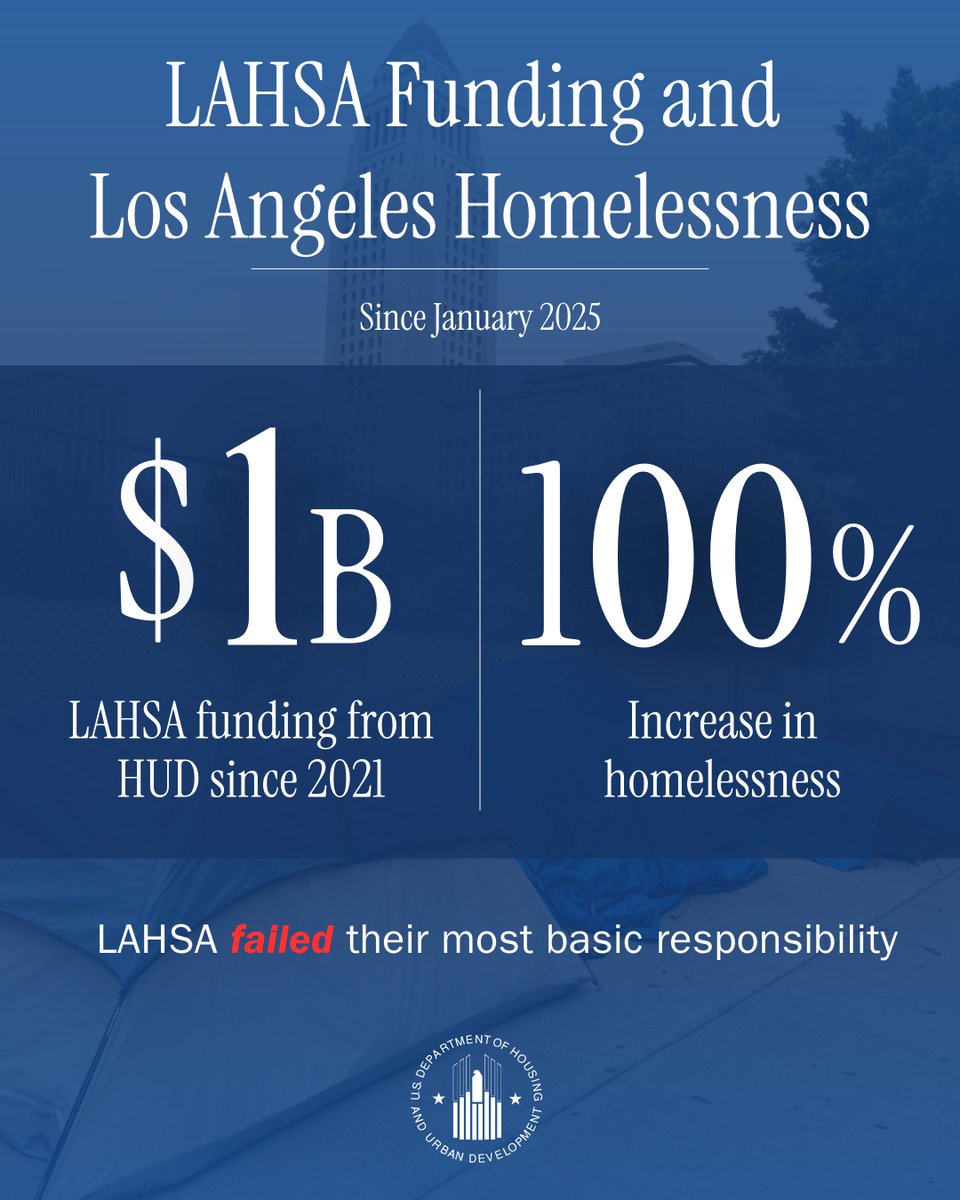
Year after year, LAHSA received millions of tax dollars, but homelessness only got worse.
We held them accountable.
Yesterday, they agreed to hand over $150M and end their theft of taxpayer dollars.
It's official. Because of our lawsuit, LAHSA is ceasing operations and will no longer receive federal taxpayer funding. Los Angeles County will take over managing funds to combat homelessness, and we will monitor them closely. The days of funding fraud are over.
When California closed institutions like Agnews, we promised to replace them with community-based care. That never happened at the scale we needed.
And now, our most vulnerable neighbors cycle between our streets, jails, and emergency rooms — never getting the treatment they need.
In my latest LA Times op-ed, I call for change. Read it here: https://t.co/BX9FIV1D0H
San Francisco is one of the most beautiful cities in the world.
Under Treatment First and drug-free housing, homelessness fell 8%. As the approach continues, streets, parks, and neighborhoods will start looking like themselves again.
Los Angeles stayed with Housing First. Homelessness rose.
Good policy brings the city back. San Francisco is worth saving.
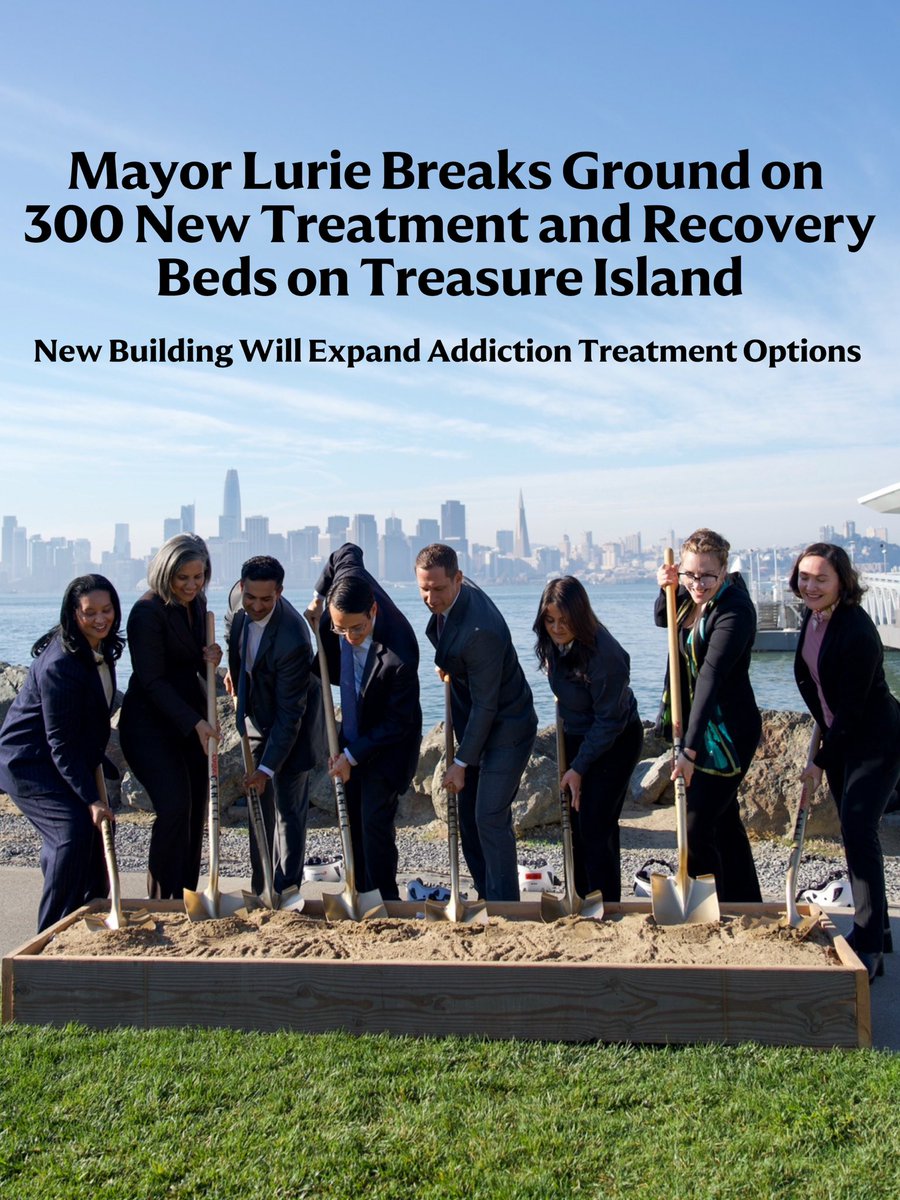
Today, we broke ground on the Treasure Island Behavioral Health Building—a facility that will soon serve up to 300 people who need treatment and transitional housing while in recovery.
When completed in 2028, this facility will give patients a place to receive care and access recovery housing. The transitional recovery-housing beds will offer up to two years of stable housing to people who complete the residential program.
Bringing these services together under one roof means someone can begin treatment and move into a stable, supportive place to live as they continue their recovery journey. The facility will join more than 2,900 behavioral health beds operated by the San Francisco Department of Public Health for people with substance use disorder and mental health needs.
Recovery takes time, and people need support along the way.
We're making progress in San Francisco. Fewer people are sleeping on our streets than at any point in the last 15 years, and overdose deaths are down nearly 25 percent this year.
But our work isn't done. We're building a system that connects people to treatment faster and gives them the support they need to rebuild their lives.
When someone is ready to accept help, we need to be ready to provide it.
Here's a radical idea: if an NGO takes taxpayer money, taxpayers get to see what it bought. Mississippi just made that law. Every state that refuses should explain who they're protecting.
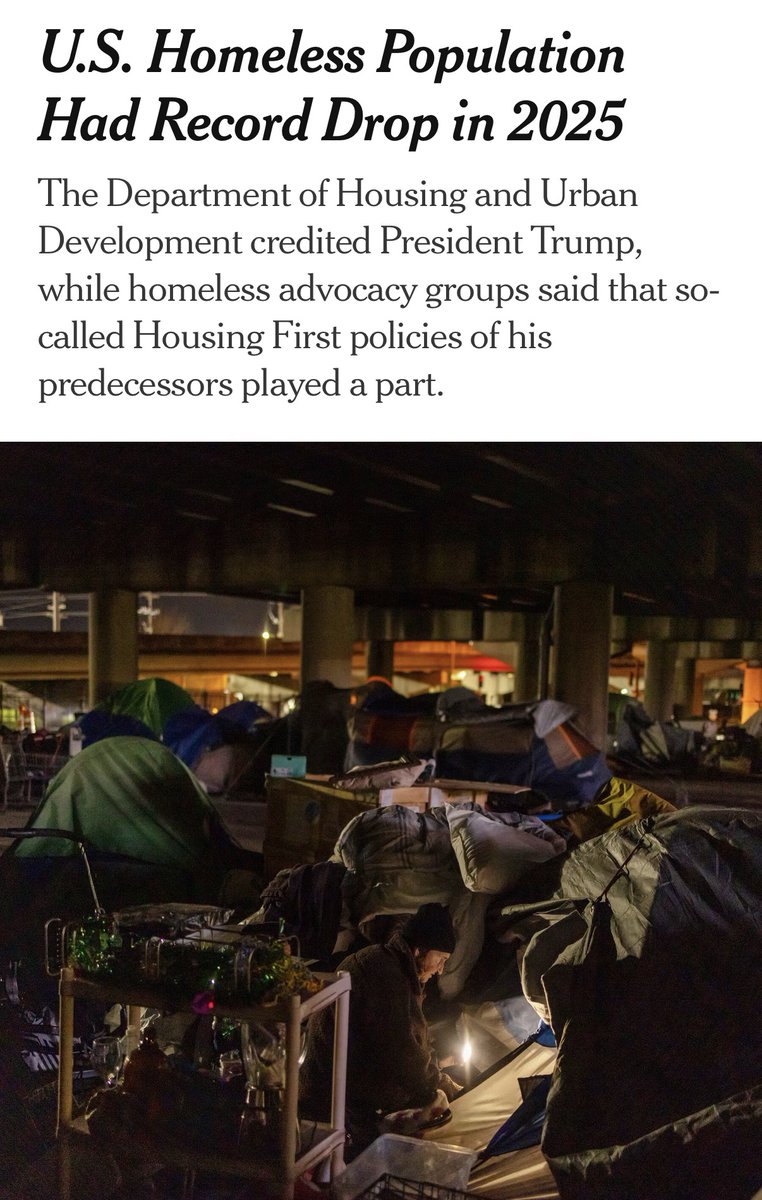
Homelessness just saw its LARGEST one year drop since the national count began, down more than 6%, over 47,000 fewer people.
Our Public Safety Policy Director @dkurtzz in the New York Times: “Housing remains spectacularly expensive in most of the country and yet homelessness still fell.”
The housing costs explain everything theory keeps failing the data.
Housing First is a failure.
Developer Steven Taylor bought a Cheviot Hills property for $11 million, then sold it to the City of LA for $27 million in taxpayer money for “homeless housing.”
It’s still empty. Still under construction. Zero homeless people housed.
This is the scam. We are ending it.
$2 MILLION and 20 YEARS in prison—that’s the penalty landlords face under the federal Crack House Statute for knowingly letting drugs spread through their buildings. Congress passed it during the 1980s crack epidemic.
Harm reduction is rooted fundamentally in the belief that people have a right to use drugs. The philosophy prioritizes practices that assist people in using drugs in ways that advocates view as safer than others.
Harm reduction is the core principle of Housing First programs, which provide housing to homeless individuals without any requirement for sobriety or engagement with treatment or services.
Providers that permit drug use in their units as a matter of policy are exposed to the same statute.
It’s already on the books. Prosecutors should use it.
https://t.co/asgw82c1yj
This is pretty much how it works. Our @InstituteCicero team did the research and NGO pay increased immensely while homelessness continued to climb. They are funding themselves more than solutions.
Michelle Dewitt tried to get her son into a mental health facility, but there were no beds. She petitioned a court for involuntary commitment, and a hospital held him for 14 days before releasing him back to her care.
With no other options –– the family dropped him at a homeless shelter. She later saw him walking the streets.
August 22, 2025 –– he boarded a Charlotte train without purchasing a ticket.
In One Flew Over the Cuckoo’s Nest, a convict fakes insanity to escape a prison sentence, lands in a psychiatric ward, and leads the patients in rebellion against the nurse who runs it.
It won 5 Academy Awards. It also became a powerful piece of propaganda the deinstitutionalization movement used: the asylum as prison, the patient as hero, the cure as escape.
A generation came away convinced that mental illness was noble resistance and the asylum an instrument of oppression.
Today the U.S. has fewer than 40,000 psychiatric beds. More than half are filled through the criminal justice system. The number of mentally ill homeless people is the highest on record.
The movie ended. The patients are still outside.
Big shift in San Francisco homelessness policy: moving away from harm reduction (free crack pipes) to recovery-focused services!
https://t.co/z7roH6AXJx
$225 MILLION a year—that’s what California stands to LOSE in federal homelessness funding if its Continuums of Care don’t adapt to HUD’s new reforms.
Our new report breaks down the exposure:
https://t.co/8Kieu2TVER