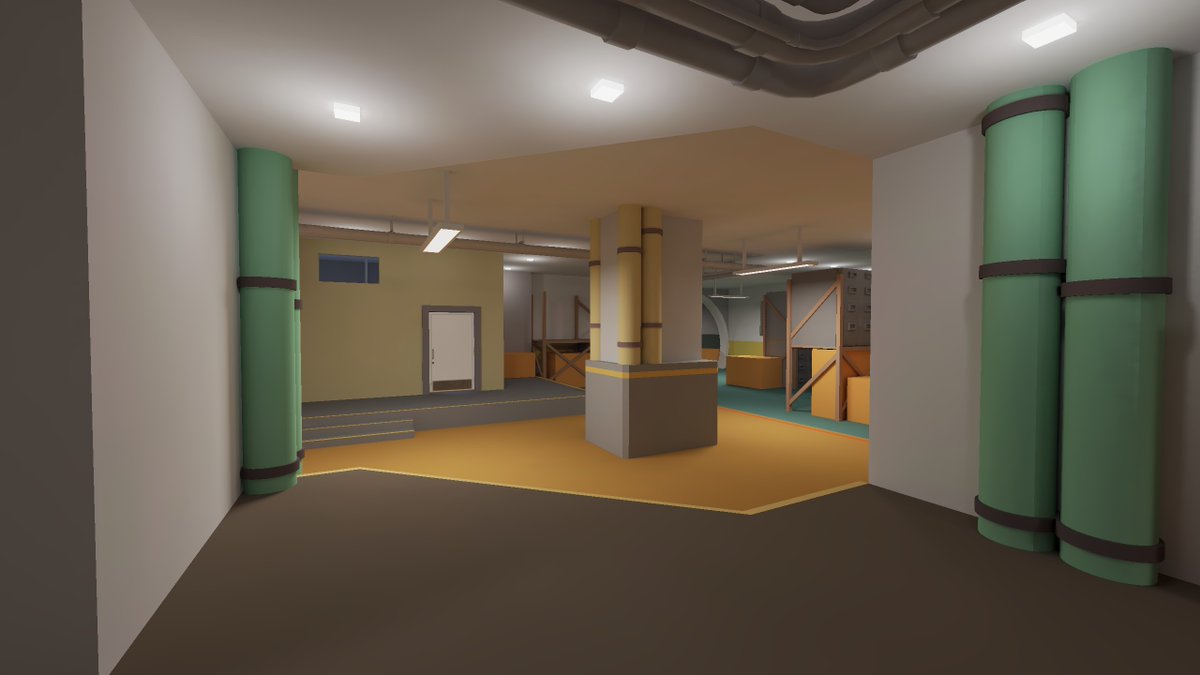
Last day of #Blocktober so here's mine 🧱
Did a 12h live challenge last week: chat picked the theme + game mode, I built a playable CS2 greybox map from scratch before the stream ended.
Next day: radar + lighting. Done.
It's on the Workshop 👇 #LevelDesign#CS2
de_splinter is out now 🔥
Our CS2 defusal map is finally live! Started during Mapcore maping contest(coaline)
🎬 Trailer: https://t.co/nuCQMHSkab
Thanks to @FMPONE and @Itsethurs for amazing art and help 🙌
Link to map below.
#CS2#CounterStrike#gamedev
2025 was crazy in the best way!
Maps, projects, people, fun – ended with pure satisfaction!
Huge thanks “Visual Wizard” @vfxNev Jura wouldn’t be here without you.
2026: new secret project, I’m hyped!
Also, Splinter is coming 👀 with @FMPONE & @Itsethurs – great job so far guys!
Final Tip! #8
Most pro FPS maps literally aim for you and you never noticed 😎
Place horizontal elements like stripes, panel lines, or tile edges at head height to give players natural aim references and help them read the map better.
Keep in mind that this is a subtle tool and shouldn’t be overused. Too many visual cues can create clutter and reduce readability.💡
This final tip wraps up my mini series, but there’s always more to explore in competitive map design. Keep experimenting, testing, and observing player behavior to refine your levels.
#LevelDesign #GameDev #FPSDesign
Tip #7
Single-entry chokepoints make fights predictable. If attackers can only push from one direction.
Add pressure routes.
Pressure routes create meaningful attacker options and force defenders reposition. Even a minor side path, elevation change, or tight off-angle is enough to break static holds and transform repetitive engagements into dynamic, fluid fights.
Pressure routes aren’t always required. A single-entry setup can still work when it’s intentional and supports your map goals. The key is choosing the right structure for the experience you want.
#LevelDesign #GameDev #FPSDesign
Tip #6 - Sound👂
Clear audio cues help players understand where fights happen and react faster. Giving each surface a unique material like wood, grass, or concrete creates a distinct sound identity for every zone.
This is especially important in areas where floors overlap or paths are close together, letting players quickly judge who is above, below, or nearby.
Think about small interactive elements like doors, breakable props, or objects that make noise when stepped on, as they can add extra layers of information and help players read the map and anticipate enemy positions.
Proper sound contrast improves spatial awareness, reaction time, and tactical clarity - the foundation of every great competitive map.
#LevelDesign #GameDev #SoundDesign
Tip #5 - Shadow Advantage 💡
In level design, art should never fight gameplay.
A cool sun angle might look great, but if it gives one team an advantage, the balance breaks. Sometimes lighting shows player shadows before they peek and that small detail can change the fight. Shadows that appear too early can reveal player positions and make fights feel unfair.
Shadow advantage can work if used intentionally for tension, pacing, or tactical depth. For example, a shadow on the ground can be a useful feature letting defenders spot attackers early in certain areas and control the flow of combat.
It always depends on your design goals.
At the end of the day, art and gameplay should support each other.
#LevelDesign #gamedeveloperconference
Tip #4 – Make Angles Clean 💡
In competitive map design, clarity always beats decoration!
A map can look stunning, but if players can’t clearly read the fight area… the gameplay breaks. 👀
Visual clutter like trims, props, uneven geometry, or foliage - can block sightlines and make duels feel inconsistent.
Keeping angles clean doesn’t mean removing art - it means designing with intent.
Every detail should help players understand the space: where to move, where danger might come from, and how to react.
Clean geometry leads to fair fights, smooth gameplay, and strong visual language , especially in games like #CS2 or any other tactical FPS.
#LevelDesign #GameDev