@cyclestand_live మరి మీ విగ్రహా గాయకుడి అంత్య క్రియలు చెన్నై లో జరిగాయి. So మీరు కూడా ఆ గాయకుడిని అవమానంచినట్టేనా.
ట్యాంక్ బండ్పై న పెట్టిన విగ్రహాల విషయం లో 34 విగ్రహాలలో కేవలం 8 మాత్రమే తెలంగాణ కి చెందిన వారివి ఉండడం.......
అప్పటి నుండి తెలంగాణ లో విగ్రహాలు ఒక సెంటిమెంట్...
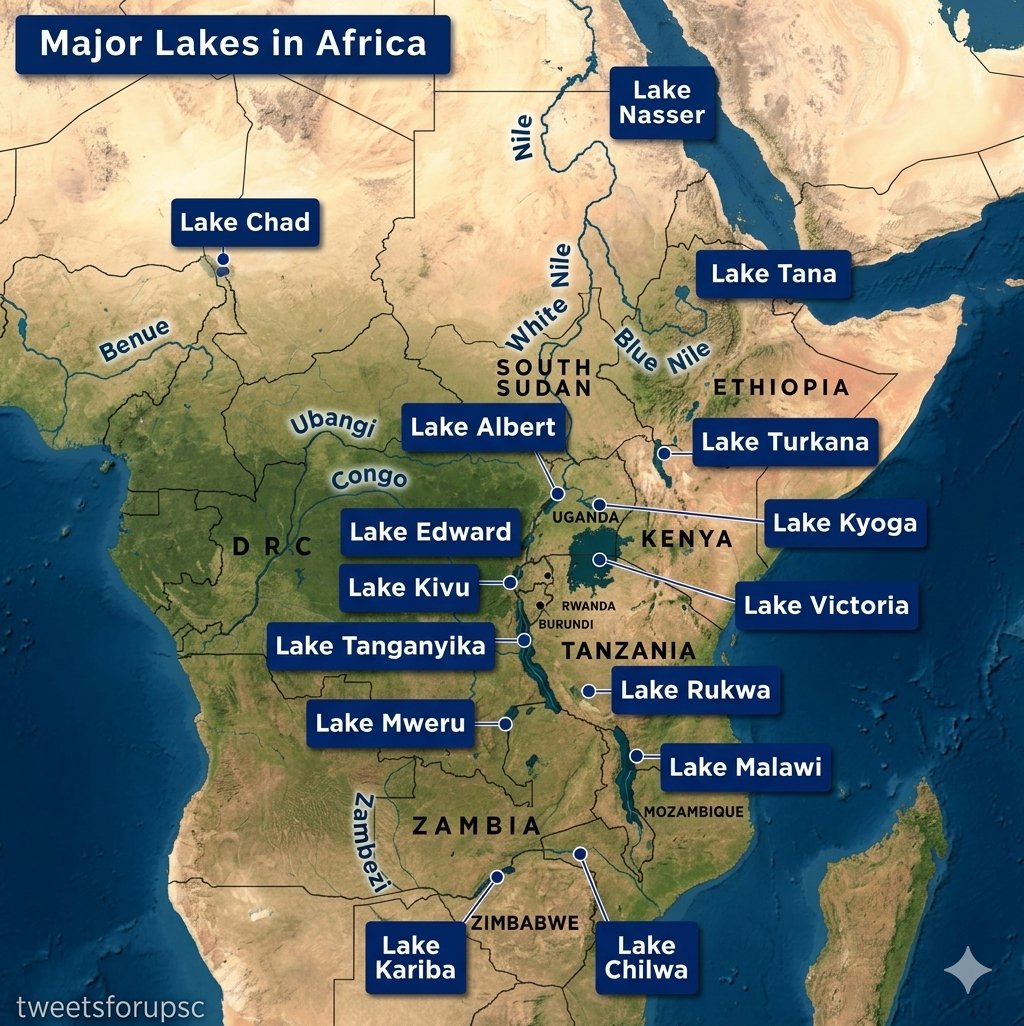
Major Lakes in Africa
Lake Victoria (not part of Rift valley) shared by Tanzania , Uganda, and Kenya
Lake Tanganyika shared by Tanzania, Burundi, DRC, and Zambia. Located in the Albertine
Lake Turkana is a vast, shallow lake located in the arid northern region of Kenya, with its northernmost section extending into Ethiopia.
Lake Albert located on the border of Uganda and the Democratic Republic of Congo
Lake Edward located on the border between the Democratic Republic of Congo (DRC) and Uganda.
Lake Kivu, located on the border of the Democratic Republic of Congo (DRC) and Rwanda.
Lake Kariba, located on the Zambezi River border between Zambia and Zimbabwe
Lake Mweru is located on the border of Zambia and the Democratic Republic of Congo (DRC)
Lake Malawi Shared by Malawi, Mozambique, and Tanzania,
🚨 Why Iran Stands Alone Against Israel and the U.S. While Other Muslim States Align with Washington
Before 1979, Iran under Mohammad Reza Pahlavi was actually a close U.S. ally and had quiet relations with Israel.
Everything changed after the Islamic Revolution led by Ruhollah Khomeini.
The new regime defined itself on three pillars:
•Opposition to Western domination
•Rejection of Israel’s legitimacy
•Governance based on Shia Islamic political theology
So hostility toward the U.S. and Israel became part of the state identity, not just foreign policy.
✅ Religious Identity:-
Iran is the largest Shia Muslim-majority nation in the Middle East, whereas most Arab countries are predominantly Sunni Muslim.
The Sunni–Shia split began in 632 CE after Prophet Muhammad’s death — it was originally about who should lead the Muslim community.
•Sunnis believed leadership should go to the most capable companion (Abu Bakr).
•Shias believed leadership belonged to the Prophet’s family, specifically Ali.
Over centuries, this political disagreement became theological.
Today:
•~85–90% of Muslims globally are Sunni
•~10–15% are Shia
•Iran is ~90–95% Shia
•Most Arab states (Saudi Arabia, Egypt, Jordan, etc.) are Sunni-majority
✅ What Makes Shia Political Thought Different?
Shia Islam has a concept absent in Sunni theology:
👉 The Hidden Imam
Twelver Shias believe the 12th Imam disappeared and will return as Mahdi.
This created a political problem:
Who rules in the absence of the Imam?
For centuries, Shia scholars avoided direct political rule — they guided society morally but did not govern.
That changed in 1979.
✅ Velayat-e Faqih – The Radical Shift
After the revolution, Ruhollah Khomeini introduced the doctrine of:
Velayat-e Faqih (Guardianship of the Islamic Jurist)
His argument:
Since the Imam is absent, a senior Shia jurist must govern to ensure Islamic justice.
This created:
•A Supreme Leader
•Clerical oversight over elected institutions
•A state built explicitly on Shia jurisprudence
This model is unique in the Muslim world.
No Sunni-majority state has an equivalent clerical supremacy system.
✅ Why This Creates Regional Tension
Now we move from theology to geopolitics.
Because Iran’s state is built on Shia political theology:
•It sees itself as protector of Shia communities
•It supports Shia movements in Iraq, Lebanon, Yemen
•It frames politics as resistance against injustice and “oppression”
Sunni monarchies — especially Saudi Arabia — see this as:
•A challenge to their legitimacy
•A threat to Sunni dominance
•A potential source of internal unrest (since they have Shia minorities)
So what looks like “sectarian conflict” is actually:
Religious identity + political legitimacy + power competition
✅ Persian vs Arab Identity Layer
There’s also a civilizational factor.
Iran is:
•Persian (non-Arab)
•Has its own language (Farsi)
•Has imperial history older than Islam
Most Middle Eastern states are Arab.
So Iran is different in:
•Ethnicity
•Language
•Historical memory
•Religious orientation
This compounds the sense of separateness.
✅ Why Most Muslim States Don’t Confront the U.S.
This is not mainly about religion — it’s about regime survival.
🇸🇦 Saudi Arabia
•Sunni monarchy
•Security partnership with U.S.
•Oil–security bargain since 1945
•Prioritizes regime stability over ideological confrontation
🇯🇴 Jordan
•Small, resource-poor state
•Depends heavily on U.S. aid
•Seeks stability
🇪🇬 Egypt
•After Camp David (1978), aligned strategically with U.S.
•Receives significant military aid
These states are not necessarily ideologically pro-Israel —
they are strategically aligned with Washington for survival and economic stability.
Iran also competes with Sunni powers for regional leadership.
For example:
•Saudi Arabia sees itself as leader of Sunni Islam.
•Iran positions itself as leader of “resistance.”
ఆదిలాబాద్ (పాత జిల్లా) ప్రస్తుత మంచిర్యాల జిల్లా సింగరేణి బొగ్గు ఉత్పత్తి ప్రారంభమైన సంవత్సరాలు.
1. బెల్లంపల్లి - 1928.
2. మందమర్రి - 1961.
3. శ్రీరాంపూర్ - 1975.
How to prepare GS for #UPSC Mains?
Golden advice:
Make a 1-2 page note on every point of syllabus
How many points every subject has?🤔
• GS1: 12
• GS2: 21
• G23: 22
• GS4: 9
Ensure you have all notes done by Dec 31
Link to get all these pointers of every subject below
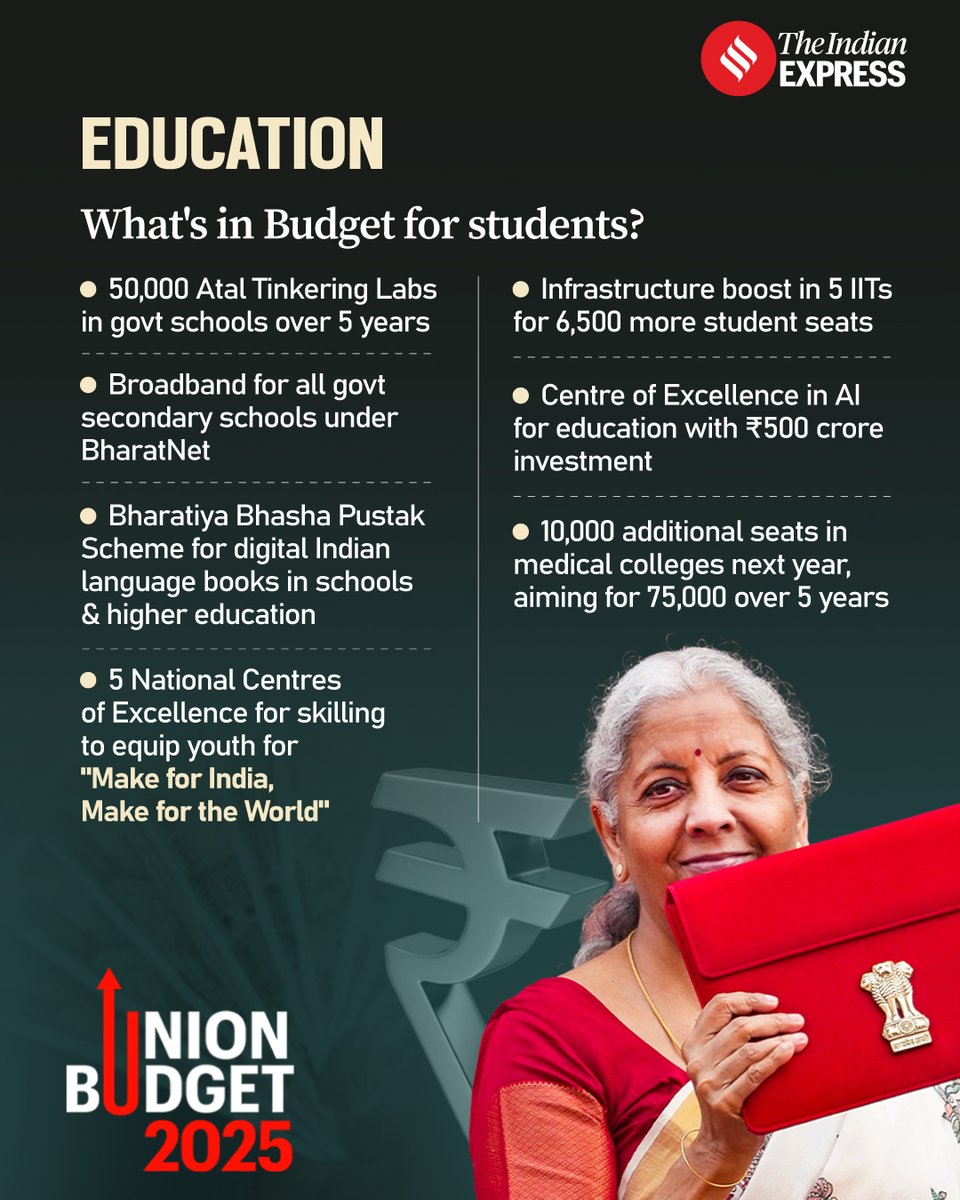
The #UnionBudget2025 allocates ₹99,858.56 Cr for health, marking a 191% increase from ₹34,286 Cr in 2014-15. Key highlights include full exemption of 36 lifesaving drugs from Basic Customs Duty, along with concessional duties on 6 others, ensuring cheaper medicines for all.
The budget also focuses on expanding healthcare access, especially for gig workers. Another major initiative is the establishment of 200 Day Care Cancer Centres in district hospitals by 2025-26.
To boost medical tourism, the government is working with private players to simplify visa norms and strengthen India’s position as a global healthcare hub.
#UnionBudget #Budget2025