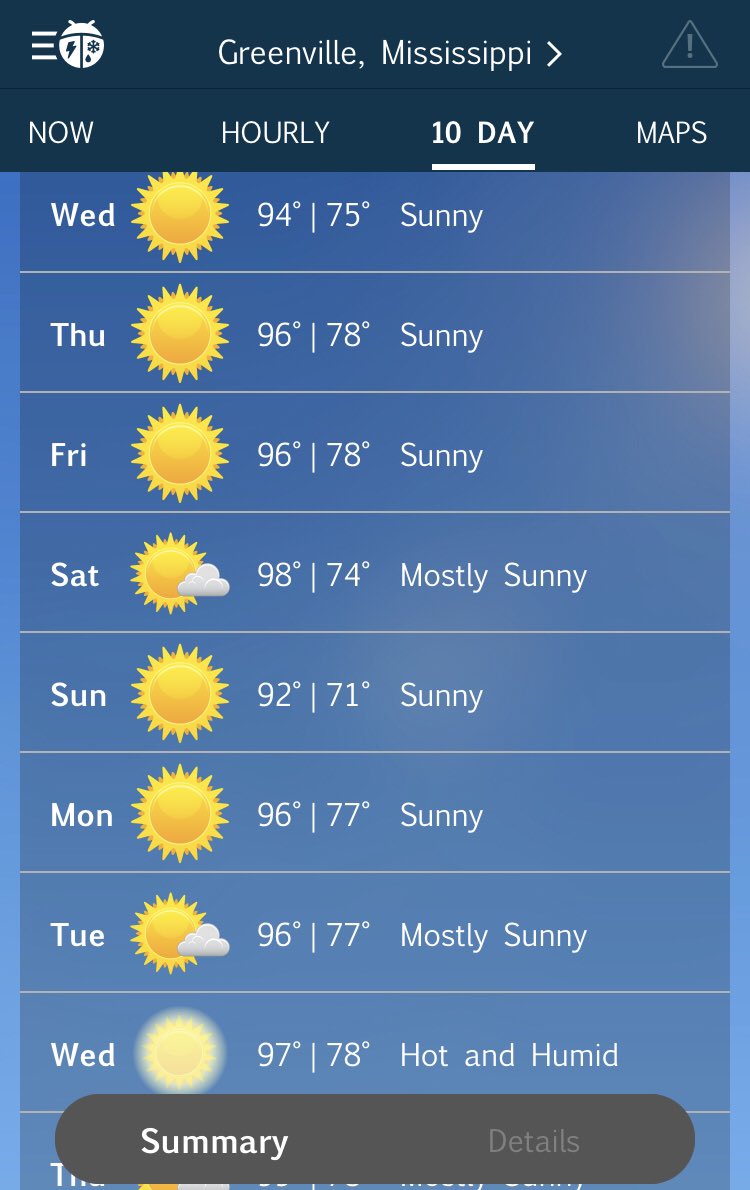
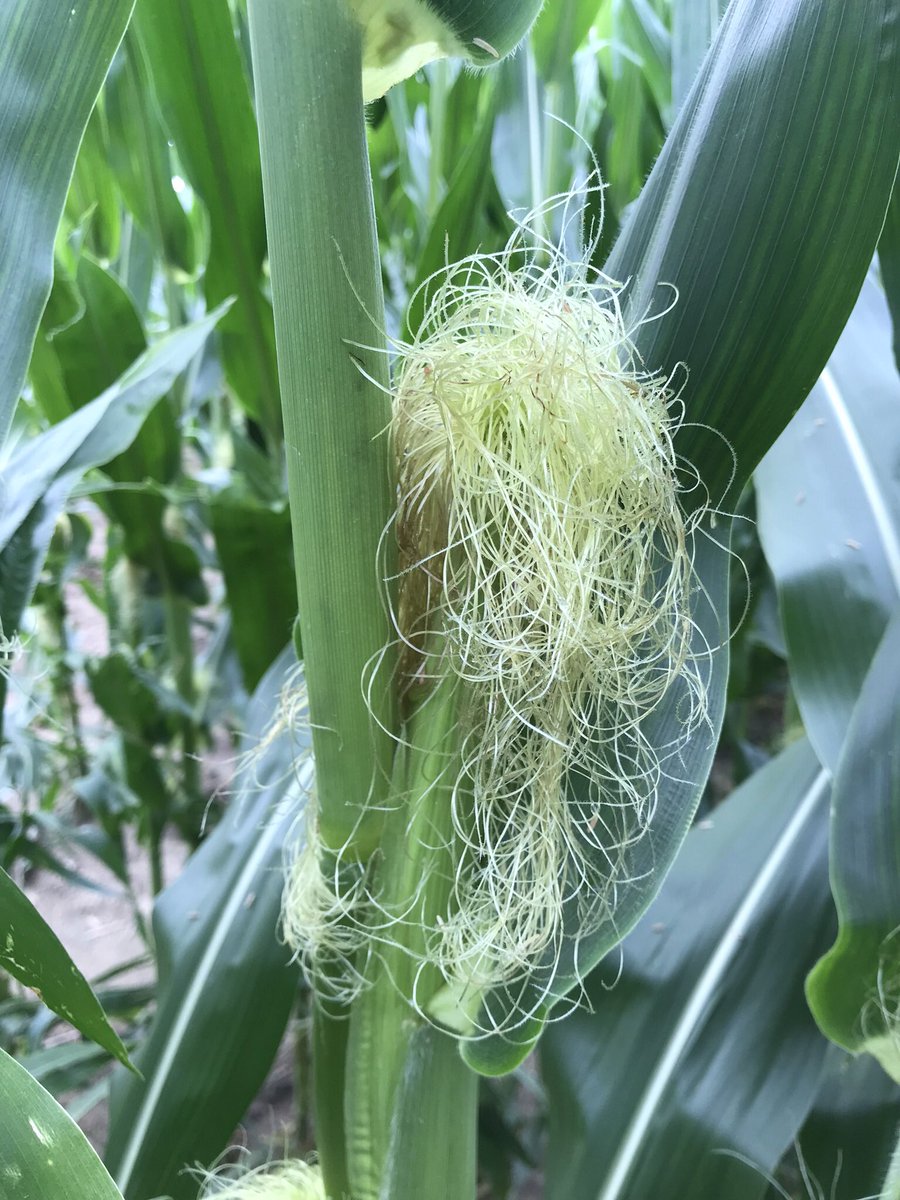
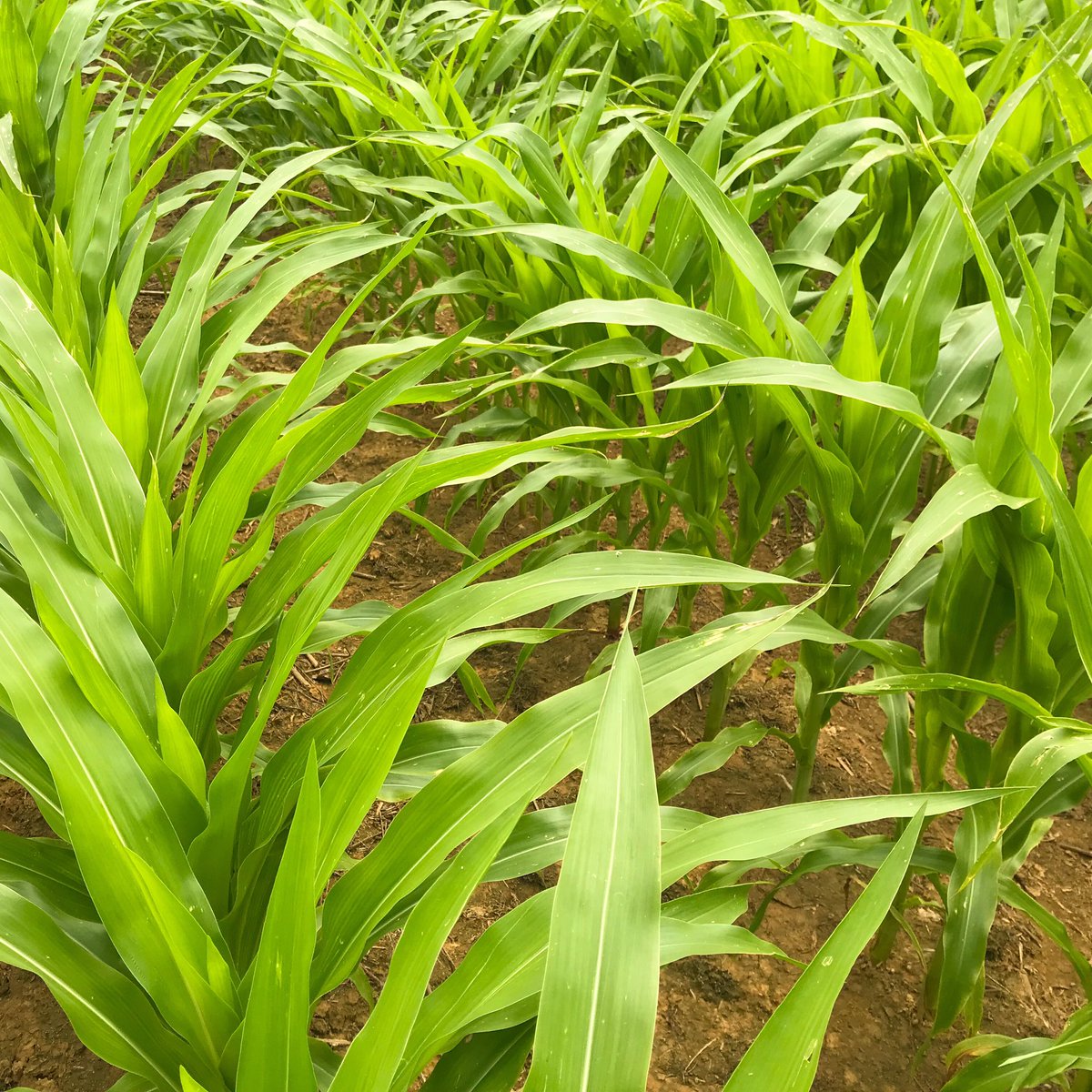
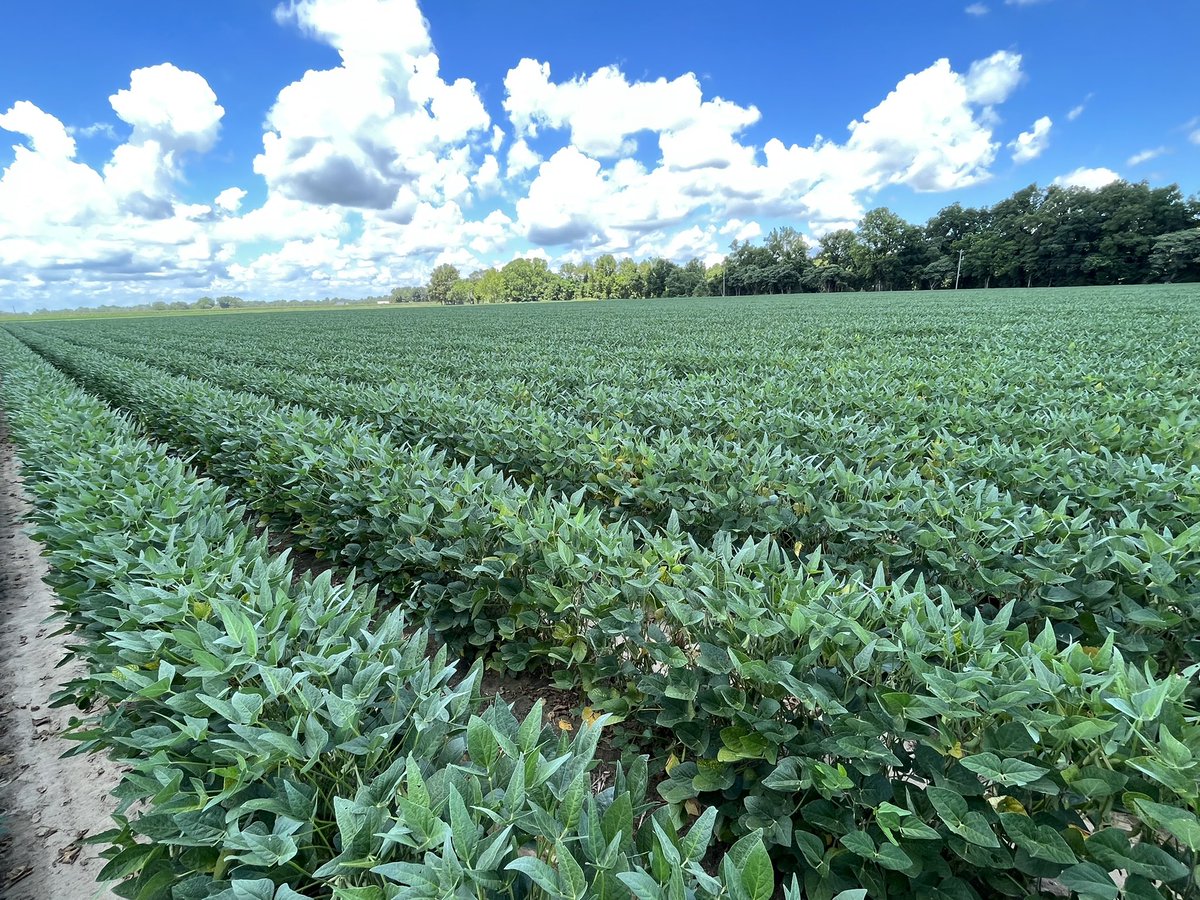
Dry weather is causing some unusual issues for us with top-dressed #fertilizer. Nitrogen needs rain for incorporation so it can feed #corn and limit urea volatility loss. It will be interesting to monitor outcomes and perhaps alter our strategies.
🌽 #mscrops#plant23#mscorn
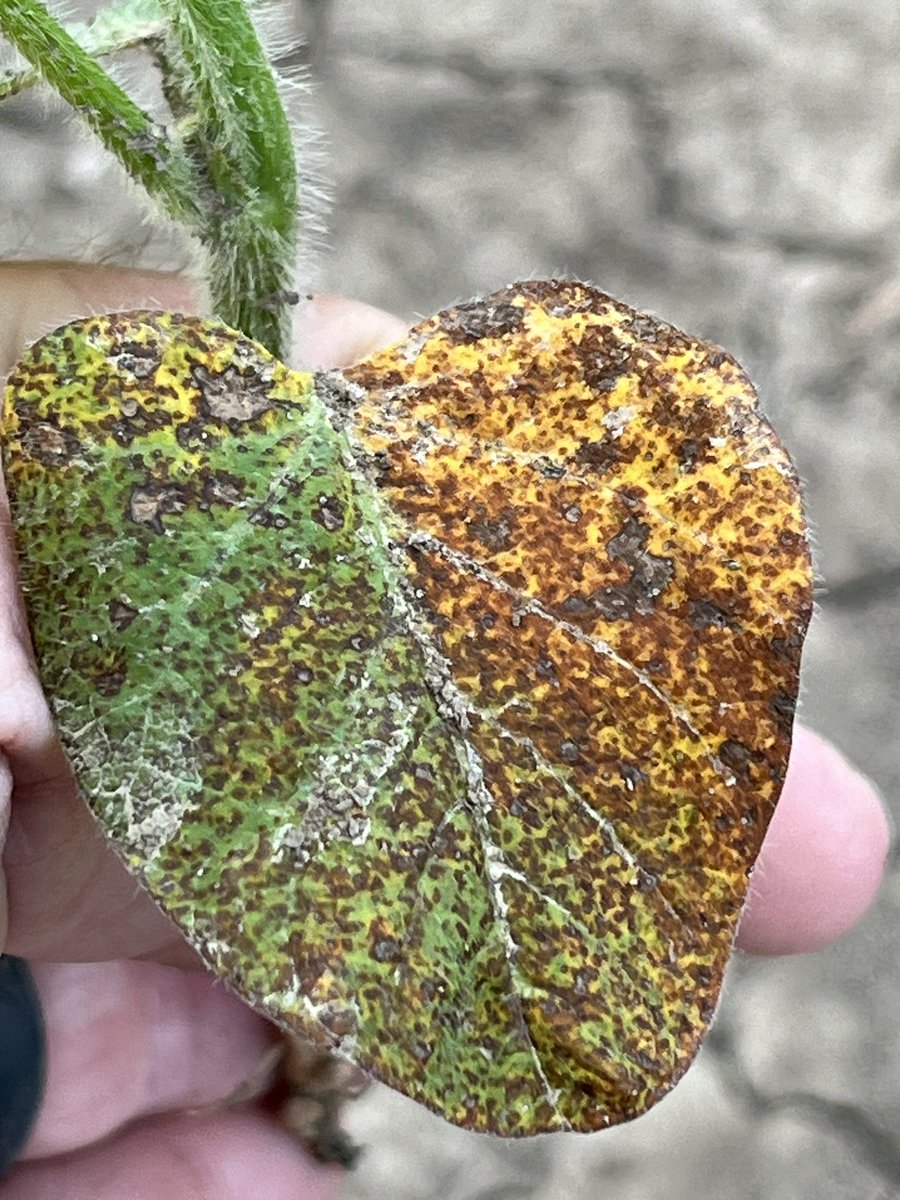
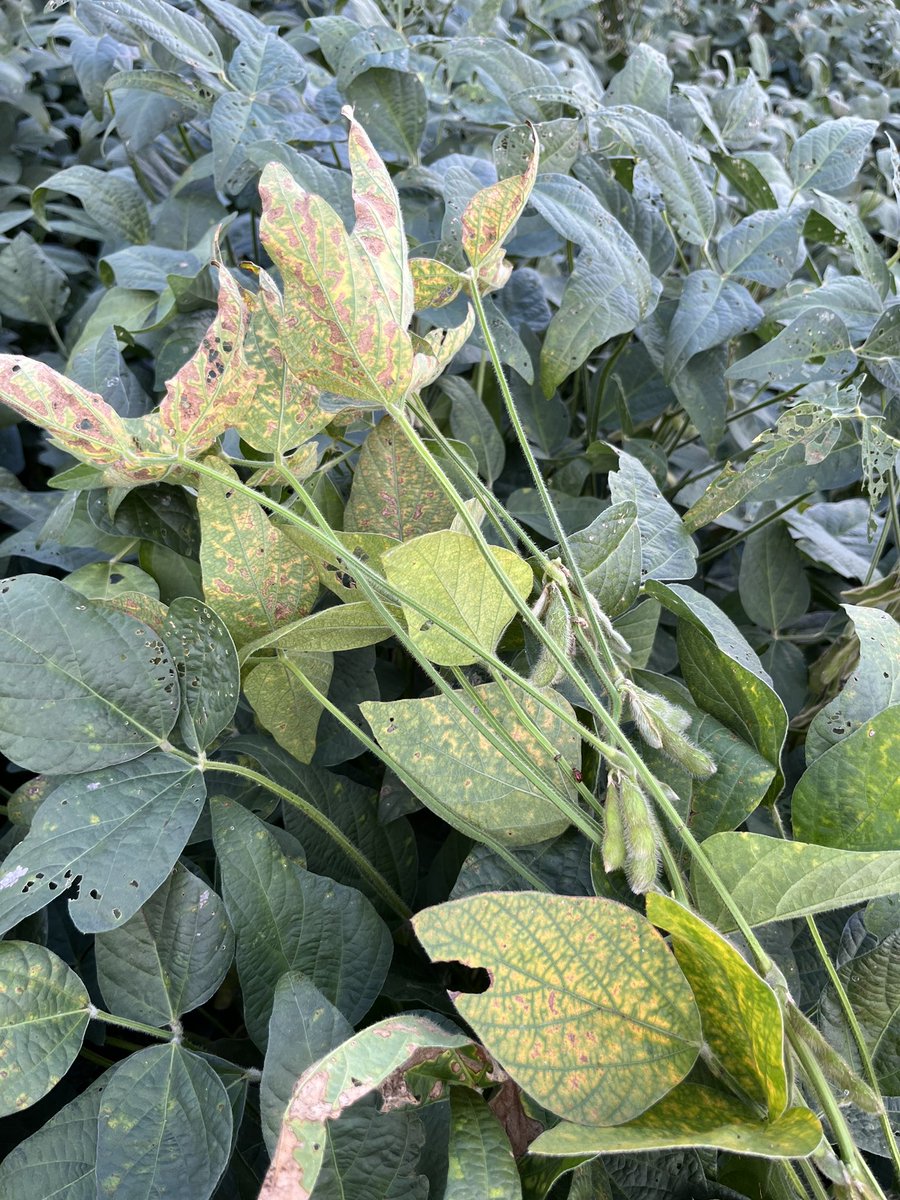
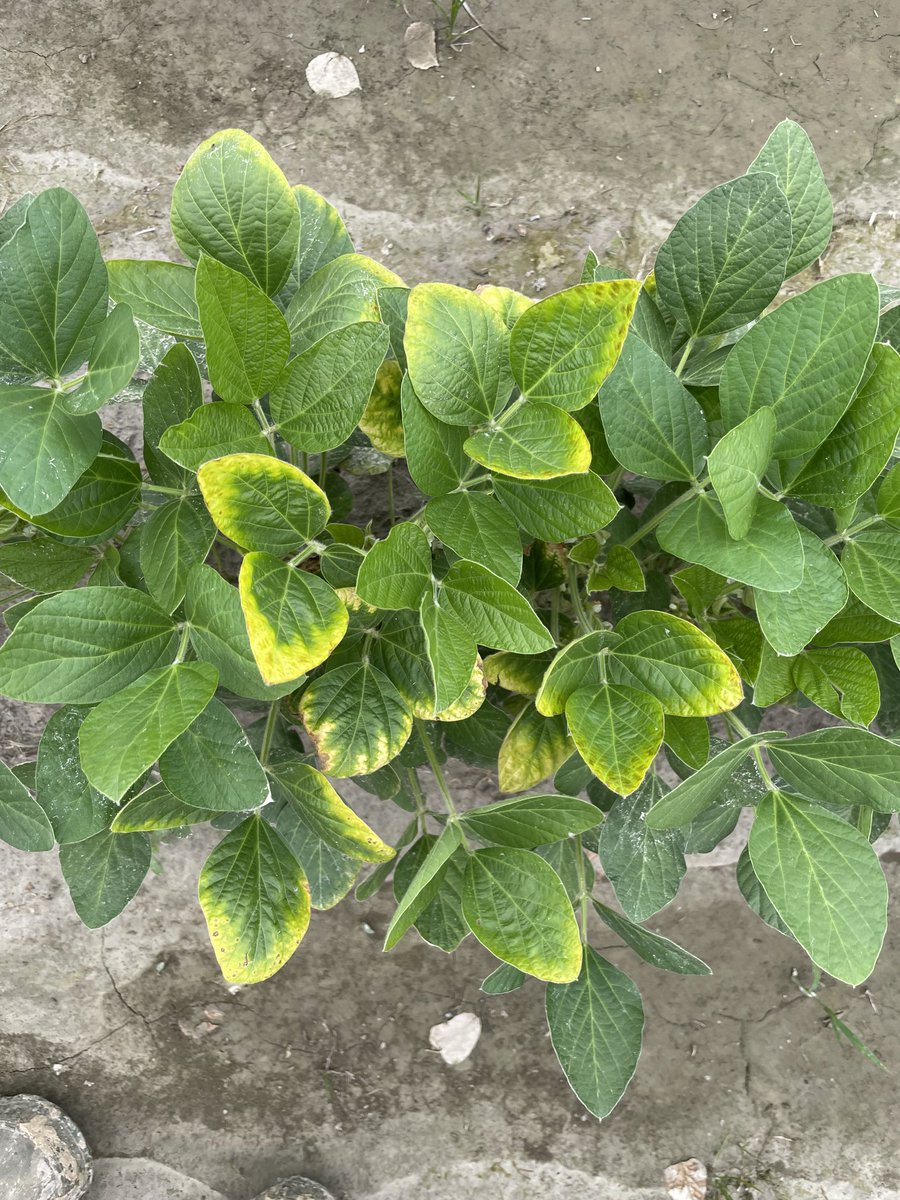
In soybean fields with 1) continuous soybean and 2) a history of taproot decline (TRD), finding TRD-infected plants can occur at vegetative stages (~V4). Look for yellowing (think animal print-like) leaves in the lower canopy. Roots will be rotted and black #mscrops@MSSOY
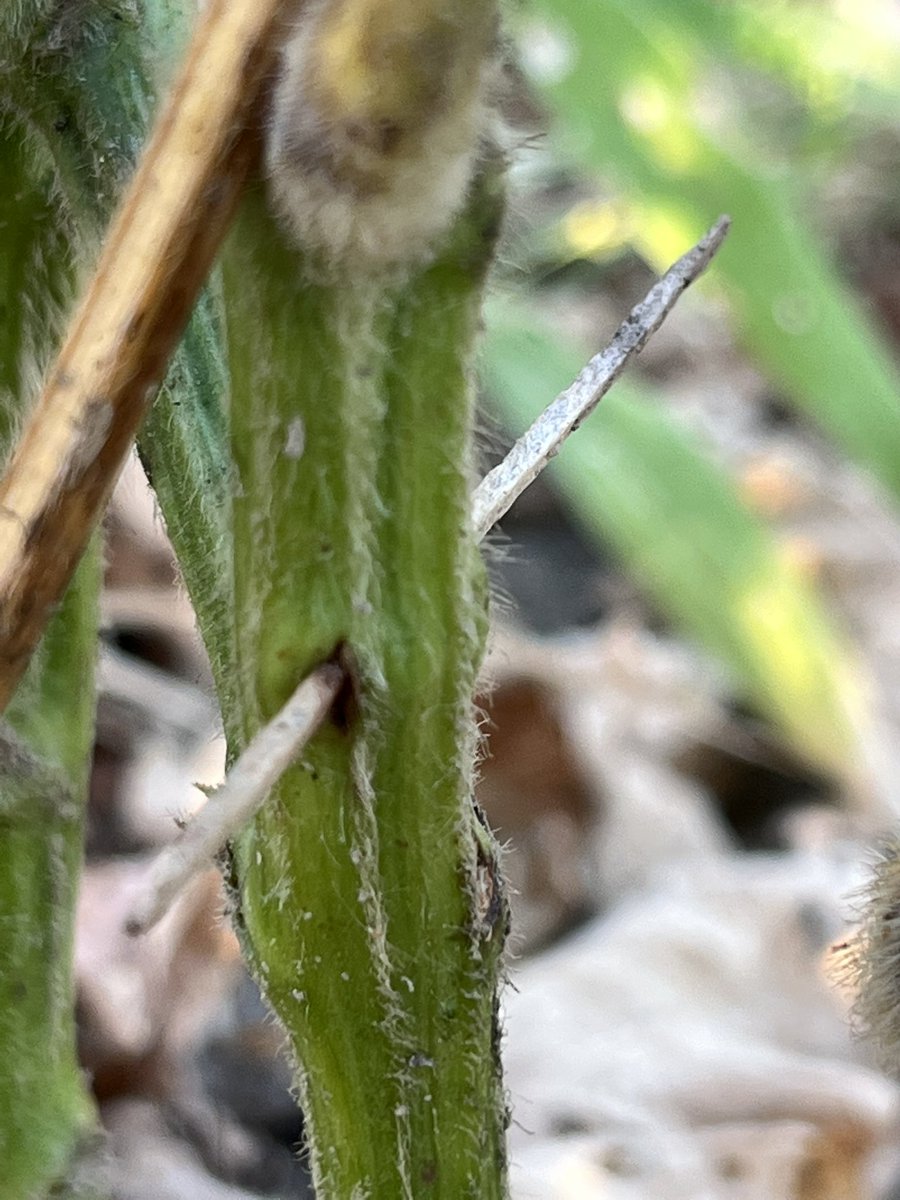
Finishing stem canker evaluations this week. Lots of “hands and knees” time to get these done. Evaluations range from no canker, to a minimal canker or a canker that extends up the plant, to dead plants. Always plant stem canker-resistant cultivars @MSSOY#mscrops
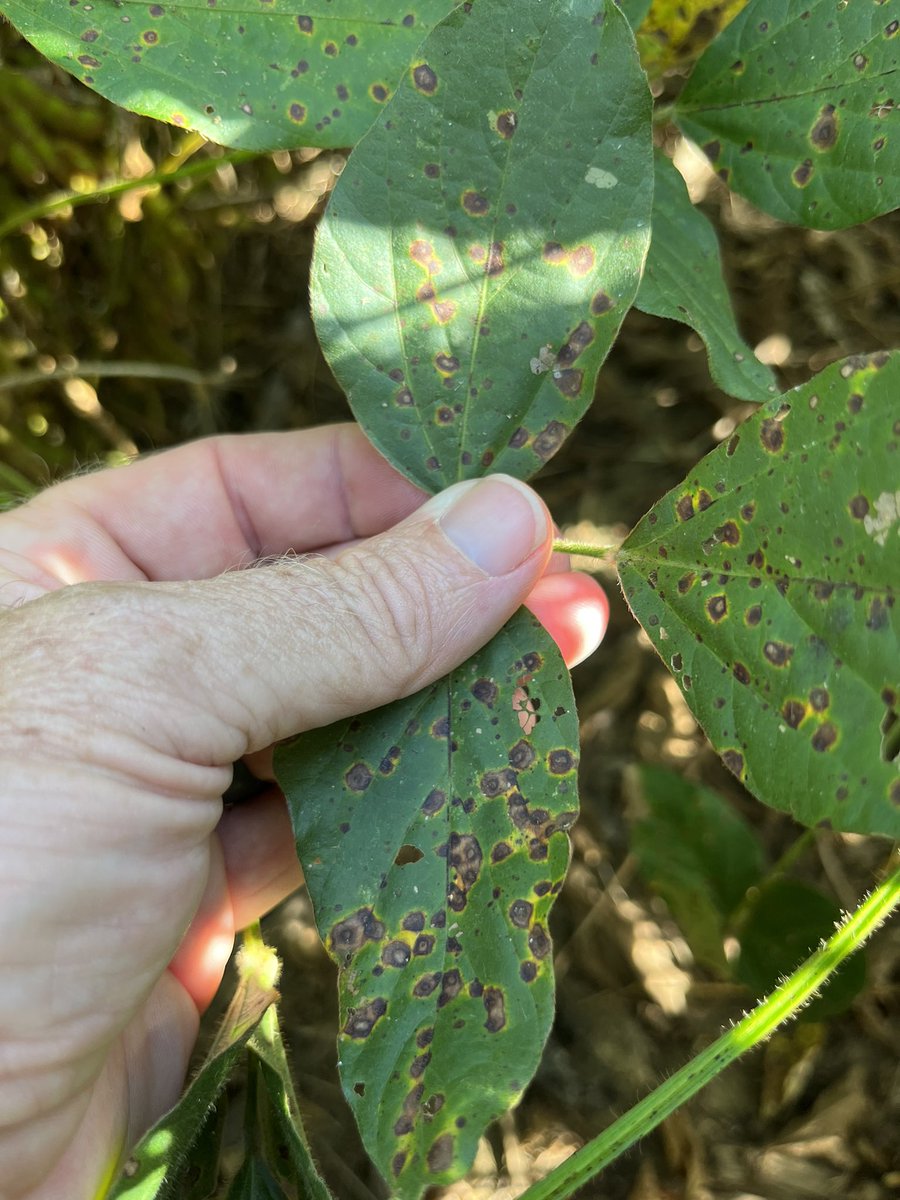
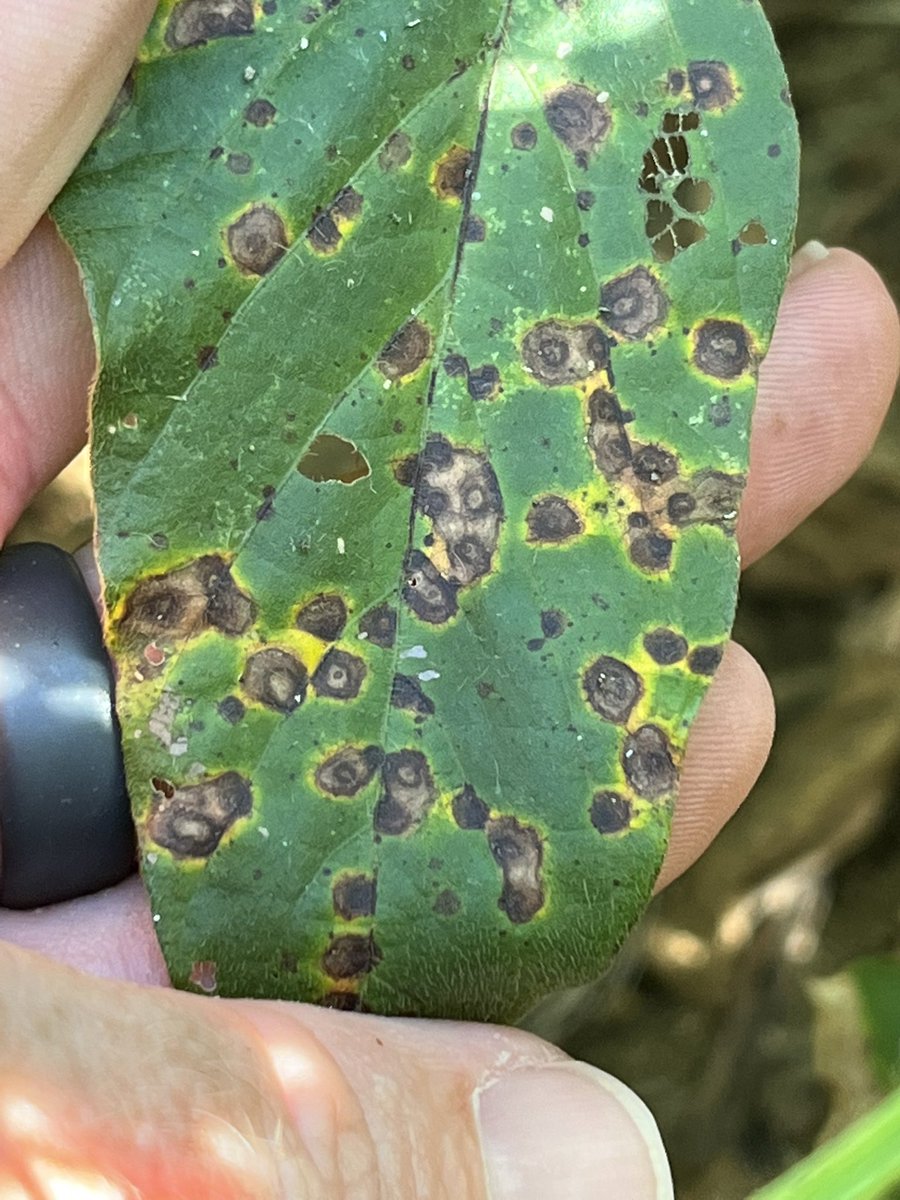
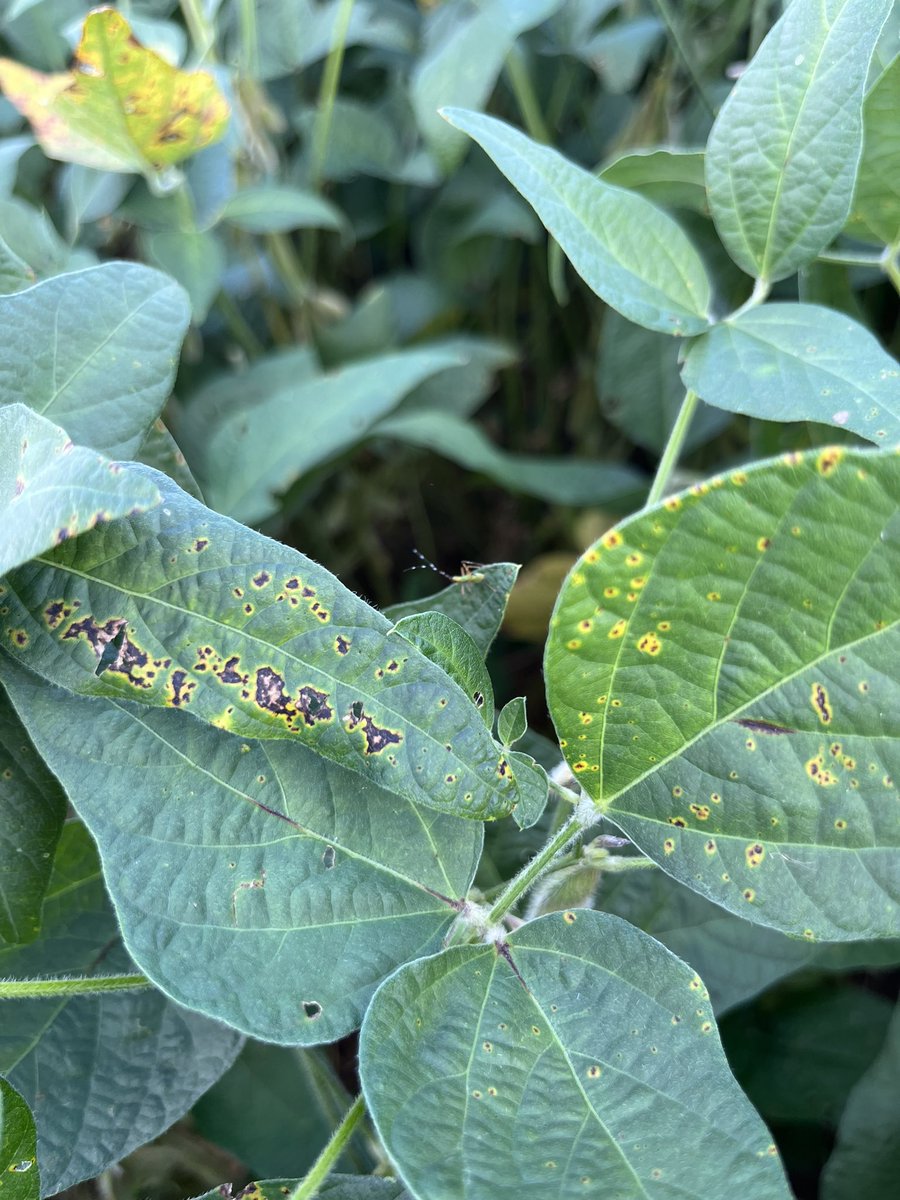
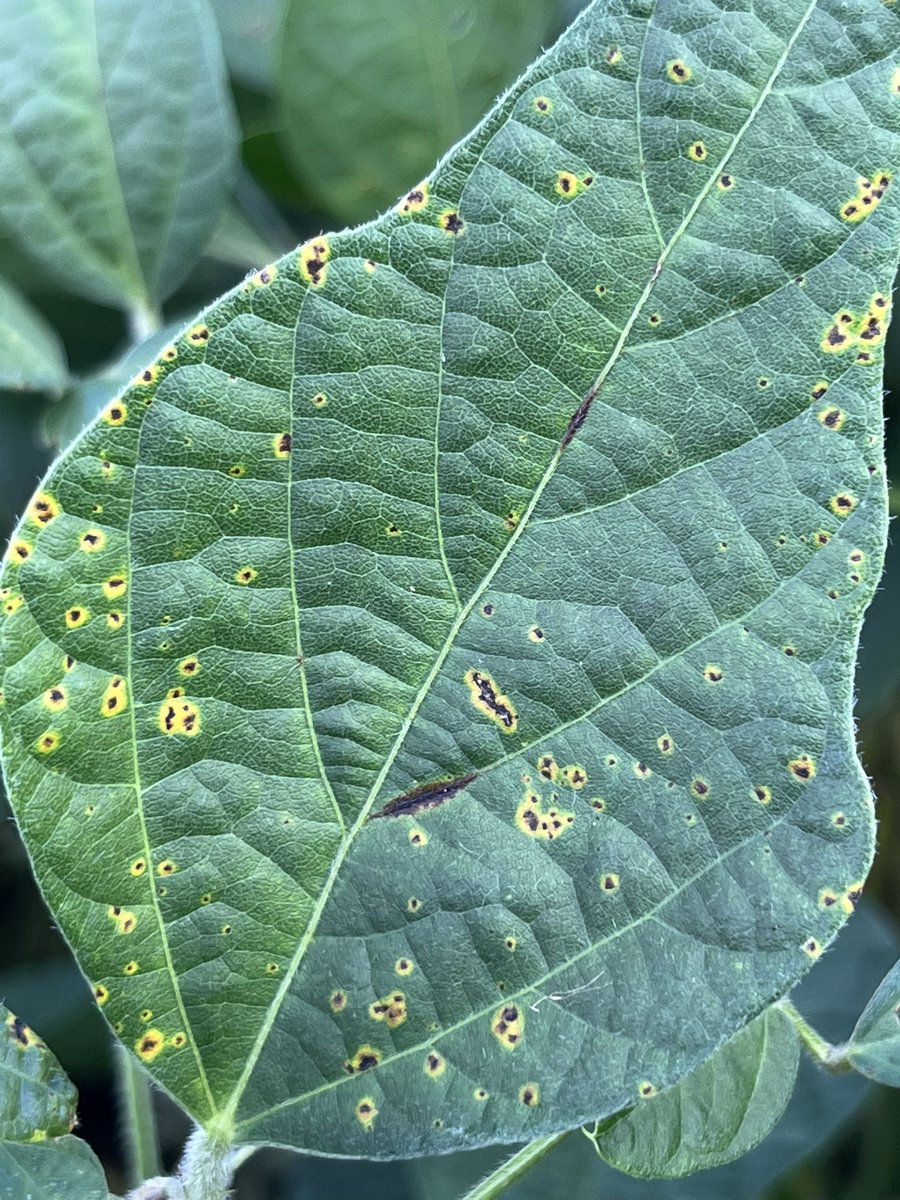
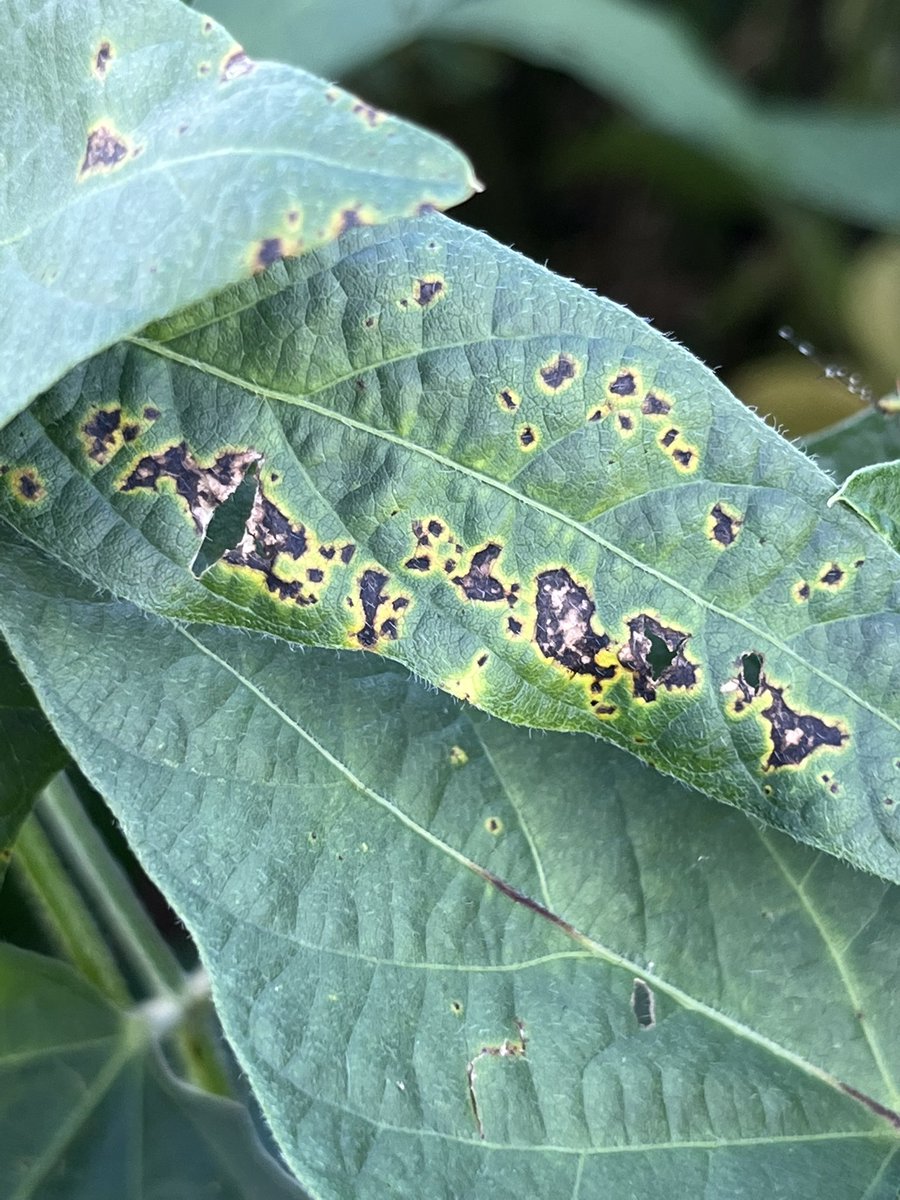
I’m general, low levels of target spot in the Verona soybean OVT, save for this variety I walked by in the MG V set. Tremendous defoliation can occur as a result of target spot if the variety is susceptible enough @MSSOY#mscrops
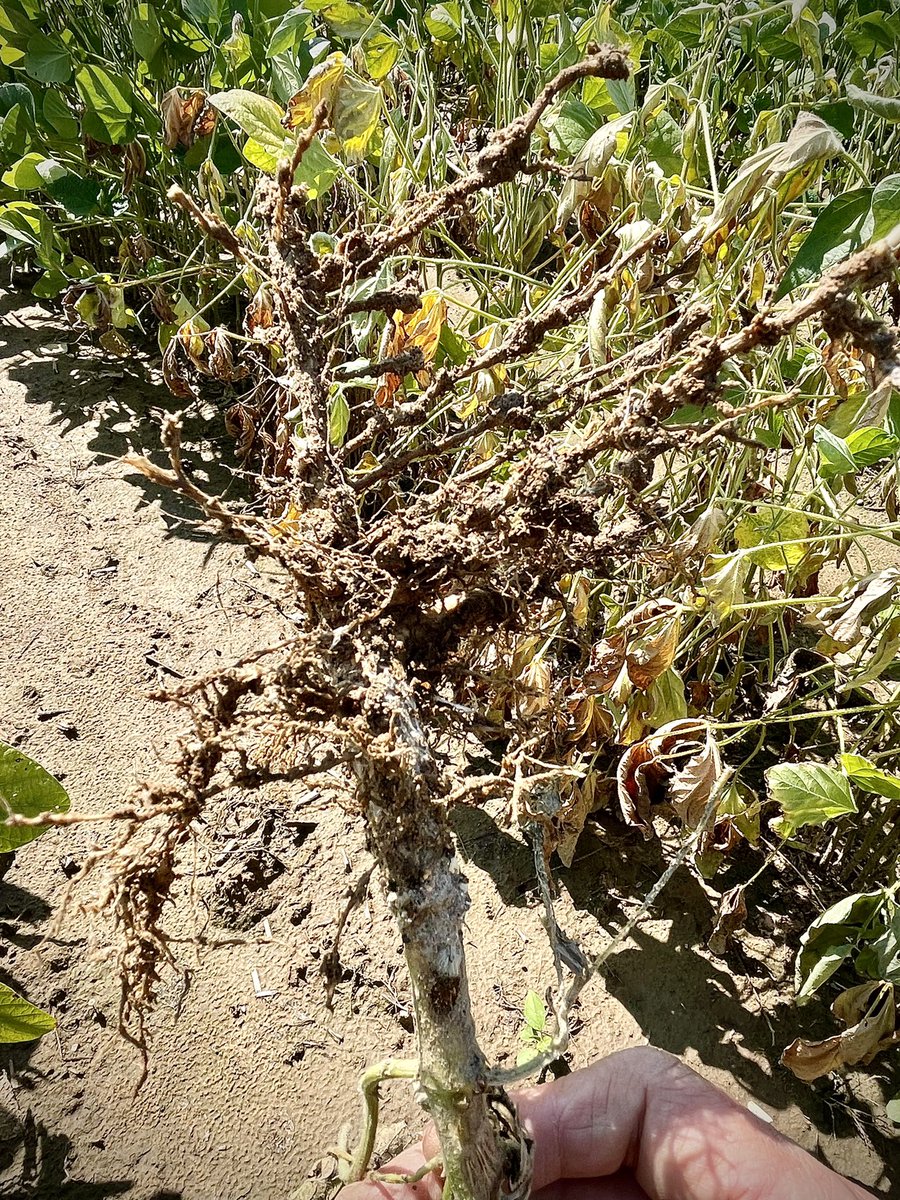
Taproot decline of soybean is caused by Xylaria necrophora. Symptoms include interveinal chlorosis & necrosis of leaves. If plants are pulled from soil, most of roots will snap off & remain in the ground. A black fungal growth can be seen on the upper root system #Disease#fungi
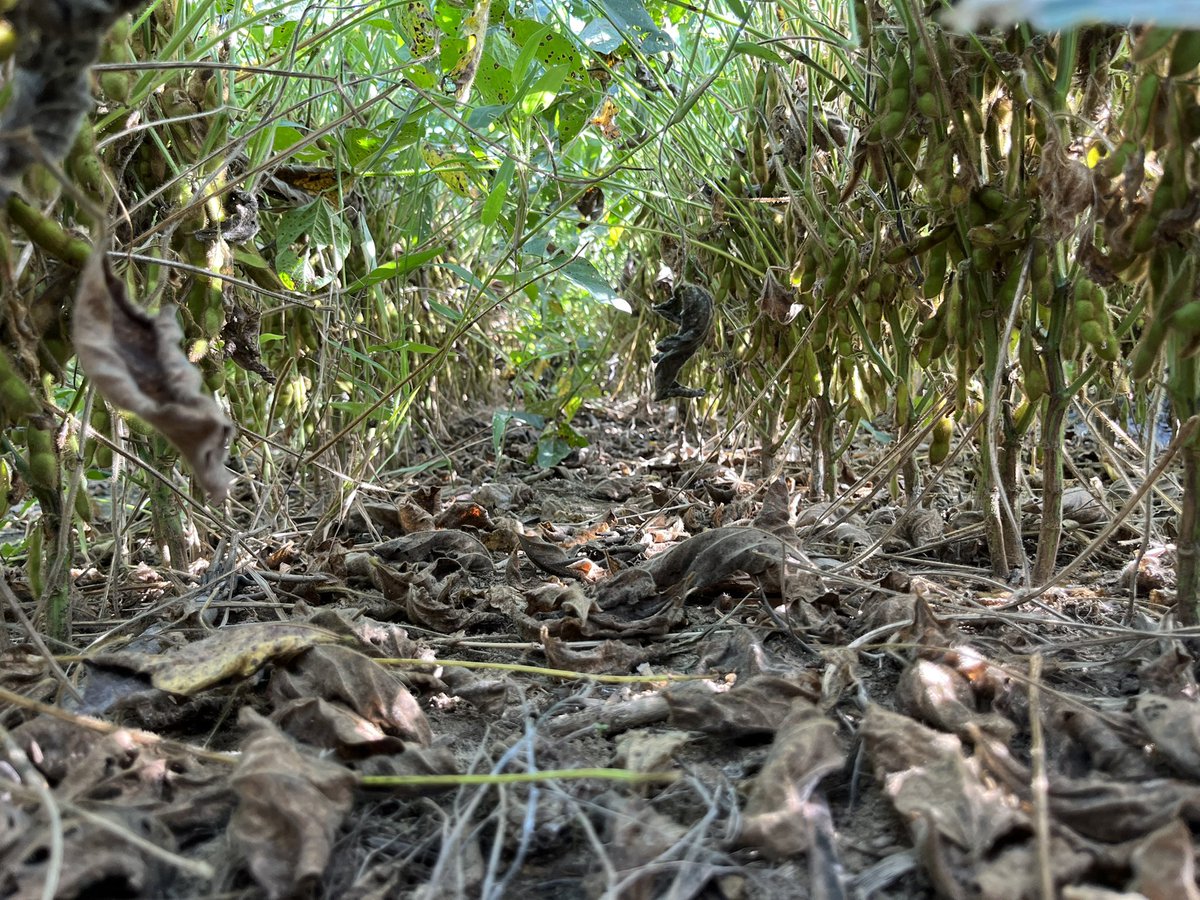
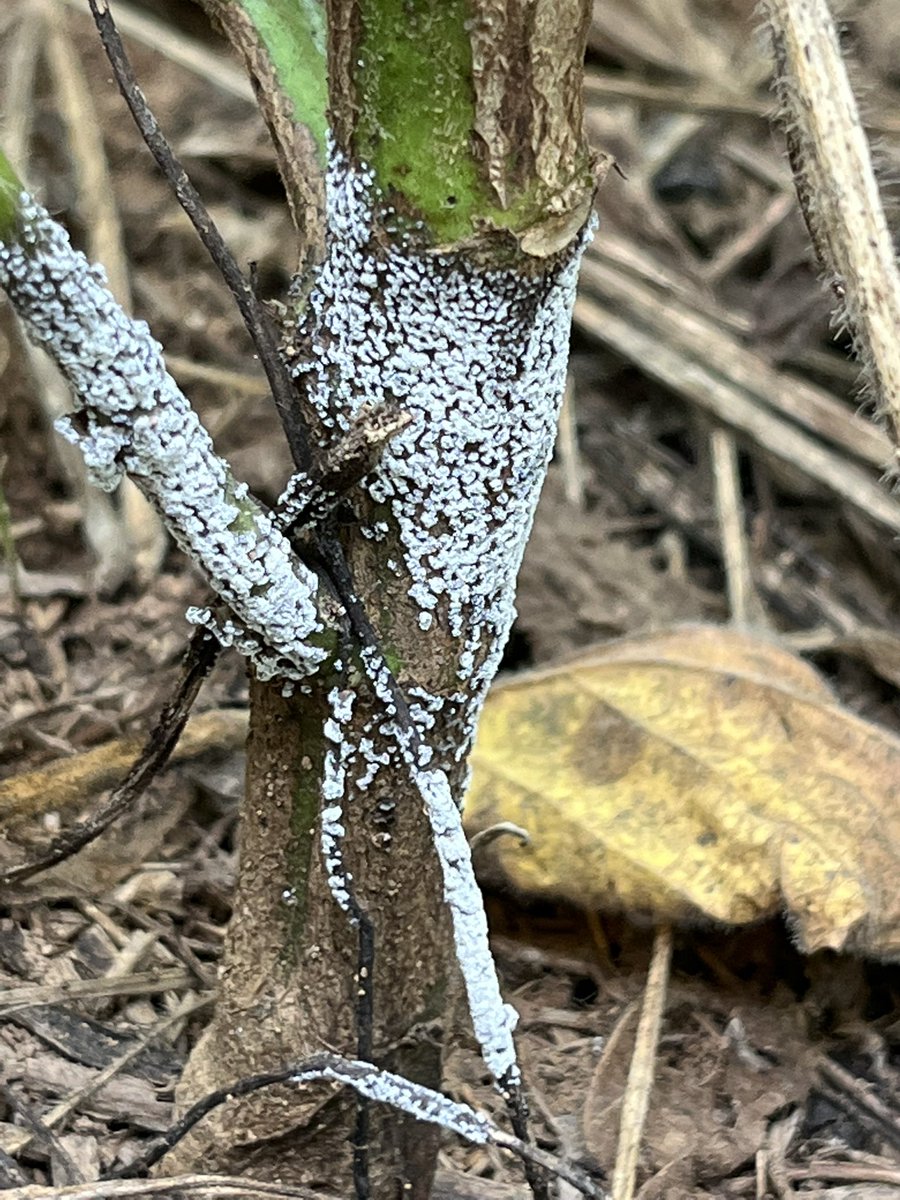
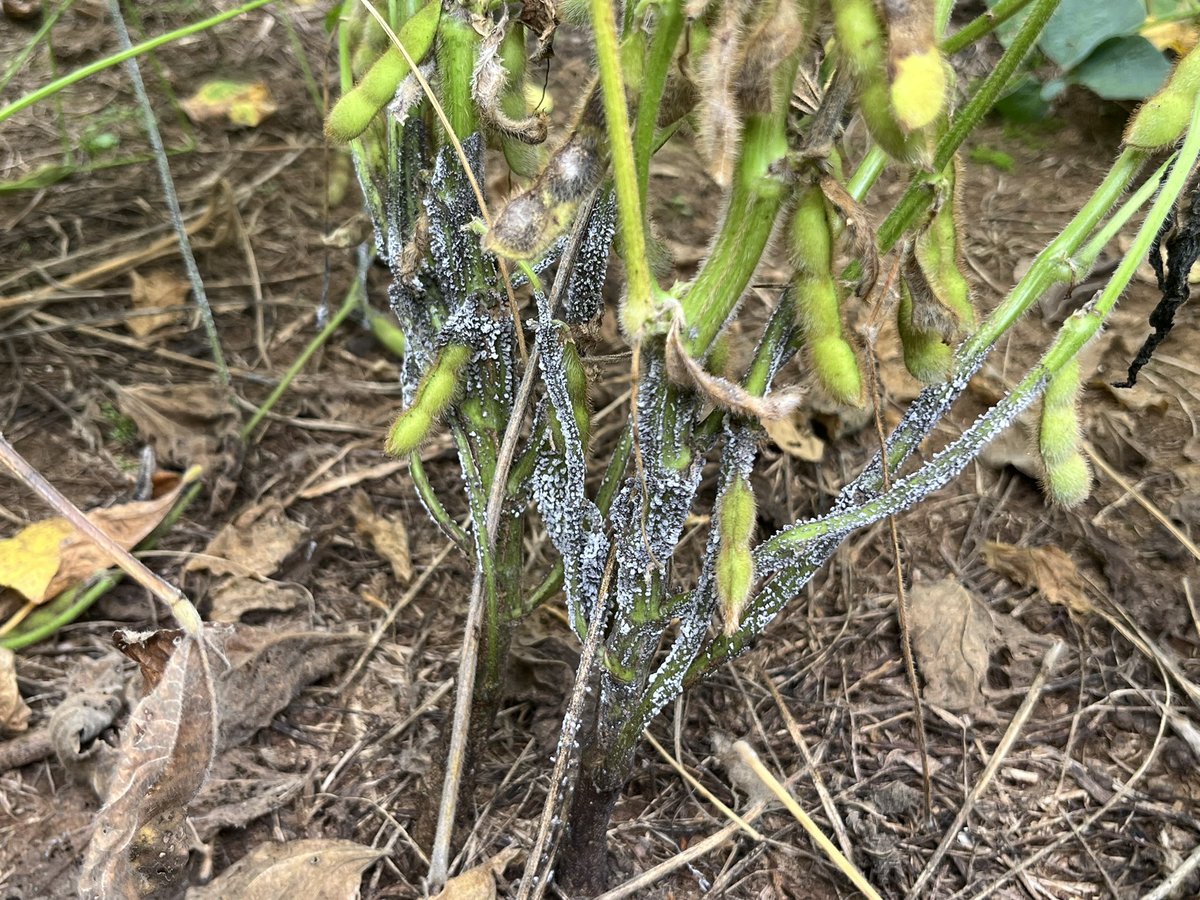
Part the soybean canopy and find abundant gray fungal growth on the plant? Usually nothing to panic about, more than likely just a slime mold “hanging out” between life stages #mscrops#fungi
More root-knot impacted areas in soybean continue to show themselves. Some important things to consider: Soil sample to verify, and when considering options for 2023 cross corn off the list. Corn is also a host of the southern root-knot nematode #mscrops
Bacterial blight of soybean tends to occur following a rain. Symptoms can vary, albeit subtly, based on variety. Mild symptoms outlined by a yellow halo tend to be observed in the uppermost canopy @MSSoybean#mscrops
This dry weather is showing off some K deficiencies more than usual in the K response trial at @NEArkRice. A few in-season potash treatments and that good rain should bounce it back to big yields!
NEMATODE MONDAY: Double trouble for soybeans with Southern Root-knot nematode and southern blight (Sclerotium rolfsii) teaming up to take down soybeans in a variety trial. Which came first, the worm or the fungal pathogen 🤔? #Plantdisease#APS#Nematode
Diplodia leaf streak (DLS) is a relatively “new” disease for MS and can be confused with NCLB. However, DLS lesions can be much longer, sometimes > 8”. Look for pycnidia, the black pepper grains, in the streak (right photo) to distinguish between NCLB and DLS #mscrops
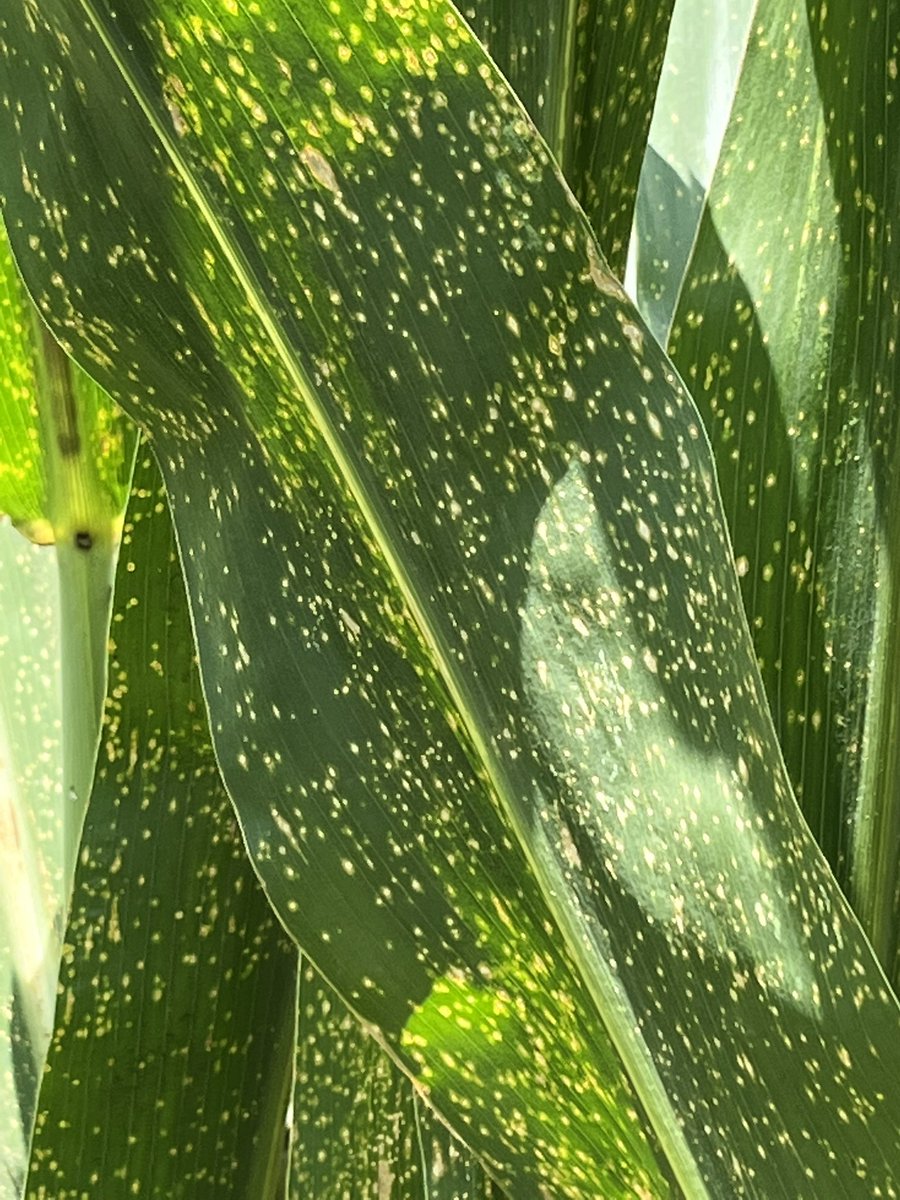
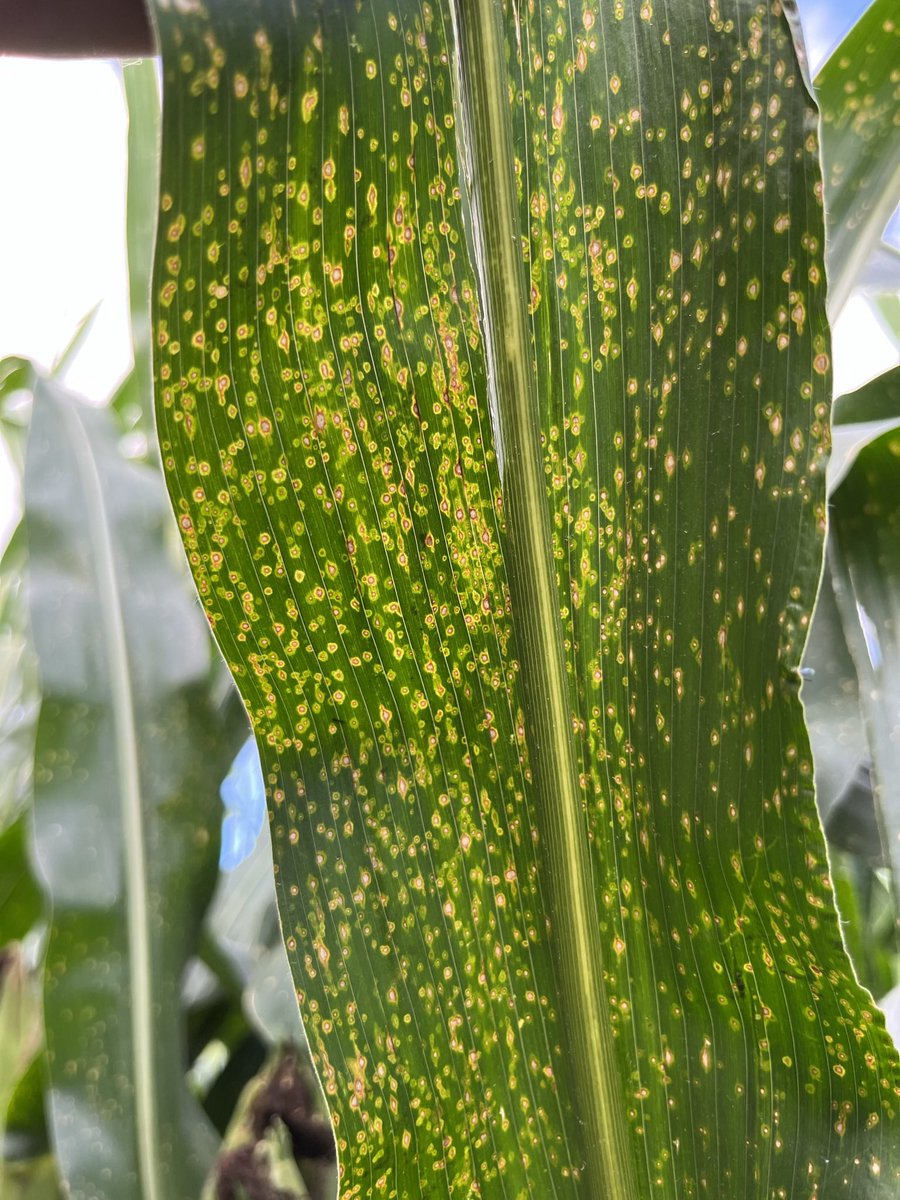
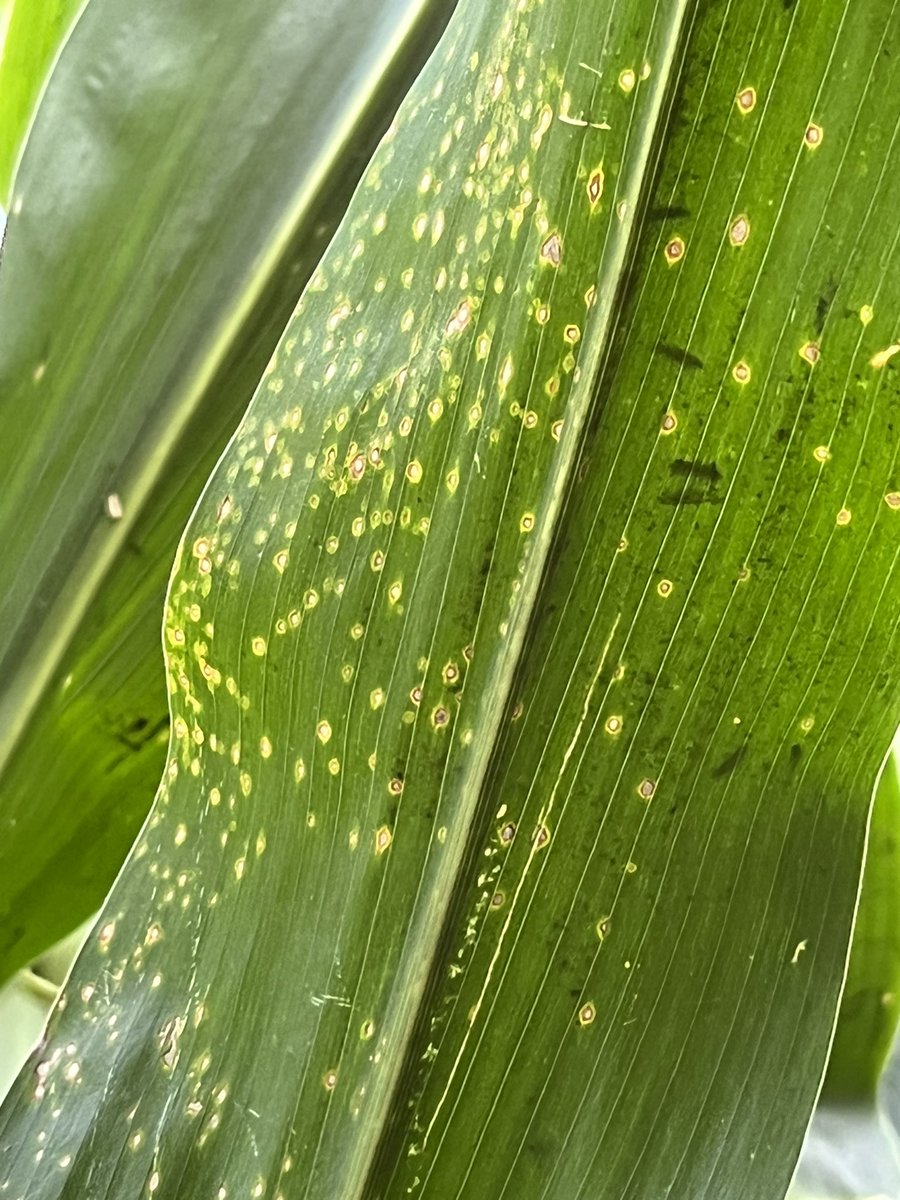
Walked a ton of corn plots this past week. The Curvularia leaf spot in some of the earliest planted plots that I saved for late fungicide applications is impressive #plantpathology#mscrops
Hot and dry conditions can make the root-knot nematode infested areas show up throughout the Delta, especially in fields with lack of rotation and a sand soil class. Remove plants from the soil and look for galling @MSSOY#mscrops
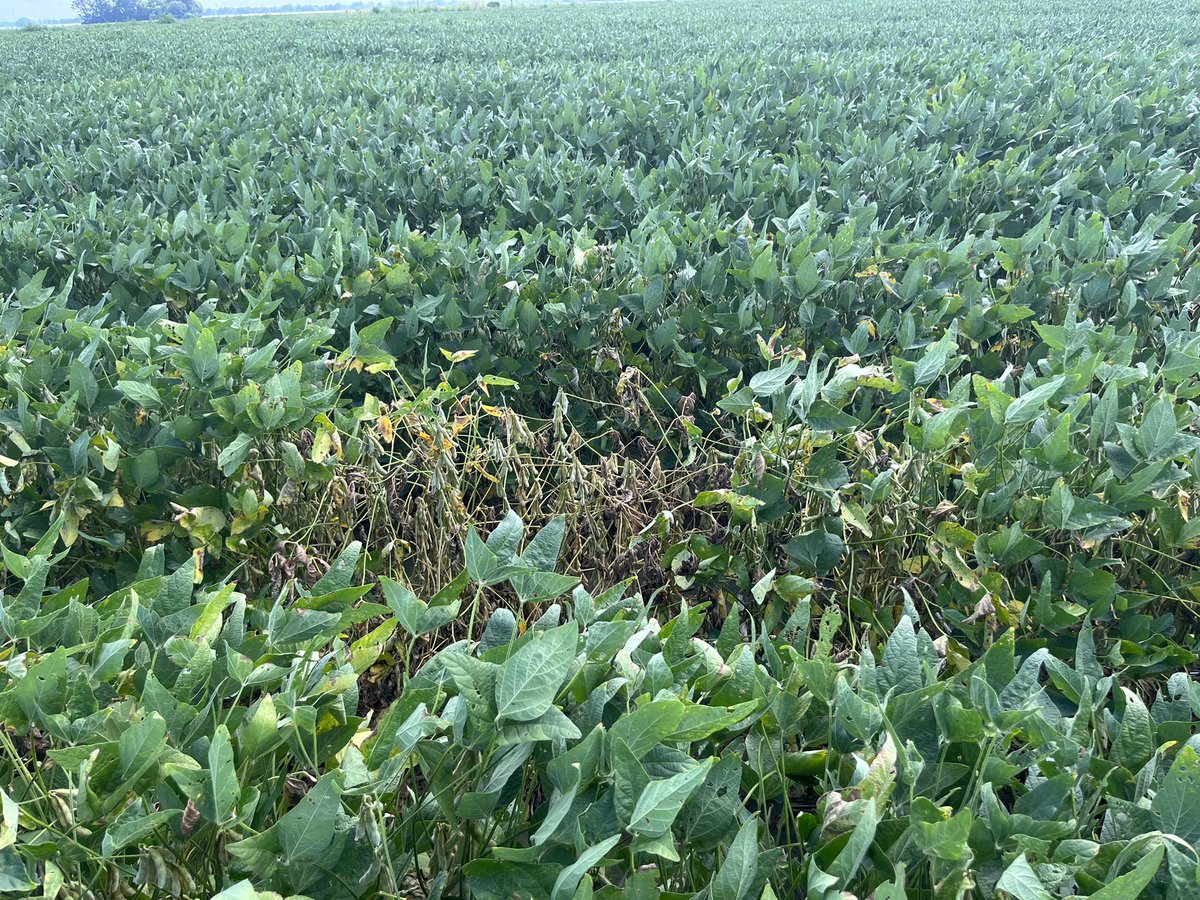
We have reached that point in the soybean season when taproot decline (TRD) becomes more showy. Field of R5 soybean in Leflore County showing some moderate to severe symptoms #mscrops
Phytophthora root and stem rot is generally rare in MS. Brown lesions at the base of the soil line, severe wilting in typically wet field conditions and a shepherd’s crook in the uppermost nodes are the most notable diagnostic symptoms #mscrops#plantpathology
I’ve walked almost 800 corn plots this week…..number 1 disease was Curvularia leaf spot. In fact, aside from a few plants (less than 6) was the ONLY disease I really observed with any regularity. Not a single rust pustule of either common or southern #mscrops
High temperatures are concerning, but pollination is not normally the primary issue. High night temps stress #corn by limiting energy available for developing kernels. Thus, we will likely see more kernel abortion near the ear tip. #Plant22#mscrops#MSUext 🌽
The primary issue with hot weather is the detrimental cumulative effect of high night temps on plant respiration and energy supply. This expends more energy for maintenance, rather than grain development, reducing #corn yield. #mscrops#Plant22#MSUext 🌽