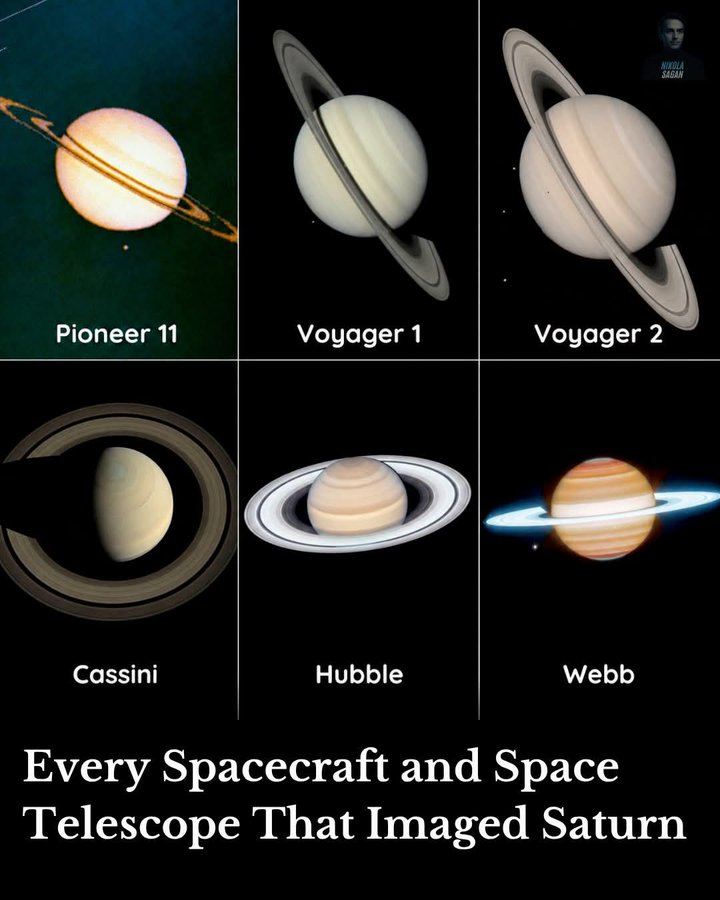
Saturn: A Planet Revealed by Humanity’s Greatest Eyes in Space
For nearly five decades, Saturn has been under intense scrutiny from some of the most advanced spacecraft and telescopes ever built. Four pioneering missions and two powerful space observatories have transformed this distant gas giant from a mysterious ringed world into one of the best-studied planets in our Solar https://t.co/BF05L1TaJI 11 made history in 1979 with the first close-up images of Saturn, revealing the delicate, narrow F ring for the first time.
Voyager 1 and Voyager 2 swept past in 1980 and 1981, delivering breathtaking high-resolution views and uncovering one of Saturn’s most bizarre features: the massive, rotating hexagon-shaped jet stream at the north pole.
Cassini-Huygens, the crown jewel of Saturn exploration, arrived in 2004 and spent a remarkable 13 years orbiting the planet. It captured hundreds of thousands of images, mapped the surface of Titan, dove through the rings, and revolutionized our understanding of the entire Saturnian system.
From Earth orbit, the Hubble Space Telescope has watched Saturn for over three decades, tracking dramatic seasonal changes in its atmosphere and rings.
Most recently, the James Webb Space Telescope has turned its powerful infrared vision toward Saturn, unveiling hidden heat patterns and detailed chemical fingerprints in the planet’s dynamic atmosphere.
Together, these missions have painted Saturn not just as a beautiful ringed world, but as a complex, ever-changing planetary system full of surprises.
Source: NASA / ESA / JPL
#BlueGhost Mission 2 heading to the far side of the Moon is bigger and bolder, and we have the team to make it happen. Standing over 22 ft tall, the structure qualification models for our Blue Ghost lander and Elytra Dark orbiter were built and fit checked at our Texas Rocket Ranch. Next up, testing!
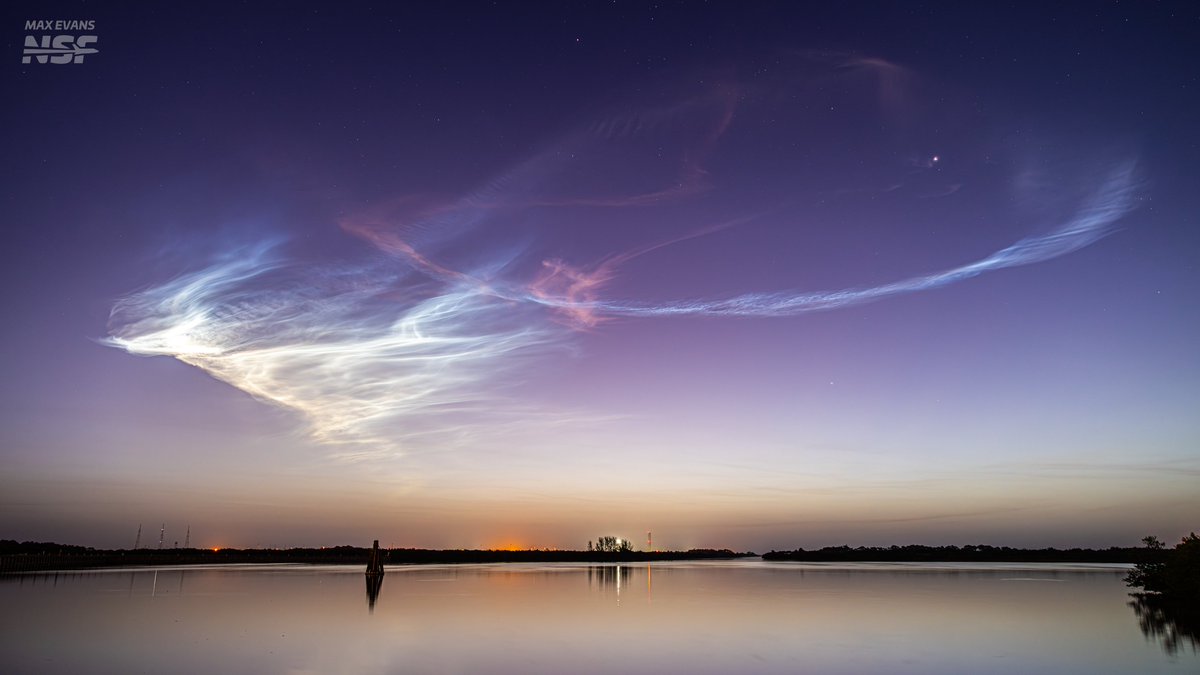
Falcon-induced noctilucent clouds greet the Space Coast on this fine Saturday morning, following the launch of the Starlink 10-26 mission less than an hour prior.
📸 - @NASASpaceflight
📺 - https://t.co/73yCG5zGo4
ISS pass over the UK on July 4th, 2025 at 1:53. We can clearly see the two Dragons from SpaceX, the Axiom-4 on the top and Crew-10 on the left. C11eHD, 3x 174MM, SharpCap, KyTrack.
#NASA#SpaceX#InternationalSpaceStation
Incredible footage from the @NASA_Langley team taken with the SCALPSS cameras during #BlueGhost's soft touchdown on the Moon! This data will help inform future robotic and crewed Moon landings. #BGM1
Falcon 9 transits the moon 🎥
Watch the sound waves radiate outward from Falcon's exhaust! They create a refractive effect and break up the edges of the moon, making it ripple
Incredible super-slowmo capture by @johnpisaniphoto with @freeflysystems and a beautiful tribute to veteran booster B1062
A unique view of a massive Martian volcano 🌋
The Mars Odyssey orbiter captured the largest volcano in the solar system – Olympus Mons. With a base that sprawls 373 miles (600 km) across, it is wider than the distance from L.A. to San Francisco. https://t.co/1wCdeme8Kv
Ad astra. ✨
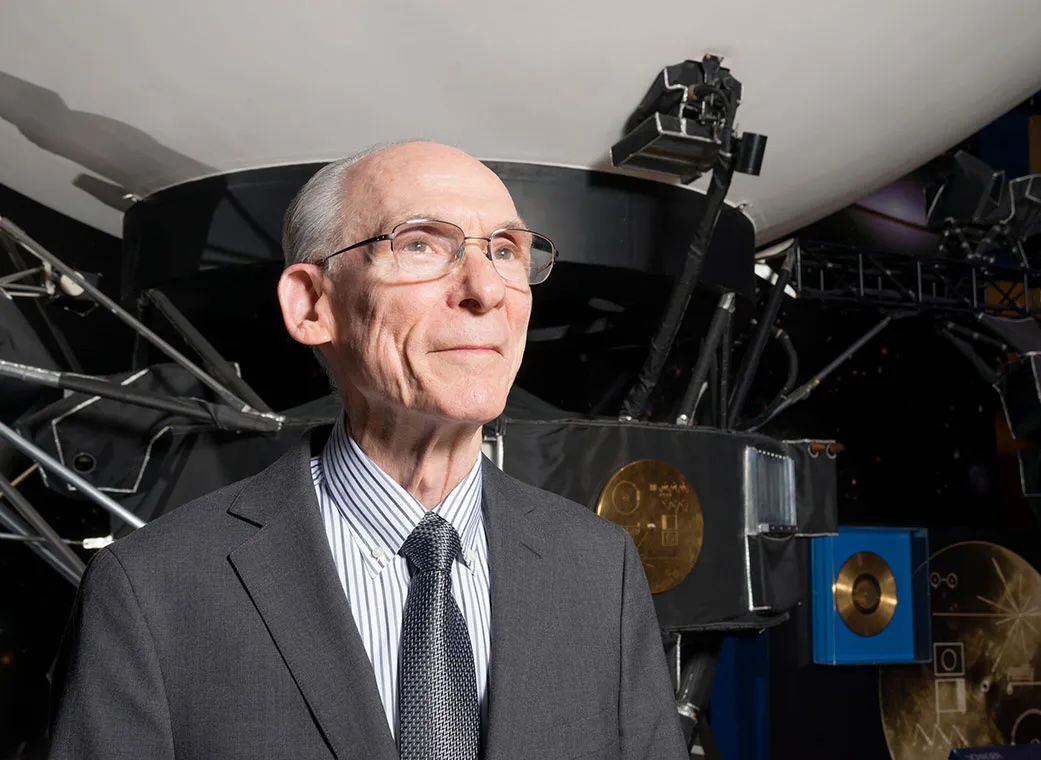
Ed Stone, former director of JPL and longtime @NASAVoyager project scientist, has passed away. He will forever be an inspiration to all who #DareMightyThings. https://t.co/ds5TriLwAj
Starship liftoff filmed at 2400fps! Our Road to Mars episode featuring footage filmed with @freeflysystems Ember cams is live. https://t.co/Mz7Ft6F2bu
Huge thanks to our supporters & @Erdayastronaut