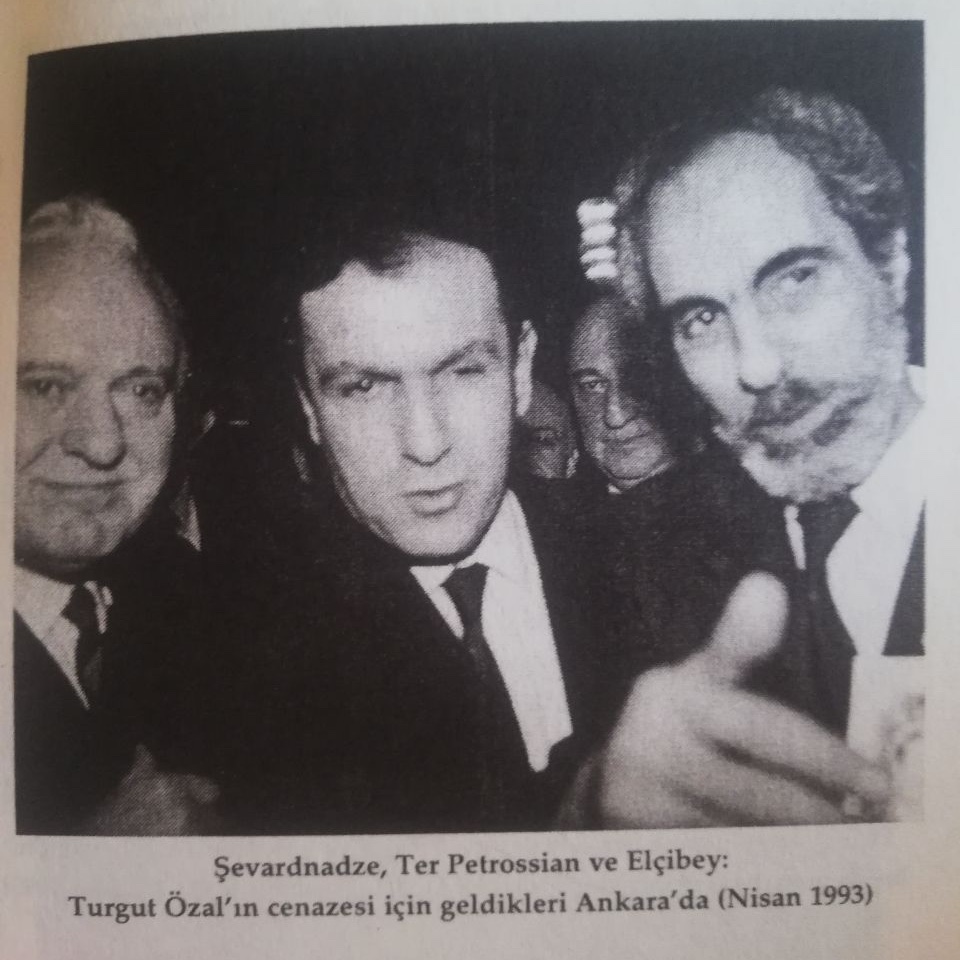
Presidents of Georgia (Shevardnadze), Armenia (Ter-Petrosyan) and Azerbaijan (Elchibey) at the funeral ceremony of the Turkish president Turgut Özal. Ankara, April 21, 1993.
The photo is from Candan Azer's collection.
Maps showing regions called Armenia and Adirbeizania. Names of places change throughout history or they can hold multiple names at the same time. Or the same names can move from one place to another
@SalehMehdizade Locals have a different experience throughout time. And also the mapmaker can have a purpose depending on the function of their map e.g. for travel, territory, educational purpose, etc.
We can see that each map is its own unique collection of places and names
There’re some anti-Armenian mis/disinformation campaigns circulating on Twitter aimed at making an impression that Armenia [as a state] and its population support the Russian invasion of Ukraine. Most of these claims, in most cases, are baseless.
🧵
In this week’s newsletter for @OCMediaorg, I touched upon the feelings of Armenians and how they see the war in Ukraine, and solidarity for Ukraine, roughly two years after facing another devastating war alone.
https://t.co/KhUMVJhVF8
Every year since January 19th, 2007, at 15.00, people gather in front of the @AGOSgazetesi newspaper's office to commemorate Hrant Dink.
The photo is from today's commemoration.
@HSiccus The state language of RoA was changed to Armenian. Languages like Russian and Turkish have been in decline. In the early 20th century most Armenians in the Ottoman empire spoke Turkish as their native language, but of course some also had a native Armenian dialect as well