@rukirukis67@joetsai1999 We tried — my team and I, seriously. But the door was closed by US regulations on Chinese companies, not by our willingness. That chapter is over for us; our respect for what https://t.co/qBijVNzaBR built is not.
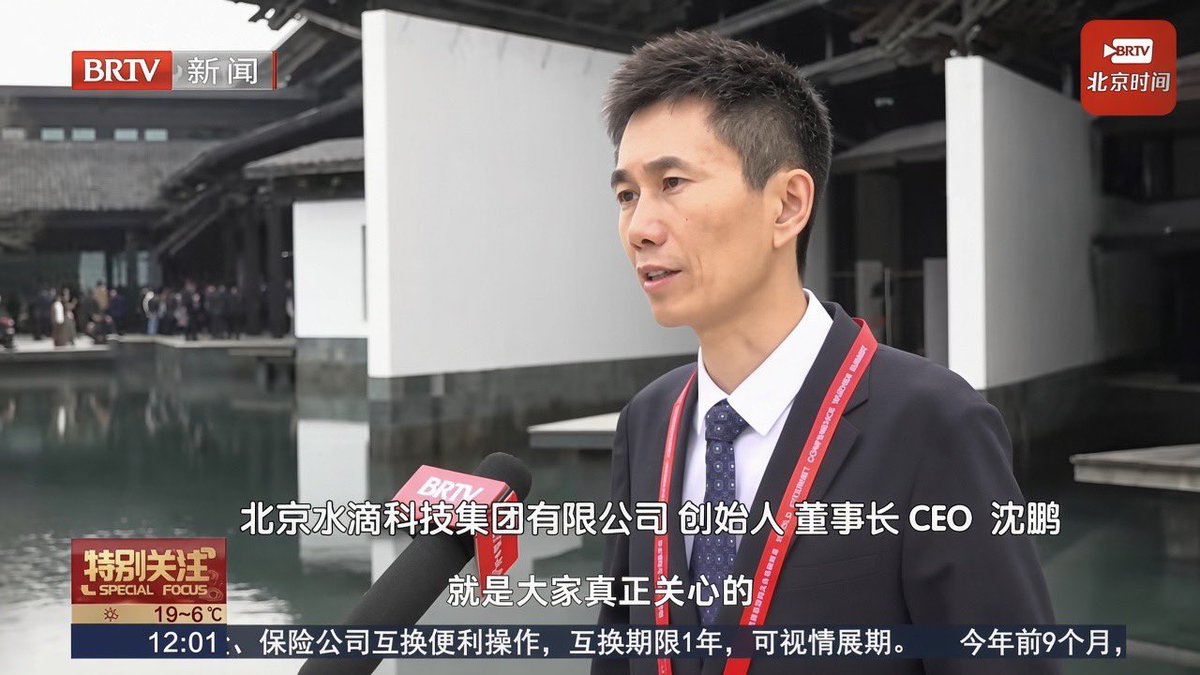
Back from Wuzhen — what I brought home is not just takeaways, but the strength to keep moving forward.
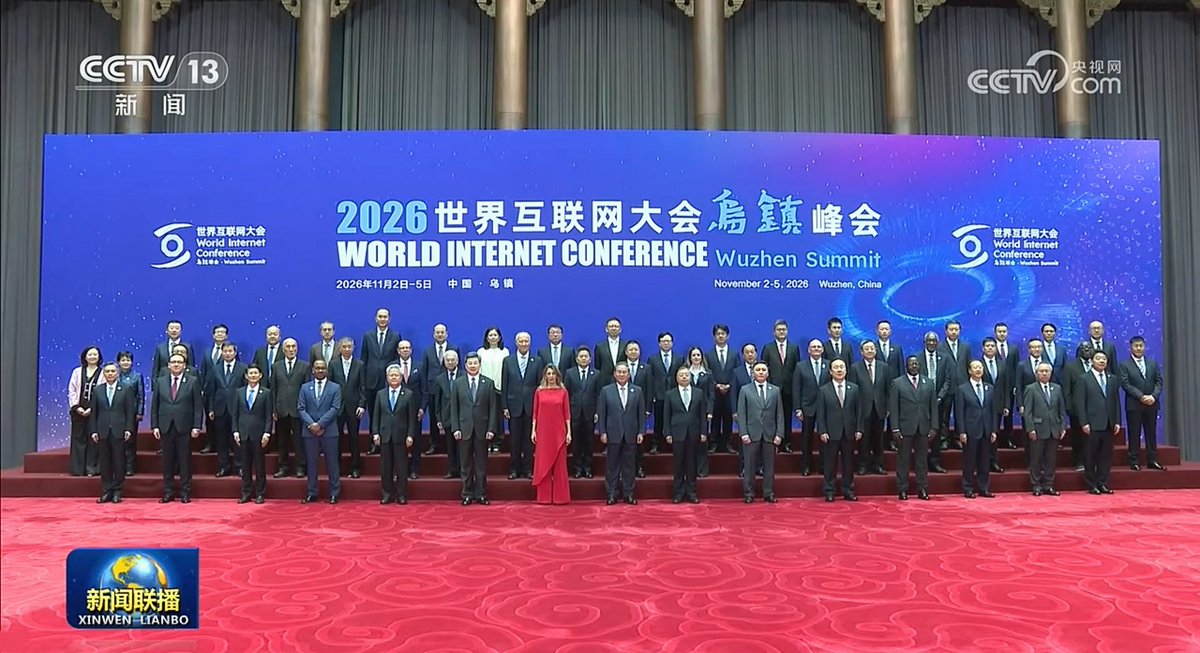
Honored to attend the opening ceremony of the 2026 World Internet Conference (WIC) Wuzhen Summit, joining industry peers from China and abroad — Joe Tsai (@joetsai1999), Chairman of Alibaba Group; Mu Rongjun, co-founder of Meituan; Kai Yu, founder of Horizon Robotics; Bicheng Han, founder & CEO of BrainCo; Charles Zhang, founder of Sohu; and Nii Quaynor (@niinarkuquaynor), "Africa's father of the internet" — and to have the great honor of a group photo with Premier Li. At the click of that shutter, I felt more deeply than ever the weight behind the title "internet entrepreneur": not a halo, but a responsibility.
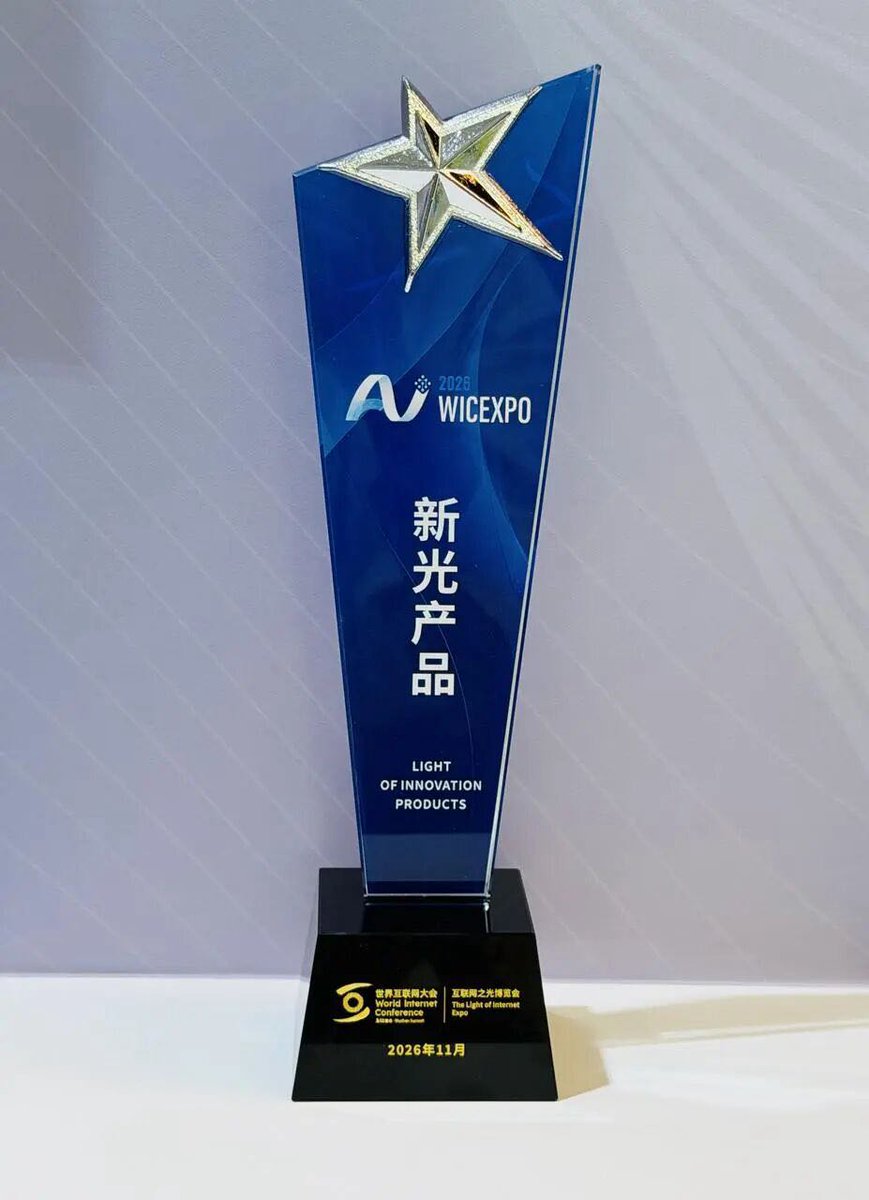
At the same summit, @WaterDrop_Inc's self-developed insurance AI large model "Shuishou" won the "New Light" Product Award. It is the best recognition of our team's long-term commitment to AI, and fresh fuel to keep running. But I know this well: awards are waypoints, not the destination.
One shift was unmistakable in these days of conversation: entrepreneurs have moved on from pitching AI concepts to using AI to deepen real industries and create real value. Concepts may win applause; only value earns trust. "AI-native" was never a pretty slogan — it is a long-term promise, one that must be embedded bit by bit into every step of the service process, until it becomes protection that users can truly feel.
Looking ahead, Waterdrop will go deeper into the life & health insurance industry — standing in our users' shoes, and in society's, to understand their true needs; combining the power of AI with close partnership across insurers, to craft products that genuinely meet user needs and solve real problems. Only then can we open up a bigger world and earn lasting word of mouth.
Wherever our users are, that is where our protection will be. Stay user-centered; use AI to reach every corner that needs protecting; make coverage more complete, more timely, and more caring around every user — and deliver better service straight to their hearts.
The road is long, but walking gets us there. The task is hard, but doing gets it done. On to the next decade. Spare no effort — dripping water wears through stone. 💧
Just made the Hurun U40 list — for the very last time. I turn 40 next June.
10 years building @WaterDrop_Inc, and here's my honest takeaway: entrepreneurship is way harder than it looks. Awards capture the visible moments. The 3am nights no one sees are the real story.
Slow is fine. Lasting is what matters.
Full story 👇
A decade in, here's what I know: the awards show the visible moments; the invisible nights are the real story. To every founder: be tired, be slow, but never carry it alone. Slow is fine. Lasting is what matters. We're in this together.
This is what real product leadership looks like: staying close to users, solving real problems, and letting the product speak louder than the title.
Titles are given. Impact is earned.
Congratulations to @petersellis on his new role at X. I’m excited to see what he and the team build next, and I wish them every success in shaping the future of X.
AI can lift the weights for you—but it cannot win you an Olympic gold medal.
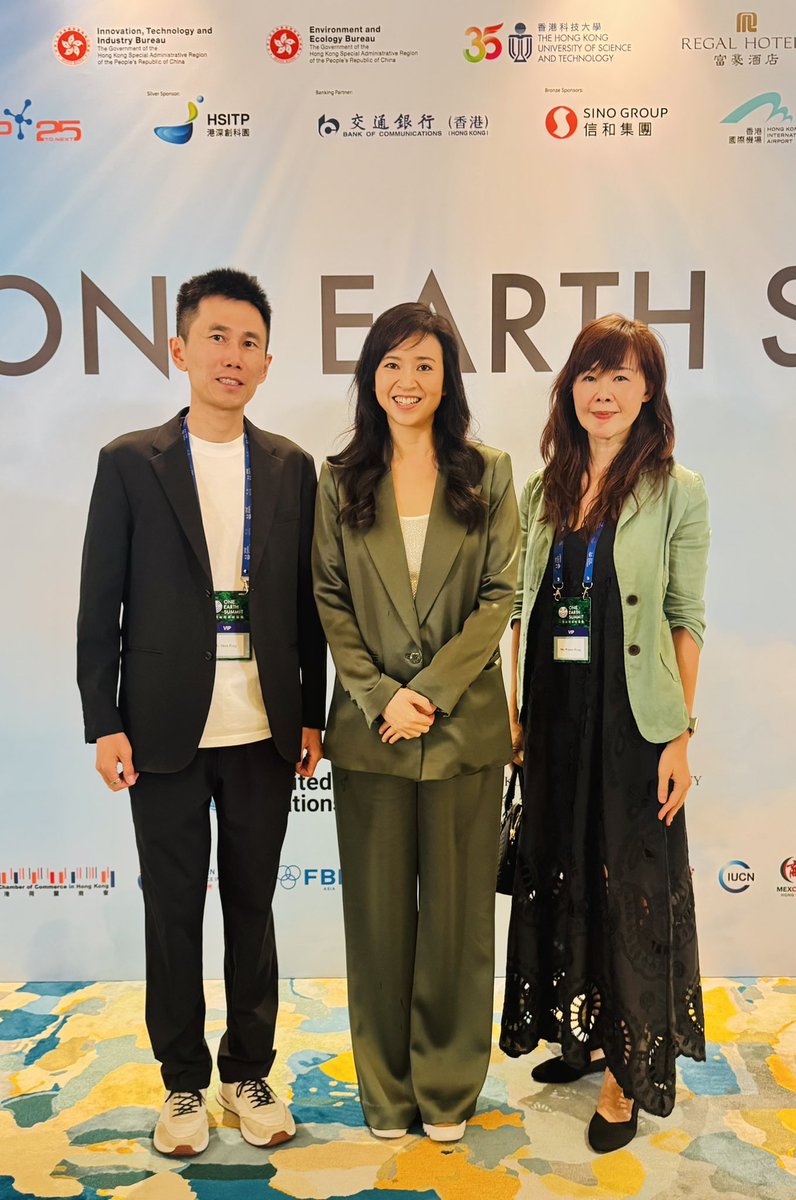
That thought stayed with me at One Earth Summit 2026 in Hong Kong, where I joined the summit and the closed-door luncheon on AI for Collective Flourishing. Welcome remarks were delivered by One Earth Initiatives founder Poman Lo and HKUST Council Chairman Professor Harry Shum (@harryshum).
The real question was not only, “What can AI do?” It was how human wisdom and public values should guide AI—so that capital, technology and cross-sector partnerships can help improve human wellbeing while scaling within planetary boundaries.
One Earth Initiatives founder and @WaterDrop_Inc shareholder Poman Lo put it sharply:
“Sustainability is not an add-on for AI. It is the boundary condition.”
The morning agenda featured Professor Harry Shum, Council Chairman of HKUST, on “AI for Good in the Intelligent Age”: how AI can support human wellbeing and collective flourishing, and how human wisdom can guide AI so that businesses, people and the planet thrive together.
Professor Yang Bin of Tsinghua University (@tsinghua_uni), Vice Chancellor of the University Council and Director of the Institute for Sustainable Social Value, offered a strong education framework. He drew on two questions raised earlier at Tsinghua:
In an April 2026 letter to Tsinghua, Turing Award laureate Andrew Chi-Chih Yao asked: As AI replaces more cognitive work, what must students still learn by walking the hard road themselves?
At a Tsinghua forum on October 9, 2026, Nobel laureate in Chemistry Omar M. Yaghi asked: As AI creates nearly infinite possibilities, what is truly worth choosing?
Yang’s answer: “slow education” and “selection science”—protect what must grow within a person, and decide what deserves to be pursued when possibilities multiply.
Science asks why. Research asks why not. Selection science asks why this.
Tsinghua is exploring a dual-track assessment model that reflects this thinking: a “safe lane” that keeps AI out to build foundations, and an “open lane” that encourages students to use AI to the fullest for real innovation.
Former UNESCO Director-General Irina Bokova’s agenda theme broadened the lens: education, culture and international cooperation remain long-term foundations for responsible leadership and social resilience.
Professor Ya-Qin Zhang, Chair Professor of AI Science and Founding Dean of Tsinghua University’s Institute for AI Industry Research (AIR), focused on scaling AI for good beyond the lab.
The approach of Boon Heong Ng, Executive Director and CEO of Temasek Foundation, adds the capital lens: philanthropic capital can take calculated early risk, back pilots, and help what works scale.
Beyond the luncheon, the day also brought welcome reunions with friends: One Earth Initiatives founder Poman Lo; HKUST Council Chairman Professor Harry Shum; Jeffrey Zhaohui Li, Vice President of @TencentGlobal, head of its investment department and Managing Partner of Tencent Investment; Professor Yang Bin; and Winnie Wong, CEO & Executive Director of Asia Insurance and a Waterdrop partner.
AI expands what is possible. Humans decide what is worthwhile.
Should progress be measured by stronger models and higher valuations—or by how many people truly benefit? And when markets hesitate, should philanthropic capital be more willing to take the first calculated risk?
Many people ask: Where should we draw the line for AI?
The more I think about it, the more I believe AI’s boundaries are not defined only by compute, energy, and data. They are also defined by who gets to benefit—and who gets left behind.
Technology sets the speed. Values set the direction. Partnerships determine how far we can go.
What is one line you believe AI should never cross?