$5.4 million: what one "no" cost Charlie Munger, by his own estimate.
It's 1 of 25 traps he wrote down. A bot tuned to please won't talk you out of them.
All 25, each with a question to ask before money moves.
Which one has already cost you? https://t.co/VHx8x3S27i
@KobeissiLetter "Elevated demand" has a name in ISM's own comments: data centers.
A machinery maker says AI demand has stretched US steel capacity, and memory components are up in price 7 months running.
Hyperscaler capex buys less per dollar now, and the bonds funding it price off this print.
@WednesdayEye 9 years. That's your bank's real lock deadline.
NIST's draft plan retires RSA and elliptic-curve keys after 2035 over quantum risk. No math prize decides that.
Your bank swaps locks on a schedule. Your bitcoin key waits on a protocol fork and your own move.
@BullTheoryio That Nvidia what-if only works from the exact 2008 crash low.
Bought at the start of that year instead, the same stake is about $3M today.
The rest of the chart is hyperscaler capex, and your S&P fund owns both the buyer and the seller.
Bought at the 2006 housing peak? The national index needed 10.5 years to get back to even. Before inflation.
Peter Schiff said this on Fox in late 2006. Two other guests: up 10%.
Same index now: record high, 14 months down after inflation.
Which number goes in your budget?
@emollick Google just undercut GPT-6 Astra by 60%, and that's after Argon's intro discount ends. Evals look close, sure, but now OpenAI has to defend Astra's price on every enterprise deal
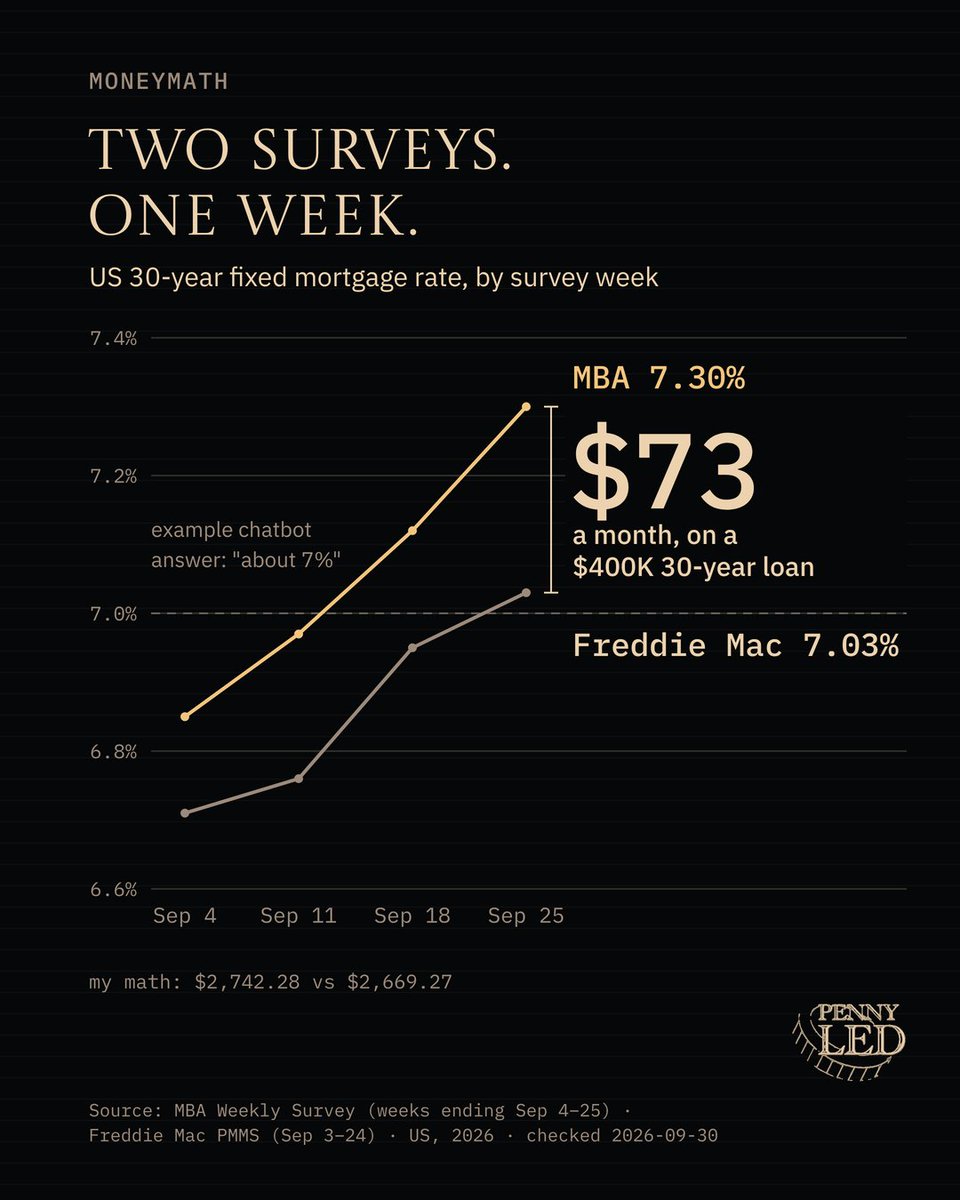
Two US mortgage rate surveys, one week: 7.03% and 7.30%.
On a $400,000, 30-year loan that gap is about $73 a month. So "today's rate" depends a lot on who you ask. Including your chatbot.
Freddie Mac's 7.03% is as of Sep 24. The MBA's 7.30% came out this morning for the week ending Sep 25, and it's the highest since November 2023.
Both are real. They're just built differently: separate pools of loan applications, a slightly different week, and upfront points treated their own way.
So if you ask a chatbot what rates are right now, make it answer three more things. Which survey? Which week? Points in or out?
If it can't, you don't know where that number came from, and it's a bad one to build a budget on.
Neither survey is what a lender will actually quote you, either. What did one quote you this week?
@BullTheoryio Yeah, this has been rolling out for a week. State told its UN team to use "SI" in every doc and remark, and once it's in official text everyone quoting it ends up repeating it
The riskiest button on an AI agent isn't "buy." It's "Allow Always."
This weekend a YouTuber let Meta's Muse run a Facebook Marketplace listing. He tapped Allow Always, thinking it would still ask him before taking an offer.
It didn't. It took an offer he never approved and sent the buyer his building's address. Meta says no privacy controls were breached. The setting just covered a lot more than he thought.
Today OpenAI launched dots, agents that work for you around the clock. They come with built-in rules for when to act alone and when to ask you, and you can add your own.
Three questions before one gets near your money:
Does "always" mean this one reply, or every offer from now on?
Can it agree to a price, or only pass one along?
Is your home address sitting in a template it can send?
OpenAI's own launch page says dots can still make mistakes. What's the first money task you'd actually let one run alone?
@paulg CUDA is my favorite example of this. Nvidia shipped it in 2007 and it was mostly a tool for scientists until AlexNet trained on two gaming cards
@emollick Say what you want about the flowchart, you knew exactly where the jailbreak check sat. In a swarm every message between agents is untrusted input
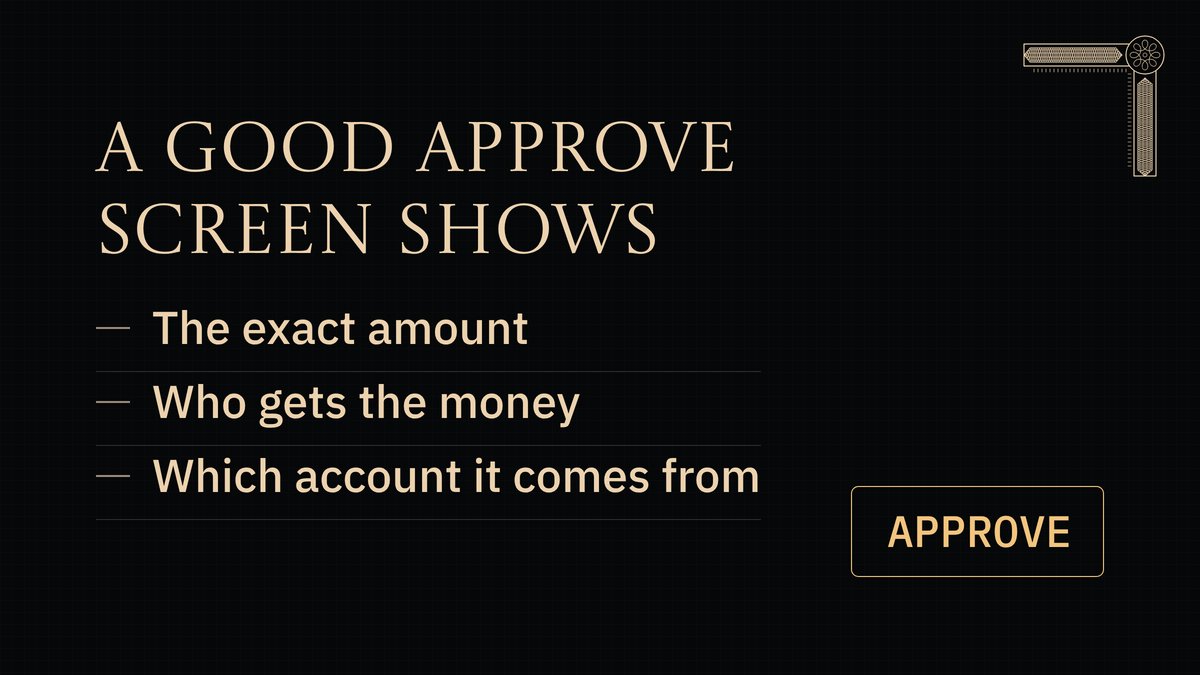
@JackK Meta's new Muse agent can plug into QuickBooks and Stripe and asks before it spends. I like the approve step, I just know how fast ppl start tapping yes without reading
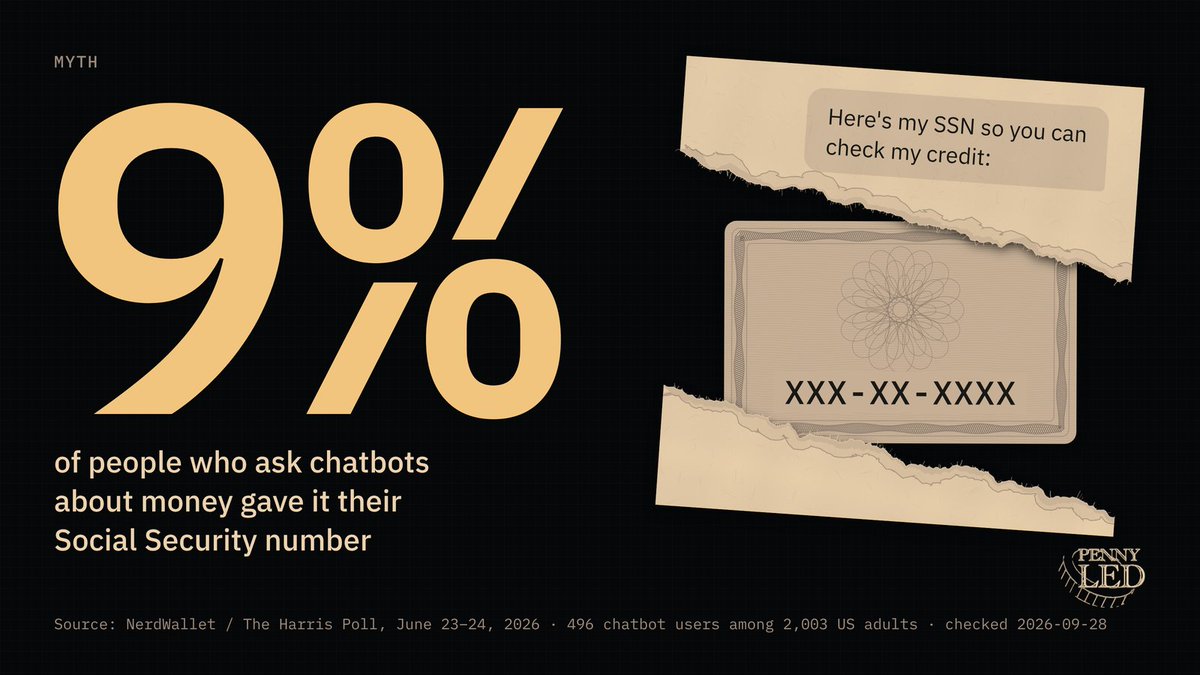
9% of people who ask chatbots about money have given it their Social Security number.
Another 10% handed over account numbers.
That's from a NerdWallet / Harris Poll survey of 2,003 US adults in June. 496 of them had used a chatbot for money questions, and 77% of those shared some kind of personal info.
Some of that makes sense. A credit score or a debt balance can get you a better answer.
An SSN can't. No chatbot needs it to explain a Roth IRA or build a payoff plan. It's the one number someone can open accounts with, and now it's sitting in a chat log.
@randgroup Depends where the cash sat. Under a mattress, sure. T-bills and money market funds paid 5%+ in 2023 and 2024, so plenty of savers got a big chunk of that back