Take your monthly repayment, halve it, and pay that fortnightly. There are 26 fortnights in a year, which works out to 13 monthly repayments instead of 12. And because it’s spread across the year, most people barely notice it.
An extra $400 a month on a typical $810,000 loan saves over $200,000 in interest and five years off the term, per Canstar.
Plus the fortnightly hack that gets you a 13th repayment each year.
The RBA knows the economy is slowing and unemployment is rising. It also knows the rate rises already made take up to a year to be fully felt.
So the risk is that they keep tightening past the point where what they’ve already done was enough to bring demand back into balance.
The heaviest load is falling on recent first home buyers — people who stretched to get in near the top of the market.
They’re sitting on high debt with little equity, house prices are falling, and now repayments are climbing on top of it. All four at once.
Any working-age household with debt is carrying this. And most of them are with banks offering cheaper rates to new customers than to the people who’ve been paying them for years.
The RBA chooses its words carefully, but the message is clear: government spending is adding to demand in an economy that’s already stretched.
Demand is demand, whether it comes from a household, a business or Canberra; when there’s too much of it, the RBA has only one lever.
Unemployment is edging up, but nowhere near the job losses and collapse in spending you’d need before a recession is imminent. That’s why the RBA isn’t forecasting one.
But for Australians, they’re in a household recession already.
Migrants overwhelmingly rent when they arrive. So cutting migration reduces demand for rentals, and all else equal rents should fall.
House prices are also driven by interest rates, tax changes and supply. Migration is one input among several.
Migration grows the economy — more workers, more consumers, higher headline GDP.
But GDP per capita is the number that tells you whether people are actually better off. In Australia it's fallen in 10 of the last 16 quarters
Which number do you think politicians should be quoting?
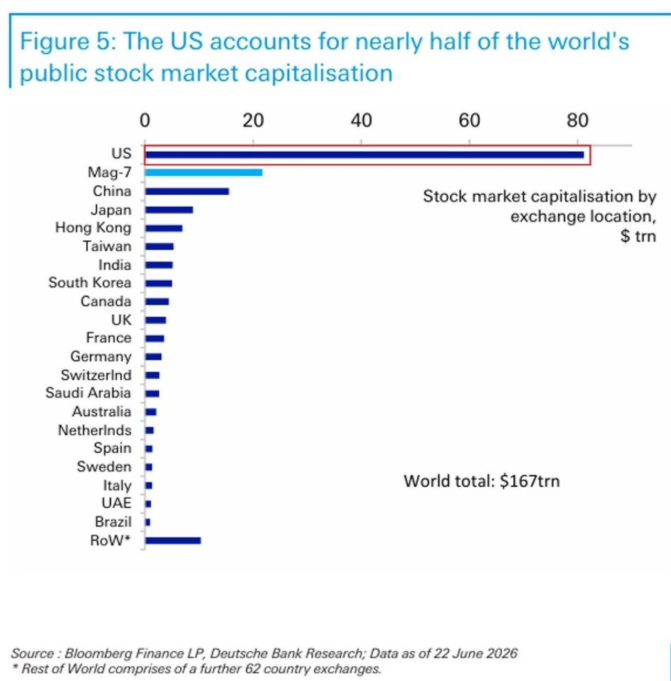
Compared with the rest of the world, the US stock market has never been more dominant - the Mag 7 stocks alone are now larger than China's market value.
When SpaceX is listed, it'll trigger some serious sales from passive index funds who will need to allocate funds to the newest, and likely biggest, IPO in history.