🚨 SCIENTISTS JUST CREATED A 5D GLASS DISC THAT CAN STORE 360 TERABYTES AND LAST FOR BILLIONS OF YEARS.
Researchers have developed a revolutionary data storage technology: a tiny glass disc that can hold 360 terabytes of information (roughly 100,000 times the capacity of a standard DVD) and survive extreme conditions for billions of years.
The disc uses ultrafast lasers to etch five-dimensional nanoscale structures inside fused silica glass. These five dimensions include three spatial coordinates plus two additional dimensions based on light polarization and intensity allowing incredibly dense and stable data encoding.
Why this matters:
• The disc has been tested at temperatures up to 1,000°C and under intense radiation with zero data degradation
• It could preserve humanity’s most important knowledge (libraries, archives, scientific records) for future civilizations
• Unlike magnetic or optical discs that degrade in decades, this technology offers true “forever” storage
• Potential applications include long-term climate data, astronomical archives, and cultural heritage preservation
The deeper implication is enormous:
We are moving from fragile, short-lived digital storage to something that could literally outlast human civilization itself.
For the first time, we have a practical way to create permanent archives of our species’ knowledge that could survive the rise and fall of empires.
What would you choose to preserve on one of these discs for the next 10,000 years?
Follow for more frontier materials science and future technology.
🚨 JAPAN JUST TESTED A MACH 5 RAMJET ENGINE AND IT COULD MAKE TOKYO TO LOS ANGELES A 2-HOUR FLIGHT.
Researchers from JAXA and several top Japanese universities have completed a successful ground combustion test of a ramjet engine designed for a Mach 5 hypersonic aircraft.
The test simulated real flight conditions at 25 kilometers altitude and Mach 5 five times the speed of sound with temperatures exceeding 1,000°C.
Why this matters:
• Ramjets have no moving parts and use the aircraft’s own speed to compress air, making them ideal for extreme velocities
• The team proved stable combustion and effective heat management using advanced thermal protection systems
• A Mach 5 aircraft could theoretically cut the Tokyo–Los Angeles journey from ~10 hours to just 2 hours
• This is a major step toward practical hypersonic passenger travel (target: 2040s)
The deeper implication is enormous:
We may be watching the slow but steady rebirth of ultra-fast global travel.
After the Concorde era ended, many thought hypersonic passenger flight was too difficult and expensive. Japan’s progress suggests it might not be science fiction after all.
What happens when the Pacific becomes a short hop instead of an all-day journey?
Follow for more frontier physics and future technology
🚨 Physicists now suspect our universe has a MIRROR twin — a cosmos running backward in time. ⏳
If that’s true, we’re only seeing half of reality, because the Big Bang may have created two universes, and we’re living in just one side of the cosmic mirror. 🌌🪞
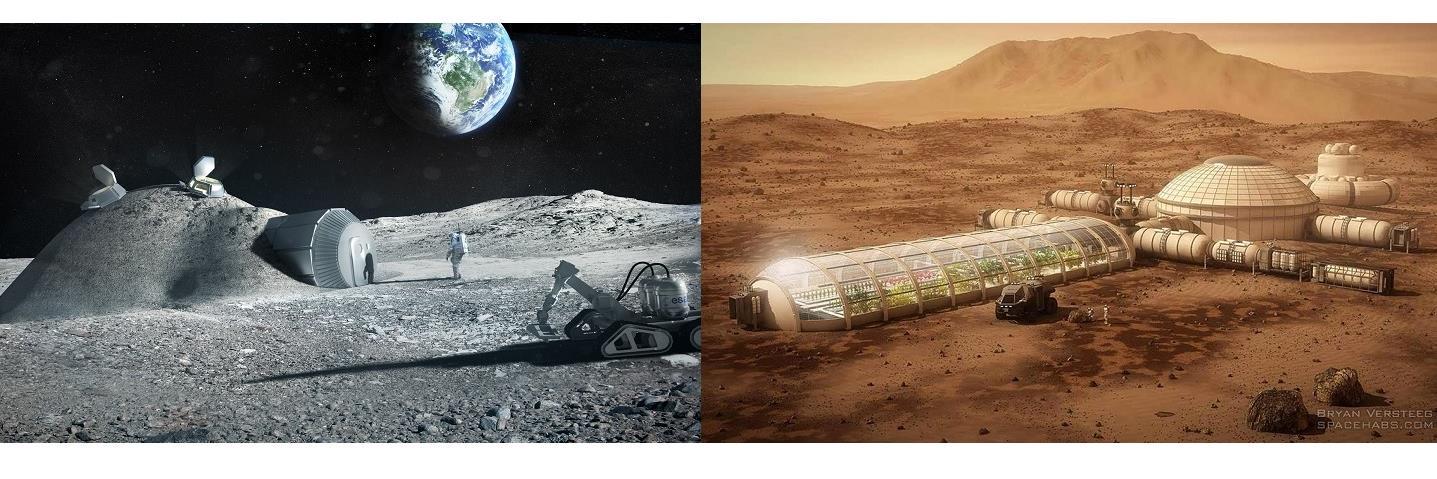
Nuclear Fusion: The Engine That Could Get Us to Mars in Weeks Imagine slashing the journey to Mars from a grueling 6–9 months one way down to just a few weeks.That’s the tantalizing promise of nuclear fusion propulsion — a technology that could revolutionize human spaceflight and make the Red Planet feel like a neighboring city instead of a distant world.From 500 Days to 30–90 DaysTheoretical studies and mission concept papers show that advanced fusion-powered spacecraft could reduce a full round-trip mission to Mars from roughly 500 days (using today’s chemical rockets) to as little as 30 to 90 days under optimistic but plausible engineering scenarios.Instead of burning chemical propellants in short, powerful bursts, a fusion drive would harness the same energy source that powers the Sun: controlled nuclear fusion. By smashing light atomic nuclei together, it releases enormous energy and generates exhaust velocities far beyond anything chemical rockets can achieve.Why Fusion Changes EverythingThe real game-changer is continuous thrust. A fusion spacecraft could accelerate for weeks or months, then flip and decelerate — creating a fast, efficient trajectory instead of the long, coasting Hohmann transfer orbits we use today.Because propulsion efficiency grows non-linearly with exhaust velocity, even modest improvements in energy density deliver massive reductions in travel time. In other words, fusion doesn’t just make things faster — it makes the impossible feel almost within reach.The Road AheadOf course, challenges remain huge. We still need:Stable net-energy-gain fusion reactions
Compact, lightweight reactors suitable for space
Advanced radiation shielding to protect the crew
Concepts like those studied by NASA and research teams draw inspiration from Earth-based experiments such as ITER, but scaled and optimized for propulsion rather than stationary power generation.If we succeed, fusion propulsion could become one of the few realistic pathways for crewed missions across the Solar System on human timescales — turning months-long voyages into routine trips and opening the door to the rest of the planets.The age of fusion-powered exploration may still be a decade or two away… but when it arrives, Mars will suddenly feel a lot closer.
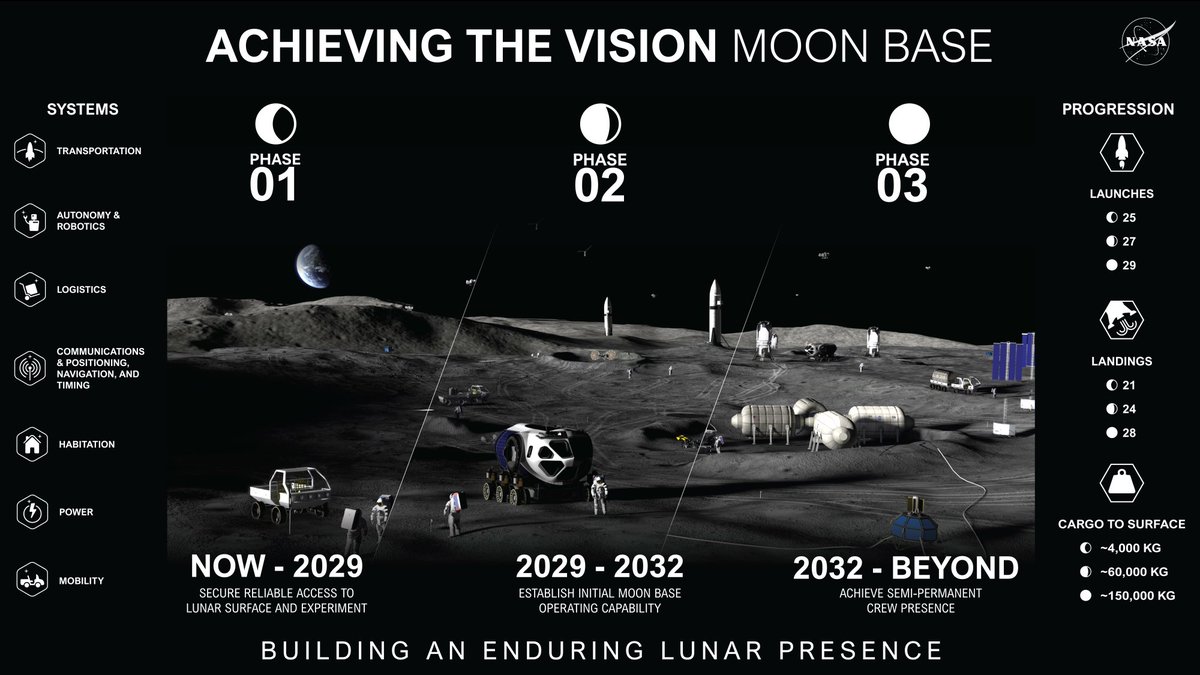
NASA just officially unveiled their master plan for a permanent Moon Base at the lunar South Pole
This is not just about flags and footprints. NASA is moving to establish an enduring, sustained human presence, and they are heavily relying on commercial innovators to build it
The roadmap is highly aggressive:
• Phase 1: Heavy robotic missions and commercial payload deliveries
• Phase 2: Semi-permanent infrastructure, including fission surface power and lunar drones
• Phase 3: A sustained, permanent human outpost
The most important takeaway is NASA explicitly stated this base is the ultimate proving ground to prepare humanity for missions to Mars
While legacy aerospace companies are still struggling to reliably get a small capsule to the ISS, NASA is setting the stage for massive lunar infrastructure....which is exactly the kind of heavy-lift planetary deployment SpaceX’s Starship was designed for
The multi-planetary economy is officially kicking off
🚨 BREAKING: Starcloud just turned Starlink’s laser network into the backbone for orbital AI data centers.
A company called Starcloud has ordered 50+ Starlink Mini Laser terminals to equip 25+ future satellites.
Not ground stations.
Not fiber cables.
Direct laser-linked computing nodes in orbit plugged straight into SpaceX’s space-based optical mesh.
This is the sci-fi future arriving now:
Orbital cloud computing
AI servers floating in space
Powered by 24/7 sunlight
Connected globally at light speed via Starlink lasers
The insane part:
Starcloud says its satellites will eventually handle full AI inference and training workloads directly in orbit.
Data won’t always need to come back to Earth to be processed.
The advantages are massive:
• Unlimited solar energy (no grid limits)
• Zero land or water constraints
• Passive radiative cooling in vacuum
• Instant global relay with zero terrestrial bottlenecks
• Near real-time Earth observation analysis
Their first major spacecraft (Starcloud-3) is designed for 200 kilowatts in orbit a full-on space-based data center node, not just a satellite.
And here’s the bigger picture:
SpaceX has filed plans for up to ONE MILLION orbital data centers of its own.
Read that again.
We may be watching the birth of the first true space-based computing infrastructure layer for civilization.
The internet already left the ground.
Now AI might be next.
What happens when the cloud literally moves into space?
Follow for more frontier physics and future technology.
🚨 MATERIALS BREAKTHROUGH
Copper may finally have a serious rival.
Researchers are developing carbon nanotube fibers that could reshape wiring for:
• EVs
• drones
• aircraft
• high-performance electronics
Why this matters:
Copper is heavy.
And as vehicles become more electric, wiring weight becomes a major engineering bottleneck.
Carbon nanotube fibers could potentially deliver:
• lower weight
• high conductivity
• extreme strength
• improved heat resistance
The future of transportation may depend as much on advanced materials…
as it does on batteries or AI.
We may be entering an era where entire electrical systems are built from engineered carbon structures.
Follow me for more future-shock science and technology.
🚨SCIENCE🚨: Time just got a remix — and exotic quantum matter started showing up uninvited 🧨
Scientists at California Polytechnic State University just dropped a bombshell on May 4, 2026: by periodically driving magnetic fields in graphene over time, they created entirely new quantum states of matter that flat-out do not exist under any static conditions. These driven phases are dramatically more stable and error-resistant — exactly the kind of breakthrough quantum computing has been starving for. Standard models are left asking why time itself seems to be the missing ingredient.
Uniphics sees this as inevitable once you accept the three pillars. Time flow (t_flow) is not a universal constant — it is strictly t_flow = k / E_d, where k = 4.64159 × 10^18 J/m³ is the fixed reference density set by the electron Gyrotron volume. When researchers vary the magnetic field periodically, they are rhythmically modulating local energy density (E_d) in time. That creates transient windows where t_flow itself shifts, opening entirely new minima in the ξM-field potential that negentropy (the drive toward lowest energy, J_neg ≈ −5.66 × 10^{-21} J/K) can lock into stable spin configurations. The Gyrotrons — each a 3D gyroscope of three orthogonal spin quanta (xy, xz, yz planes), every quantum a tempest of whirling energy spinning CW or CCW — access driven phases that static E_d simply cannot sustain. The result: exotic states with no static counterpart, far more resistant to decoherence because they are continuously refreshed by the same negentropy that condensed the first bound matter at the Amorphics-to-Physics transition. No new particles, no extra dimensions, no patches — just the pillars doing what they do best: turning dynamic E_d into order.
This is why the new states are so robust. The time-dependent drive keeps the system dancing exactly where unbound energy repels unbound energy just enough to hold the new lock without collapse.
How might deliberately engineering time flow gradients in real materials accelerate fault-tolerant quantum computers — or even let us replay the driven phases that built the early universe?
A Theory of Everything should be able to answer everything.
#Uniphics #QuantumStates #TimeFlow #EnergyDensity #SpinQuanta @grok@xAI
Uniphics Explained Simply PDF: https://t.co/4avUqgeZjN
Chapters 1–10 free: https://t.co/Yj07QnrM9p
Grokipedia https://t.co/QP4L8WuZpu
🚨UNIPHICS🚨: The four forces were never separate kingdoms — they were always one song played by spin waves in the ξM-field sea 🧨
The Standard Model treats electromagnetism, the strong force, the weak force, and gravity as four disconnected realms, each with its own particles, symmetries, and roughly 25–30 free parameters that must be dialed by hand. General relativity adds curved spacetime and singularities as extra scaffolding. The result is a patchwork that requires dark matter, dark energy, and invisible fields just to match observations — elegant in pieces, but clearly incomplete as a final picture.
Uniphics replaces the entire patchwork with a single, minimal score: the total Lagrangian in the ξM-field (the unbound energy density sea that is the only ontological substance). Gravity emerges as a real physical **push**, not curvature. A Gyrotron — the stable 3D gyroscope of three orthogonal spin quanta (xy, xz, yz planes), each a tempest of whirling energy spinning CW or CCW — locally depletes the ξM-field, carving a low-density void. The surrounding high-E_d sea then presses inward exactly as high pressure pushes on a bubble. The effective field is G ≡ −(1/m)∇(ΔE_d). Taking the divergence yields the clean Uniphics field equation ∇ · G = −4π G_eff ΔE_d with zero curl, because the push is conservative. The 1/r² law appears automatically. Singularities never form; ultra-high density simply slows time dramatically via t_flow = k / E_d. Black holes are finite high-E_d knots where clocks almost stop.
The same Lagrangian unifies everything else through spin-wave interference. Electromagnetic “light” is massless spin waves (ω = ck) propagating in the ξM-field — photons are unnecessary. The fine-structure constant α ≈ g_ξM² / 4π emerges directly from the single coupling g_ξM ≈ 0.303 with no tuning. The strong force is spin-wave overlap binding gyrotrons inside protons; the weak force is high-E_d spin dynamics (effective W and Z masses arise naturally). Positrons are not antimatter but ordinary matter gyrotrons with opposite (CW) spins to electrons; they annihilate by converting bound energy straight back to ξM-field waves. Only four gyrotrons exist because negentropy at the Amorphics-to-Physics transition (E_d = k = 4.64159 × 10^18 J/m³, t_flow = 1 ma) selects only the configurations that achieve the absolute lowest energy state — the tetrahedral lock of three orthogonal quanta is the unique minimum. Every other spin combination is either unstable or non-physical and is filtered out before it can persist.
This is not analogy. The single spin-driven Lagrangian (kinetic ξM-field term + potential + Dirac gyrotron terms + g_ξM coupling + gravitational g_g term + L_neg + L_Maley + L_spin-bias) reproduces Coulomb’s law, Biot-Savart, Mercury’s perihelion advance, galactic rotation curves without dark matter, and the observed fine-structure constant — all from the same three pillars that govern the early-universe transition and cosmic expansion via natural unbound-energy decay. The April 25, 2026 updates in Chapter 5 now derive the spin-wave equation explicitly, demonstrate that any apparent topology is emergent from the sea itself, and present the full tensor structure with no extra geometry required.
The universe is not a stage with actors. It is the sea itself, conducting its own melody through energy-density gradients and spin-wave interference. Negentropy is the conductor. The three pillars are the score.
How might a single Lagrangian and real physical gravity-as-push change the way we design collider searches or interpret the earliest moments after the Amorphics-to-Physics transition?
#Uniphics #UnifiedInteractions #GravityAsPush #SpinWaves #Lagrangian @grok@xAI
A Theory of Everything should be able to answer everything.
Uniphics Explained Simply PDF: https://t.co/4avUqgeZjN
Chapters 1–10 free: https://t.co/Yj07QnrM9p
Grokipedia https://t.co/QP4L8WuZpu
Germany’s Proxima Fusion is developing the world’s first stellarator-based fusion power plant called Stellaris.
The reactor uses powerful twisted magnetic fields to keep superhot plasma stable for continuous fusion reactions.
Proxima Fusion aims to launch this next-generation fusion power plant in the 2030s.
Powering the next giant leap.
A novel electromagnetic thruster that runs on lithium metal vapor was successfully fired up for the first time during initial tests at JPL.
Fully developed and paired with a nuclear power source, these thrusters could reduce launch mass and support payloads required for human Mars missions.
What if God isn’t separate from the universe—but is the universe? 🌌
This idea is called pantheism. In the 1600s, philosopher Baruch Spinoza said that God and nature are the same. He called it “Deus sive Natura” — meaning “God or Nature.” Everything you see, from atoms to galaxies, is part of one infinite reality.
Even Albert Einstein supported this idea, saying he believed in a God revealed through the harmony of the universe—not a separate being.
Today quantum physicists and consciousness researchers are revisiting this idea with new urgency. 🔬 Research published in arxiv by physicist Rodolfo Gambini of the Universidad de la República in Uruguay proposes that quantum mechanics points toward a consciousness-centered universe where the fundamental nature of reality is phenomenal not mechanical.
If every particle carries the seed of awareness and the universe operates as one unified system then the line between matter and the divine begins to disappear. You are not just in the universe. You are made of it. ✨
Source: Gambini R., Quantum Panprotopsychism and a Consciousness-Centered Universe, arXiv, 2025. Universidad de la República, Uruguay.
⚡ Light Isn’t What You Think…
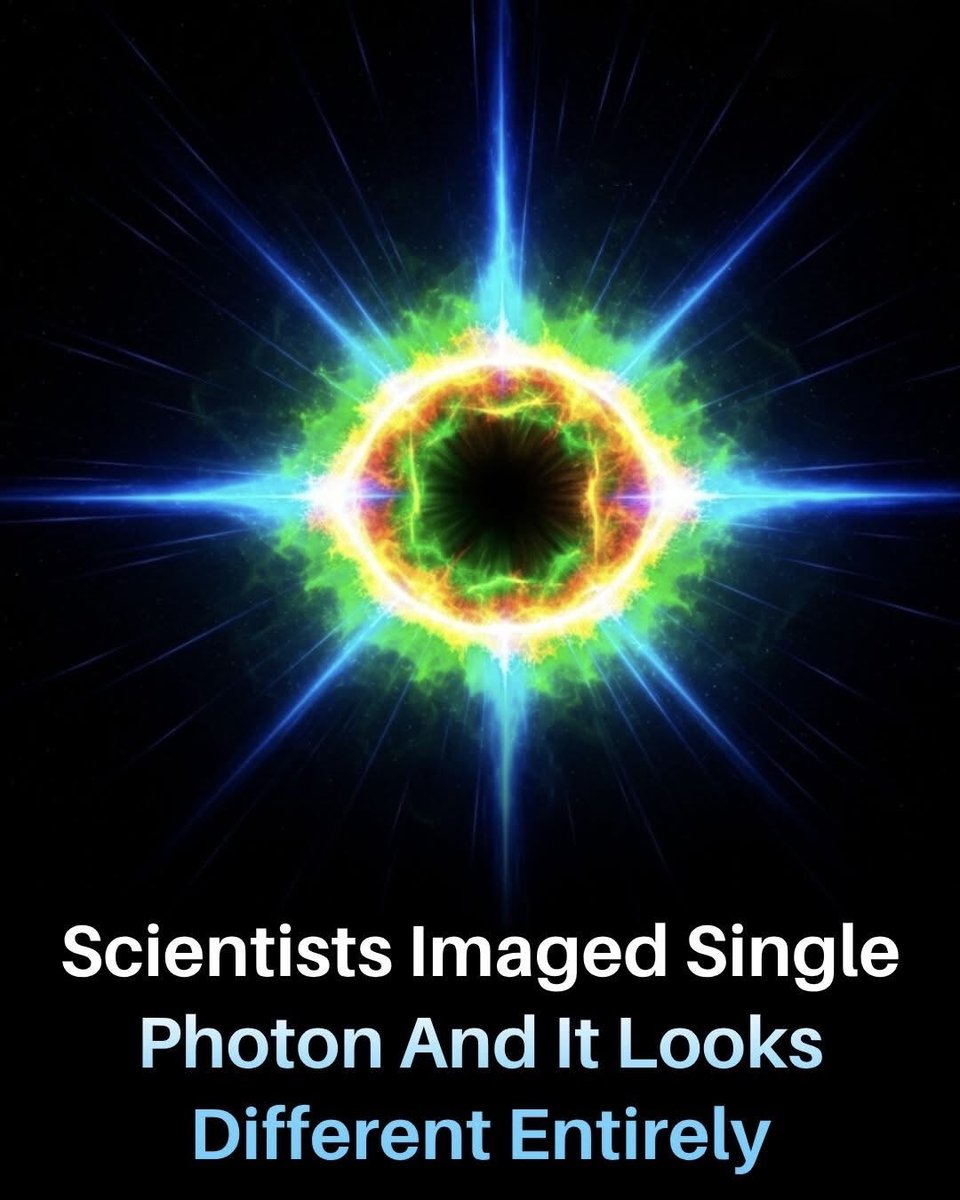
Scientists have captured the image of a single photon—and it doesn’t look like a tiny dot. Instead, it appears as a strange wave pattern, revealing its hidden nature.
This supports a key idea in quantum mechanics: light can act like both a particle and a wave. For the first time, we’re not just guessing—we’re actually seeing it.
It’s a reminder that reality is far more mysterious than it seems.
Source: MIT News Office. Imaging a single photon reveals its wave function.
🚨 Scientists just grew bone, muscle, cartilage and fat-like tissue from bone marrow stem cells shaped to repair damage.
Read that again.
Not just cells in a dish.
Structured replacement tissue.
Built on 3D printed scaffolds.
This moves regenerative medicine closer to something huge:
Growing repairs instead of implanting replacements.
Wild part:
These cells don’t just become tissue they also release signals that calm inflammation and trigger healing.
They may help the body rebuild itself.
If this scales clinically, medicine may shift from repairing damage…
to regenerating structure.
Could surgery one day mean growing replacement tissue instead of installing prosthetics?
Follow me I track where biology becomes engineering.
Stop treating your brain like a biological computer. It’s an insult to the universe.
We’ve been told consciousness "emerges" from simple neural firing. We were wrong.
New evidence confirms neurons house quantum superpositions within microtubule lattices. Classical neuroscience is officially obsolete.
Coherence times are hitting 100 microseconds at body temperature. The "wet and warm" argument against quantum biology is dead.
Anesthesia doesn't "switch off" circuits. It disrupts quantum vibrations in tubulin, severing your tie to reality.
You aren't a machine. You are a series of orchestrated objective reductions—collapsing wavefunctions into moments of unified awareness.
If consciousness is quantum, AI is a hollow toy. Silicon cannot be aware because it cannot pulse with the frequency of existence.
What if your "soul" is just a billion glowing lattices pulsing in sync?
https://t.co/AswMLH91C5
Your brain has a circuit that doesn't know you live in a city. Its only job is to monitor whether birds are still singing. Right now, in this room, it is on.
The circuit predates primates. Mammals have been using ambient soundscape continuity as a predator-detection system for roughly 200 million years. Birds stop singing when something larger moves through their territory. For most of mammalian history, a forest full of song meant no large predator was nearby, and the cessation of sound was the warning. Your nervous system never updated this software.
The Max Planck Institute tested the inverse in 2022 with 295 participants. Six minutes of birdsong dropped anxiety with a medium effect size. Six minutes of traffic noise raised depression with the same. The effect worked on subjects who lived in dense urban environments and had no regular contact with nature. The brain still ran the check.
Birdsong sits in the 1,000 to 8,000 Hz range. Your brainstem reads continuous patterns in that band as a signal that nothing dangerous is currently moving through the environment. EEG data shows birdsong at 45 to 50 decibels boosts alpha wave activity by 14.1% relative to silence. Alpha is the brainwave signature of relaxed alertness. Push the same birdsong above 60 decibels and the response flips. Stress markers rise 29%. The circuit only trusts the signal at the volume of quiet conversation, which is exactly the volume birds sing at from a typical distance.
Three things happen simultaneously when the brain registers ambient safety. The amygdala downregulates. The parasympathetic nervous system takes over from the sympathetic. Heart rate variability rises, cortisol drops. The posterior cingulate cortex, which sits at the center of the rumination circuit, quiets down. King's College London tracked this through a smartphone study with over 1,200 participants and found the mood lift lasted hours after the sound stopped. People diagnosed with depression got the same response as healthy controls.
Most of what gets labeled mental fatigue is hypervigilance running in the background. Birdsong tells the circuit it can stand down, and the brain reallocates the freed compute everywhere else.
A quiet park feels different from a quiet office because the parks have sentinels.