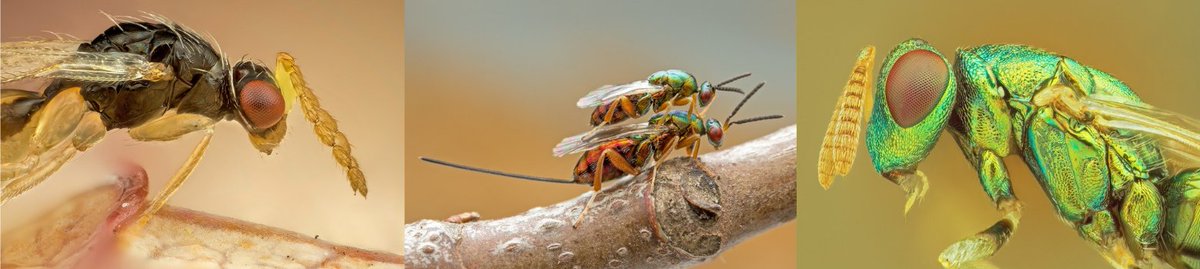
Cool!!! @zefrank features some of our lab's work on gall wasps & their parasitoids! The last time they featured our work, the video got over 1.7 million views! #biodiversity@RiceUniversity (cc-@FuSchmu)
"True Facts: Parasitoid Wasps" https://t.co/L9XkyflKEN via @YouTube
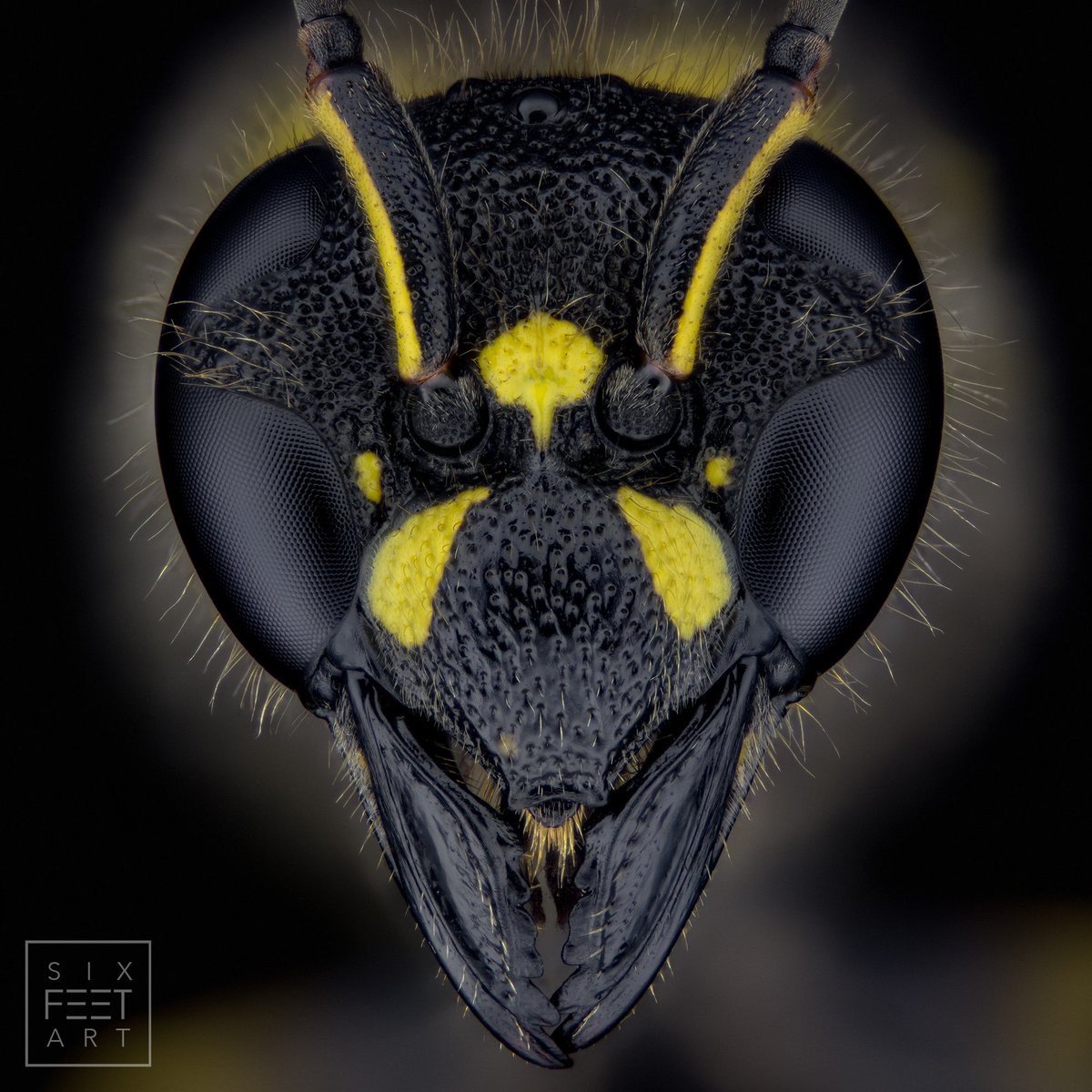
🇬🇧Potter wasp, Ancistrocerus sp. These wasps of the genus Ancistrocerus belong to the solitary potter wasps. Unlike their more social relatives, such as the common wasp or hornet, they live alone and do not build large nests. They hunt alone and take care of their offspring by themselves. Ancistrocerus wasps paralyze small caterpillars, beetle larvae, or spiders to store them as food for their larvae.
🇩🇪Lehmwespe, Ancistrocerus sp. Diese Wespen der Gattung Ancistrocerus gehören zu den solitären Faltenwespen. Im Gegensatz zu ihren sozialeren Verwandten, wie der Gemeinen Wespe oder Hornisse, leben sie allein und errichten keine großen Nester. Sie jagt allein und kümmern sich selbst um den Nachwuchs. Ancistrocerus-Wespen betäuben kleine Raupen, Käferlarven oder Spinnen, um sie als Futter für ihre Larven zu lagern.
#Ancistrocerus #wasp #wespe #hymenoptera #portrait #insects #entomology #wasps #potterwasp
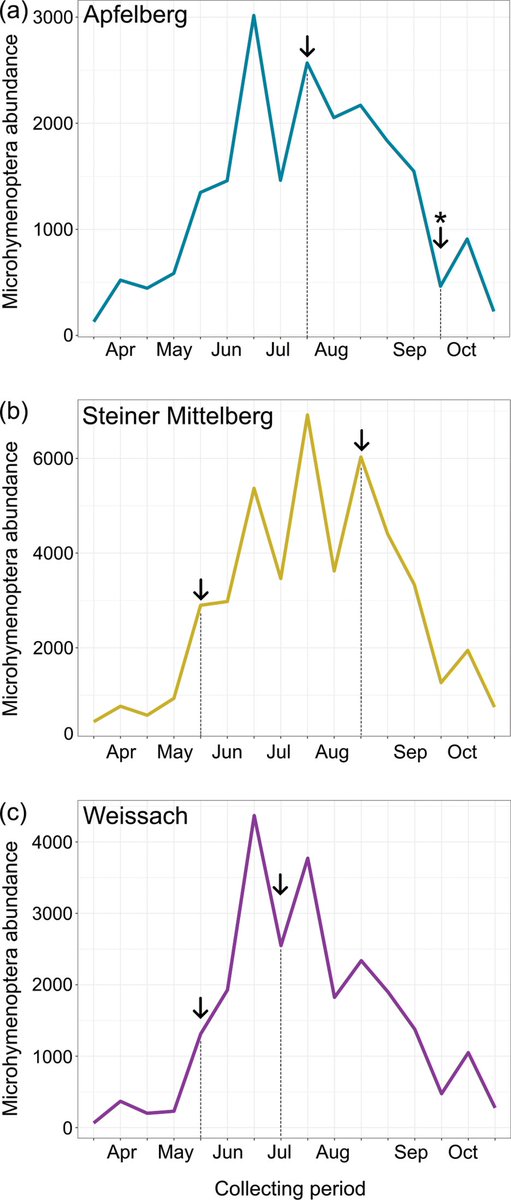
Researchers highlight the impact of insect decline on the abundance and diversity of microhymenoptera, which are important for maintaining #ecosystem health but often overlooked in monitoring efforts.
🔗 https://t.co/PVrqketbDp
#Hymenoptera#biodiversity
#PhDposition in #biochemistry
Apply for a PhD position in the Robert Hanus Group (Chemistry of Social Insects) @IOCBPrague@CzechAcademy, funded by the #MSCADoctoralNetwork 'ModBioTerp': https://t.co/UlP5XHuuDw
The project "Evolution of Terpenoid Biosynthesis in Insects" is focused on the functional characterization of a set of insect terpene synthases from unrelated insect clades and defining their common and idiosyncratic structural features acquired during their multiple independent origins.
Please note: Students coming from Czech universities are not eligible for this position.
The life strategies of #parasitoids are stunningly diverse, but no wasps that attack and develop inside adult flies have ever been described. Our article describes the first one. Its hosts: Drosophila melanogaster and other species of #Drosophila#Entomology#Braconidae
PhD IN AMBROSIA BEETLE SYSTEMATICS!
A fully-funded degree available at the University of Florida Forest Entomology Lab. This is a part of our 4-year NSF funded project, based on the main UF campus in Gainesville, FL. Please share widely https://t.co/I9vDhFk1MU
Nejhorší není, že ničíme poslední kouty české přírody. Nejhorší je, že ničíme poslední kouty a ještě za to platíme horentní částky, protože si někdo na @SPUvCR opravdu upřímně myslel, že tím pomůžeme přírodě.
PhD position on tripartite interaction of termites, termitophilous rove beetles, and microbes at the Institute of Entomology, Ceske Budejovice, Czechia. Co-supervised by me and Thomas Bourguignon @tom_oist. Thanks for sharing! https://t.co/zn0xc7hVIy
Cheers,
Ales
We are hiring! 🌟
Two PhD positions opened on species diversification and evolution of hymenopteran parasitoids in multi-trophic systems. Join our team at Charles University, Prague, Czech Republic 🇨🇿. Happy for retweets! Details: https://t.co/eF6mf0aH83