A little bear carved from amber some 6,000+ years ago! 🐻❤️
A hole through the torso suggests it was worn or suspended from a cord.
National Museum in Szczecin, Poland 📷 by me
#Archaeology
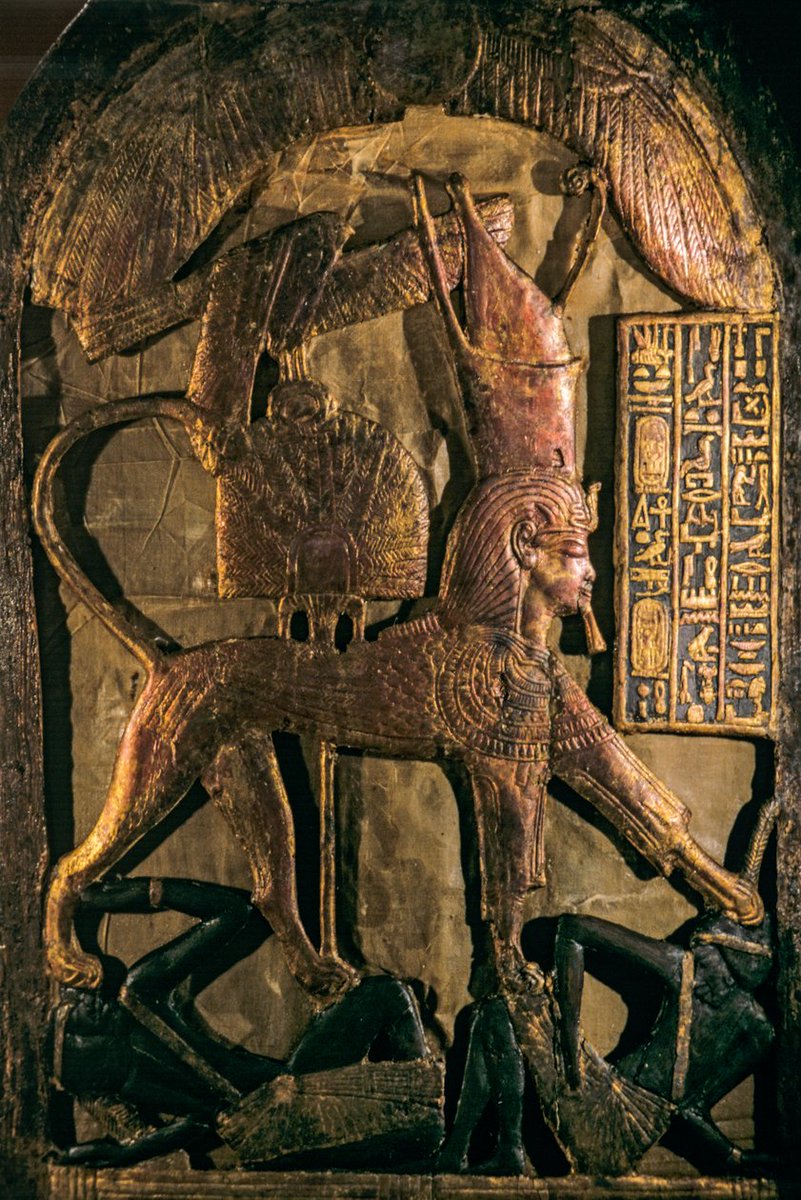
Ceremonial shield depicting Tutankhamun as a Sphinx Trampling the Enemies of Egypt
New Kingdom, late 18th Dynasty, reign of Tutankhamun, c. 1332–1323 B.C.
Fashioned from wood, covered with stucco, gilded and inlaid with ebony, this ceremonial shield transforms Tutankhamun into a human-headed sphinx, crowned as ruler of Upper and Lower Egypt. Beneath his powerful leonine body lie two defeated southern enemies, representing Nubia and the lands beyond Egypt’s southern frontier.
The image was not intended as a record of a particular battle, but as an idealised expression of kingship, showcasing the pharaoh eternally subduing the forces that threatened Egypt and maintaining divine order. Above, the winged sun-disc and a falcon grasping the protective shen sign proclaim the king’s divine protection and enduring sovereignty.
From the Tomb of Tutankhamun (KV62), Valley of the Kings, Thebes. Now at the Grand Egyptian Museum, Giza.
Photograph by Kenneth Garrett
Read more: https://t.co/ZDdmQCveEn
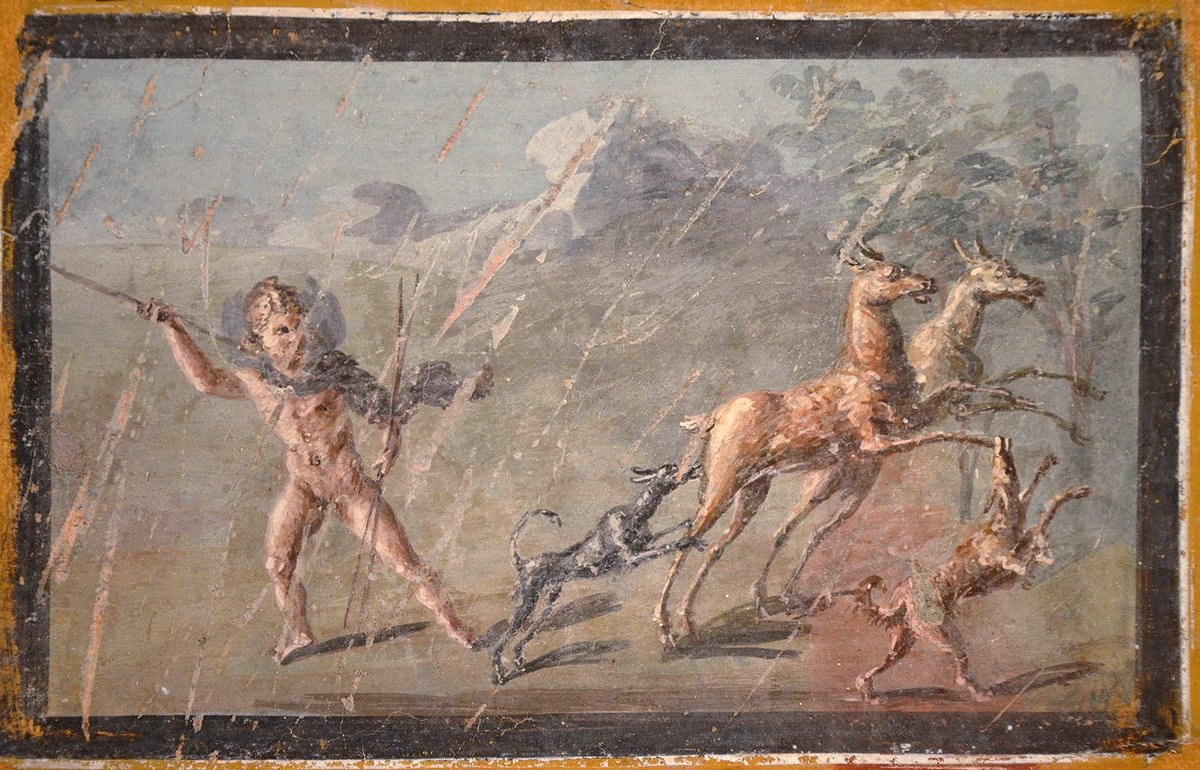
#FrescoFriday – Fresco depicting a Cupid hunting deer, from the cryptoporticus of the House of the Deer (Casa dei Cervi) at Herculaneum. Armed with a spear, the winged Cupid pursues two fleeing deer with hunting dogs.
The luxurious house takes its modern name from the famous marble sculptures of deer attacked by dogs found in its garden.
Trajan was born today 53AD. He presided over the greatest military expansion in Roman history, leading the empire to attain its maximum territorial extent by the time of his death
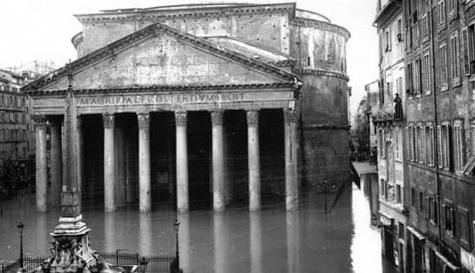
Flooding of the Pantheon in 1870.
The Tiber was once known for its floods — the Campus Martius is a flood plain and would regularly flood to a depth of 2 metres. The floods of the Tiber caused considerable damage. From Augustus to Aurelian attempts were made to limit or manage the floods, with limited success. The river is now confined between high stone embankments which begun in 1876.
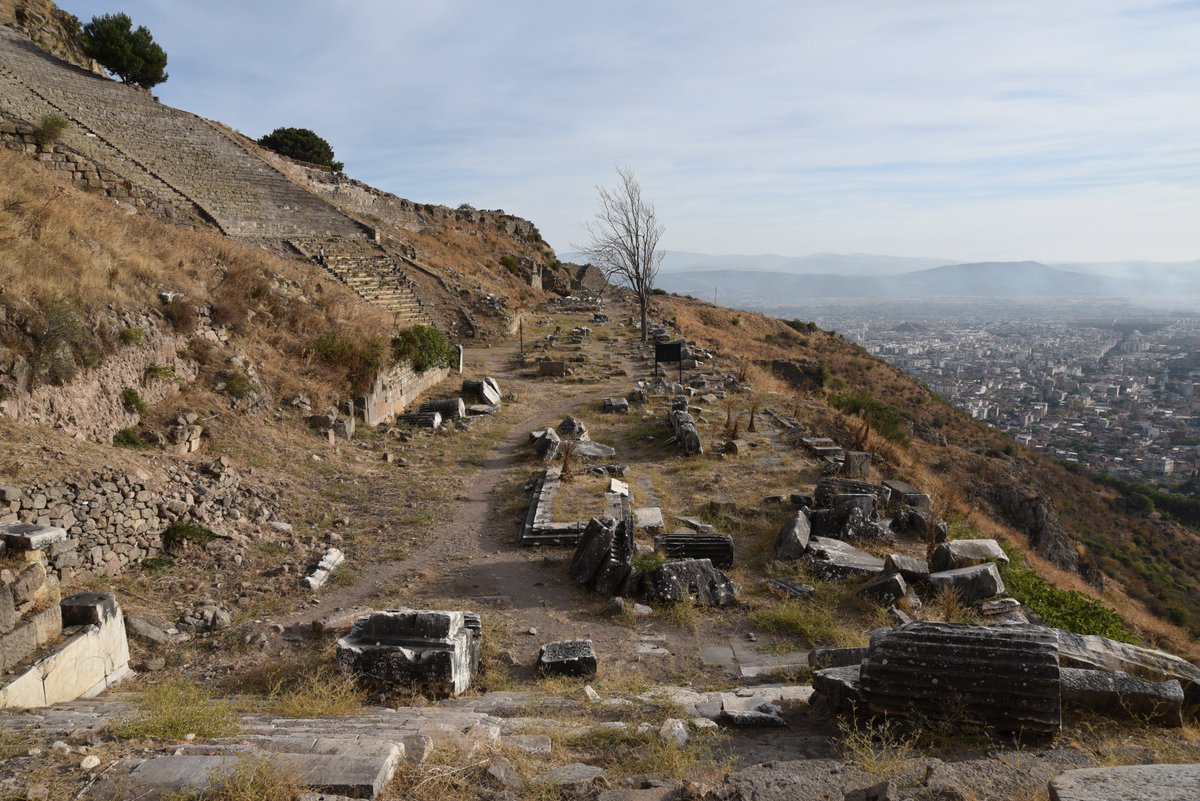
#TempleTuesday - The so-called Caracalla Temple on the Acropolis of Pergamon, a Roman temple built atop a Hellenistic structure at the end of the theatre terrace, traditionally attributed to Caracalla but actually dedicated to Hadrian and Sabina.
The original Hellenistic temple, likely dating to the 2nd century BC and probably dedicated to Dionysos, was largely destroyed, possibly by fire, at an uncertain date before the Roman imperial reconstruction. Of the original Hellenistic temple, only the foundational substructure, parts of the cella walls, some paving, and a few undecorated blocks and water spouts remain. Most of the visible architectural decoration and the temple's front date to the Roman reconstruction.
Traditionally, the temple was attributed to Emperor Caracalla based on a reconstructed dedicatory inscription, but this attribution was controversial because architectural features suggest a different date. The key evidence is a two-line dedicatory inscription in gilded bronze letters (litterae aureae) on the temple's architrave blocks. Scholars have debated the inscription's reading and interpretation for over a century. The new reading conclusively identifies the dedicatees as Hadrian and his wife Sabina, not Caracalla.
The dedication has been associated with an imperial visit in AD 124 and with Pergamon's elevation to the rank of metropolis. The dating remains disputed, however. Other scholars argue that the titulature of the imperial couple, particularly Sabina's designation as Augusta, requires the dedication and the granting of the metropolitan title to be placed instead during Hadrian's visit in the summer of 131.
Flooding of the Pantheon in 1870
The Tiber was once known for its floods — the Campus Martius is a flood plain and would regularly flood to a depth of 2 metres. The floods of the Tiber caused considerable damage. From Augustus to Aurelian attempts were made to limit or manage the floods, with limited success. The river is now confined between high stone embankments which begun in 1876.
#ReliefWednesday - Marble relief depicting Antinous as Silvanus, harvesting grapes with a dog at his side. Antinous wears a pine wreath and the exomis (Greek tunic) and carries a pruning hook. The maker's name is inscribed on the altar: 'Antonianos of Aphrodisias made this'.
un café tradicional o kafeneio griego llamado «ΚΑΦΕ-ΜΠΑΡ Η ΑΛΕΞΑΝΔΡΕΙΑ» (Café-Bar Alejandría), regentado originalmente por griegos procedentes de Egipto. El letrero sobre la puerta principal muestra los nombres de sus antiguos propietarios.
Fotografías antiguas de Grecia
@TodayinHistory The Wealth and Power of Augustus Caesar - The Richest Man That Ever Lived - Read the article at https://t.co/bEpbAhrw3E
Follow for more on the Romans at @romanhistory1
.مبخرة من العهد السومري خاصة بـ نيرلاا زوجة الملك كوديا وكانت مخصصة لتبخير القرابين الممنوحة للآلهة للحفاظ على حياة ملك لكش
2100 ق.م عثر عليها في ذي قار جنوب العراق
A little Roman bronze dog affectionately known as the ‘Chesters Scottie dog’ 🐾
This lovely figurine was found at Chesters Roman fort on Hadrian’s Wall. You can meet this good boy at the site museum!
📷 English Heritage https://t.co/GdXN87xIz3
#RomanFortThursday#Archaeology
Tomb of Menna, c. 1419–1370 B.C.
A moment of quiet humanity unfolds beneath the soft shade of a tree. At the right stands an older labourer, leaning thoughtfully upon his staff, his wispy “horseshoe” halo of hair painted with such tenderness that one can almost feel the afternoon heat lifting from his scalp. He gazes ahead with the weary dignity of a man who has seen many harvests come and go.
Beneath the tree, two field hands rest from the toil of gathering grain. One sat upon his stool, flute poised to his lips, sending a small ripple of music into the field. The other hunches forward, elbows on knees, wearing a look of quiet melancholy; as though pondering life, dust, and the eternal rhythm of the seasons.
Painted in the Tomb of Menna, “Overseer of Fields of Amun and Scribe of the Lord of the Two Lands”, this gentle vignette reminds us that even amidst the grandeur of New Kingdom statecraft, the true heartbeat of Egypt lay in its fields, its labourers, and its fleeting moments of rest beneath a painted tree.
#ancientegypt #egypt #history #art
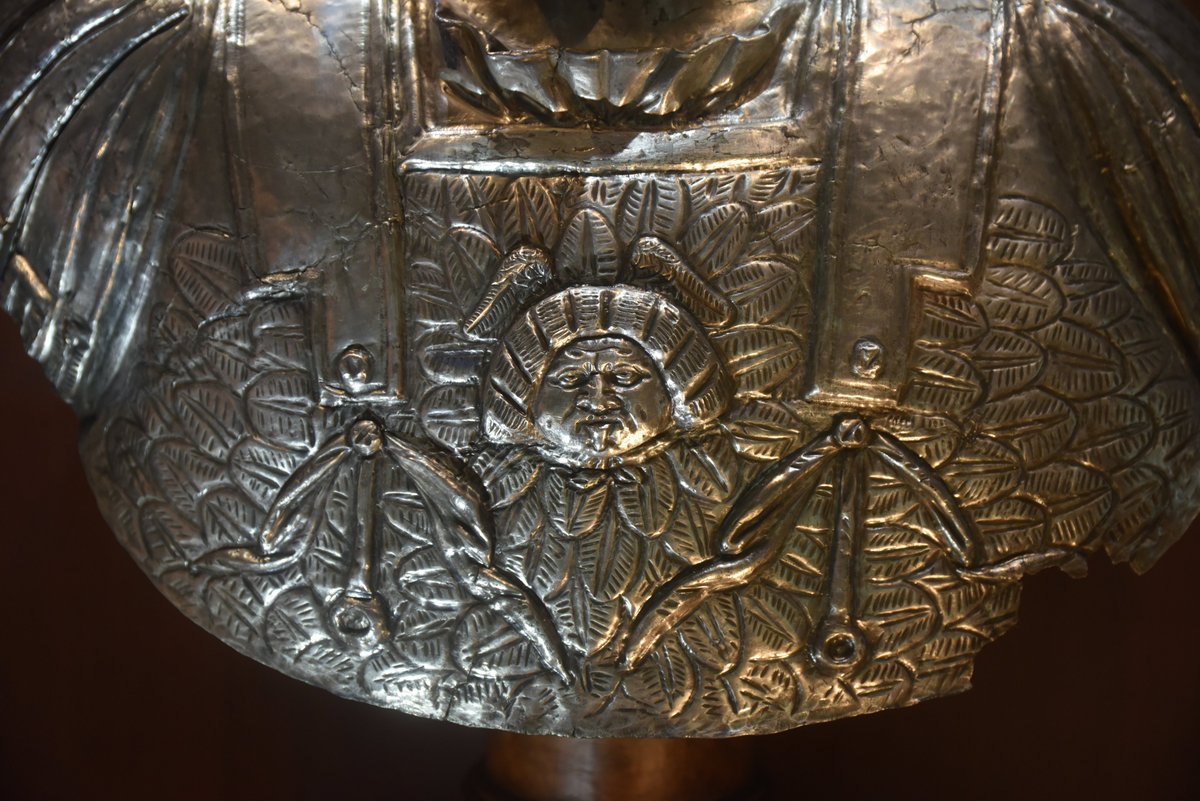
#PortraitThursday - This remarkable silver bust portrays the Roman emperor Lucius Verus (r. AD 161–169). Crafted from a sheet of silver using the repoussé technique, it preserves a strikingly realistic image of the emperor, complete with his thick, curly hair, slightly asymmetrical eyes, and prominent aquiline nose. Unlike the idealised portraits often created for Roman rulers, this work emphasises individual features and imperfections, lending it a rare sense of personality and authenticity.
The bust was discovered near Spinetta Marengo in northwestern Italy, crushed, and was carefully restored in 1936. Its cuirass is decorated with the aegis and the head of Medusa (gorgoneion), symbols associated with Jupiter and reserved for imperial imagery. Originally attached to a wooden core with nails, the portrait may have been displayed in a shrine dedicated to the imperial cult or used in ceremonial and military contexts.
“When they come, the barbarians will make the law.”
– C.P. Cavafy, “Expecting the Barbarians”, translated by Marguerite Yourcenar and W.H. Auden.
#poetry#cavafy
Arena in Pula
The Arena in Pula, Croatia is the only remaining Roman amphitheatre to have four side towers and with all three Roman architectural orders entirely preserved. It was constructed in 27 BC – 68 AD and is among the world's six largest surviving Roman arenas.