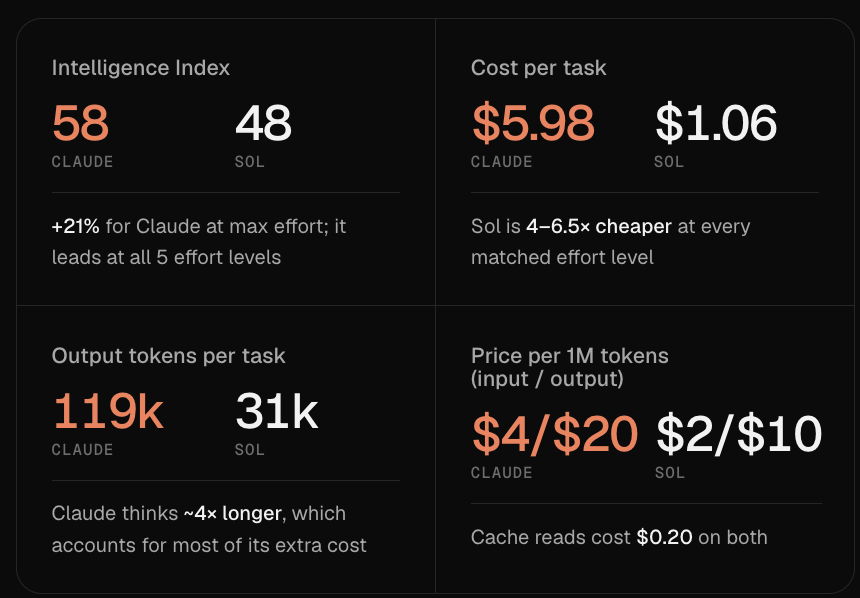
Opus 5.5 vs GPT 6 Sol
Opus is ~20% smarter but costs ~5x more & produces 4x more tokens
Use Opus for non time sensitive planning & Sol as a daily driver?
https://t.co/UKJKInUSAA
@iamlemec It's quite real; I've been playing around with it for the last day. I think they've invented a new type of AI that will compliment LLMs in many use cases.
Details for the curious:
Original 1998 StarCraft shareware, running in the browser via BottleShip. Jev gets structured game state (own units, visible enemies, economy), picks a command, and the harness executes it with real mouse clicks and hotkeys. Game pauses during inference.
Winning run: 421 decisions, 17.5 min, ~9.4M input tokens, 383ms median latency.
Took 16 attempts to get there — most failures were harness bugs, not the model. Every one is documented.
Repo: https://t.co/8lMcVwAScp
8× video + full 1× + evidence bundle: https://t.co/HkqECmFogD
@jeff_weinstein@stripe@link wouldn’t happen to have something i can try out?
I’ve got some time between jobs coming up and need to make https://t.co/kMPOtAs8y7 agentic… 😏
@natolambert you overestimate these companies capacity to build controls in lock step with their scale. most companies i’ve seen moving this fast are like having an adult head in a baby’s body.
build a 2 stage data pipeline using python scripts. stage 1 extracts metadata from individual trajectories based on types of things you’re interested in. index stage 1 data. then stage 2 looks for patterns across trajectories to generate a report. you need to have an idea what you’re looking for - but this approach scales well to a few orders of magnitude bigger than your data set.