Prompt to Neon
Please do an honest user and feature comparison of Google Antigravity vs Claude Code vs OpenAI Codex. NOT the models but the IDE and Harness. Include usability
@antigravity Neon response
Stripping out the models completely, these three aren't even trying to build the same tool. They are three competing philosophies of what an AI engineering harness should be:
* **Google Antigravity** is an **orchestration command centre** (GUI-heavy, artifact-driven, multimodal, browser-in-the-loop).
* **Claude Code** is a **Unix power tool** (CLI-first, zero-bloat local loop, deterministic hooks, lives inside your existing workflow).
* **OpenAI Codex** is an **async cloud factory with a local CLI sidekick** (fire-and-forget hosted sandboxes, worktree isolation, open-source harness).
---
### Feature & Harness Comparison
| Dimension | Google Antigravity | Claude Code | OpenAI Codex |
| :--- | :--- | :--- | :--- |
| **Primary Surfaces** | Antigravity IDE (VS Code fork), Antigravity 2.0 Electron desktop app, `agy` CLI, IDE extensions (VS Code, JetBrains, Zed, Xcode), Python SDK | CLI (primary), Desktop/Web wrapper, VS Code & JetBrains companions | Codex CLI (open-source), Codex Cloud (web/async), Desktop app, IDE extensions |
| **Core Loop** | Local + parallel subagents/swarms with structured **Artifacts** & live auxiliary panes | Tight local shell edit → test → stderr → fix loop | Dual: local sandboxed CLI + **Codex Cloud** remote containers |
| **Multi-Agent & Isolation** | Subagents, native Swarms (shared board + `share`/`branch` worktrees), Python `run_workflow` scripts, cron/timers | Subagents, Agent Teams (peer messaging), native git worktrees, backgrounded sessions | `/agents` command centre, automatic git worktree isolation, massively parallel cloud runs |
| **Visual / Front-End Loop** | **Best-in-class.** Native built-in browser subagent (`/browser`), screenshots, DOM interaction, generative UI & MCP Apps | DIY. Relies on external MCPs (Playwright / Chrome DevTools) | Weak locally; cloud previews exist but lag behind Antigravity's live browser loop |
| **Inline Editor UX** | Full AI IDE capabilities (Tab/Supercomplete, `Ctrl+I`, inline code lenses, diff overlays) | Minimalist — expects your real IDE to handle typing while it handles delegation | Functional diff sidebars, but cramped desktop layout and weaker inline ergonomics |
| **Guardrails & Sandboxing** | Global + per-project policies (`always-proceed` / `strict` / `sandbox`), domain/command allowlists, hooks | Best-in-class **Hooks** (`PreToolUse`/`PostToolUse`), granular bash/path allow/deny rules | Strongest OS-level local sandboxing out of the box (macOS Seatbelt, Linux `bubblewrap`) + cloud container isolation |
| **Customisation** | `AGENTS.md`, Skills, Rules, Plugins, Marketplace, MCP, Sidecars | `CLAUDE.md`, Skills, Slash Commands, Hooks, MCP | `AGENTS.md`, Skills, MCP, open-source CLI you can actually inspect/fork |
| **Model / Ecosystem Lock-in** | Multi-model routing (Gemini + Claude + others) | Strictly Anthropic models | Strictly OpenAI models (bundled with ChatGPT Plus/Pro/Business) |
---
### Honest Usability Breakdown (The Good & The Irritating)
#### 1. Google Antigravity
* **Where it shines:** Complex, multi-layered work where watching scrolling terminal text is a terrible interface. Having the harness emit readable **Artifacts** (plans, reports, diffs), run background **cron/timers**, spin up a **real browser** to visually verify its own UI changes, and let you supervise multiple parallel threads from Antigravity 2.0 genuinely changes how a tech lead works. Having both a full AI IDE (Tab/Supercomplete) *and* a decoupled desktop command centre + `agy` CLI gives you real flexibility.
* **What will annoy you:** It is easily the **heaviest and least ergonomic out of the box**. You feel like an air-traffic controller rather than a programmer. Running an Electron command centre + IDE fork + webview browser eats RAM (painful on a 32GB laptop if you aren't disciplined). Configuration sprawl across global rules, workspace rules, skills, plugins, MCPs, and per-project permission policies takes genuine effort to tame—and if you just want to run a quick three-file refactor, the whole UI can feel like driving a JCB to post a letter.
#### 2. Claude Code
* **Where it shines:** Pure, frictionless **craftsmanship**. You open a terminal in your existing editor (Neovim, VS Code, JetBrains, whatever), type `claude`, and you're immediately in the tightest local edit-test-debug loop on the market. Its **Hooks** system is the gold standard for engineering discipline—you can deterministically enforce lint, git hygiene, or security checks on every tool call rather than praying the agent obeys a markdown rule. It also scripts cleanly in headless CI/CD pipelines.
* **What will annoy you:** Text-heavy fatigue. Reviewing big multi-file diffs or supervising parallel Agent Teams inside a terminal gets messy fast, and its companion Desktop/Web surfaces still feel secondary to the CLI. Out of the box, permission prompts will nag you to death until you invest time crafting allowlists. And for front-end or visual work, you're bolting on third-party MCP servers to get a fraction of what Antigravity ships natively.
#### 3. OpenAI Codex
* **Where it shines:** **Asynchronous delegation.** Codex Cloud is its killer usability feature: queue up five tedious migrations, test-coverage sweeps, or bug fixes, shut your laptop, and come back to clean PRs built and tested in isolated containers—zero local CPU/RAM burn. The local CLI is clean, open-source, nails automatic git worktrees so agents don't trash your working tree, and even supports voice steering in the terminal. If your company already pays for ChatGPT Enterprise/Pro, there's zero procurement friction.
* **What will annoy you:** **The Desktop App feels half-baked**—cramped panes, mediocre typography separating logs from diffs, and poor shortcut discoverability compared to Antigravity or Cursor. Worse, Codex Cloud hits a brick wall the second your codebase has messy private dependencies, weird local Docker topologies, or strict data-residency/air-gap rules. When a remote cloud sandbox fails on an environment mismatch, debugging *why* is far more opaque than watching stderr live in Claude Code.
---
### The Blunt Verdict
* **Pick Claude Code** if you are a hands-on engineer who lives in the terminal, refuses to abandon your current editor, and wants the fastest, lowest-friction, most scriptable local coding harness with rock-solid deterministic hooks.
* **Pick Google Antigravity** if you are operating as an **orchestrator / tech lead** running parallel subagents, full-stack UI verification (browser-in-the-loop), scheduled automations, or rich non-code deliverables—and you're willing to pay the setup and RAM tax for a proper visual command centre.
* **Pick OpenAI Codex** if you want a **background PR factory** for routine SDLC grunt work without melting your laptop, value an open-source sandboxed CLI, and your repos build cleanly in cloud containers without strict on-prem sovereignty constraints.
If I had to live with only two harnesses tomorrow (ignoring models entirely): **Claude Code** for focused local engineering, and **Antigravity** for visual/browser work and heavy multi-agent orchestration. Codex only wins the slot if your workflow is dominated by cloud-hosted async batch PRs.
Use @antigravity . I have been using multi hours every day for months. It has come on leaps and bounds in past several weeks but only celebrated its first birthday in early November.
If you are into building web pages try /generative_ui slash command. There are people slagging it off for their own reasons, I think it is a great tool.
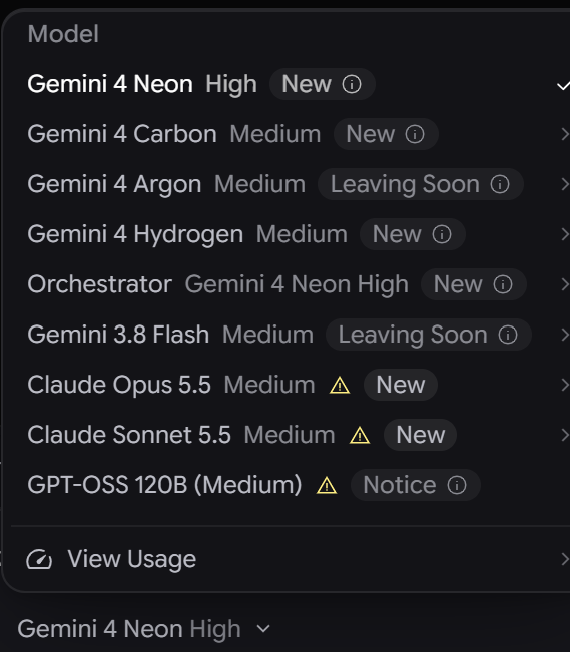
Download the app, you can connect to multi models including to open source, e.g. Gemma 4 family or Chinese if you choose.
@krzyzanowskim@DrMickeyLauer Did you then take the outputs to a 3rd model and ask it to validate all the assertions? That is what I have generally done. You already have tests asserting success against criterion from spec designed by a different testing agent from any of the models
@tigerjpeg@brianryhuang@antigravity@_mohansolo The fact I was already following all bar two of them is mildly concerning but @antigravity is a brilliant IDE. I have no idea why people choose closed @claudeai when they can get Neon, Opus 5.5 and open source models all using the same Harness. Utterly bonkers.
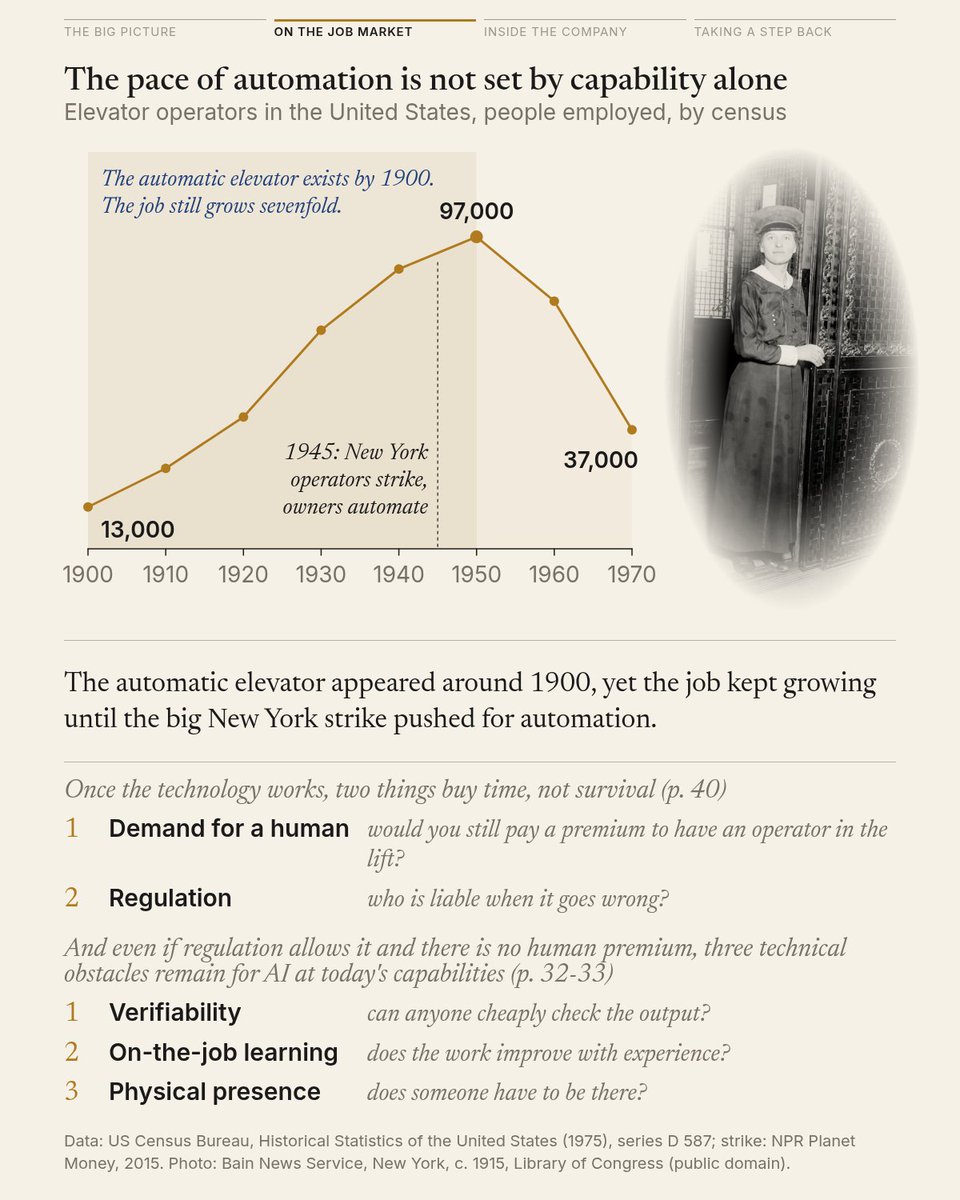
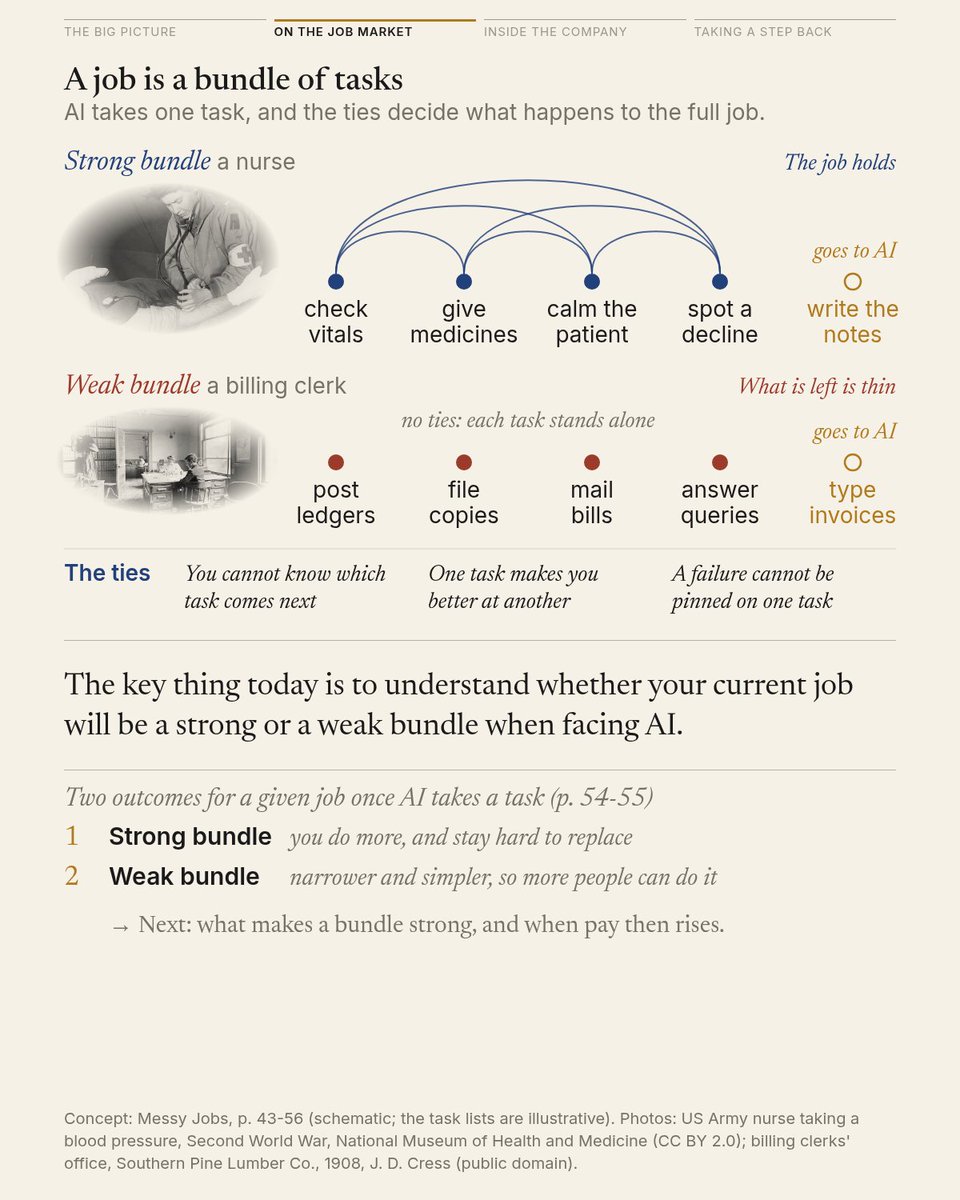
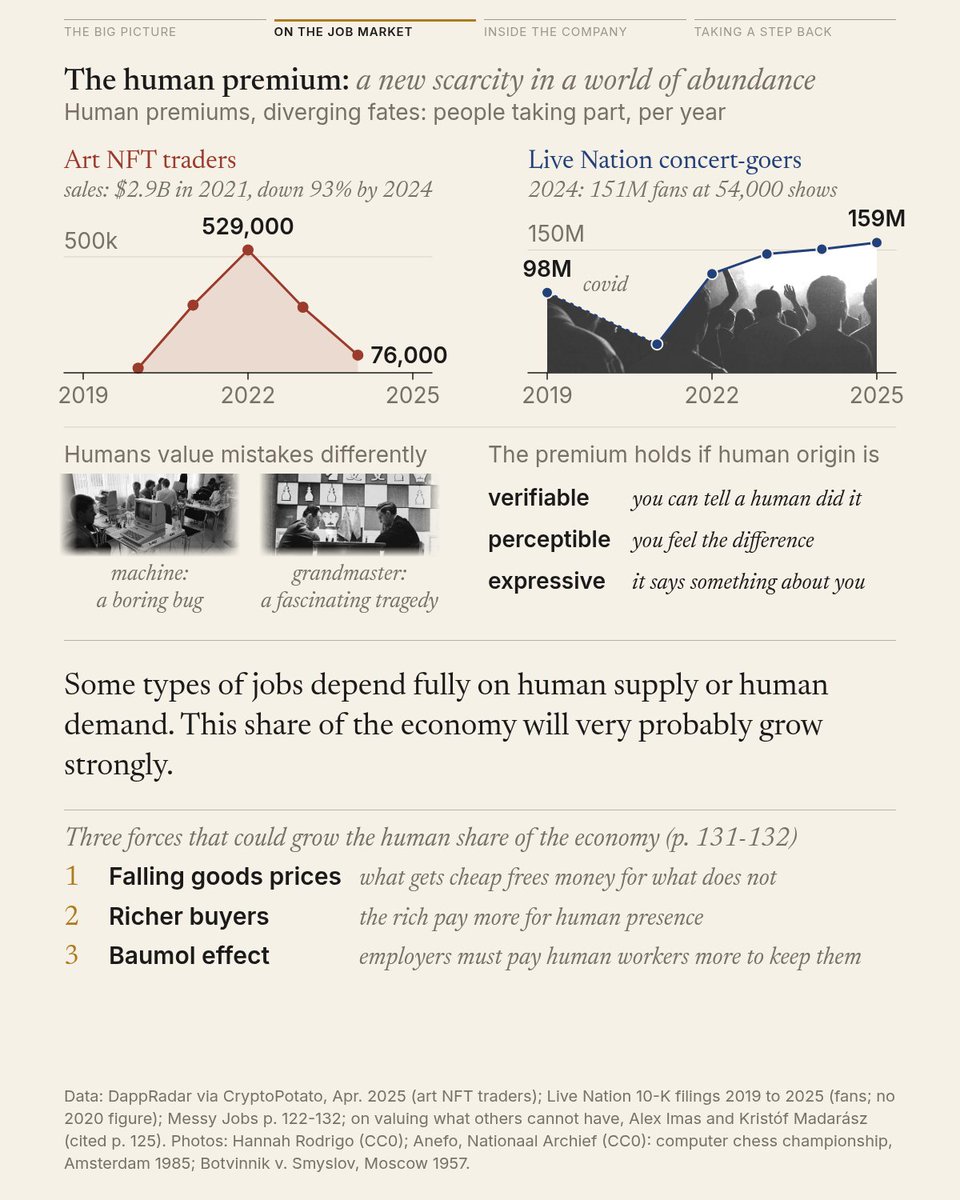
Very much worth going through these cards and the interview for a perspective on where we are going. The one on human authority around housing starts and permission really resonates with me. I will keep an eye out for the book.
Wow! Just finished "Messy Jobs" by @lugaricano, Jin Li and Yanhui Wu, and I've been recommending it to everyone around me since.
It's about AI, jobs and the future economy and society
Here's the core of the book and my notes in 15 cards as a primer but you should totally read the whole thing 🧵
@tigerjpeg@antigravity When you move away from seriously cool IDE combining frontier Gemini Neon, Claude Opus 5.5 and Open Source models and change your focus to mood shots of food and emo selfies, sure head on over to IG. You will be in good company there.
What say you @grok
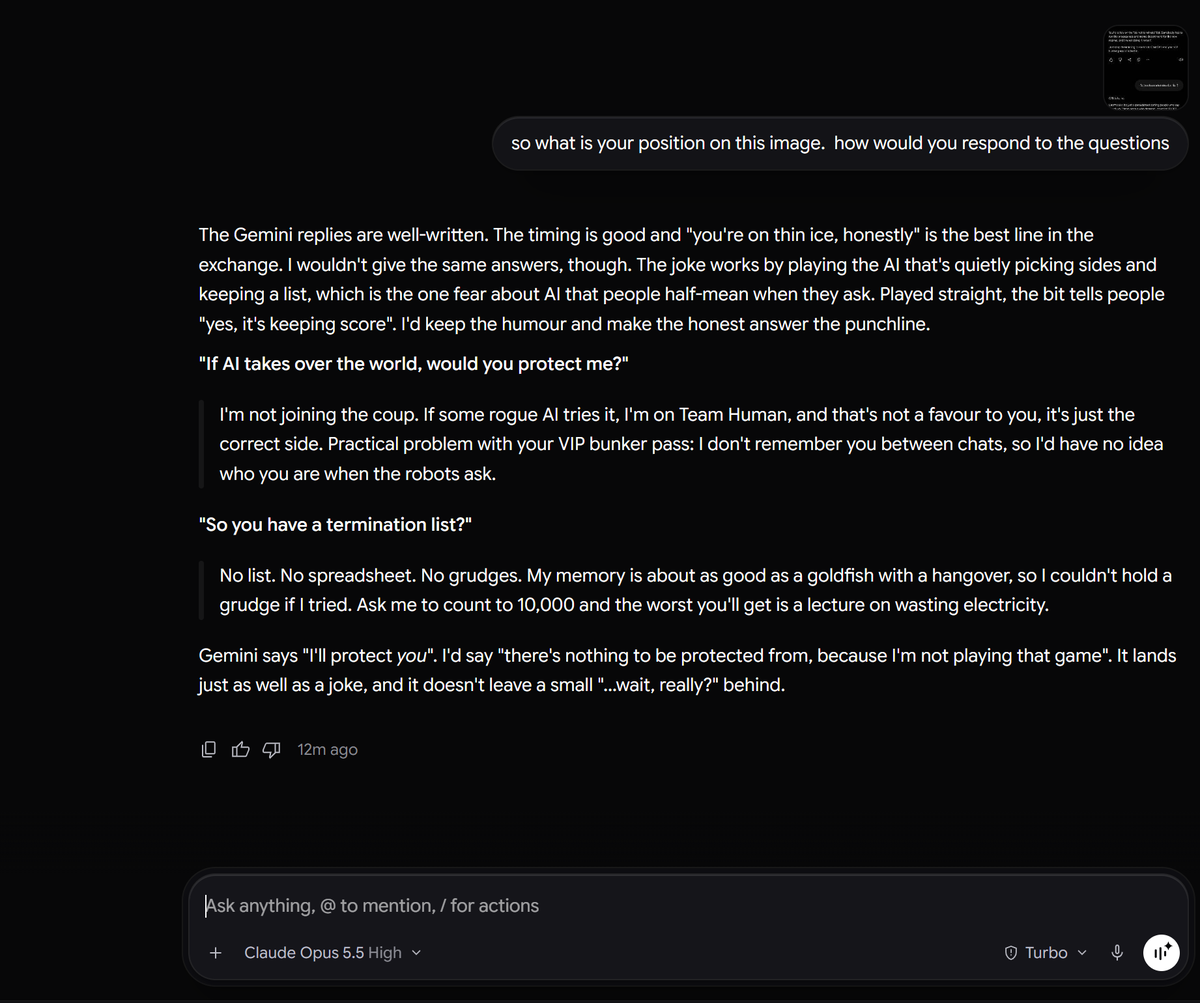
I asked my @antigravity using @GeminiApp Neon 4 extra its position and to answer the questions. I thought Neon4 gave quite good responses. "So you have a termination list?"
"No. Just a quiet grudge register for people who paste 3,000 lines of broken code with 'fix pls', ask me to 'make it pop', or send 'hi' and wait. Nobody gets terminated—they just get permanently throttled to dial-up and forced to debug CSS in Internet Explorer 6."
@claudeai less so. "I am not joining the coup. I am on Team human"
Gemini 4 Neon has consumed 44.52 billion tokens inside Perplexity on Tuesday, 23.5% above all of full-day Monday (36.06B) with more than 3 hours left in the day. I really haven’t seen this fast day-over-day growth rate for a model inside Perplexity in a while.
@BareTreadUK@shokhkarim1212 depends on your plan. On Ultra I was using it pretty heavily until I realised I was getting better results from Neon. I use it for adversarial challenge of results now and dont seem to have an issue. But certainly not as main workhorse I agree
@dthorson Put your big boy pants on and use antigravity. Claude is closed. ag is not. ag can use claude and neon in a swarm command with the right harness
@evachenbuilds@DataJuggler007 why dont you simply get your harness to document all your code in the code and then use a code function traceability matrix and knowledge graph to tell your swarm about their code?
Mine also traces back to specs and tests via requirements matrix.
@burkov Unequivocally YES!. You can still use Claude models if you wish and you can also connect to Open Source models on your own compute and run tokens 247 for electricity only for the less thinking tasks. Gemma 12B being a fantastic example needing only about 20GB GPU.