Phil Cooke is a strategic advisor to church, nonprofit, and media leaders navigating the intersection of faith, culture, and high-stakes public visibility.
The best lack all conviction, while the worst
Are full of passionate intensity.
Sir Kenneth Clark reads The Second Coming by W.B. Yeats
W.B. Yeats, born 13th June 1865
Jesus did 22% of his ministry in people's homes and another 22% in synagogues and the temple. He taught on lakeshores, hillsides, and city streets. He did not wait for people to come to a building. He went where people already were.
🏴 En Inglaterra, una periodista fue a un barrio de musulmanes a decir que ellos son PACIFICOS
y al rato apareció una banda de musulmanes a decirles que se vayan porque los iban a matar☠️
País destruido por la agenda 2030.
In September 1942, a single Japanese floatplane lifted off from a submarine off the coast of Oregon. In the cockpit sat Chief Warrant Officer Nobuo Fujita, carrying two 170-pound incendiary bombs and a 400-year-old samurai sword beside him in the cramped space.
His mission?
Drop the bombs over the forests of the Pacific Northwest, start a massive firestorm, and force the U.S. military to pull vital resources away from the Pacific theater.
Fujita released his bombs over Brookings, Oregon. But the mission failed. Recent rain had soaked the forest, and alert park rangers put out the small fires almost immediately. The war continued, and the strange, isolated attack slowly slipped into the margins of history.
Until 20 years later.
In 1962, a civic group in Brookings came up with an extraordinary idea. They found Fujita and invited him back as the guest of honor at their local festival.
The invitation caused national controversy and split the town. But the deepest conflict was inside Fujita himself. Deeply ashamed of what he had done during the war, Fujita accepted the invitation with a dark private promise. He packed his family’s ancient samurai sword in his luggage. Later, he admitted that if the Americans put him on trial for war crimes or publicly humiliated him, he planned to use the sword to commit seppuku, ritual suicide, right there.
But when he stepped off the plane, he was met not with hatred, but with handshakes, applause, and a town offering real forgiveness.
Overwhelmed by the mercy of the people he had once attacked, Fujita stepped to the podium and did something no one forgot. He knelt and gave the town his most treasured possession, his family’s 400-year-old samurai sword, as a lasting promise of peace.
For the rest of his life, Fujita helped fund student exchange programs between Japan and Oregon. He even returned to the exact place he had bombed and planted a redwood “peace tree.” When he died in 1997, Brookings named him an honorary citizen, and his daughter later returned to the forest to scatter some of his ashes on the land he had once tried to burn.
Today, that 400-year-old sword is displayed inside the Brookings Public Library, not as a trophy of war, but as a masterpiece of peace.
Elon responded to Warren calling him a “freeloader" in 2021:
“I'm actually paying the most tax that any individual in history has ever paid this year. Ever."
"And she doesn't pay taxes basically at all. Her salary is paid for by the taxpayer, like me. If you could die by irony, she would be dead."
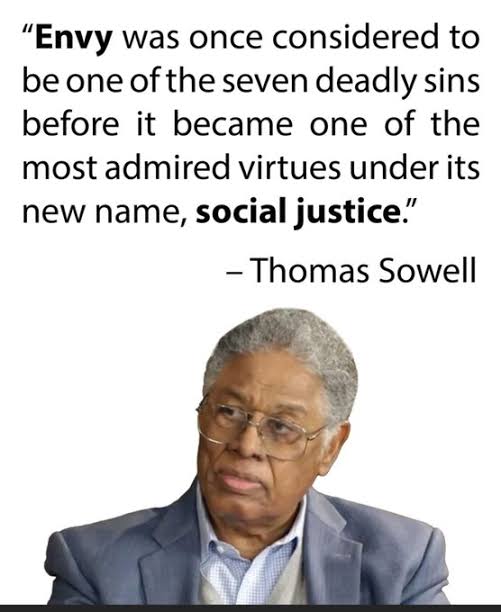
"Envy was once considered to be one of the seven deadly sins before it became one of the most admired virtues under its new name, 'social justice'."
- Thomas Sowell
OTD in 1864: 100,000 men vanished overnight, and the greatest general of the age had no idea where they went. This might be the most underrated move of the Civil War.
Context: Grant had just spent ten days locked in trench warfare at Cold Harbor, Virginia, after a frontal assault on June 3 that cost him thousands of men in under an hour. He admitted it was the worst mistake of his career. The armies were so close that soldiers could not lift their heads above the dirt in daylight.
Everyone, including Lee, expected Grant to do what every Union commander before him did after a bloody repulse: retreat north and regroup.
Instead, on the night of June 12, Grant did something audacious. He pulled the entire Army of the Potomac out of trenches that were in some places only yards from Confederate lines. No bugles, no fires, wheels muffled. By morning the Union trenches were empty and Lee's scouts found nothing but abandoned earthworks.
The army marched south, away from Richmond, which made no sense to Confederate observers. Then Union engineers did something almost nobody thought possible: they threw a pontoon bridge across the James River, roughly 2,100 feet of it, over water up to 85 feet deep with a four-foot tidal swing. They built it in about eight hours. It was one of the longest floating bridges in military history.
For three full days Lee was effectively blind, unsure whether Grant was north or south of the James. By the time the picture cleared, Grant's army was across the river attacking Petersburg, the rail hub that fed Richmond.
The siege that followed lasted nine months and ended with Lee's surrender at Appomattox.
Everyone remembers Cold Harbor as Grant's worst day. Almost nobody remembers that one week later he pulled off the maneuver that won the war.
History's first trillionaire is a guy who catches rockets out of the sky with chopsticks and beams internet to every dead zone on the planet.
Same guy ships cars that drive themselves, humanoid robots for the factory floor, brain chips that let paralyzed people move a cursor with pure thought, and an AI running on a supercomputer his team stood up in months instead of years.
And the people crashing out about his net worth are doing it on the app he owns. The same app governments spent years trying to censor.
You cannot legislate a rocket into orbit.
Hey Pocahontas, it’s been over a YEAR since I asked you this, and you STILL haven’t told us:
How did you amass a $12 MILLION net worth on a $176,000 salary??!
The math ain’t mathin’!
I am so in for this one.
Brad Pitt. Alaska. A plane crash. A retired Special Forces operator. One loyal combat dog. No CGI multiverse nonsense, no superheroes, no forced plot twists—just survival, grit, and man versus nature.
The fact that it’s directed by David Ayer and reunites him with Brad Pitt after Fury makes me even more bullish. Everything coming out of the early previews suggests it’s less of an action movie and more of a story about resilience, loyalty, grief, and survival.
“One last mission” is exactly the vibe.
Not saving the world.
Not stopping an alien invasion.
Just a broken warrior and the only partner he trusts trying to make it home.
That’s the kind of movie Hollywood forgot how to make.
September can’t get here fast enough. 🐺🏔️🐕🦺
On June 6, 1966, Roy Orbison was following his wife Claudette on his car as she rode her motorcycle.
A truck pulled out. She swerved. Crashed.
Roy held her body in the road, screaming.
Claudette was 25 years old.
When the police arrived, they found her purse. Inside was a pregnancy test. Positive.
She had planned to tell him that night. He never knew until it was too late.
Roy stopped performing for a year. The stage, the lights, the audience — nothing mattered.
Then, in 1968, disaster struck again. His house caught fire. Two of his three sons died in the blaze.
Most people would have vanished from the world entirely.
Roy did not.
He wrote. He cried. He poured grief into melodies because there was nowhere else to put it. Songs built from a loss that had no bottom. Lyrics that carried what his heart could not release.
For decades, he carried the weight silently.
In 1988, Roy Orbison died of a heart attack at 52.
When they went through his wallet, they found it. Claudette’s pregnancy test. Still there. Twenty-two years later.
He had carried it every single day.
His final album, recorded just weeks before he died, was titled — *She's a Mystery to Me*.
Some grief doesn’t fade.
It doesn’t end.
It becomes the quietest, most permanent part of who you are.
Every note he sang, every melody he wrote afterward, held a piece of that silence.
Roy Orbison carried his love and his loss together, letting the sorrow shape the music itself.
And in doing so, he transformed tragedy into art that could be heard, felt, and remembered.
Some memories never leave.
Some grief never lets go.
Some love lasts beyond life, quietly shaping everything left behind.
Understanding Western Civilization is understanding that these were built by the same type of people.
The most righteous and terrifying force in the world is a people who understand when to pray and when to fight.
Just a typical summer evening in Toulouse, France.
Not a French person in sight, only doctors and engineers.
The future of Europe in one short video.
Wake up, Europe.
Deaths in the US so far in 2026, by cause:
Drowning: approximately 1000 (22 kids in Texas alone)
Mushroom poisoning: 4
Rattlesnake: 3
Lightning: 2
Marathon: 1
Measles: 0
And, oh yeah, overdose: approximately 30000
Let's try to scare people some MORE about measles, huh?