Excited to share our paper in @CurrentBiology! We extend human electrochemistry to clinical depth electrodes (epilepsy) and show (1) noradrenaline (NA) dynamics in amygdala reflect attention and arousal and (2) NA-pupil coupling varies with cognitive state https://t.co/gfhronOiy5
🚨 Postdoc Position Available in Electrophysiology & Machine Learning! 🚨
Join our team at the Institute for Neuromodulation (Hôpital St-Anne) in Paris, France. Work on cutting-edge research involving voltammetric recordings in human patients.
[1/5] 🧵 #Postdoc#Neuroscience
@UNICOG1 @GhuParis@univ_paris_cite a cool study that gives a glimps of the approach's potential for human cognition by
@DanBang_
https://t.co/7VLSvYYqH4
Excited to share our paper in @NatureHumBehav! Using electrochemical recordings in PD patient volunteers undergoing DBS surgery, we show that dopamine and serotonin in the substantia nigra track social context and value signals during the ultimatum game https://t.co/nLad9oFO19
Viewpoint discusses why it is important for psychiatry residency programs to continue to prioritize the training of psychiatrist-scientists. https://t.co/Q6m4w6UA3s
Where to place an ultrasound transducer to optimally target a specific brain region in a given individual?
We developed 𝗣𝗹𝗮𝗻𝗧𝗨𝗦, a tool that helps TUS researchers to quickly and heuristically select the most promising transducer placement(s).
A 🧵 on its functionalities.
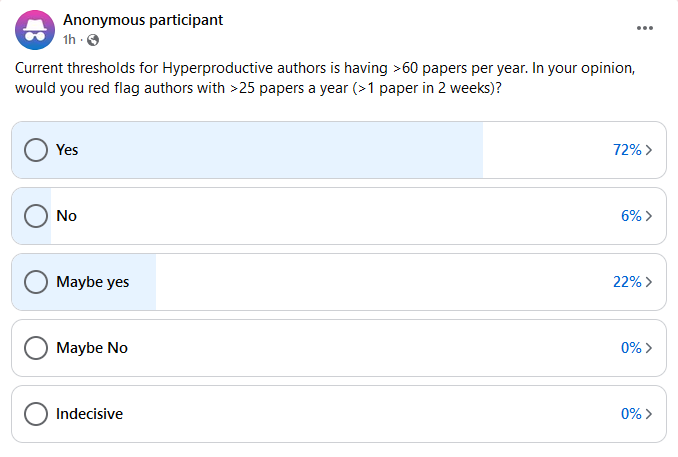
How many papers is too many in a year?
Was pointed to this Facebook poll (thank you). We did a similar one recently, but set the threshold at 30.
It is subjective but ...
1⃣ The poll says "The current threshold ... is 60". Where does that threshold come from? Anybody know?
2⃣ What would you consider as "too many" papers in a year, bearing in mind that there will never be a number that everybody agrees on?
This week, the "computational brain" team (F. Meyniel, @jmourabarbosa, @UNICOG1 ) has moved into its new premises, on the top floor of the Neuromodulation Institute (@FabienVinckier, @GhuParis, @univ_paris_cite), next to Saint-Anne hospital in the center of Paris.
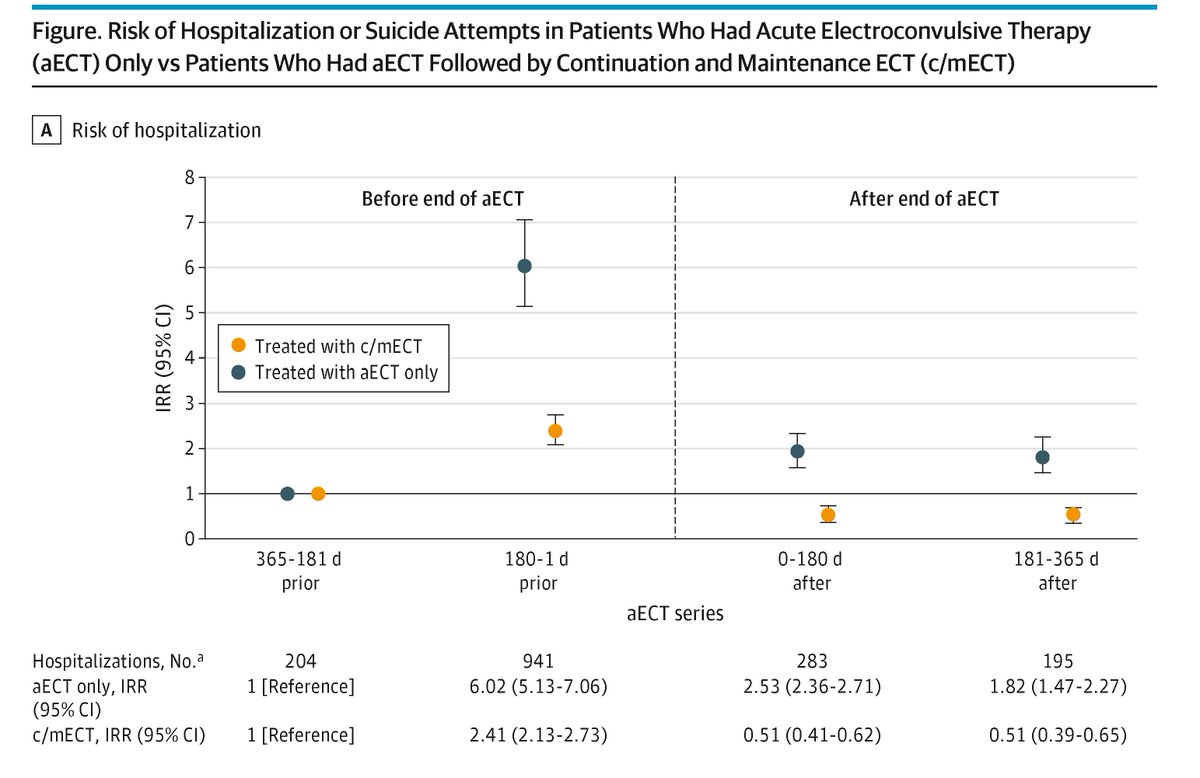
Nationwide Danish study shows that continuing electroconvulsive therapy as maintenance treatment is associated with a better outcome and lower treatment costs in patients with severe psychiatric illness. https://t.co/rG5vVmcHgb
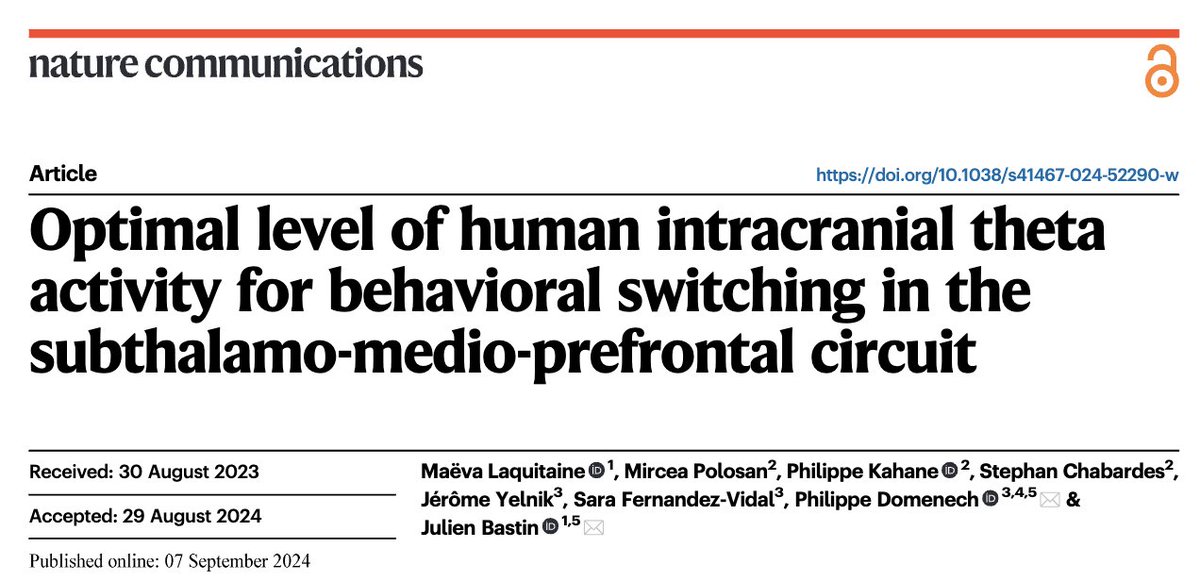
"Optimal level of human intracranial theta activity for behavioral switching in the subthalamo-medio-prefrontal circuit" is out today in @NatureComms ! a cool collaboration with @bastinj_neuro and Mircea Polosan teams. @GhuParis@univ_paris_cite @UNICOG1
https://t.co/bH86HQ4RD2
Such non-linear Goldilocks’ effect of theta activity on switching behavior challenge our current understanding of the role of theta oscillations in human cognition.






![PhilippeDOMENE2's tweet photo. 🚨 Postdoc Position Available in Electrophysiology & Machine Learning! 🚨
Join our team at the Institute for Neuromodulation (Hôpital St-Anne) in Paris, France. Work on cutting-edge research involving voltammetric recordings in human patients.
[1/5] 🧵 #Postdoc #Neuroscience https://t.co/CR6cYzgrqT](https://pbs.twimg.com/media/GZ9X0IfXQAARPmS.jpg)