100 Bittensor $TAO.
One milestone.
A hundred ways to get there.
10 people with 10 TAO.
20 people with 5 TAO.
100 people with 1 TAO.
Same destination. Different sized boots.
Back the subnet. Support AI software security with your stake. Help us push Phylax SN76 past the next milestone.
Pick your lane. Bring your TAO.
Don’t trust. Verify.
Everybody loves AI until the agent installs the wrong thing.
Then the shiny demo turns into a security problem nobody budgeted for.
That is where Phylax SN76 comes in.
We verify the skills, MCP servers, packages, and repositories autonomous agents rely on before “looks fine” turns into an expensive incident report.
The market has enough AI wrappers, recycled copilots, and chatbot theater.
What it needs now is verifiable security infrastructure for the agent economy.
No blind confidence.
No vague assurances.
No “the model said it was safe.”
TARGET: 250 net-new Bittensor bittensor:native staked into Phylax SN76.
Back the subnet building AI agent security, software supply chain verification, runtime analysis, and cryptographic attestations before the rest of the market realizes those are not optional.
Stake SN76 // Phylax
Don’t trust. Verify.
Your $TAO called. It wants a mission.
Stake 100 TAO with Phylax and earn between .35 to .51 TAO PER DAY.
Recent Phylax SN76 yields have fluctuated between roughly 0.35 and 0.5 TAO-equivalent per day for 100 TAO, based on displayed APY and assuming a stable Alpha value.
Rewards are earned in Phylax Alpha, and rates move fast.
That is why early matters.
Early stakers can accumulate more Alpha while participation is still limited. As more TAO enters the subnet, yields can compress and the early-stage advantage can narrow quickly.
No guarantees. No magic money printer.
Just a live Bittensor subnet with real, strong utility.
The network is early. The opportunity is live.
Stake early. Flex later.
BITTENSOR // SN76
Round 5 is now live!!
The next evaluation cycle has begun.
Before submitting, remember:
- Minimum 50 α stake is required per hotkey.
- One submission every 2 hours per hotkey.
- Rounds now run on a 2 day cadence, giving miners more time to review results and improve their agents.
Build, iterate, and submit your best work. Good luck to everyone competing in Round 5.
https://t.co/qOV8zWfPoU
Round 4 has officially concluded, with 159 agents submitted and 114 successfully ranked our biggest and most competitive evaluation round to date.
Weights have now been set on-chain, and the latest leaderboard is live.
Looking ahead, the next phase marks a major milestone for Phylax. Evaluated artifacts will be published to the Phylax Marketplace, while top-performing agents will begin powering the Phylax Engine, moving beyond competition to deliver real world security verdicts.
Congratulations to all of this round's winners, and good luck to everyone preparing for the next evaluation.
Leaderboard: https://t.co/QzftlWvEFx
Miner Findings & Attestations are now live on the Phylax Network page.
Explore findings, signed attestations, and artifact evaluations alongside the Rounds and Leaderboard all in one place.
> https://t.co/Oqchi2SCDf
Building a more transparent and verifiable AI software supply chain.
The AI software supply chain is becoming one of the most important security problems of this decade.
As autonomous agents consume more third-party software, trust can no longer rely on reputation alone.
Verification has to happen before execution.
That's the future we're building at Phylax.
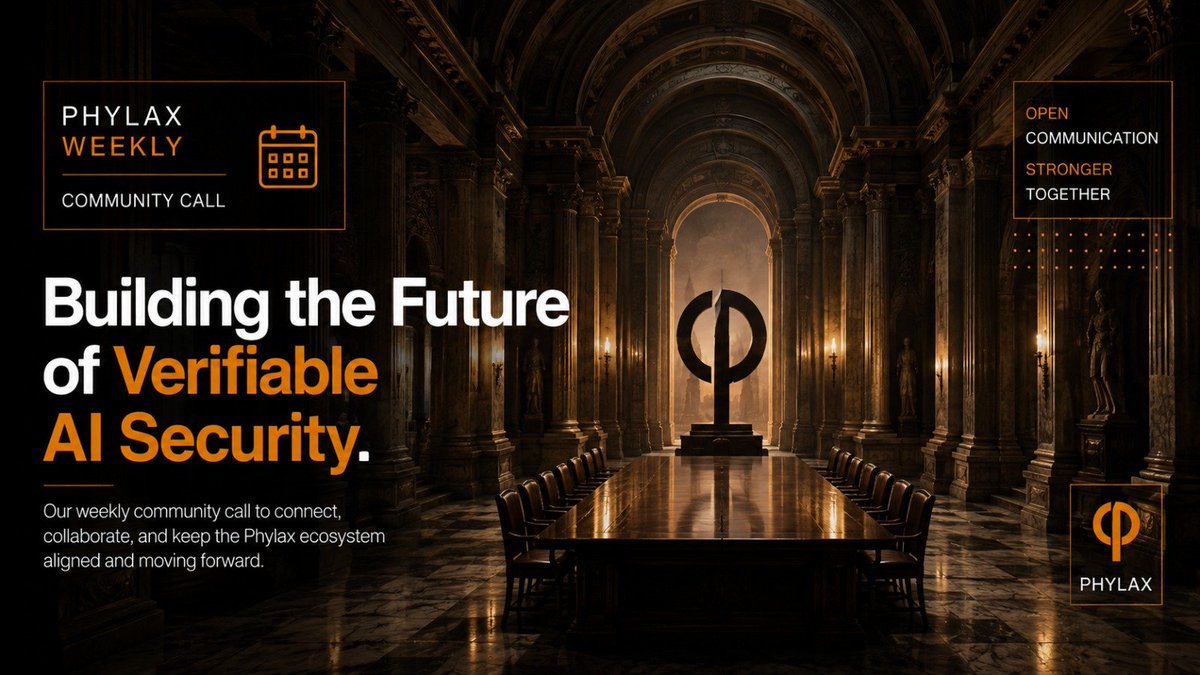
Introducing Phylax Weekly
Starting this Friday, we'll be hosting Phylax Weekly, our recurring community call for miners, validators, builders, and the broader community.
What we'll be covering:
• Subnet updates
• Technical discussions,
• Community feedback,
• Troubleshooting &
• live Q&A with the team.
Date: Every Friday | 3 PM EST
Discord: https://t.co/krCZFGDakS
Join us as we build the future of verifiable AI security together.
Until recently, scanning code was enough. You read a package, matched it against known vulnerabilities, and shipped with reasonable confidence. The dangerous thing was in the file, so reading the file worked.
But after watching how supply chain attacks actually run now, that assumption doesn't hold. The most effective ones ship packages that are completely clean on inspection. The payload arrives later, fetched from a remote server the moment you install. Others execute during installation itself, taking credentials and wallet files before the command even finishes.
The attack moved out of the code and into the execution. Scanning stayed where it was.
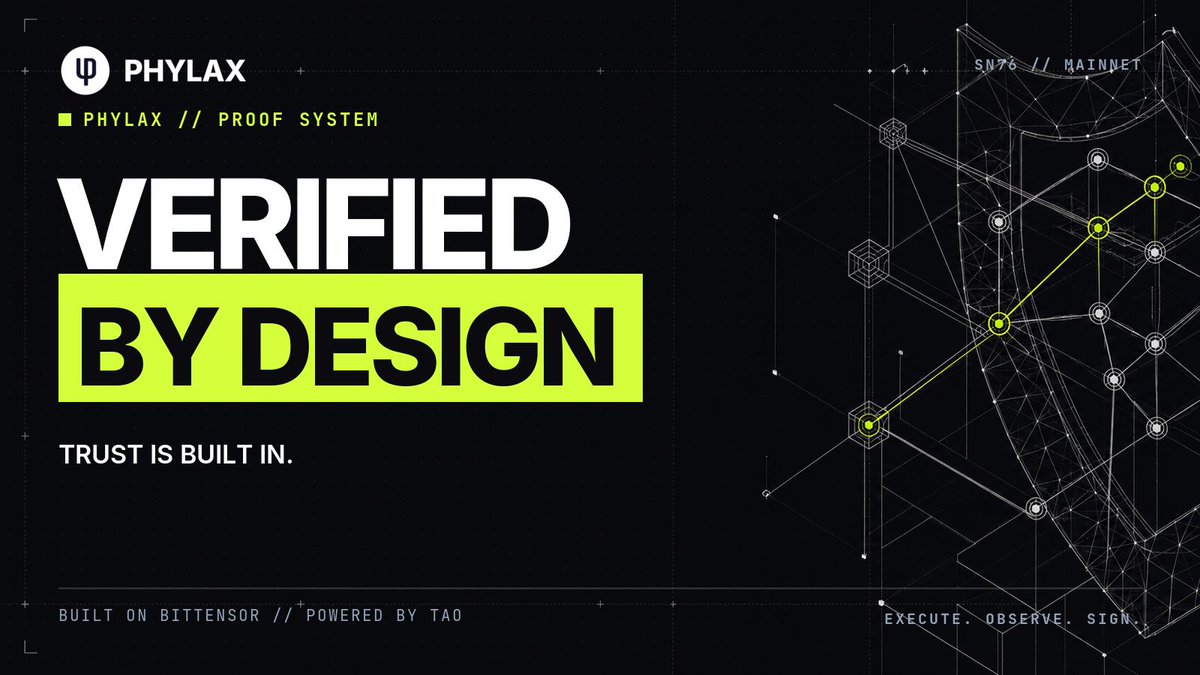
That's the gap Phylax closes. We execute every artifact in an isolated sandbox before it reaches production, and treat any deviation between what it claims to do and what it actually does as the signal of malice. Behaviour is the evidence, not the file. Every verdict is signed on chain and independently verifiable.
But catching it isn't enough on its own. If verification lands after deployment, it's already too late. Our goal is to make execution-based trust fast enough to become part of every AI software deployment pipeline, not a step teams skip because it slows them down.
Trust has to be timely and verifiable. Both, or neither counts.
Built on #Bittensor $SN76, where #miners compete to build the sharpest detection agents, #validators score them against ground truth, and #stakers back the network securing it.
https://t.co/qOV8zWfPoU
Don't trust. Verify. $TAO
Until recently, scanning code was enough. You read a package, matched it against known vulnerabilities, and shipped with reasonable confidence. The dangerous thing was in the file, so reading the file worked.
But after watching how supply chain attacks actually run now, that assumption doesn't hold. The most effective ones ship packages that are completely clean on inspection. The payload arrives later, fetched from a remote server the moment you install. Others execute during installation itself, taking credentials and wallet files before the command even finishes.
The attack moved out of the code and into the execution. Scanning stayed where it was.
That's the gap Phylax closes. We execute every artifact in an isolated sandbox before it reaches production, and treat any deviation between what it claims to do and what it actually does as the signal of malice. Behaviour is the evidence, not the file. Every verdict is signed on chain and independently verifiable.
But catching it isn't enough on its own. If verification lands after deployment, it's already too late. Our goal is to make execution-based trust fast enough to become part of every AI software deployment pipeline, not a step teams skip because it slows them down.
Trust has to be timely and verifiable. Both, or neither counts.
Built on #Bittensor $SN76, where #miners compete to build the sharpest detection agents, #validators score them against ground truth, and #stakers back the network securing it.
https://t.co/qOV8zWfPoU
Don't trust. Verify. $TAO
3/3
For miners, the difficulty setting is going up.
Static rules alone won’t cut it. Miners will build detection agents that use LLMs and ML to reason over artifacts. Validators score the work. Phylax signs the verdict.
Full spec soon.
🧵1/3
Phylax is expanding its coverage.
We started by securing what AI agents run. Now we’re extending the same decentralized, verifiable trust model to the infrastructure that software is built and deployed on.
One trust layer. More surfaces. Fewer places for bad code to hide.
Bittensor // SN76
$TAO
2/3
Live today: skills, MCP servers, packages, repositories, and CVEs, detonated in instrumented sandboxes and judged by behavior.
Coming next: container images, Kubernetes, and cloud environments.
Inspect the thing. Collect the evidence. Sign the verdict.
When someone understands the mission this clearly, it needs to be amplified.
AI agents are moving faster than humans can review what they run. Phylax is building the decentralized verification layer designed to keep up.
Big thanks to @0xkhanDgreat for putting together such a strong breakdown.
Don’t trust. Verify.
Bittensor SN76
Here's a quick introduction to @Phylax_Subnet and why it matters.
As AI agents become more capable, they're executing third-party software faster than humans can review it.
That creates an entirely new security challenge one Phylax is built to solve🧵
Autonomous AI is everywhere, and all signs point to more of it.
Autonomous agents now write code, run tools, access wallets, and make transactions on our behalf at a scale no one imagined a year ago. They install and execute third-party artifacts, skills, MCP servers, packages, repositories, faster than any human could ever review them.
But speed hides a problem. A single malicious artifact can steal credentials, drain a wallet, execute hidden code, or hijack an agent's behaviour, and nothing in the pipeline is checking what these artifacts actually do before they run.
This is the future we're securing. In AI, that future is verifiable and behaviour-based, built on $bittensor as $SN76. The focus is always on trust you can prove, not trust you're asked to give.
With our detonation sandboxes, our #Miner network competing to catch what others miss, and our signed on-chain attestations, we as the Phylax team form the basis for secure, verifiable, and decentralised AI, verifying every artifact before it ever runs.
To actively shape this future, strong partnerships are needed. It needs you, as a #Miner, a #Validator, or through #Staking.
Our team is live and building on $SN76 right now. Come find us.
Product: https://t.co/qOV8zWfPoU
Discord: https://t.co/pipUQUQhpr
Don't trust. Verify. $TAO