SpaceX will try again today to launch the 13th #Starlink mission to add another ~60 satellites to the collection of over 600 in orbit already.
You can watch the launch here; it's scheduled to be in 29 minutes:
https://t.co/rO3qqMDehH
We are standing down from today's Starlink mission due to weather violations on the Range. The team is setting up for a launch opportunity tomorrow at 7:29 a.m. EDT; weather forecast is 70% favorable for liftoff
In about fifty minutes #SpaceX will launch the 13th rocket for their #Starlink satellite program. It will see approximately 60 satellites join the 600+ already in Earth's orbit.
You can watch live here:
https://t.co/rO3qqMlDq9
#Methane in the atmosphere of #Saturn and #Jupiter is compressed into #carbon (soot) as it falls down through the atmosphere during lightning storms.
As it falls, it is condensed further into #graphite and then into #diamond, and so it rains diamonds on both of these planets.
One of #NASA's space suits costs 12 million US Dollars. 70% of that cost is for the backpack and control module.
This is the same cost as both of the protective payload fairings on a #SpaceX#Falcon rocket ($6m each).
📸: @NASA
A composite photograph of the relative movement of the #stars in the Northern Hemisphere, above Arthur's Seat, #Edinburgh, #Scotland.
The other, bendy lines of light are from people's torches as they walk up the hill at night.
#Astrophotography
During the space race in the 1960's between the #USSR and the #USA, #NASA spent over $1000 on individual pens, which worked in space. (In low gravity, the ink of a normal pen would not come out).
The #Soviets instead just used pencils and saved millions of dollars.
The centre of a black hole is thought to contain a singularity. These are not very well understood, but the underlying idea is that an infinitely dense mass is confined inside a region of infinitely small volume, giving an immense gravitational field.
📸: @esa@ESO
While space is often referred to as being a vacuum (being devoid of all matter), it is actually not. The #universe has an average density of 5.9 protons per cubic metre. This means that any metre cubed of space has approximately 5.9 protons in it and so is not an absolute vacuum.
Of all of the atoms in the Milky Way #Galaxy, 74 percent of them are Hydrogen atoms. This is because most of the objects in the Milky Way are stars, and most of the mass of a star is Hydrogen, which is used to produce heavier elements.
📸: @esa
Typical car crashes have G-forces of ~30, but this is over a very short period of time so humans can withstand it. Racing car crashes can be in the orders of hundreds of G's, but are sustained over tenths of seconds, so are not deadly.
(2/2)
On Earth, you experience an acceleration which pulls you towards the ground due to the Earth's mass. This is a force of 1G. Humans can only survive continuous G-forces of up to around 8G.
(1/2)
On average, the Earth's #magnetic field switches every hundred thousand years or so. If this next happens whilst the human race still exists, satellites would have to be reconfigured and exposure to radiation from the #Sun could increase.
📸 - Movement of Earth's Magnetic Field
Electrons in the atoms of the #atmosphere gain energy from these collisions (become excited) and when they later lose that energy, emit light in different colours, depending on the amount of energy they lost.
Different elements also emit different colours of light.
(2/2)
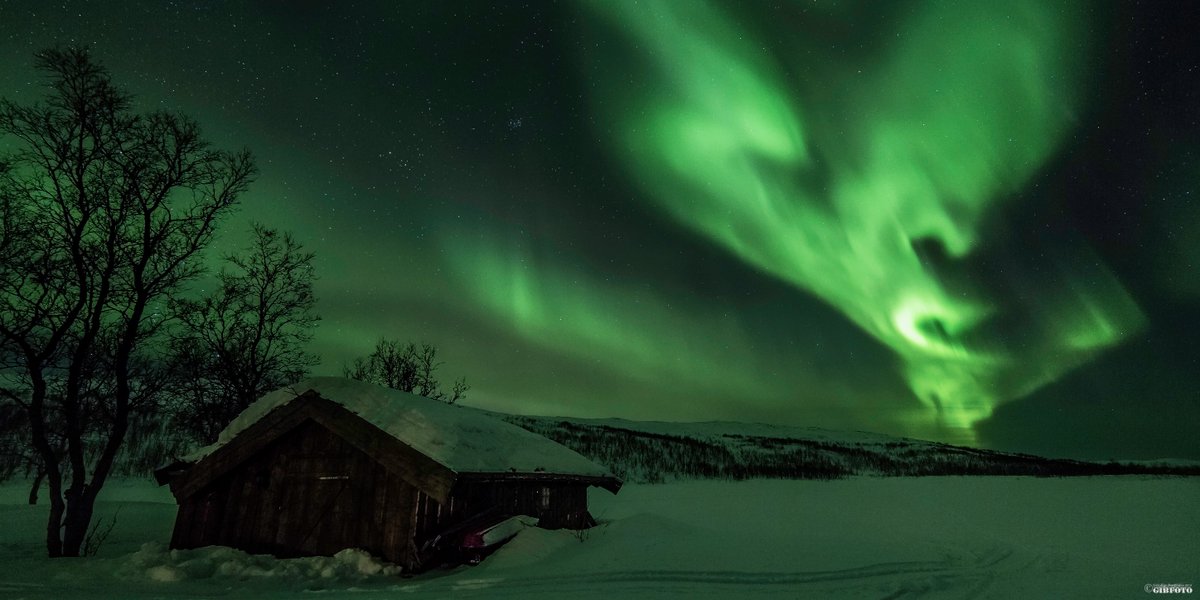
The aurora borealis or aurora australis (Northern/Southern lights) are created when charged particles released from the #Sun collide with Earth's atmosphere. These particles are emitted from storms on the surface of the sun.
(1/2)
#SpaceX is just about to test their #Starship#SN7 prototype to destruction. They will fill the rocket with pressurised gases until it explodes, in order to test the strength of the 304L stainless steel being used.
Watch live here:
https://t.co/iDXLz5QL8Y
@LabPadre
Almost all of an atom is 'empty space' (>99.9% in a #Hydrogen atom). This is due to the very small size of the protons, neutrons and electrons in an atom.
In quantum mechanics, this 'empty space' is filled completely by electrons acting as waves, not particles.
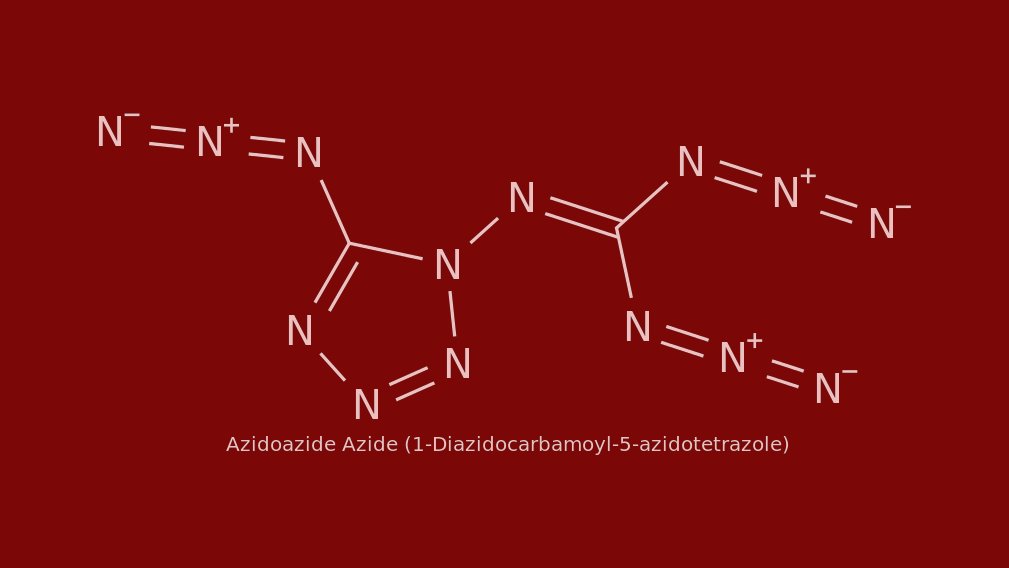
Azidoazide Azide is one of the most dangerous chemicals ever created because of the large number of high-energy #Nitrogen bonds it has.
It explodes if:
touched / moved
exposed to bright light
left undisturbed
quite literally, doing anything to it
A teaspoon of a #Neutron Star (the leftover core of an exploded star) would weigh about 10 million tonnes. This is because these stars have extremely strong gravitational fields and the constituent #atoms are packed very densely.
Elements in group 1 of the periodic table (such as Lithium, Sodium & Potassium) react rapidly with #oxygen - either in the air or in water. If dropped in water, these #elements all explode violently as their atoms remove one electron from their outer orbital.
📸 Caesium & Water