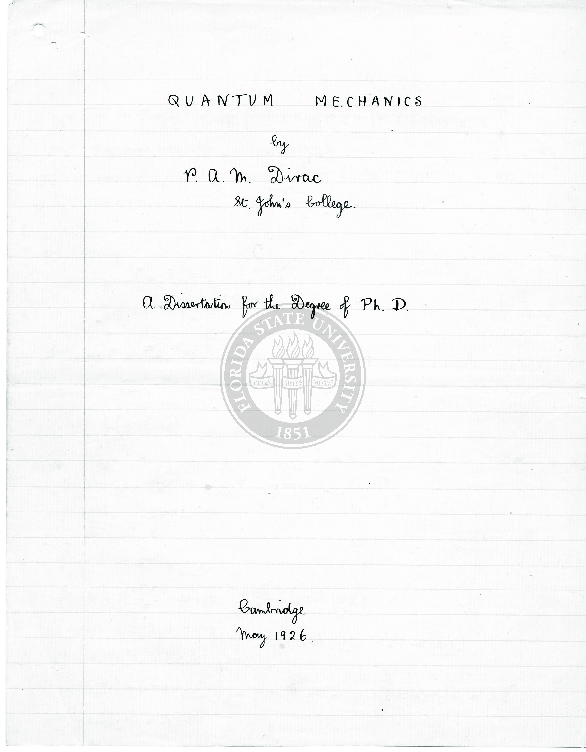
a pattern I observed in the lives of great people and achieving greatness
is paranormal learning.
not normal learning. not linear accumulation. not syllabus → credential → compliance.
paranormal learning is learning that looks irrational from the outside.
it’s when you obsess over a subject past utility, past rewards, past social validation. when curiosity turns compulsive. when you study things you “don’t need yet” because something internally hasn’t resolved.
most people learn reactively. they wait for permission: a job, an exam, a trend. their learning is bounded by relevance and approval.
paranormal learners invert this. they learn ahead of reality. they build internal models before the world asks for them. when the opportunity appears, it looks like talent. it isn’t. it’s preload.
this kind of learning feels inefficient. scattered. even wasteful. until suddenly multiple domains snap together and you see what others can’t.
greatness doesn’t come from optimized paths. it comes from deep, strange, self-directed exploration that compounds quietly for years.
by the time it’s visible, the work is already done.
Barb Wire (1996). A grunge version of Casablanca set in the future, staring Pamela Anderson.
Based on the comic book character, Barb Wire has a lot of cyberpunk style themes: bioweapons, an American civil war, retinal ID contact lenses, jumping through the air firing two guns, etc...
It did terrible numbers at the box office, but it is an honest slice of '90s hyper-fuel maximalist cinema that throws everything at the screen whilst turning up the volume and the colour saturation. You'll be surprised how many later movies and TV series seem to riff off some of its ideas.
Part of the wonder of being a kid is not feeling the constraints of adulthood even with fiction. Some of my first comics were the Marvel Star Wars comics and to me they were as real and important as the movies. I had no concept of "canon" at the time, I just knew I liked them.
"I prefer dark chocolate"
Totally valid, delic-
"Milk chocolate is just too sweet 😥😝"
Ok now get over yourself. Like a child pretending to be a grownup. What happened to the light that was once in you. When was the last time you felt true mirth. Go find a shape in the clouds
#GodzillaMinusOne isn’t going anywhere! In fact, the film will be playing on EVEN MORE North American screens this coming weekend—increasing to over 2,500 locations in the US & Canada starting December 8.
As long as people are attending, showtimes will continue. So get your tickets and spread the word! GODZILLA MINUS ONE is (still) NOW PLAYING NATIONWIDE: https://t.co/LdnEJ2deLV
#GodzillaMinusOne: Live. Despite the horrors of this world, you must find it within you to keep going. The ghosts of your past are your own creation. Live and put your personal war behind you.
Godzilla x Kong: LET'S GO KICK THAT MONKEY'S ASS!
Godzilla fans: One of each please.
Toho & Marvel will be releasing Godzilla: The Original Marvel Years Omnibus Hardcover October 2024.
Standard cover art by Junggeun Yoon.
Direct Market First Issue Variant covert art by Herb Trimpe.
Direct Market War of the Giants Variant cover by Herb Trimpe.
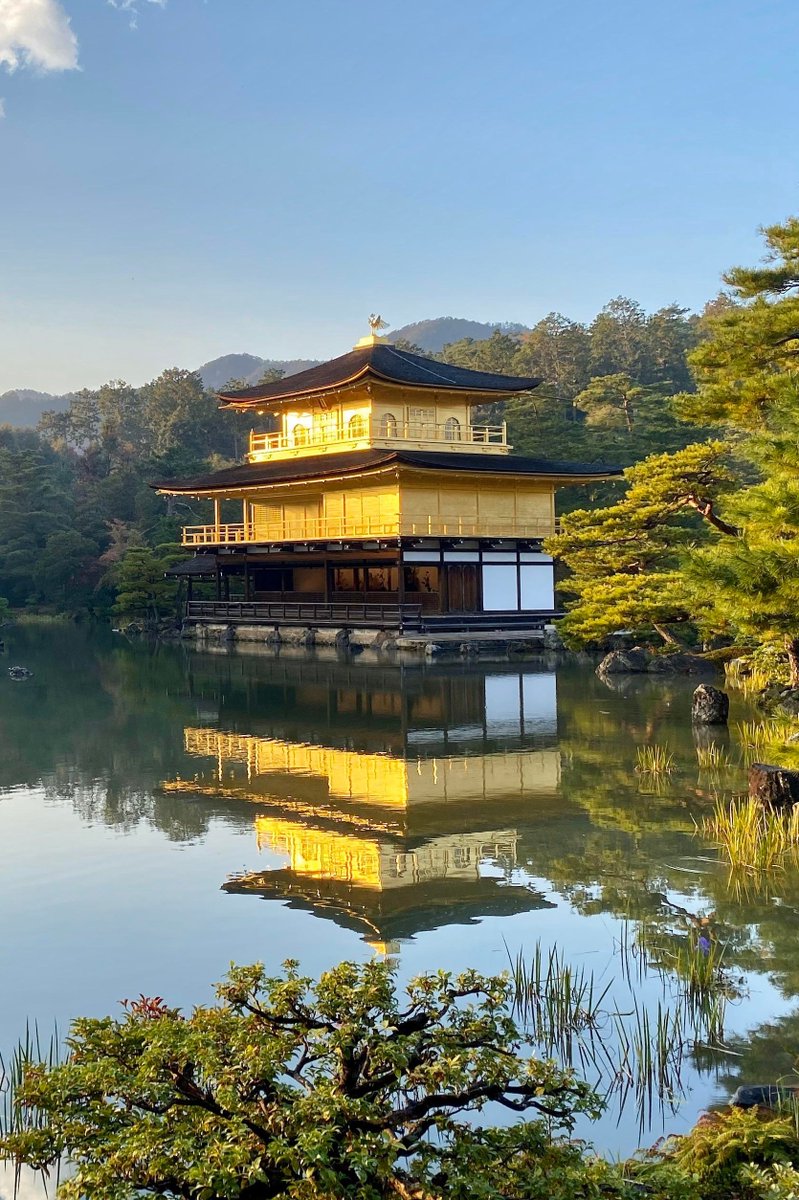
The Temple of the Golden Pavilion in Kyoto, Japan, was originally built 600 years ago. But it has been burned down and rebuilt twice.
So how old is it? And is it still the same building?
Here's what Douglas Adams, author of The Hitchhiker's Guide to the Galaxy, said about it:
'I remembered once, in Japan, having been to see the Gold Pavilion Temple in Kyoto and being mildly surprised at quite how well it had weathered the passage of time since it was first built in the fourteenth century. I was told it hadn’t weathered well at all, and had in fact been burnt to the ground twice in this century. “So it isn’t the original building?” I had asked my Japanese guide.
“But yes, of course it is,” he insisted, rather surprised at my question.
“But it’s burnt down?”
“Yes.”
“Twice.”
“Many times.”
“And rebuilt.”
“Of course. It is an important and historic building.”
“With completely new materials.”
“But of course. It was burnt down.”
“So how can it be the same building?”
“It is always the same building.”
I had to admit to myself that this was in fact a perfectly rational point of view, it merely started from an unexpected premise. The idea of the building, the intention of it, its design, are all immutable and are the essence of the building. The intention of the original builders is what survives. The wood of which the design is constructed decays and is replaced when necessary. To be overly concerned with the original materials, which are merely sentimental souvenirs of the past, is to fail to see the living building itself.'
So that was Douglas Adams' view — that whether a building is "original" really has nothing to do with the actual age of its materials and when they were put together, but is defined by the form they take and when it was decided to arrange them in that way, regardless of how recently they have been made and installed.
So even if we reconstruct an old building with new materials — as happened at the Temple of the Golden Pavilion after it was burned down in the 1950s — it is still an authentically old building.
It is surprising to learn how many "old" buildings have, indeed, been rebuilt in this way. Some examples include the Frauenkirche in Dresden, St Mark's Campanile in Venice, the old towns of Warsaw and Frankfurt, the Yellow Crane Tower in Wuhan, and even the Great Ziggurat of Ur in Iraq.
This is essentially an architectural version of the Ancient Greek conundrum of the Ship of Theseus. Imagine an old ship in a harbour. If all its separate parts were replaced, one by one, over the course of one hundred years, would it still be the same ship? If not, when did it become a different ship? And, in either case, how old would the ship be after one hundred years had passed?
We generally think that an old building, once destroyed, is surely lost forever — and that to rebuild it would be somehow inauthentic or artificial. Perhaps this isn't the case. Perhaps we can rebuild, brick for beam and gable for window, any old and important structure which has been lost to war and catastrophe without losing its age or authenticity.
So, was the Temple of the Golden Pavilion built in 1397 or 1955... or both?
12 Reasons Why Cities Need More Trees:
1. Temperature Control
One large tree is equivalent to 10 air conditioning units, and the shade they provide can reduce street temperature by more than 30%.
2. Noise Reduction
Trees can reduce loudness by up to 50%. In urban areas filled with the sound of cars, construction, sirens, aeroplanes, and music, trees are essentially the best way to block noise and keep cities — along with the homes and workplaces in them — quieter.
3. Air Purity
Trees remove an astonishing amount of harmful pollutants and toxins from the air. In urban areas air quality is often disastrously bad — with severe consequences for our health. Trees make the air we breathe much cleaner.
4. Oxygen
And, while absorbing all those pollutants, trees also put more oxygen back into the urban environment. Oxygen levels are significantly lower in cities compared to the countryside; trees help to solve that problem.
5. Water Management
Trees do more than just shelter us and our buildings from rain — which is, in fact, extremely important. They also absorb huge quantities of water, reduce run-off, neutralise the severity of flooding, and make flooding more unlikely altogether. Not to forget that their roots absorb pollutants and prevent them from feeding back into a city's water supply.
6. Psychological Health
Studies have proven what we instinctively know to be true: that human beings are significantly happier when surrounded by nature rather than sterile urban environments. Our emotions, behaviour, and thoughts are shaped by the places we spend time — and trees have a profoundly positive effect on our psychology. The consequential benefits of being happier and more peaceful — as individuals and as a society — are immense.
7. Physical Health
Beyond all the other ways in which trees improve air quality and the urban environment, much to the benefit of our health, they also encourage people to go outside. Cycling, running, and walking are all more common in urban areas with plenty of trees. A knock-on effect of people spending more time outdoors is also social integration and stronger communities.
8. Privacy
A simple point, but not inconsequential, is that trees provide privacy.
9. Economics
The total economic benefit of urban trees is hard to calculate. There are costs, of course, including the repair of infrastructure damaged by roots and maintaining the trees themselves. But the total economic benefit — a consequence of everything else in this list and more — far outweighs the expenditure. Trees make cities wealthier.
10. Wildlife
Trees are miniature cities all of their own, serving as a habitat for hundreds of different species, including birds and mammals and insects.
11. Light Pollution
Trees don't only block the light shining down, therefore keeping us and our cities cooler — they also disrupt light shining up, from street lighting, cars, houses, and billboards. Skies are clearer in cities with more trees.
12. Aesthetics
And, finally, trees are beautiful. They break up the potential monotony of urban environments — the sharp geometry, the greyscale roads and buildings, the endless rows of cars — with their trunks, boughs, canopies, and flowers.
Just think: the gold and red of falling leaves in autumn, the white and pink blossom of spring, the vast green canopies of summer, and the branches lined with hoar-frost in winter. Every single tree is a myriad of intricacy and texture, of colour and scent, of dappled light on the pavement, mottled bark, knotted roots, of clustered leaves and delicate petals and stern boughs.
Few streets would not be improved by the kaleidoscopic aesthetic delights of a tree, not to mention the many different species of tree, all over the world, whether willow, oak, lime, cherry, aspen, maple, birch, horse chestnut, dogwood, hornbeam, ash, sycamore... the list goes on.
There are some drawbacks to urban trees, most of them context-specific, and they are not — of course — universally appropriate. But it seems fair to say that many cities would benefit from at least a few more trees here and there.
In 4 minutes, Kurt Vonnegut explained stories better than anyone I’ve ever heard.
“The shape of the curve is what matters. Not their origins.”
He plots stories on 2 axes:
X: Time
Y: Good fortune / ill fortune
He goes on to say,
“Somebody gets into trouble, then gets out of it again. People love that story. They never get tired of it.”
Point 1:
Stories have defined patterns.
In Joseph Campbell’s Hero of a Thousand Faces, he makes the case for the Hero’s Journey.
Since then, it’s become the most famous storytelling structure in the world.
Vonnegut argued stories could be divided into 8 shapes.
Each story, he said, fit one of the 8.
Point 2:
Vonnegut says,
“Be a sadist. No matter how sweet and innocent your leading characters, make awful things happen to them — so the reader may see what they're made of.”
To see who your characters really are, you have to make them suffer.
Only then does your audience have someone worth cheering for.
Point 3:
End on a high note.
Vonnegut says, “It’s not accidental that the line ends up higher than where it began. This is encouraging to readers.”
The way a story makes people feel when they finish is how they remember it.
It’s called recency bias.
Lift people up and they will love you.
***
“There are people. There are stories. The people think they shape the stories, but the reverse is often closer to the truth.”
I wrote this with @RobbieCrab. Follow him for lessons on storytelling + fundraising.
And I talk about creative storytelling. Follow @nathanbaugh27 for more like that.