🇮🇷🇴🇲🇺🇸 Iran and Oman want to charge for Hormuz
The two countries are pushing a "service fee" on ships crossing the Strait of Hormuz, the wording built to make a charge sound like a courtesy.
Oman has floated it past the U.S. and other Western allies, fully aware Washington has been pushing back.
They are careful not to say the word toll, but a fee you cannot skip on a route everyone needs is a toll wearing a nicer jacket.
A charge by any other name still ends the part where it was free, and that is the whole point.
Source: NYT / Writer: Daniyal
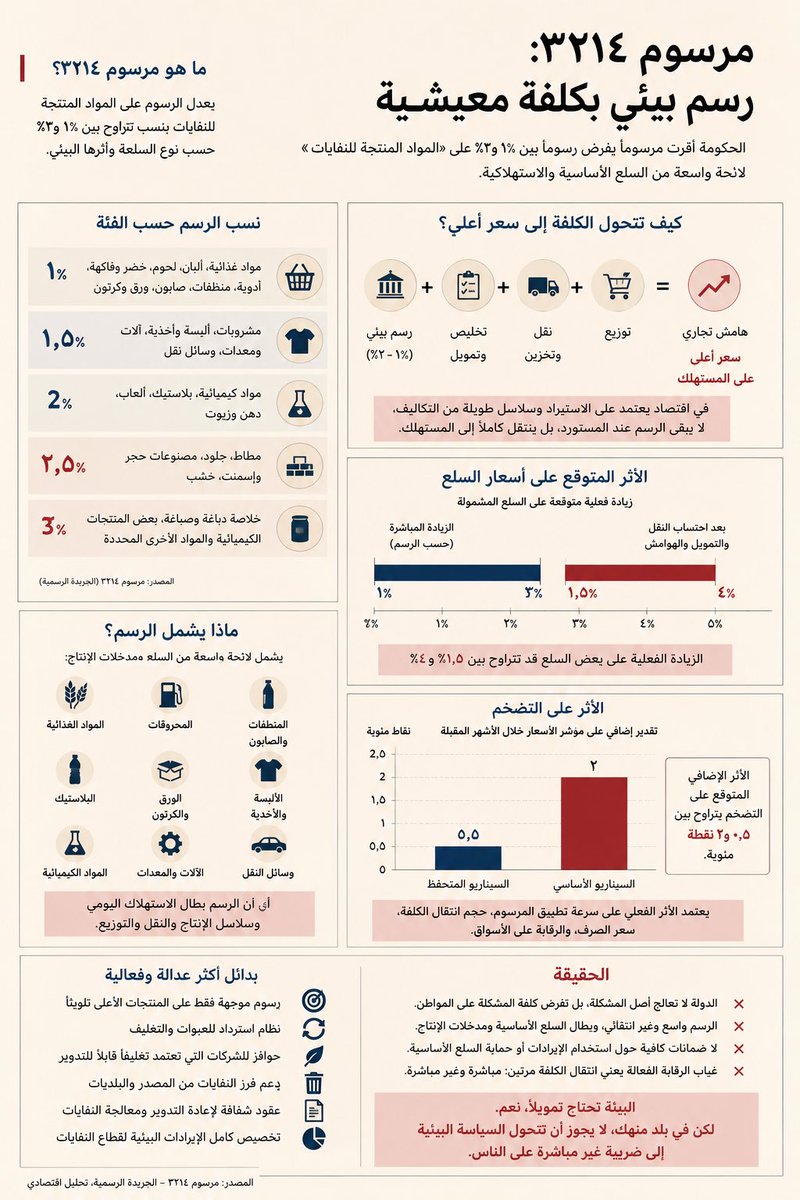
فرض رسوم بين ٪١ في و ٪٣ في على لائحة واسعة من المواد المنتجة للنفايات قد يبدو نظريا اجراء بيئيا. لكن في التطبيق اللبناني، هو اقرب الى ضريبة غير مباشرة تضاف الى الاسعار في لحظة اقتصادية لا تحتمل موجة كلفة جديدة.
المشكلة ليست في مبدأ الملوث يدفع.
المشكلة ان الدولة اختارت الطريق الاسهل: فرض رسم على الاستيراد والاستهلاك، بدل بناء سياسة فعلية لادارة النفايات.
في اقتصاد يعتمد بشدة على السلع المستوردة، اي رسم جديد لا يبقى عند المستورد. ينتقل فورا الى المستهلك عبر التخليص، التمويل، النقل، التخزين، التوزيع، والهوامش التجارية. لذلك، رسم بين ٪١ و ٪٣ قد يتحول عمليا الى ارتفاع فعلي بين ٪١٫٥ في ٪٤ في المئة على عدد من السلع، مع ضغط اضافي على التضخم والقدرة الشرائية.
وهنا جوهر الاعتراض:
الدولة لا تعالج اصل المشكلة، بل تفرض كلفة المشكلة على المواطن.
البديل ليس ترك ملف النفايات من دون تمويل. البديل هو سياسة اكثر عدالة وفعالية: رسوم موجهة على المنتجات الاعلى تلويثا فقط، حوافز للشركات التي تعتمد التغليف القابل للتدوير، نظام واضح لاسترداد العبوات، دعم فرز النفايات من المصدر، عقود شفافة لاعادة التدوير، وتخصيص كامل الايرادات البيئية لقطاع النفايات لا للخزينة العامة.
اما ان تفرض رسوم واسعة على مواد تدخل في الغذاء، النقل، الانتاج والاستهلاك اليومي، من دون ضمانات جدية حول استخدام الايرادات او حماية السلع الاساسية او مراقبة تمرير الكلفة، فهذا ليس اصلاحا بيئيا.
هذا نقل لفاتورة فشل الدولة الى المستهلك.
لبنان لا يحتاج ضرائب مقنعة تحت عناوين خضراء.
لبنان يحتاج سياسة بيئية عادلة، شفافة، ومبنية على تقليل النفايات لا على زيادة الاسعار.
Here we observe the seismic waves propagating outwards from the destructive M7.2 and M7.5 Venezuela earthquakes today June 24th 2026. This was the strongest earthquake sequence Venezuela has experienced since the 1812 Caracas Earthquake...
Over the last 24 hours, nearly 20 vessels have transited the Strait of Hormuz with 5 vessels using the U.S. established safe route through Omani waters visible via https://t.co/bYX0jXrfTw. The remaining traffic is using the Iranian traffic separation scheme.
Oil tankers, mostly VLCCs, carrying Iranian oil have now crossed the area where the US blockade was in place, with one more tanker already on its way.
Total: 18 million barrels.
It was the Hormuz Leak, now the Hormuz Flood!
Map From @Kpler
📌 الدكتور توفيق كسبار في دراسة جديدة: الدولة لم تقترض أموال المودعين
📌ويقول: هناك تضارب بين الرواية السياسية الشائعة وبين الأرقام والبيانات الرسمية فيما يتعلق بإقراض مصرف لبنان للدولة، وتخلص إلى الآتي:
📌تفنيد الرواية الشائعة: يشير إلى وجود تفسير شعبي يروج له السياسيون ووسائل الإعلام مفاده أن "الناس أودعوا أموالهم في المصارف، والمصارف وضعتها في المصرف المركزي، الذي أعطاها بدوره للحكومة التي هدرتها" يصف هذا التفسير بأنه غير صحيح ولا تدعمه البيانات الرسمية
📌حجم الإقراض الفعلي بالدولار: لو كانت الرواية صحيحة، لظهرت معظم الأموال (حوالي 90 مليار دولار أودعتها المصارف لدى المركزي) كديون على الدولة في ميزانية مصرف لبنان
📌لكن البيانات الرسمية حتى ايلول 2019 تظهر أن ائتمان مصرف لبنان للحكومة بالدولار كان أقل من 6 مليارات دولار فقط، وذلك على شكل سندات خزينة أو يوروبوندز
📌 أين ذهبت الأموال؟ يوضح أن الـ 90 مليار دولار التي استلمها مصرف لبنان من المصارف التجارية لم تذهب كقروض للدولة، بل استُخدمت ضمن سياسة "الهندسة المالية" لدعم سياسة سعر الصرف الثابت . وقد نتج عن هذه السياسة عجز ضخم في صافي احتياطيات المصرف المركزي من العملات الأجنبية وصل إلى 60 مليار دولار (أي أن التزاماته بالدولار تجاوزت موجوداته بهذا المبلغ)
📌المسؤولية عن الانهيار: يخلص إلى أن انهيار القطاع المصرفي لم يكن بسبب إقراض الدولة فحسب، بل كان نتيجة مباشرة لسياسة نقدية محددة اتبعها مصرف لبنان ("الهندسة المالية") بالتعاون مع المصارف، والتي حولت سيولة المودعين إلى أصول غير سائلة لدى المركزي .
📌باختصار، يرى أن تحميل "الدولة" وحدها مسؤولية ضياع كافة الأموال هو محاولة لـ "تجهيل الفاعل" وإعفاء مصرف لبنان والمصارف من مسؤوليتهم المباشرة عن سوء الإدارة المالية
قررنا و بطريقة سليمة عدم نزع سلام الحرب بالقوة خوفا على السلم الاهلي و خوفا من انقسام مؤسسات الدولة
اليوم العالم قرر توكيل المهمة لقوى خارجية؛ يعني إذا تطورت الأمور سنندم على خوفنا و نلعن الساعة.
اي تدخل خارجي سوري او تركي سيمحي الدولة برمتها و سنترحم على المقبور
Today two quotes keep echoing in my mind:
“It may be dangerous to be America’s enemy, but to be America’s friend is fatal.” H. Kissinger.
“Iran never won a war, but it never lost a negotiation.” D. Trump
History will deliver its verdict.
If the U.S. and Iran sign a truce tomorrow, Lebanon is left with:
• 10–15% of its territory effectively lost or inaccessible
• Thousands of Lebanese dead
• Over a million displaced
• Billions in economic damage
• Dual reporting lines: Israel and Iran
• Deeper sectarian divisions
• Weaker state sovereignty
No change in political/military actors.
All winners no losers debate 😅.
Just when you think things can’t get worse for this fragmented country, a new floor appears beneath the old one.
🇺🇸 The U.S. just deemed an AI model so dangerous that nobody on earth is allowed to use it, including the government itself.
The Trump administration moved to block all foreign access to Anthropic's most advanced models, Mythos 5 and Fable 5, with Commerce Secretary Howard Lutnick notifying CEO Dario Amodei that they now fall under export controls.
The trigger, per an administration official, was another company's claim that it had jailbroken Mythos, raising national security alarms.
The administration had reportedly tried to get Anthropic to delay the release and failed.
The result is a strange bind.
Anthropic already sits on a Pentagon blacklist deeming the models too risky for the government's own use, and now a Commerce regime deems them too risky for foreign use.
Rather than navigate the licensing maze, the company cut off access for every customer late Friday, calling it a "misunderstanding" it's working to resolve.
The official said the lockdown stays until the government hardens its own security, possibly within weeks, stressing that Trump "does not want to hurt the industry."
Source: Axios / Writer: Daniel
Mada Airways, a new Lebanese commercial airline, is preparing to enter the market, coinciding with the expiry earlier this year of MEA’s long-standing exclusivity over Lebanon’s local aviation market.
The carrier, sister company of IBEX Air Charter, is awaiting its license and the rehabilitation of Qleiaat Airport, from which it plans to operate exclusively.
My report for @LOrientLeJour@lorienttoday
https://t.co/0GLyDdfetI
This appeared in today's WSJ. It reflects the familiar bias that characterizes much of Western reporting on the Middle East in general, and Lebanon in particular.
Interestingly, in an article about Hezbollah-controlled Lebanon, the shaming epithet "gang" is used to describe and stigmatize Hezbollah's opponents. The journalists write: "In an area of Christian East Beirut known for its right-wing gangs, groups of black-clad men hung out near a building that displayed a four-story portrait of a rifle-wielding Bachir Gemayel."
I live in Christian East Beirut. I grew up here, and I am writing these very words from East Beirut. There are no "gangs" here, let alone Christian "right-wing gangs." A handful of young men—some unemployed, others doing odd jobs—hardly constitutes a gang.
The real super-gang in Lebanon is Hezbollah itself: an organization guilty of political assassinations, of dragging the country into war with Israel on behalf of Iran, and, according to numerous reports, of involvement in narcotics trafficking. Yet the article carefully avoids using any negative terminology to describe Hezbollah while casually applying pejorative labels to its opponents.
In fact, Christians are mentioned three times in the piece: first in connection with these alleged "gangs"; then as collaborators with Israel; and finally as armed men flashing pistols at a funeral. Reading the article, one might conclude that Lebanon's Christians are little more than a collection of hooligans who somehow manage to be both neo-Nazis and pro-Israeli at the same time. The portrayal is absurd.
The article also gives space to pro-Hezbollah narratives lamenting the Lebanese state's indifference to displaced Shiites: "The state? Where is the state?" What it fails to mention is that: (1) Hezbollah and Amal are among the most powerful actors within the Lebanese state; (2) decades of corruption by Amal weakened state institutions, while Hezbollah subordinated much of the country to Iranian interests. If the remnants of the Lebanese state are unable to adequately assist the Shiite population today, the responsibility lies, to a significant extent, with the very political forces that have dominated Shiite politics for decades.
Had this article appeared in The New York Times or The Washington Post, it would not have seemed out of place. It is disappointing to see it published in the Wall Street Journal. The WSJ is a serious newspaper and should demand better reporting on Lebanon.
@omarabdelb: If your knowledge of Lebanon is this limited, why write about it?
@ElliotKaufman6